
Air
Cleaner indoor air for a country house that lives with field dust
Hickory Grove sits in working farm country, and the air shows it. Planting and harvest send field dust across the roads, gravel drives kick up more with every passing truck, and barns and hay add their share. Then each spring the treelines coat everything in pollen. A good deal of it ends up inside the house, on the furniture, and packed into the coil of your system.
We are Zach and Eric Massey. Our family company opened in 2023, and we carry more than 25 years of hands-on HVAC work. We would sooner sell you the right filter than a gadget you do not need, and the phone is answered 24/7 with no extra charge for an emergency.
Filtration comes before anything that plugs in
A deeper media cabinet, sized right
Most of the cleaner air a central system can give you comes from its filter, and most houses run the thinnest, cheapest one that fits the return grille. A media cabinet mounted at the air handler or furnace holds a filter several inches deep, which catches far more fine dust and pollen and lasts much longer between changes.
We size that cabinet to your blower and ductwork, then measure the pressure drop across the new filter once it is in. That reading tells us the blower is still moving the air it was built to move.
Changing that filter stays simple: the old one slides out of the cabinet and a new one slides in. We show you how on the first visit and write the filter size on the cabinet door, so nobody has to guess at the store.
Why a thicker filter alone can backfire
A dense filter crammed into a small slot chokes the blower. Airflow drops, the coil can freeze up in summer, the furnace can run hot in winter, and the variable-speed motors in newer equipment strain to make up the difference. A filter rated to catch fine particles only helps when the system can breathe through it.
That is why static pressure gets measured before we recommend anything. On some older duct systems the right first step is a bigger return, so the filter has enough surface area to work without starving the equipment.
UV lights, ionizers, and the claims printed on the box
What a UV lamp on the coil does
A UV lamp mounted to shine on the indoor coil keeps mold and bacterial slime from growing on the wet fins and in the drain pan. Through a humid Carolina summer that can keep a coil cleaner and the condensate flowing. It is a reasonable add-on for a system that has had growth on the coil before.
It does far less for the air you breathe. Air moves past a lamp too fast for most of what it carries to be affected, and UV light does nothing about dust or pollen. We will say that on the visit.
Ionizers and ozone, looked at plainly
Ionizers and other electronic cleaners make big promises, and some of them produce ozone, a lung irritant you do not want circulating in a house where somebody has asthma. We are skeptical of any device whose main selling point is a number on the packaging, and we tell customers so.
If you already own one and want to know whether it is helping, we can look at it with you and give you a straight answer. In most of the houses we see, the money does more good spent on filtration and sealing the return ducts.
Sealing the returns that pull in attic and crawlspace air
A return duct with a gap at a joint, a crushed section, or a panned floor joist leaking into the crawlspace pulls in whatever is around it. That means insulation fibers and attic dust from above, or damp crawlspace air carrying dirt and mildew from below, mixed straight into the air your system sends to every room. No filter downstream can make up for a return drawing from the wrong place. Damp crawlspaces are common out here, and a return that breathes from one carries that musty smell straight into the living room.
So on these visits we trace the return side first, look for disconnected joints and gaps around the air handler cabinet, and seal what we find with mastic and proper fittings. Where a section is past saving, we build its replacement in our own warehouse. Our air purification systems overview shows how we approach indoor air in every kind of house.

Gray dust caked across the fins and the cabinet walls: this is where unfiltered air ends up, and a coil this loaded moves far less air than it should.
Planting season, harvest, and the spring pollen load
Dust that follows the farm calendar
Out here the dust keeps a calendar. Spring brings pollen off the treelines and dust from field work, a dry spell in summer lifts gravel road dust every time a truck goes by, and harvest stirs the fields again in the fall. Houses near barns or hay storage deal with it most of the year. Each season shows up on your filter, and on the coil whenever the filter misses it.
For houses close to the dust, we usually suggest looking at the filter more often during planting and harvest. A deeper media filter is a big help here, since it holds a lot more before it loads up. A filter that turns gray within a couple of weeks at harvest is doing its job, and it is telling you to change it.
Cleaning the coil that already took the hit
If your coil already looks like the frame on this page, a new filter will not undo it. A packed coil moves less air, cools poorly, and gives mold something to grow in. We clean it properly, check the drain pan and the blower wheel, and look at the duct joints that let the dust through in the first place.
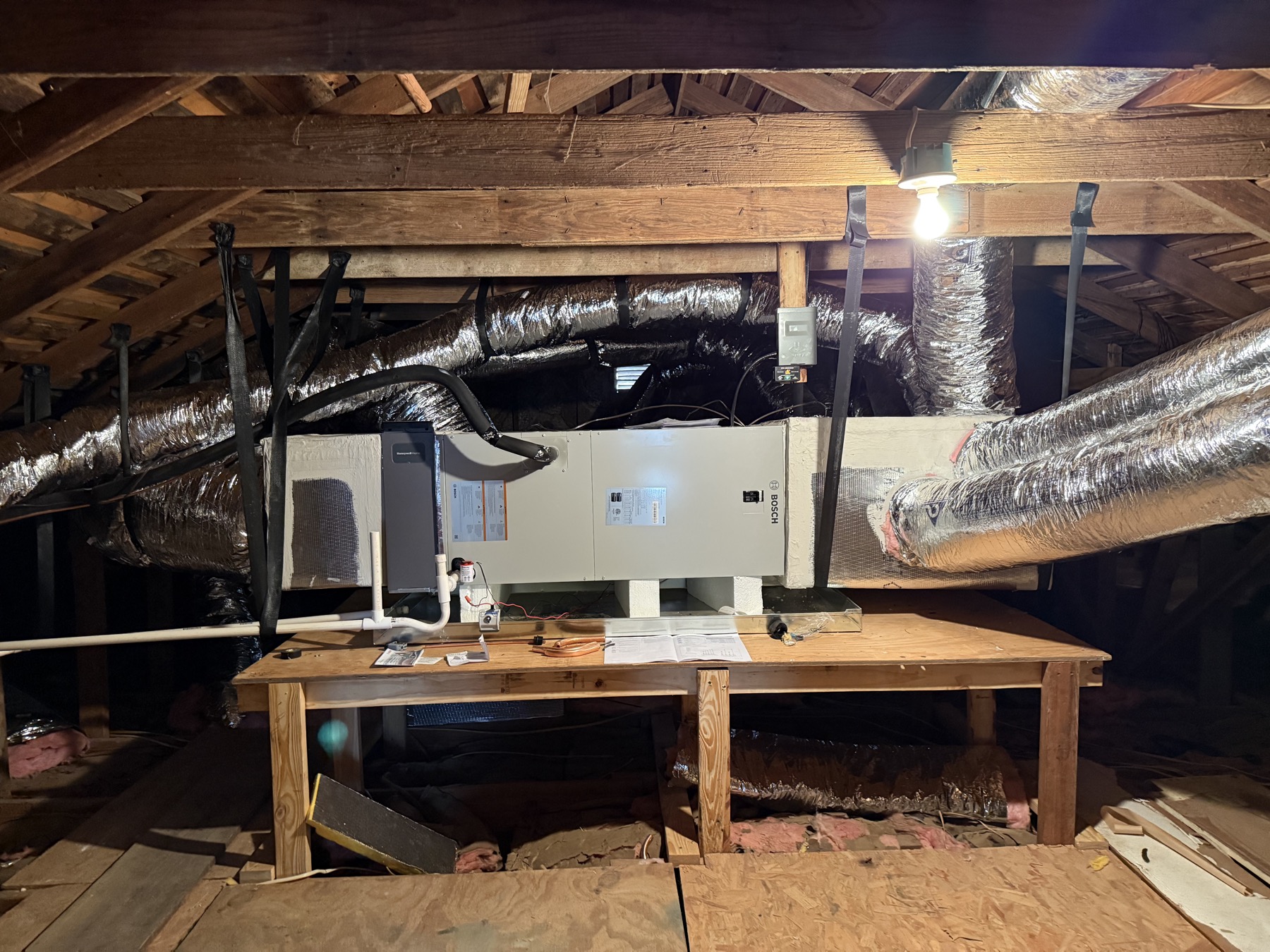
Then we fix the cause, so you are not paying for the same cleaning next year. The photo at the top shows an attic air handler with flex duct branching off in every direction, and each one of those connections is a spot we check.
Allergies, asthma, and who in the house feels it first
Households where breathing comes first
When someone in the house has allergies or asthma, we start with what bothers them and when. Spring pollen, dust at harvest, or a musty smell when the system first kicks on each point toward a different fix. We sort out which one is in play before suggesting anything.
We keep our advice to what the equipment can do. A good filter and tight ducts cut the dust and pollen moving through the house. They do not replace a doctor’s advice, and we never pretend they do.
Bedrooms matter most for people who struggle at night. We check that the supply and return in those rooms move enough air to carry dust back to the filter, because a bedroom with a weak return lets it settle on the blankets and the nightstand instead.
Pairing cleaner air with the rest of the system
Air quality work fits naturally into other jobs. If the furnace is due, a media cabinet and sealed returns can go in with the replacement, and our furnace replacement page for Hickory Grove explains that work. Dry winter air is a separate question, covered on the humidifier installation page.
Shops and barn offices with ductless heads collect the worst of the dust, and those filters need rinsing often. If an old outbuilding unit is already struggling, look at our mini split replacement work.
Want to know what is really riding through your ducts?
One visit covers the filter, the return side, the coil, and the blower, with a written price for what would help and a plain answer about what would not.
What country homeowners ask about air purification
What is the best first step toward cleaner air in my house?
Better filtration. A media cabinet at the furnace or air handler holds a much deeper filter that catches more fine dust and pollen. We size it to your blower and measure the pressure drop after it goes in, so the system still moves the air it should.
Will a high-rated filter hurt my system?
It can if it is jammed into a slot too small for it. A dense filter with too little surface area chokes the blower, which can freeze the coil in summer and overheat the furnace in winter. A properly sized media cabinet gives the filter enough area to work without that problem.
Do UV lights clean the air?
Not much. A UV lamp shining on the indoor coil keeps mold and slime from growing on the wet fins and in the drain pan, which is useful. Air moves past it too quickly for it to clean the air in any meaningful way, and UV does nothing about dust or pollen.
Are ionizers or ozone air cleaners safe?
We are skeptical of them. Some electronic cleaners produce ozone, which irritates the lungs, and that is the last thing a household with asthma needs. For most houses we recommend spending the money on filtration and duct sealing, which show a clear result you can see on the filter.
Why is my house so dusty even with a new filter?
Often the return ducts are leaking. A return with gaps in the attic or crawlspace pulls dusty or damp air in behind the filter, or around it. We trace the return side, seal the joints and the air handler cabinet, and replace any sections that are too far gone.
How often should I check filters during planting and harvest?
More often than the rest of the year if your house sits near fields, gravel roads, or barns. Look at it once a month through the dusty stretches and change it when it looks loaded. A deeper media filter goes longer between changes because it holds far more before it clogs.
Can I finance air purification work or get a discount?
Yes. Optimus financing is available on this work, and we take ten percent off for teachers and service personnel. Ask during the visit and we will put it on the written price.
Other ways we help houses out on the farm roads
Cleaner air is one part of a comfortable country house. The Hickory Grove page covers how we look after the whole property. If the furnace in the hall closet is near the end, see furnace replacement. A worn-out ductless unit on the shop has its own mini split replacement page. For winter dryness, read about adding a whole-house humidifier, or about humidifier repair when an existing one has gone quiet.
Want to see the kind of work we do in attics and closets? Our gallery is real jobs, photographed by the crew that did them.