
Cooling · Measured, sized right, installed once, verified
AC installation is a math problem before it is a trade
The most expensive air conditioning mistake in the Carolinas is not a cheap brand or a bad warranty. It is the wrong size system installed with shortcuts, and it gets sold every day. We do the opposite: measure the house, run the load numbers, match equipment to your ductwork and your budget, and install it like our name is on it, because it is.
Family crew, 25 years in the trade, Fort Mill based, and the whole Charlotte metro covered on both sides of the state line. The pricing visit is free, the number arrives in writing, and the equipment gets staged in our own warehouse before install day so your driveway never becomes a supply chain problem.
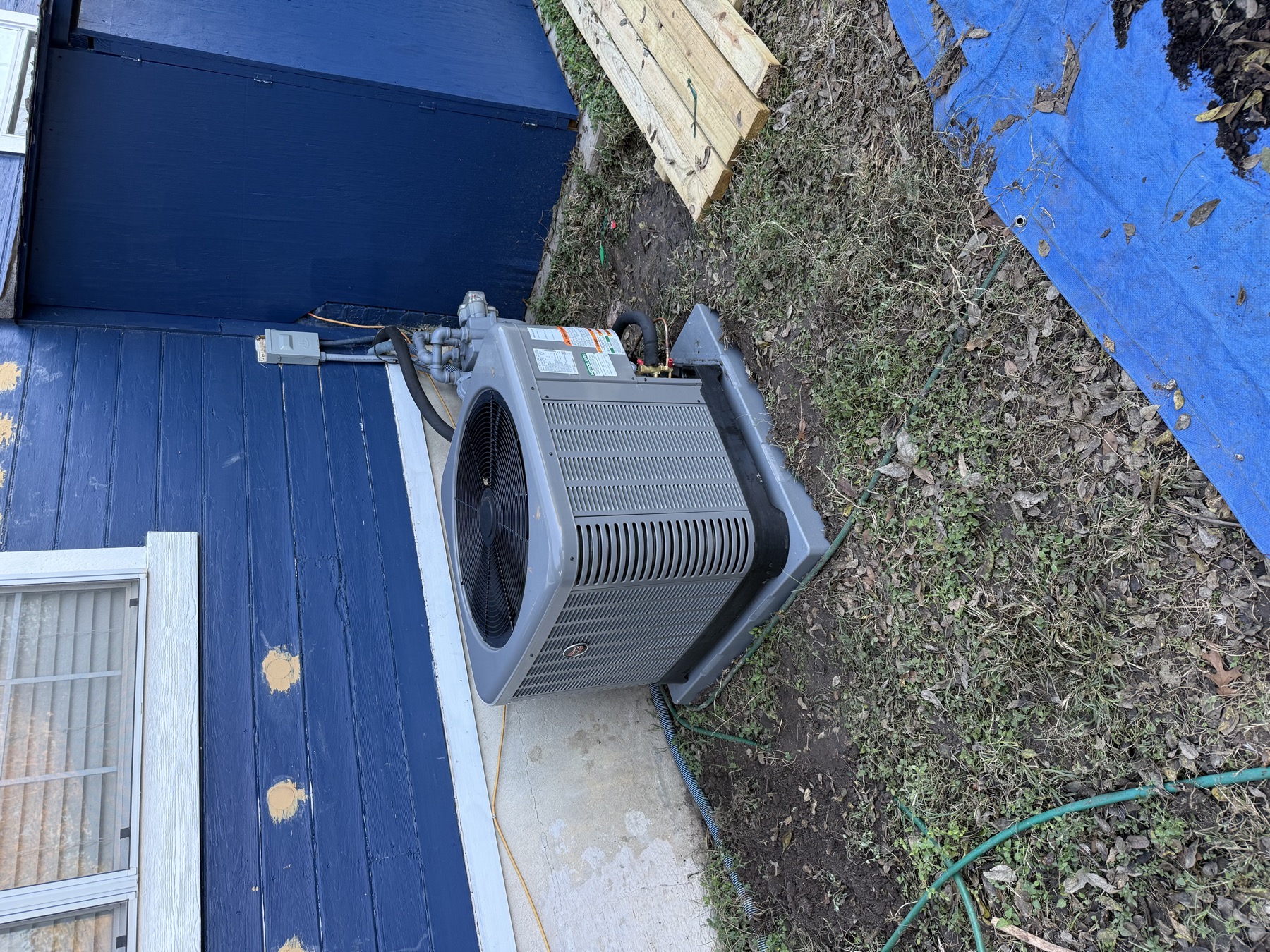
Why sizing decides everything
Oversized is a real problem, and common
The industry habit of eyeballing tonnage off square footage produces oversized systems constantly, and oversized is quietly terrible. A too-big AC blasts the thermostat into submission in ten minutes and shuts off before it has dehumidified anything, which in Carolina humidity means a cold, clammy house that never feels right. Then it does that again, forty times a day, which is called short cycling, and it wears the compressor like city miles wear a car.
Undersized has the opposite personality: the system simply never wins July. It runs from breakfast to midnight, the upstairs never catches the downstairs, and the power bill reads like a second rent payment. Both mistakes come from skipping the same twenty minutes of math at the start.
What we measure before we recommend
A real load calculation looks at the house you actually own: square footage, sure, but also window area and orientation, insulation levels, ceiling heights, duct condition and routing, air leakage, and how your rooms are actually used. Two identical floor plans on the same street can need different equipment because one bakes in west sun and the other hides behind oaks.
The ductwork gets inspected as part of every quote, because a perfect condenser bolted to leaky, undersized ducts is a stereo with blown speakers. If the ducts need help, you will know up front, priced separately and honestly, and our warehouse fabrication makes duct corrections far less painful than most homeowners expect.
Install day, the EZ version
Staged in the warehouse, finished in a day
Most of our installations complete in a single day, and the reason is preparation you never see. Equipment gets ordered, received, and checked over at our warehouse before scheduling, so a damaged coil or missing part becomes our problem on our bench instead of a delay in your driveway. Line sets, pads, electrical whips, and fittings are staged the night before. Install day starts with everything already answered.
At the house, floors get covered, the old refrigerant gets recovered legally, and the old equipment leaves on our truck. The new condenser lands on a leveled pad with real clearance for airflow, the line set runs sleeved and strapped, and the electrical work is done to code with a proper disconnect, not whatever was there before.
Commissioned by the numbers
The install is not finished when the system turns on. It is finished when the measurements say it is right. We verify refrigerant charge against manufacturer spec, check temperature split across the coil, confirm amp draws, test the condensate path, and balance airflow at the registers. Then we walk you through the thermostat, the filter, and the shutoffs until the system is genuinely yours.
You also get the paperwork that matters later: model and serial records, warranty registration handled, and a written record of the commissioning numbers. Five years from now, when somebody asks whether the system was installed right, your file answers in specifics.
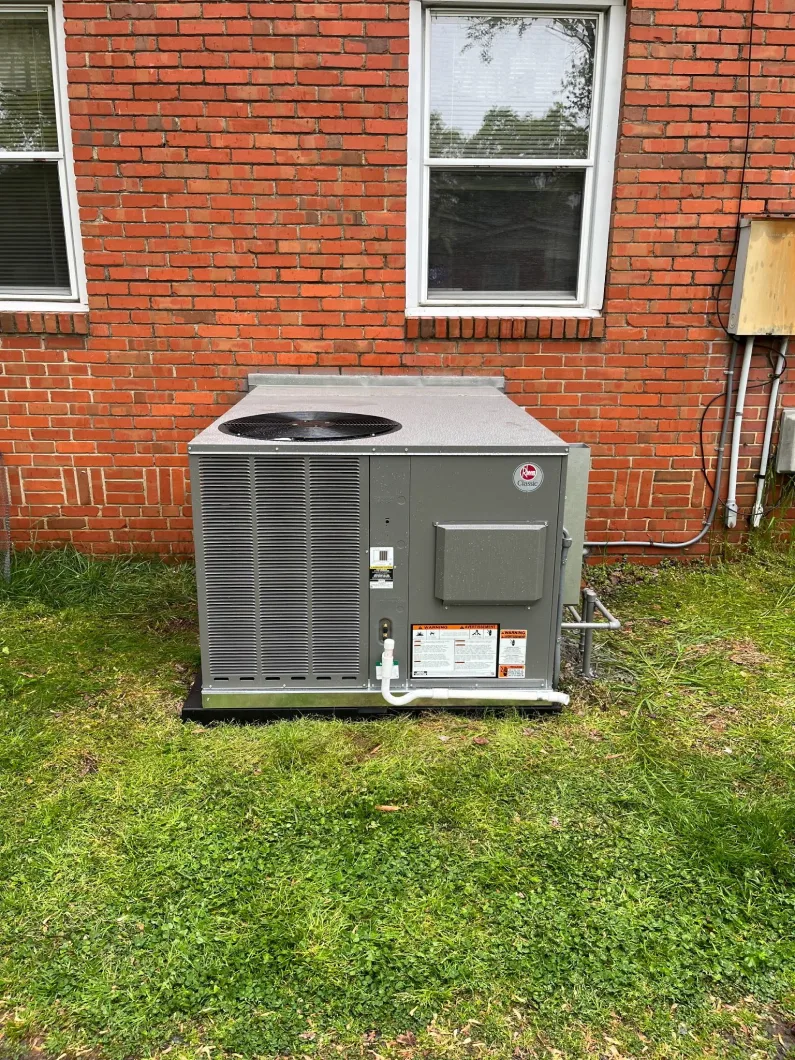
A fresh package unit against the brick.
Choosing equipment without the brochure fog
Brands we install and why
We install a lot of Rheem for its price-to-durability math in this climate, Bosch where quiet and efficiency top the wish list, and Carrier and Goodman where they fit the budget and the house. We are dealers of good equipment, not missionaries for any of it. The right answer is the system that matches your load calculation, your ductwork, and your years-in-the-house plans, and we will tell you plainly when the mid-tier option is the smart one.
Efficiency ratings deserve honest translation too. High SEER numbers pay off fastest in houses that run cooling half the year, which around here is most of them. But the jump from good to premium efficiency has a price, and we will show you the realistic payback on your usage instead of a national-average fantasy.
The add-ons worth discussing, and the ones that are not
Some options genuinely earn their line item in the Carolinas. A matched thermostat configured correctly. A surge protector for the condenser, because our summer storms are not gentle. Drain protection that shuts the system down before a clog becomes a ceiling stain. A media filter cabinet sized so it filters without strangling airflow.
Other add-ons exist mostly to pad quotes, and we skip them. If something appears on your quote, it is because we can explain in one plain sentence what it does for your specific house. Ask us to justify any line, any time. That is a standing invitation, not a dare.
The install mistakes we get called to undo
Shortcuts we find behind other companies
Condensers jammed against walls where they inhale their own exhaust. Line sets run bare through sun and shrubbery, insulation crumbled off years ago. Charge set by guesswork instead of manufacturer spec, so the system spent its whole life slightly wrong. Drains routed uphill on optimism. Returns starved to save an afternoon of duct work, leaving the blower gasping and the filter howling.
None of these show up in a sales brochure and every one of them shows up on your power bill, your comfort, and your equipment’s lifespan. They are also why two quotes for the same tonnage are not the same job. The cheapest install in the neighborhood is frequently the one we get paid to correct in year three.
Your first year with a new system
A right-sized install changes daily life in specific ways worth expecting. Longer, quieter run cycles instead of blasts, which is correct behavior and better dehumidification. Rooms that finally agree with each other. A power bill that steps down noticeably if the old system was struggling. And a first spring tune-up that matters more than people think, because it verifies the system settled into spec after a season of real use.
We schedule that first checkup with you before we leave, register the warranty so it exists when needed, and keep the commissioning numbers on file. If anything feels off in month two, you call, we come, and we make it right without a debate about whose fault it is. That is what installed by the owners actually means, and it is the part of the job no spec sheet can describe: the company that answers the phone after the check clears.
What a new AC costs, told straight
Every quote is the whole job in one written number: equipment, labor, materials, permits where required, haul-away, and commissioning. No mid-install surprises, no monthly-payment fog hiding the total, and the same price whether you pay cash, card, check, or finance through Optimus on qualifying installs. Teachers and service personnel take 10% off before any financing math happens.
The pricing visit costs nothing anywhere in our 30-mile radius, and it comes with the honest comparison: this system versus that one, repair the old unit versus replace it, now versus shoulder season. You decide with real numbers on the table, at the speed of good information, because a system you will live with for fifteen years deserves better than a decision made under a countdown timer.
Stuck between repair and replace?
Call and describe what the system is doing. We run the math at your kitchen table, in writing, and the decision stays yours.
Installation questions we hear at kitchen tables
How long does an AC installation take?
Most straightforward replacements finish in one day because the staging happened at our warehouse beforehand. Jobs that include duct corrections or electrical upgrades can stretch to two. You will know the schedule before we start, and the house is never left without cooling overnight in summer without a plan you agreed to. On install morning we confirm the arrival window, and the crew that shows up is the crew you met at the quote, which customers tell us is rarer than it should be.
Can you install in new construction or an addition?
Yes, and we like being in early. Designing the system while walls are open produces better duct routing and cleaner line set paths than any retrofit ever manages. Builders in the Fort Mill and Indian Land growth corridors keep our number for exactly this work, the warehouse duct fabrication keeps framing schedules happy, and additions often pencil out better with a ductless zone instead of stretching the main system, which we will say plainly when it is true.
What size AC does my house need?
The honest answer is that nobody can tell you without measuring, and anyone quoting tonnage from square footage alone is guessing with your money. The load calculation accounts for windows, insulation, orientation, ducts, and layout. It is part of every EZ quote, free, and it is the single step most bad installs skipped. Around here the answers surprise people constantly: shaded older houses often need less capacity than their square footage suggests, and west-facing new builds with big glass need more.
Do I need to replace my furnace at the same time?
Sometimes it saves real money, sometimes it is unnecessary. If the furnace and coil are near end of life, doing both at once avoids paying labor twice for overlapping work, and pairing matched equipment can simplify warranties. If the furnace is young and healthy, we leave it alone and say so in writing. We will show you both totals and the age math side by side, and plenty of customers hear us recommend the smaller job, which is exactly how it should work.
Will a new AC actually lower my power bill?
If your old system was aging, undersized, badly charged, or attached to leaky ducts, yes, and often noticeably, because Carolina cooling seasons give efficiency a lot of hours to pay you back. We will sketch the realistic savings from your current bills rather than quoting a brochure number, so the payback story is yours, not a national average. Customers replacing fifteen-year-old builder-grade equipment routinely report the summer bill stepping down enough to notice without squinting.
Can you work around my schedule and my dog?
Yes and yes. Install day gets planned around school runs, work calls, and the golden retriever who supervises from the window. Plenty of customers hand us a garage code and come home to cold air. Clear communication about arrival windows is a review theme for a reason, and the dog usually ends up with a new best friend.
What warranty comes with the install?
Manufacturer parts warranties, which we register for you so they actually exist when needed, plus our own workmanship standing behind the install itself. If anything about the installation is not right, we come back and make it right. The reviews describing our follow-through are the real warranty document.
Around the install decision
Installation questions usually travel with a few neighbors: whether the old system deserves one more repair, whether the ducts can carry a new system’s airflow, and whether a ductless zone solves the room central air keeps losing.
AC Repair · AC Replacement · Air Balancing · Ductless Mini Splits · Smart Thermostats
Want proof before the phone call? The gallery is all real jobs, and the financing page covers the big-ticket math.