
Chester County · The river side, where the water writes the work orders
Fort Lawn HVAC for the county’s river side
Fort Lawn holds Chester County’s eastern edge where the land runs down toward the Catawba, Fishing Creek carrying the county’s water story past the town, and the river’s big lakes just beyond. A small working town with rural roads spreading out from it, housing that spans farmhouses to manufactured homes to the occasional new build, and a moisture agenda the creek bottoms write daily: crawlspaces that hold damp longer than the uplands, humidity baselines that run higher, and mechanical systems that work the water’s atmosphere all year whether their owners think about it or not.
We serve the river side from Fort Mill down the eastern route with the rural roster loaded and the instruments that matter here most: moisture readings before moisture verdicts, veteran systems given honest keep-or-retire math, working homes of every construction served as real categories, and conversions closing their strips-and-propane arithmetic across the older stock. Flat Fort Mill prices at every address, honest windows for the river roads, and the 24/7 line covering the town without a surcharge at any hour.
The river side, mapped
Where we work
From the town’s center out along the roads that run toward the creek bottoms and the river beyond, Fort Lawn anchors the eastern side of our Chester County coverage, sharing the southwestern route with Richburg at the crossroads and Chester on its hill. The drive gets quoted honestly, the trucks stock for the countryside, and the prices never notice the odometer.
The county page carries the radius-edge story at full scale, and the Richburg and Chester pages hold the county’s other corners. This page belongs to the water side.
The short version
A working river-side town where the creek bottoms set the moisture agenda and the housing spans every construction the countryside builds, served with instruments, honest math, and flat prices that survive the whole drive east.
The water’s agenda, measured
Creek-bottom moisture, read honestly
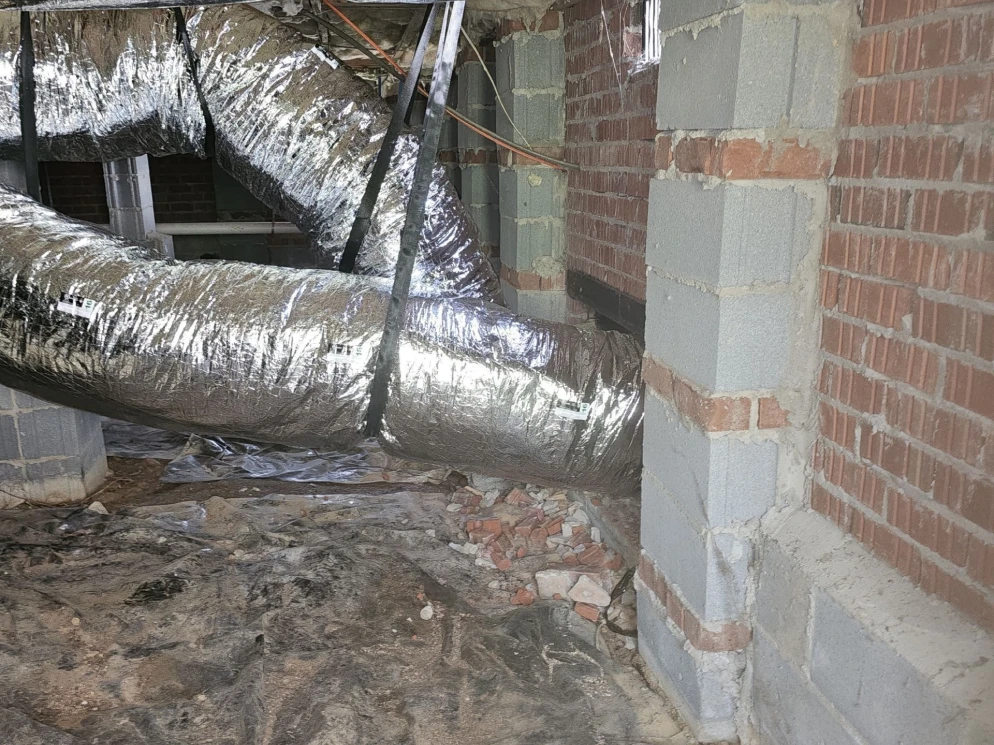
The land’s run toward the river shows up under the houses: crawlspaces in the low ground holding damp long after the uplands dry, duct insulation failing from below in the spaces nobody visits, floors cupping over the wet years, and the musty baseline that residents stop noticing until they leave town and come back. The readings-first sequence is the whole method: sources found before hardware sold, drainage and sealing where the ground demands, duct restoration up off the wet, and dehumidification only where the numbers justify the machine.
River-side crawlspace work pays the county’s best compound returns because everything upstairs depends on it: duct losses close, the baseline lifts, and the system above breathes measurably easier. The before-and-after readings make the case without a word of salesmanship, which on the county’s working side is the only pitch that lands anyway.
Humidity upstairs, all year
The creek-bottom baselines run high enough that summer humidity control is a real performance question, not a thermostat number: systems short-cycling through mild-wet days without wringing the air, window units laboring where retrofits have not reached, and the clammy-house conversation arriving on the water’s schedule each June. Right-sizing at replacement fixes the cause, dedicated dehumidification covers the gap where the readings justify it, and balancing sorts the room-to-room disagreements the long floor plans accumulate.
Winter brings the reverse question on the tightest houses, and the honest answer runs on instruments both seasons: measure first, fix the cheapest real cause, and let the numbers close the case. The water writes the agenda here; the readings are how we read it back.
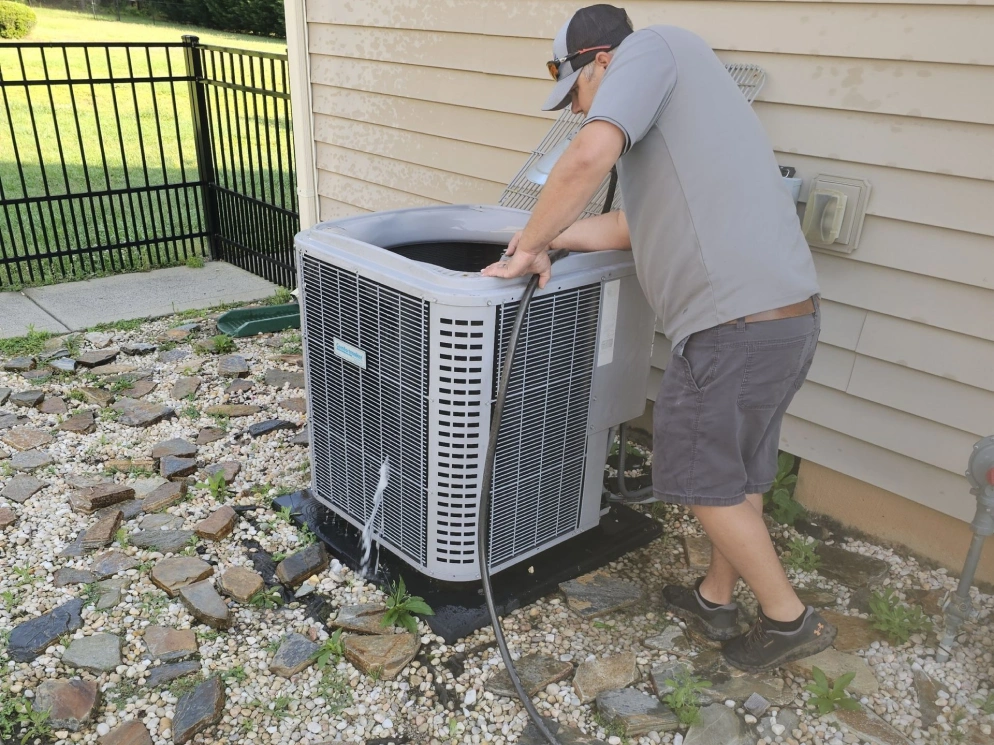
Condenser service, done properly.
Working homes, every construction
Farmhouses to manufactured, served as real categories
Fort Lawn’s stock spans the countryside’s full range: farmhouses with long mechanical histories, brick ranches on acreage, manufactured homes with package units and under-home duct logic, and the occasional newer build on subdivided land. Each construction gets served as its own real category, load calculations on the actual structure, failure patterns known per type, and replacements sized to what each home can genuinely support.
The veteran share runs high across all of them, and the honesty edition applies in full: instruments before verdicts, repairs priced beside replacements in writing, keep-alive sequencing where the budget wants it, and second opinions free wherever a drive-by condemnation has visited the river roads. The readings decide, never the calendar and never a commission.
Strips, propane, and the river-side math
The conversion arithmetic runs the county’s standard course here: strips heating the older stock at the Carolinas’ most expensive rate, propane’s delivered pricing stacking across the cold months, and a heat pump carrying the mild season stepping both down on a schedule shown in writing. Dual-fuel keeps the backup where the coldest snaps demand, and the free-visit calculator settles each house at its own kitchen table.
Financing through Optimus rides beside every replacement quote, shown honestly, and the cases where keeping what you have wins get said just as plainly, because the math is the product and the river side remembers which trades understood that. The 10% teacher and service-personnel discount works every road in town, stacked on the flat pricing rather than replacing it.
The countryside infrastructure
Wells, outbuildings, and the acreage layer
The country infrastructure layer runs its full agenda on the river side: well houses needing freeze protection that actually works through the January snaps, pump sheds with their own conditioning logic, and the outbuilding accumulation every acreage property generates, shops, barns, and project spaces, each one mini-split territory sized to real exposure and use with electrical run to code.
Rural competence is a practiced specialty rather than an improvised one: trucks stocked for the countryside’s realities, techs who read crawlspaces and well houses fluently, and honest windows for addresses the GPS debates. The difference between rural service and lost subdivision service shows up in the first ten minutes of any visit out here.
The working lane and the storm ledger
The town’s working economy, the businesses at the center, the operations along the roads, runs on our light-commercial lane at written prices with business-hour maintenance and honest scoping, small buildings served fully and big-facility logistics referred rather than fumbled. The rental stock across the working roads gets the standing portfolio model: one number, honest triage, batched maintenance, per-address records.
The river corridor’s storm cells spare nobody on the water side, and the electrical ledger runs annually: boards and contactors taken, well pumps stressed, and surge protection at the condenser earning its modest line in every quote. Post-storm checks catch the casualties early, documented properly for the insurance conversations when the hit was real.
A river-side year, in service calls
The warm half
Spring opens wet in the creek bottoms, pollen loading the coils while the crawlspace readings hit their most instructive stretch, and the maintenance batches book the eastern circuit; summer runs the cooling campaign against the water’s humidity, package units earning their calls across the manufactured stock, drain lines and float switches working overtime, window units laboring where the retrofits have not reached, and the storm cells keeping their annual ledger. Surge protection and post-storm checks earn their keep on schedule.
The maintained households watch the wet season from the comfortable side, and the dehumidification installs prove themselves in exactly the weeks their owners doubted the readings.
The cold half
First snaps examine the river side at dawn: strips meeting December pricing, propane tanks meeting winter invoices, well houses testing their freeze protection, veteran furnaces explaining skipped fall service, and the 24/7 line working the eastern shift at honestly quoted windows, vulnerable households first without exception. Fall-serviced systems show their preparation across every construction type.
Shoulder seasons belong to the planners and the crawlspaces: moisture projects sequenced while the ground allows, replacements booked calmly where the math flipped, conversions closing at kitchen tables, and the maintenance rhythm adding river-road addresses referral by referral. Then the creek bottoms green up first, as they always do, and the water side’s year restarts on its own schedule.
The Fort Lawn promise
The river side served on the water’s terms: moisture read by instrument before any verdict, every construction type treated as a real category, veteran systems given honest keep-or-retire math, conversions shown straight at the kitchen table, wells and outbuildings handled as core competence, and the storm ledger watched annually. Flat Fort Mill prices across the eastern drive with zero mileage theater, financing through Optimus shown honestly, the 10% teacher and service-personnel discount working every road, and the 24/7 line covering Fort Lawn without a surcharge at any hour.
The water writes the work orders on this side of the county, and it never takes a season off. Neither does the line that answers for it: (803) 573-2473, any hour Fort Lawn needs it.
Same crew. Same price. Any hour.
No after-dark surcharge and no phone tree. If your system cannot wait until morning, neither do we.
Fort Lawn questions, answered from the river side
Do you charge more to come out to Fort Lawn?
Never: flat Fort Mill pricing at every address, no fuel surcharges, no radius markup, and the eastern drive treated as ordinary logistics on a route that runs the county weekly anyway. The invoice from a creek-bottom road reads exactly like one from our home zip code.
Our crawlspace stays damp most of the year. Is that just life near the creek?
Common for the low ground, and fixable by sequence rather than accepted by default: readings first, sources found, drainage and sealing where the ground demands, duct restoration up off the wet, and dehumidification where the numbers justify the machine. River-side crawlspace work pays the county’s best compound returns, and the before-and-after readings make the case honestly.
Do you service manufactured homes out here?
As a practiced category, at full honesty economics: package units and their failure patterns, under-home duct runs and their moisture logic, right-sized replacements that respect the structure, written prices, and financing shown beside every quote. The river side’s working homes deserve working service, whatever their construction, and that is the model at every address.
We heat with propane and the winter bills hurt. Options?
The arithmetic usually offers one: a heat pump carrying the mild Carolina months beats propane’s delivered pricing across most of the season, with dual-fuel keeping the backup for the coldest snaps. The free visit runs your actual usage at the kitchen table, shows the payback schedule in writing, and includes the cases where staying propane-primary wins.
How fast can you reach Fort Lawn in an emergency?
The honest eastern quote: a real drive, prioritized ahead of everything routine, faster at night than daytime traffic allows, and moving the moment the call ends with the actual travel time stated. No-heat calls in winter and no-cooling calls against the summer humidity jump every queue, vulnerable households first, at the standard no-surcharge price.
Do storms really take out equipment on the river side?
Annually, on a ledger we watch: the corridor’s cells take boards, contactors, and the occasional well pump every season, and surge protection at the condenser is the cheap insurance quoted into every river-side install without embarrassment. Post-storm checks catch the casualties early, documented for the insurance conversation when the hit was real.
What do you work on most in Fort Lawn?
The water side’s catalog: crawlspace moisture work by measurement, humidity control against the creek-bottom baselines, veteran repairs and keep-alive sequencing across every construction type, strips and propane conversions closing their math, well-house and outbuilding work as core competence, and the storm ledger’s annual entries. The river writes the agenda, and the roster answers all of it.
Around Fort Lawn
The county page carries the radius-edge story, the crossroads and the hill share the southwestern route, and the services linked below are the ones the water assigns weekly: the moisture work, the conversions, and the veteran honesty.
Chester County · Richburg · Chester · Dehumidification · Heat Pumps · Furnace Repair
Want proof before the phone call? The gallery is all real jobs, and the financing page covers the big-ticket math.