
Air quality · Genuinely clean air, without choking the blower to get it
Air filtration systems that actually clean the air without strangling the system doing it
Every spring, the Carolinas turn yellow, and every house becomes a case study in what its filtration can and cannot catch. The one-inch filter slot behind most return grilles was designed to protect the equipment, never your lungs, and asking it to do both by stuffing in the densest filter on the shelf mostly succeeds at suffocating your blower.
Real filtration is a system decision: media cabinets, filter ratings, and airflow engineered together so the air gets cleaner while the equipment breathes freely. We install and service that version across both sides of the state line, sized to your system with static pressure measured rather than assumed, and priced in writing like everything else we touch.
The filtration trade-off nobody explains at the shelf
Why the densest filter is usually the wrong filter
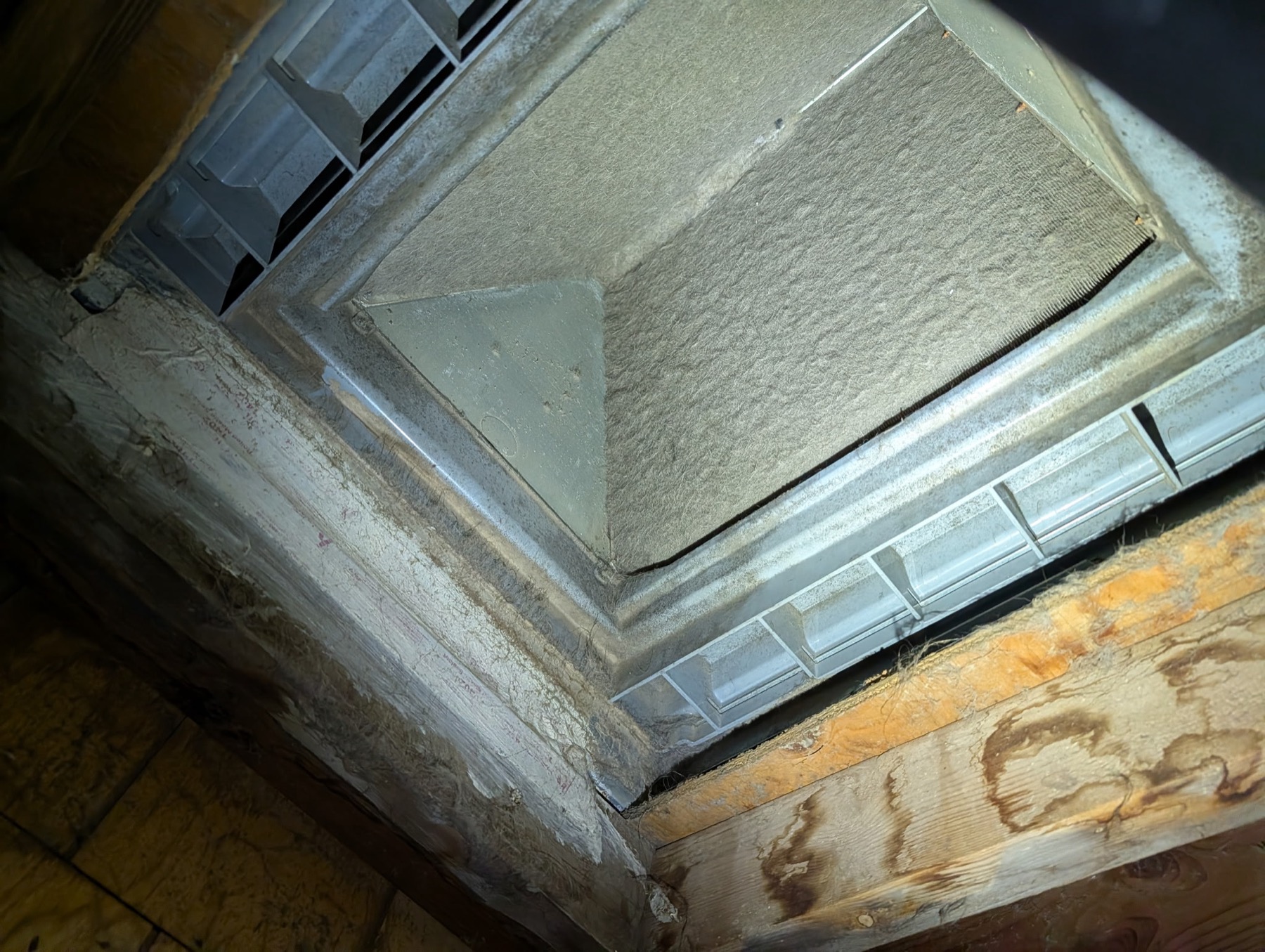
Filter ratings measure what gets caught, and the marketing stops there. The physics does not: every step up in capture density is a step up in resistance, and a one-inch slot running a high-density filter can drop system airflow enough to freeze coils in summer, overheat furnaces in winter, and grind the blower through its lifespan early. The hero photo on this page is what a coil looks like when filtration fails; the invisible version of the same story is what a blower motor endures when filtration over-succeeds in an undersized slot.
The honest fix is surface area. A four- or five-inch media cabinet holds a deeply pleated filter with several times the surface of the one-inch slot, which means high capture ratings at low resistance, six-to-twelve-month change intervals instead of monthly, and a system that breathes while the air gets genuinely cleaner. It is the single best value in residential air quality, full stop, and it is where we start most filtration conversations at most kitchen tables.
What Carolina air asks of a filter
Pollen season here is not a metaphor: for weeks each spring, everything outside wears a yellow coat, and your return duct inhales it daily. Add regional dust, pet dander in most households, and the humidity that makes settled particles cling, and the filtration load in this metro runs heavier than the national-average assumptions printed on filter packaging.
That load argues for capacity, and it also argues for honesty about goals. Protecting equipment takes modest filtration done consistently. Helping allergy and asthma households takes higher capture with the airflow math done properly. Managing odors and the finest particles crosses into purification territory, which has its own page and its own honest conversation. Naming your actual goal first is how the right hardware gets chosen instead of the loudest box.
What we install and how we verify it
Media cabinets, done as duct work
A media cabinet install is sheet metal work, and we treat it that way: the return gets opened properly, the cabinet gets fitted and sealed airtight so air cannot cheat around the filter, and the transition work comes from our warehouse fabrication habit rather than field improvisation. A cabinet that leaks around its filter is filtration theater, and the seal is where cheap installs quietly fail.
Filter access gets planned like we expect you to actually use it, because we do: a cabinet mounted where the filter slides out without gymnastics is a filter that gets changed on schedule, and one buried behind a water heater is a coil photo waiting to happen. The install finishes with the change interval written down, the spare filter size recorded, and the first replacement date on your calendar if you want it there.
Static pressure: the number that keeps it honest
Every filtration change we make gets verified by static pressure measurement, before and after, because that number is the system’s blood pressure and filtration is the easiest way to push it out of range. The reading tells us the equipment is breathing correctly with the new media in place, and it catches the pre-existing duct restrictions that a filtration upgrade would otherwise get blamed for.
This is also why our recommendation sometimes surprises people by being more modest than the competitor’s quote: if your duct system runs tight already, the honest path is fixing the restriction before adding capture density, and we will say so with the measurements visible. Clean air at healthy static pressure is the whole assignment, and both halves are measurable.
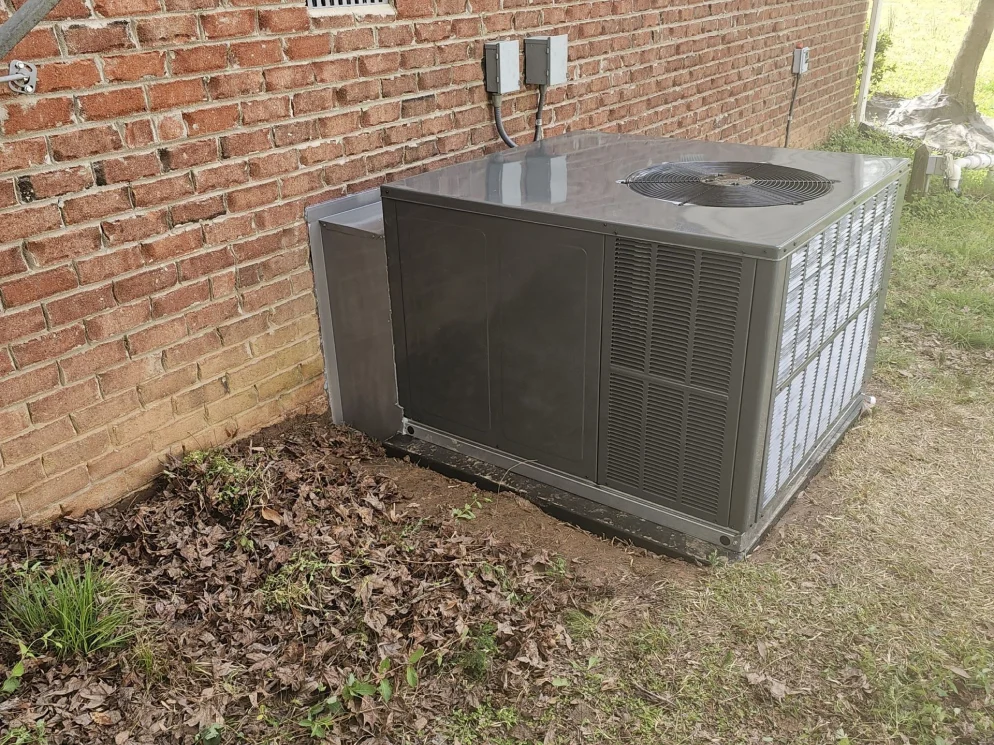
A package unit set at an older brick home.
Households where filtration earns its keep hardest
Allergy, asthma, and pet households
For allergy and asthma households, filtration is quality-of-life equipment, and the spring difference is dramatic when the system is doing its share: less pollen circulating, fewer flare mornings, windowsills that stop growing yellow dust. We pair capture ratings to the household’s actual sensitivities and the system’s actual airflow, and we will say honestly where filtration ends and purification begins for the finest triggers.
Pet households get the practical version: dander and hair load filters fast, and the one-inch slot’s monthly change becomes a two-week reality nobody sustains. Media cabinets absorb the load gracefully, and pairing the upgrade with balanced airflow means the whole house actually cycles through the filter instead of the hallway hogging the treatment while the bedrooms marinate.
Renovations, new builds, and the post-drywall year
Construction dust is filtration’s stress test: renovations and new builds shed fine drywall and wood dust into duct systems for months, and the first year in a new house is when builder-grade filtration gets found out. We see it in the coil photos constantly. A media cabinet installed at move-in, or before the renovation starts, protects the equipment through the dusty season and the family after it.
It also pairs naturally with the rest of the story: duct sealing keeps crawlspace and attic particles out of the airstream entirely, balancing distributes the filtered air where people actually live and breathe, and a smart thermostat’s runtime-based filter reminders retire the guesswork on change intervals. One system, engineered together, which is the recurring theme of this entire site for a reason.
The maintenance truth, told plainly
A filter only works until it is full
The most common filtration failure in this metro is not wrong hardware, it is a right filter left in place until it becomes a wall. A loaded filter strangles airflow exactly like an over-dense one, and the system pays the same tax: frozen coils, tripped limits, and blowers working overtime. The gallery’s dirty-coil photos are almost all downstream of this one habit gap.
The fix is boring and works: change intervals matched to your actual load, written down, and backed by either the thermostat’s runtime reminder or our maintenance rhythm, where filter checks ride along with every spring and fall visit automatically. Media cabinets stretch the interval to something humane, which is half their value, but no filter anywhere is a permanent installation, whatever its packaging implies.
What we check on a filtration service visit
The visit reads the whole capture chain: filter condition against its interval, cabinet seal integrity, static pressure against the system’s healthy range, coil cleanliness as the downstream evidence, and the return-side duct work for the leaks that let unfiltered attic or crawlspace air bypass the whole apparatus. Each finding comes with the plain-English version and a price where action makes sense.
Inherited systems get the identification treatment: what the previous owner installed, whether it ever matched the equipment, and what it costs to run correctly going forward. Half the media cabinets we service arrived with the house as mystery slots running the wrong filters, and twenty minutes of honest reading turns them back into the asset somebody once paid for.
Filtration pricing, filtered for honesty
Media cabinet installs price as one written number covering the cabinet, the sheet metal and sealing work, the first filter, and the static pressure verification. Service visits carry the same upfront-rate clarity as everything else, teachers and service personnel take 10% off, and the whole 30-mile radius pays identical rates with no zip-code theater.
If your system’s honest answer is a better change habit rather than new hardware, that is the recommendation you will get, with the interval written down and zero invoice attached to the advice. Clean air at healthy airflow is the goal, every time. The hardware is only ever the means to it.
Want a straight answer first?
Ten minutes on the phone usually tells us plenty. The visit puts real numbers on it, in writing, before any work starts.
Filtration questions from yellow-season veterans
What filter rating should I actually buy?
The highest rating your system can breathe through at healthy static pressure, which depends on slot depth, blower capacity, and duct condition, and that is why the honest answer is a measurement rather than a number recited from memory. One-inch slots have real limits; media cabinets move the whole conversation upward. We will name your system’s number after reading it, free, and it will be a number with reasoning attached.
Do media cabinet filters really last a year?
Six to twelve months in typical homes, with pets, renovations, and heavy pollen years trimming the interval honestly. The deep pleats hold multiples of a one-inch filter’s load, which is where the longevity comes from. We write your realistic interval down at install based on your household rather than the box’s marketing, and the maintenance rhythm checks it so the guessing retires.
Will better filtration help my spring allergies?
Meaningfully, when the system is engineered together: high-capture media, a sealed cabinet so air cannot bypass it, sound airflow so the whole house cycles through the filter, and closed windows during peak pollen. Filtration handles the pollen-sized world well. The finest triggers and odors belong to purification, and we will draw that line honestly for your household instead of overselling either box.
Why does my current filter turn black in weeks?
Heavy load or bypass air. Pets, candles, renovation dust, and crawlspace leaks pulling unfiltered air into the return all accelerate loading, and a filter blackening in weeks is data worth diagnosing rather than just replacing faster. The visit reads the source: sometimes the answer is capacity, and sometimes it is a duct leak feeding the system dirt from under the house.
Can you add a media cabinet to any system?
Most, honestly. The return-side geometry decides the fit, and tight closets occasionally demand creative sheet metal, which is conveniently a thing our warehouse does well. Where a cabinet genuinely cannot fit, we will say so and name the best achievable alternative rather than forcing hardware into a space that will fight it forever.
Is duct cleaning part of filtration?
Adjacent, and occasionally justified, but filtration and duct sealing usually deserve the money first: a sealed, well-filtered system stops recontaminating itself, while cleaning without fixing capture is renting cleanliness. When cleaning is genuinely warranted, post-renovation debris or evidence of real contamination, we will say so plainly. When it is being sold to you as a cure-all, bring us the quote and we will translate it.
What does the dirty coil in your photo have to do with my filter?
Everything. The coil is what catches whatever the filter misses or bypasses, and a loaded coil taxes cooling capacity, humidity removal, and power bills simultaneously. That photo is the downstream evidence of upstream filtration failure, and it is why we talk about cabinets, seals, and change intervals with such enthusiasm. Keep the filter honest and the coil stays boring, which is the entire goal of this page in one sentence.
Clean air’s neighbors
Filtration handles the particle world you can almost see. The finer story, the moisture story, and the airflow that carries all of it live next door.
Air Purification · Air Balancing · Dehumidifier Services · Furnace Tune-Up · Smart Thermostats
Want proof before the phone call? The gallery is all real jobs, and the financing page covers the big-ticket math.