
York County · The Brattonsville orbit, where the county keeps its oldest stories
McConnells HVAC where the county keeps its oldest houses
McConnells sits in the part of York County that history chose to keep: Historic Brattonsville just down the road with its preserved plantation buildings, farmhouses across the surrounding countryside that have watched two centuries of the county’s weather, and a tiny town center serving a community that measures its tenure in generations. The housing out here runs old in the truest sense, hand-built frames with their original proportions, crawlspaces dug when shovels did the digging, and mechanical retrofits layered across every era since electricity arrived.
Serving houses like these is patient work by definition, and we drive the southwestern roads from Fort Mill to do exactly that: ductless retrofits routed to spare walls that predate ductwork by a century, equipment sized to volumes no builder’s chart anticipates, crawlspace moisture read by instrument under floors that have earned careful treatment, and veteran systems given honest keep-or-retire math at kitchen tables that have hosted a lot of honest math over the years. Flat Fort Mill prices on every road, and the 24/7 line covers the countryside without a surcharge at any hour.

The old country, mapped
Where we work
From the town center out across the countryside that surrounds Brattonsville, along the roads where the county’s oldest houses keep their tenure, McConnells sits on our southwestern circuit between York and the western towns. The drive gets quoted honestly, the trucks carry the retrofit stock, and the prices never notice the odometer.
The county page holds the home-county story, York carries the historic-district craft in town form, and Sharon and Hickory Grove share the western roads. This page belongs to the old country itself.
The short version
The county’s oldest houses served with the patience they have earned: retrofits that spare the original walls, equipment sized to hand-built volumes, moisture read by instrument under old floors, and veteran systems given the honest math their kitchen tables expect. History kept the houses; the service should keep the standard.
Old farmhouses, retrofitted properly
Walls that predate the trade
The farmhouses of the Brattonsville orbit were framed before ductwork existed as an idea, and retrofitting them is the craft at its most careful: ductless zones routed through closets and chases rather than through hand-plastered walls, line sets placed where two centuries of proportion cannot be offended, compact equipment sized to the real volumes of rooms built for wood heat, and every penetration planned twice before it happens once.
The window-unit retirement runs house by house out here, one ductless zone at a time at each household’s pace: quieter rooms, humidity actually controlled, power bills stepping down, and windows that open again on evenings that deserve it. The sequence can pause between steps for as long as a budget needs, which is the only pace old houses and their owners respect anyway.
The additive centuries, unwound by measurement
Two centuries of ownership write two centuries of additions: kitchens extended, porches enclosed, second stories finished, and heating improvised across every era, wood to coal to oil to strips to whatever the last contractor left. The balancing craft unwinds the layers by instrument, room-to-room disagreements named by measurement and corrected cheapest-first, dampers and returns before anyone discusses equipment.
Where systems do get replaced, the load calculation happens on the actual house, hand-built volumes, real exposures, the additions counted honestly, because no builder’s chart anticipates a farmhouse that grew for six generations. Right-sizing out here is archaeology plus arithmetic, and we enjoy both halves of the job.
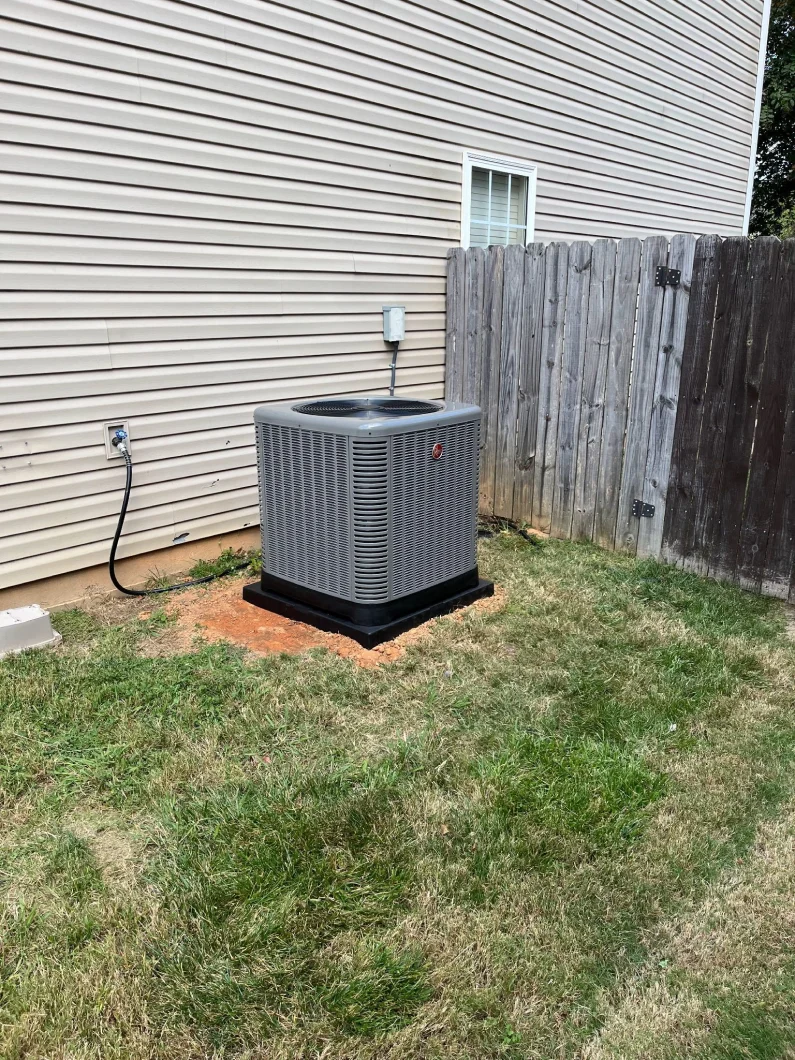
A Rheem condenser, installed and running.
Under the old floors
Crawlspaces with two centuries of history
The crawlspaces under the old stock were dug when shovels did the digging, and they hold the countryside’s moisture agenda with interest: damp lingering after rains, duct insulation failing from below where ducts were ever added, original floor framing that has earned careful treatment, and the musty baseline generations stop noticing. The readings-first sequence applies with extra patience: sources found, drainage and sealing where the old ground demands, restoration up off the wet, and dehumidification where the numbers justify.
Moisture work under a two-century floor pays compound returns because everything above depends on it: boards stop cupping, the baseline lifts, duct losses close, and the house breathes the way its builders assumed it always would. The before-and-after readings make the case honestly, which is the only pitch this countryside has ever respected.
Veterans, wells, and the country layer
The mechanical stock skews veteran across the orbit, and the standing honesty applies in full: instruments before verdicts, repairs priced beside replacements in writing, keep-alive sequencing where the budget wants it, and second opinions free wherever a drive-by condemnation has visited the old roads. Genuine extra seasons get earned wherever the readings support them.
The country infrastructure layer runs its full agenda: well houses needing real freeze protection, outbuildings and barns wanting conditioning sized to their use, and the strips-and-propane arithmetic closing its conversions at kitchen tables that have hosted generations of careful decisions. Rural competence practiced on purpose, at flat prices that survive every mile of the drive.
The orbit’s particular calendar
History’s neighborhood, served quietly
Living beside a landmark shapes a community’s rhythms, Brattonsville’s events pulling traffic down the old roads on their calendar, and the countryside around it keeping its own: planting and harvest on the working land, family land passing between generations with houses attached, and renovation decisions made carefully because the houses deserve them. The mechanical service fits itself to those rhythms rather than imposing its own.
Renovations on the old stock get the coordinated treatment: rough-ins sequenced with the trades, mechanical decisions made at the drawing stage where they cost markers instead of change orders, and documentation kept for houses whose histories genuinely matter. The orbit’s houses are heirlooms with plumbing, and the mechanical work should be specified like it knows that.
The working lane, orbit edition
The community’s working economy runs modest and real: the operations along the roads, the businesses serving the countryside, and the agricultural infrastructure the working land still employs, all on our light-commercial lane at written prices with honest scoping and maintenance scheduled around actual working hours.
The manufactured stock scattered across the orbit gets served as a real category, package units, under-home ducts, right-sized replacements, and every construction on every road gets the same flat pricing and the same instruments. The old country holds every kind of home the county has ever built, and the roster serves all of them without sorting them by age or price.
An old-country year, in service calls
The warm half
Spring opens wet under the old floors, the crawlspace readings at their most instructive while the pollen loads every coil on the southwestern roads, and the maintenance batch books its circuit; summer runs the cooling campaign across the veteran fleet, window units laboring where the retrofits have not yet reached, ductless zones proving themselves in the rooms that got theirs, and the storm cells taking their toll of boards and well pumps across the countryside. Surge protection earns its line in every rural quote.
The maintained houses watch the humid months from the comfortable side, and the orbit’s renovation projects run their coordinated rough-ins while the weather allows the walls open.
The cold half
First snaps examine the old stock at dawn, and the countryside’s preparation shows street by street: fall-serviced veterans performing, strips meeting December pricing where conversions have not reached, well houses testing their protection, and the 24/7 line working the southwestern shift at honest windows, vulnerable households first without exception. The old houses hold their heat the way their builders planned, when the systems underneath them are kept honest.
Shoulder seasons belong to the patient work: retrofit zones added at each household’s pace, moisture projects sequenced while the ground allows, repairs sequenced so money counts twice, and the occasional replacement calculated on a house that took six generations to reach its current shape. Then spring returns to the old country first, as it always has, and the orbit’s year restarts.
The McConnells promise
The county’s oldest houses served with the patience they earned: retrofits that spare the original walls, load calculations that count two centuries of additions honestly, crawlspace moisture read by instrument under floors that deserve it, veteran systems given honest keep-or-retire math, wells and outbuildings handled as core competence, and every price in writing at kitchen tables that expect exactly that. Flat Fort Mill prices across the southwestern roads with zero mileage theater, financing through Optimus shown honestly, the 10% teacher and service-personnel discount working the whole orbit, and the 24/7 line covering McConnells without a surcharge at any hour.
History kept these houses standing for two centuries. The mechanical service should be specified like it plans to help with the third: (803) 573-2473, any hour McConnells needs it.
Want a straight answer first?
Ten minutes on the phone usually tells us plenty. The visit puts real numbers on it, in writing, before any work starts.
McConnells questions, answered from the old country
Can you retrofit our old farmhouse without tearing it up?
That is the specific craft we drive the southwestern roads for: ductless zones routed through closets and chases rather than hand-plastered walls, line sets placed where the proportions cannot be offended, compact equipment sized to rooms built for wood heat, and every penetration planned twice before it happens once. Old houses reward patience, and patience is the only version we practice on them.
Our crawlspace has been damp as long as anyone remembers. Is that fixable?
Fixable by sequence, not by acceptance: readings first, sources found, drainage and sealing where the old ground demands, duct restoration up off the wet, and dehumidification where the numbers justify. Moisture work under a two-century floor pays the countryside’s best compound returns, and the before-and-after readings make the case without salesmanship.
Do you charge more for the drive out here?
Never: flat Fort Mill pricing at every address on the old roads, no fuel surcharges, no radius markup. The southwestern circuit runs weekly regardless, and the invoice from a farmhouse driveway reads exactly like one from our home zip code.
Our system is old but the house is older. Keep or replace?
The instruments decide: veteran equipment that was installed well earns genuine extra seasons, and the orbit keeps plenty running on exactly that math. Both paths get priced in writing, the load calculation counts the house’s real history when replacement wins, and if another company already condemned the system, the second opinion rides out free.
Can you work with our renovation contractor?
From the drawing stage, ideally: rough-ins sequenced with the trades, mechanical decisions made where they cost markers instead of change orders, and documentation kept properly for houses whose histories matter. The orbit’s renovations deserve coordinated mechanical work, and the contractors who have sequenced with us keep our number.
How fast can you reach McConnells in an emergency?
The honest southwestern quote: a real drive, prioritized ahead of everything routine, faster at night than by day, and moving the moment the call ends with the actual time stated. No-heat calls in the old stock jump every queue, vulnerable households first, at the standard no-surcharge price.
Do you handle wells, outbuildings, and the farm side too?
As core competence: freeze protection that actually works, pump-shed logic, barns and shops conditioned to their real use with mini-splits sized honestly, and the strips-and-propane arithmetic run straight at the kitchen table. The country layer is half the southwestern calendar, and we built the trucks for it.
What do you work on most in McConnells?
The old-country catalog: patient ductless retrofits across the farmhouse stock, crawlspace moisture by instrument under the old floors, veteran repairs and keep-alive sequencing, balancing that unwinds the additive centuries, wells and outbuildings as core competence, and renovation coordination on the houses that deserve it. History kept the houses, and the roster keeps the standard.
Around McConnells
The county page carries the home-county story, York holds the historic craft in town form, the western neighbors share the roads, and the services linked below are the ones the old country assigns weekly.
York County · York · Sharon · Mini-Splits · Dehumidification · Air Balancing
Want proof before the phone call? The gallery is all real jobs, and the financing page covers the big-ticket math.