
Tega Cay · One room, its own weather
The lake-facing room that never keeps up, finally solved
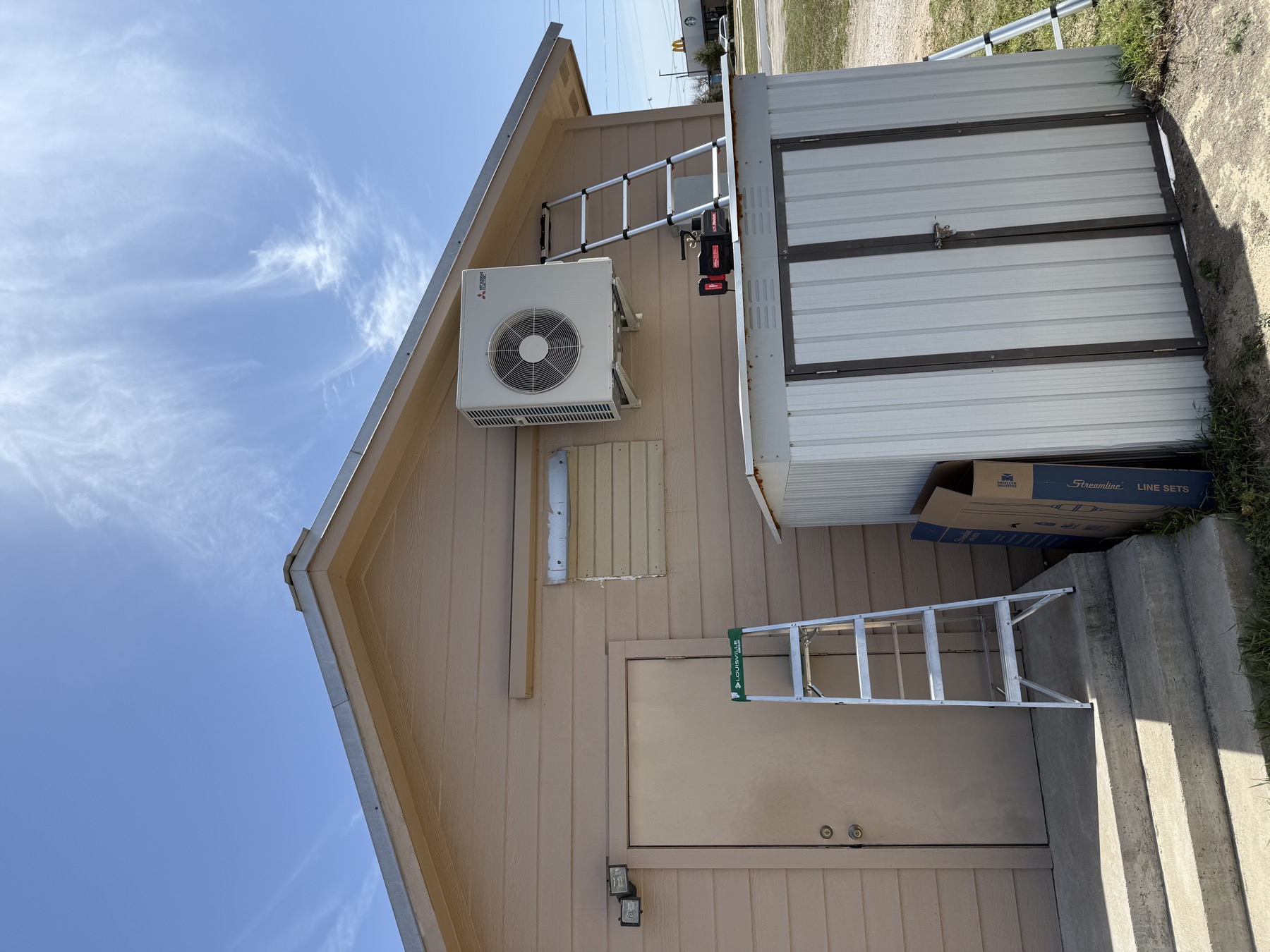
A ductless mini split is a heat pump without ducts. One slim outdoor unit, one or more indoor heads, and a refrigerant line set running between them through a small cored opening in the wall. Each head carries its own room on its own control, which is why it answers the question the peninsula keeps asking us: why is this one room always losing when the rest of the house is fine.
On a peninsula where the water raises the moisture baseline and the sunniest rooms face straight at it, that question usually has the same shape. The sunroom cooks. The bonus room over the garage runs eight degrees behind. The addition off the back never got its own capacity. Below is what ductless actually fixes here, where it is the wrong answer, and how we place the equipment on a lakeside lot. The ductless overview covers the equipment side in more depth.
Glass, water, and afternoon sun in one room
Sunrooms and screened porches with a view
A room built to look at the lake is a room built out of glass, and glass is the worst insulator in the house by a wide margin. It gains heat all afternoon, gives it back all night, and it does both faster than the rest of the structure the central system was sized around. Then there is orientation: the reason the room exists is the water, so it faces the water, which usually means it faces the sun for the part of the day that matters most.
The central system almost never wins that fight. Its thermostat lives in a hallway that feels nothing the sunroom feels, and the duct run out to that room, if there is one at all, is the longest in the system. Owners try closing registers elsewhere, adding fans, or dropping the whole house four degrees to make one room bearable. All three are expensive ways to lose.
Additions that grew past the equipment
The other version is a room added after the fact. A porch closed in, a den bumped out toward the water, a garage finished into something useful.
Where a head earns its keep on this peninsula
Bonus rooms over garages
The town’s housing generation came with a bonus room over the garage as near standard equipment, and it is the single most common ductless job on our Tega Cay route sheet. The room sits above an unconditioned garage, it has knee walls with attic on the other side, and it is fed by the longest branch in the duct system. By the time that air arrives in July, the coil’s work is mostly spent.
The instinct is to add another supply register upstairs. That usually makes the whole house worse: the blower moves a fixed amount of air, so every cubic foot pushed toward the far room gets pulled from somewhere else. The result is a marginally better bonus room and two bedrooms that used to be fine.
Garages, shops, and the room with its own schedule
Some spaces should never share a thermostat with the house at all. A garage gym, a workshop, a home office over the garage. The load has nothing to do with the rest of the house, and neither does the schedule. Somebody wants that room at seventy two on a Saturday morning and does not care what it does Tuesday afternoon. One head on its own control does exactly that and costs almost nothing the rest of the week.
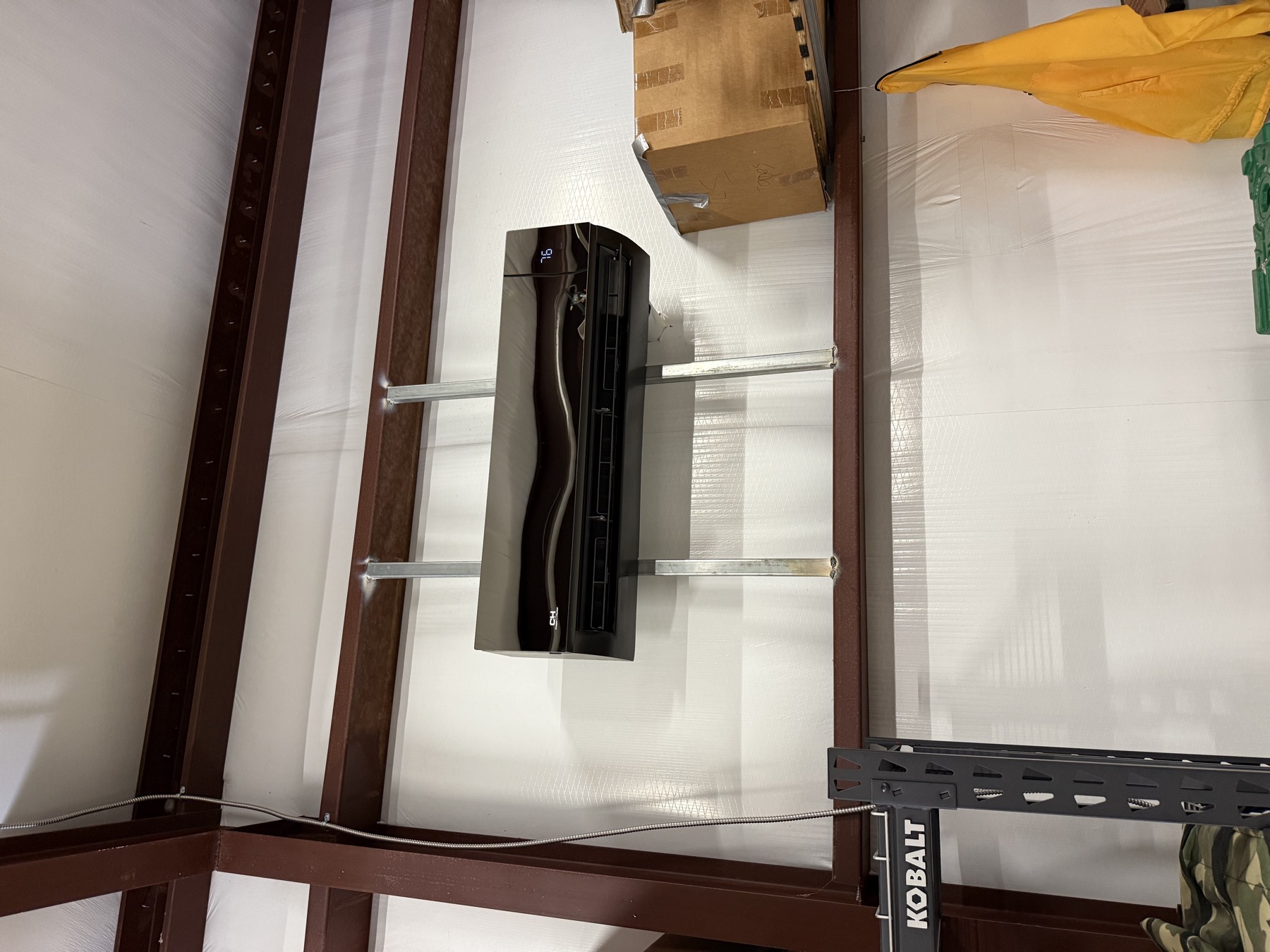
A ductless head in a shop, set high and out of the way.
Why moisture is the argument here, not temperature
The sticky-at-seventy-two problem
The Tega Cay page makes the point across the whole town and it is worth repeating on a room-by-room basis: the lake raises the moisture baseline measurably, and the thing an oversized system does badly is run at part load. It satisfies the thermostat quickly, shuts off, and never runs long enough to pull real moisture out of the air. The number on the wall says seventy two. The room still feels damp.
What happens next is the expensive part. The owner treats a humidity problem with temperature, drops the setpoint, and the house gets colder and clammier at once while the power bill climbs.
Long cycles are what actually dry a room
An inverter driven ductless head ramps down instead of shutting off. It runs long, low speed cycles, and long cycles are what remove moisture. Most units also have a dry mode that prioritizes humidity over temperature for the stretches in August when that is the whole battle. This is why a sunroom that was unusable by two in the afternoon frequently ends up the most comfortable space in the house afterward.
It is also why sizing decides everything. Oversize a mini split and you hand back the advantage you paid for, because a head that is too big short cycles exactly the way a too-big central system does. We size from the room’s real load, its glass area, its insulation, and where the sun actually lands. If the room is damp because something underneath it is damp, we will say so, and whole-home dehumidification is the more honest answer.
One outdoor unit or several, and where it goes on a lake lot
Single zone against multi zone
Single zone pairs one outdoor unit with one head. It is the simplest version of this equipment and the most forgiving. Multi zone runs several heads from one outdoor unit, which saves wall space outside and usually costs less than separate systems. The honest tradeoff is that those heads share a compressor, so they share its condition: if the outdoor unit stops, every room it feeds stops on the same afternoon.
For a house with three or four rooms to solve, multi zone is usually right. For one sunroom, one shop, or one bonus room, a dedicated system is almost always the better buy. We price both at the free pricing visit and let the numbers argue.
Placement, penetrations, and drainage
Where the outdoor unit sits matters more on a lakeside lot than most people expect. We keep units out of roof runoff and mud splash, on a pad or on wall brackets where the grade will not cooperate, and clear of the landscaping that grows enthusiastically here. A unit boxed in by shrubs works harder every cycle.
The wall opening gets cored, sleeved, pitched toward the outside, and sealed on both faces. Condensate leaves through a drain that genuinely drains. The gallery is all real jobs if you want the standard before you call.
Not sure ductless is the right call?
Tell us which room is losing and what the rest of the house is doing. We will say plainly whether a head fixes it or whether the problem lives somewhere else.
What separates a good install from one that ages badly
You can read a bad one from the driveway. Line set taped rather than covered and chalking in the sun, an outdoor unit parked in the drip line so the coil eats roof grit all winter, condensate staining down the siding, a penetration foamed instead of sleeved. Inside, the head runs but the room never quite arrives, because the charge was set by feel instead of weighed in and the line was never properly evacuated before startup.
None of that is visible at the handshake. It shows up in the second summer, and correcting it then costs close to what doing it right once would have. We commission with instruments, write down what we set, and leave the paperwork with you. Every price goes out in writing, and if ductless is the wrong answer for your room we will say so before you have spent a dollar, including when the real fix is repairing the system you already have.
What Tega Cay owners ask us about ductless
Will one head really handle a sunroom in August?
If it is sized for that room, yes. The reason sunrooms defeat central systems is that they are mostly glass with an exposure the hallway thermostat never feels, not that the heat is impossible. A head sized from the actual glass area, insulation and sun exposure carries the room, and the long low speed cycles pull the moisture out at the same time. Sizing it from square footage alone is how these jobs disappoint people.
Does a mini split heat through a Carolina winter?
Comfortably. Our winters sit mostly in the thirties and forties, which is squarely inside where this equipment is efficient, and cold weather models keep producing useful heat well below freezing for the snaps. For a bonus room, a sunroom, a shop or an addition, one properly sized head carries the whole season without a backup heater running alongside it.
Does living near the lake change anything about the install?
Mostly placement and drainage. Higher moisture means condensate systems work harder and drains matter more, so the drain has to actually drain and not dump against the foundation. The outdoor unit goes clear of roof runoff and clear of landscaping that will close in around it. The equipment itself is the same equipment we install a mile inland; the care in siting it is what changes.
Can one outdoor unit cover my whole house?
Sometimes, though it is rarely the best value in a house that already has decent ductwork. Whole house ductless means four or five heads, and by then a central replacement usually serves the same square footage for less. Ductless earns its keep in the rooms ducts cannot reach properly. We will tell you which case your house is before anyone starts drilling.
Where does the indoor head have to be mounted?
High on an exterior wall in most installs, with a clear throw into the room and a straight path for the line set behind it. Ceiling cassettes and slim concealed units exist for rooms where a wall head will not work or will not look right. Placement is the biggest single factor in whether the room feels correct afterward, so we walk it with you instead of choosing a wall on our own.
Will our HOA have an opinion about the outdoor unit?
Possibly, and it is a normal conversation. The peninsula’s communities have their guidelines, modern equipment runs quiet, and screening, setbacks and noise questions all get settled at the placement walk before anything is drilled. That is when those conversations belong, not after the pad is poured.
How long does the install take, and how loud is it?
A single zone job typically wraps in one day including commissioning and cleanup. Multi zone runs one to two days depending on head count and routing. Indoor heads are quiet enough that people regularly do not believe the system is running, and the outdoor unit is a low hum you stop noticing from inside the house within a week.
Ductless work around the peninsula
Related pages, plus the neighbors a ductless decision usually touches.
The other Tega Cay pages cover heat pumps, furnace repair and emergency service.
We cover the rest of York County from the same trucks, and the Tega Cay page lists everything we handle on the peninsula.