
Heating
A furnace you choose in October beats one you settle for at dawn
The first hard morning of the season is when veteran furnaces quit, usually before sunrise and usually all over town in the same week. A replacement decided under those conditions gets decided in a hurry. We would rather meet you in the shoulder weeks, read the old furnace with instruments, and hand you an honest number while there is still time to think it over.
Zach and Eric Massey run this family crew, with 25 years in the trade behind them. If the old furnace gives out before we get there, the 24/7 line picks up at the standard rate, with no added fee for the hour.
Why the first snap empties the furnace queue
Weak parts wait for the coldest morning
A furnace that limped through last spring can sit idle all summer and seem perfectly fine. Then real cold arrives, the system runs long cycles for the first time in months, and whatever was marginal gives up: an igniter, an inducer motor, a flame sensor, a pressure switch, or a heat exchanger that finally trips a safety. York runs a lot of veteran equipment, so those failures pile up on the same few mornings.
Those are hard mornings to shop for heat. The house is cold, the kids need to get to school, and every heating company in the county is juggling the same calls at once.
Booking in the shoulder weeks
Replacing a furnace between seasons changes the whole experience. You have room to compare options and ask questions, the install lands on a day that suits your week, and the old furnace keeps running while you make up your mind. If it turns out the old unit has good years left, the visit cost you nothing and you sleep better in December.
Owners who have kept a service history, sometimes penciled inside the cabinet door by somebody long retired, save us real time. Bring it out to the kitchen table. Five minutes of that history often tells us more than an hour of testing would.
Hallway closets, platforms, and the inches that matter
Fitting a furnace where the old one stood
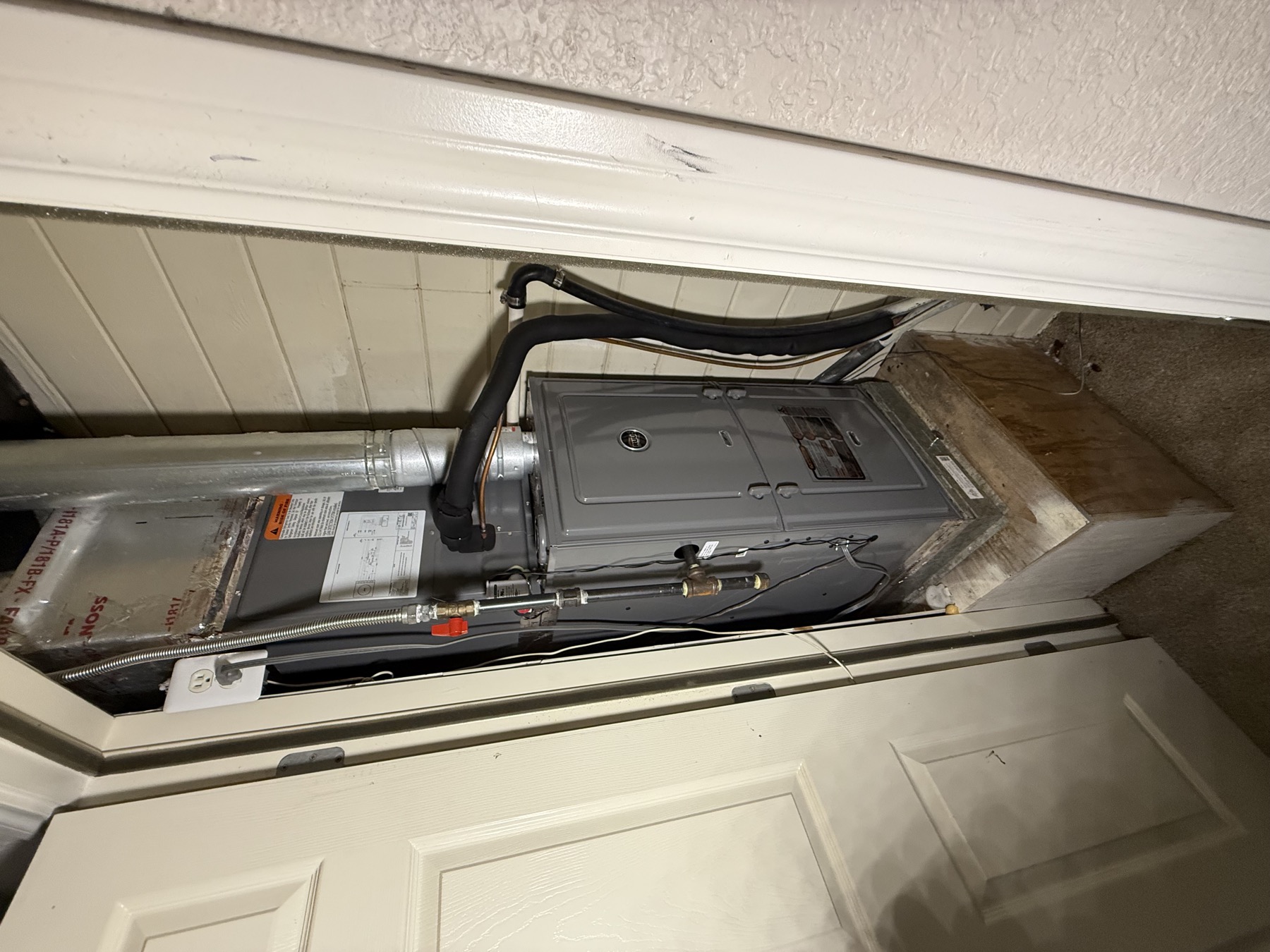
Many older homes keep the furnace in a hallway closet, and those closets were never framed with modern equipment in mind. A new furnace may be taller or wider than the one coming out, the platform under it may be tired, and the door still has to close afterward. We measure the closet before we pick a model, then build or repair the platform so the new unit sits level and solid.
Clearances get checked against the manufacturer’s requirements, including service access on the front. A furnace nobody can reach is a furnace that stops getting maintained, and that shortens its life by years.
Some furnaces in town stand in attics instead, where the platform, a clear path for service, and a drain pan under the coil carry the same weight that closet clearances do downstairs. We plan those the same way, starting with a tape measure.
Venting and gas, checked twice
The vent pipe rising off the top of a gas furnace carries combustion gases out of the house, which makes it the most serious pipe in the closet. When equipment changes, the venting often has to change with it in size, material, or pitch. We do not reuse a vent that does not suit the new furnace. The gas line gets the same care: a proper shutoff, sound connections, and a leak test before the burners ever light.
Then we run the furnace through full heating cycles and take combustion and temperature readings with you standing there. That way the first cold night of winter is never its first real test.
Gas or heat pump where the main never reached
Out on the farm roads and along parts of the town’s newer edges, natural gas was never piped in. Replacing like for like is a habit there, and sometimes a poor one. A modern heat pump carries most of a Carolina winter efficiently and cools the house all summer from the same equipment, while a furnace still earns its place for a household that wants strong, fast heat on the coldest nights.
We lay the options side by side with what each one would cost to run in your particular house, and we say so when a heat pump with a furnace as its backup makes more sense than either alone. On those properties the conversation starts with what fuel actually reaches the house. The furnace installation overview lays out how we handle replacements across the whole service area, and the questions on that page apply here too.
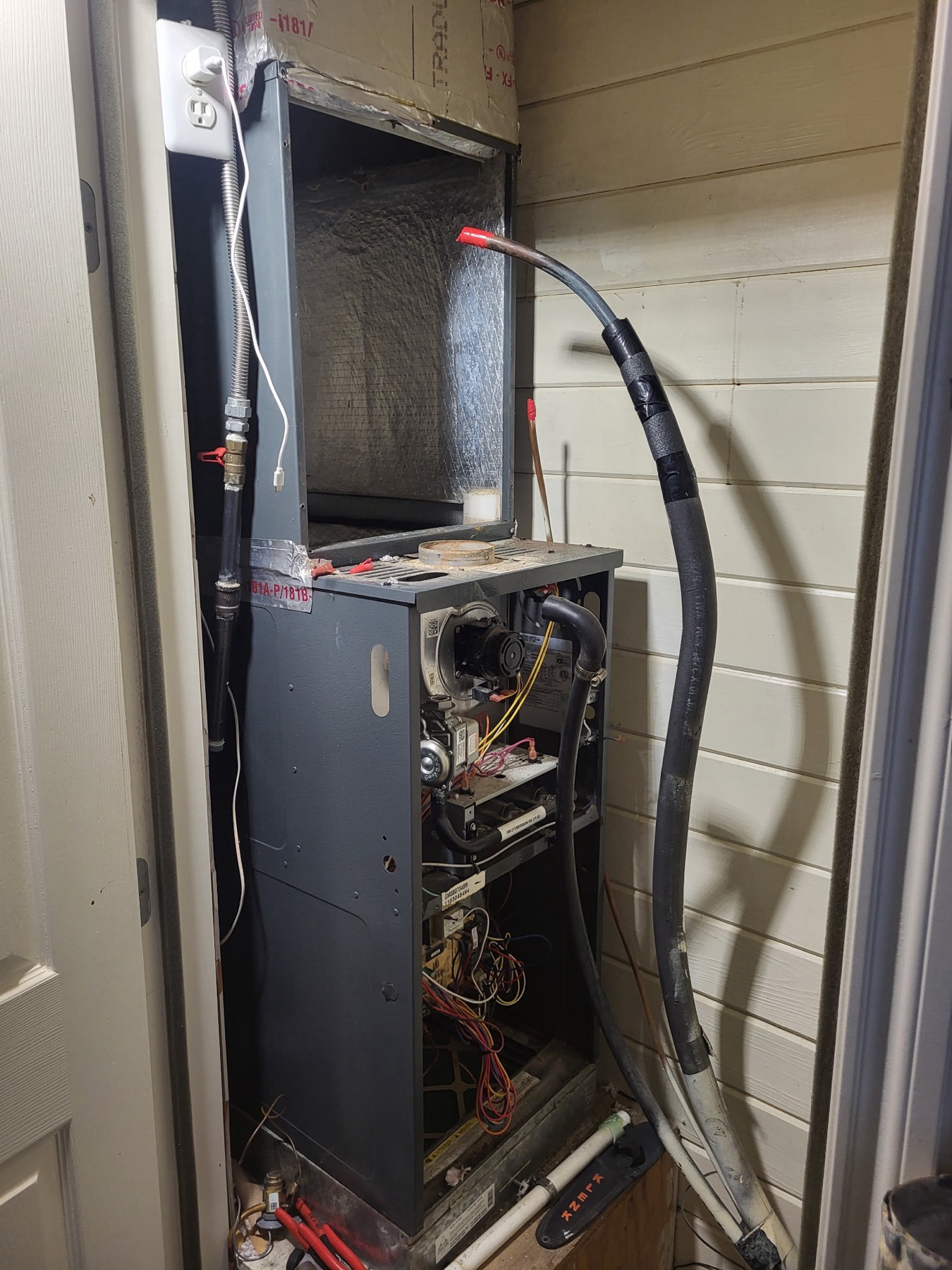
Panels off, burners and control wiring in plain view: the middle of a hallway closet changeout, when the gas line and venting get their second look.
Second opinions on a condemned furnace
Instruments before verdicts
Old furnaces attract sales scripts. A technician reads the age off the data plate, mentions a crack nobody can actually show you, and writes up a full replacement. Sometimes that verdict is right. Often enough, the real fault is a dirty flame sensor, a failed pressure switch, or a control board, and the furnace has plenty of honest service left in it.
A second opinion from us is free. We test the components, inspect the heat exchanger wherever it can be reached, and walk you through what we found. If the first company had it right, we tell you so plainly and price the replacement on the same visit.
When replacement is the right answer
A cracked heat exchanger, combustion readings that will not settle, or a furnace that has needed three major parts in two winters are the usual reasons we recommend replacing. Even then we price whatever repair is possible beside the new unit, so you can see for yourself why spending on the old one would be throwing good money after bad.
The replacement then runs on the discipline we use everywhere: fittings and parts staged in our warehouse ahead of time, and most changeouts finished in a single day. You go to bed the night of the install with heat.
What a new furnace inherits from decades of remodeling
Ductwork with a history
A furnace pushes air through whatever duct system the house happens to have, and in York that system often reflects the ideas of several owners. Rooms were added, walls moved, and a run got tacked onto the nearest trunk. The old furnace may have been fighting that layout for twenty years. A new one with a stronger or variable-speed blower can smooth some of it out and expose the rest.
We measure static pressure and airflow at the install and balance the system so heat actually reaches the far bedrooms. Where a section is crushed or undersized, its replacement gets fabricated at our Fort Mill shop.
Return air is the usual weak spot. A house that was opened up or extended over the years often ends up with one small grille feeding a furnace sized for far more, and a new blower starved of return air runs loud and wears early. Adding or enlarging a return is often the cheapest improvement on the whole job.
Matching heat to the cooling side
A furnace usually shares its cabinet stack with the air conditioning coil, and the two have to suit each other. If your air conditioner is close to retirement, replacing both on one visit often saves a second disruption. If it still has years, we match the new furnace to it. Our York AC installation page covers the cooling side of that decision.
Controls deserve a look too. A modern furnace can stage its heat in steps, and an old thermostat may not know how to ask for anything but full blast. That conversation lives on our smart thermostat page for York.
Beat the cold-morning rush
Book a free pricing visit while the furnace still runs. We read it with instruments and leave you a written answer, repair or replace, with the reasons attached.
Furnace questions we hear around town
When is the best time to replace a furnace?
Between seasons, while the old one still runs. Fall and spring give you time to weigh the options, schedule the work on a day that suits you, and stay clear of the rush that follows the first hard freeze. If your furnace is old and acting up, a pricing visit in October is free and takes the pressure off January.
Will a new furnace fit in my hallway closet?
Usually, with some planning. We measure the closet, the door opening, and the platform before choosing a model, then confirm the clearances the manufacturer requires, including room to service it. Sometimes the platform needs rebuilding or the venting needs a new route. You hear about any of that at the pricing visit, before a furnace is ordered.
We do not have natural gas. What are our options?
A heat pump is the usual answer, often with electric backup heat for the coldest nights. Some households pair a heat pump with a furnace burning a delivered fuel. We compare how each option would perform and what each would cost to operate in your specific house, then recommend one and explain why we landed there.
Another company said my heat exchanger is cracked. Can you check it?
Yes, at no charge. We inspect what can be reached, take combustion readings, and show you what we see. A genuine crack is a safety problem and we will say so without hedging. If the evidence is thin, we test the rest of the furnace and price whatever repair it actually needs, in writing.
Do you replace the ductwork when you replace the furnace?
Only where it needs replacing. We measure airflow and static pressure during the install. Sections that are crushed, undersized, or leaking get rebuilt from site measurements, fabricated on our warehouse bench, and installed that same day. Ductwork that tests sound stays right where it is, and you are not billed for any of it.
My furnace quit in the middle of the night. Do you charge more after hours?
No. The 24/7 line runs at our normal rate, so a call at five in the morning on the coldest day of the year costs what a weekday appointment does. Everybody gets an honest arrival window.
Can I spread out the cost of a new furnace?
Yes. We offer Optimus financing on replacements, and teachers and service personnel receive ten percent off. Both get covered at the pricing visit and folded into the written number, so the figure on the page is the one you agree to before any work begins.
More of the York household
Heat covers one season of a house. Ductless zones, humidity control, and new cooling pick up the others, and each of them has its own page for the White Rose City.
The York page holds the full picture. Close neighbors to this page: ductless mini splits and whole-house dehumidifiers.
Want to see the closet work before you call? The gallery holds real installs from our own crews.