
Gaston County · The revival town, served to its own standard
Belmont HVAC for a mill town that reinvented itself properly
Belmont pulled off the transformation every mill town dreams about: the village streets kept their bones and gained a second life, Main Street became a destination people drive to on purpose, and the renovation economy turned compact century frames into some of the county’s most sought-after housing. A town that reinvented itself to this standard deserves mechanical work held to the same one, and the trade’s default version falls conspicuously short of it.
We make the river run from Fort Mill with the craft edition: renovated mill houses given systems that match the restoration upstairs, the riverside’s moisture agenda handled by instrument rather than assumption, veteran equipment on the unrenovated streets given honest keep-or-retire math, and every price in writing at the same flat rates the whole map pays. The revival earned better than franchise treatment, and the western route exists to deliver it.
The revival town, mapped
Where we work
From Main Street’s orbit through the mill village blocks in their various stages of revival, out to the newer neighborhoods filling the edges and the riverside streets where the Catawba writes its daily moisture agenda, Belmont sits on our western route between Mount Holly and Gastonia, served at the same flat prices as every address on the map.
The county page carries the river-county story at scale, and Mount Holly holds the other bank. This page belongs to the revival town itself, renovated frame by renovated frame.
The short version
A town that restored itself to a standard, served by a crew that recognizes the assignment: restoration-grade mechanical work behind the renovated walls, riverside moisture instruments on every crawlspace call, honest veteran math for the streets still waiting their turn, and written prices that never notice the drive. The revival earned the careful version of this trade, and the careful version is what makes the river run.
Renovation-grade mechanical work
Matching the craftsmanship upstairs
Belmont’s renovated mill houses get the full restoration treatment from their owners, exposed original details, proportions respected, finishes chosen carefully, and the mechanical systems behind those walls should meet the same bar: ductless zones routed invisibly through closets and chases, compact equipment sized to the frames’ real volumes, line sets placed where they cannot offend, and commissioning documented for the appraisals these houses increasingly command.
We coordinate with the renovation trades as a standard practice: rough-ins sequenced with the contractors, duct designs drawn while walls are open, and mechanical decisions made at the drawing stage where they cost markers instead of change orders. The revival’s builders and remodelers keep our number for exactly this sequencing, and the finished houses show why.
The unrenovated streets, honestly served
Between the showpieces, Belmont’s village blocks still run plenty of houses awaiting their turn, and their veteran systems get the standing honesty: instruments before verdicts, repairs priced beside replacements, second opinions free, and extra seasons earned wherever the math supports them. The strips-to-heat-pump conversions close their dramatic arithmetic on these streets constantly.
The compact frames make ductless the natural retrofit everywhere in the village: zones that spare the plaster, heads sized to real volumes, and window units retired a generation at a time, which the streetscapes appreciate as much as the power bills. The pre-revival houses deserve the same care the renovated ones receive, and they get it.
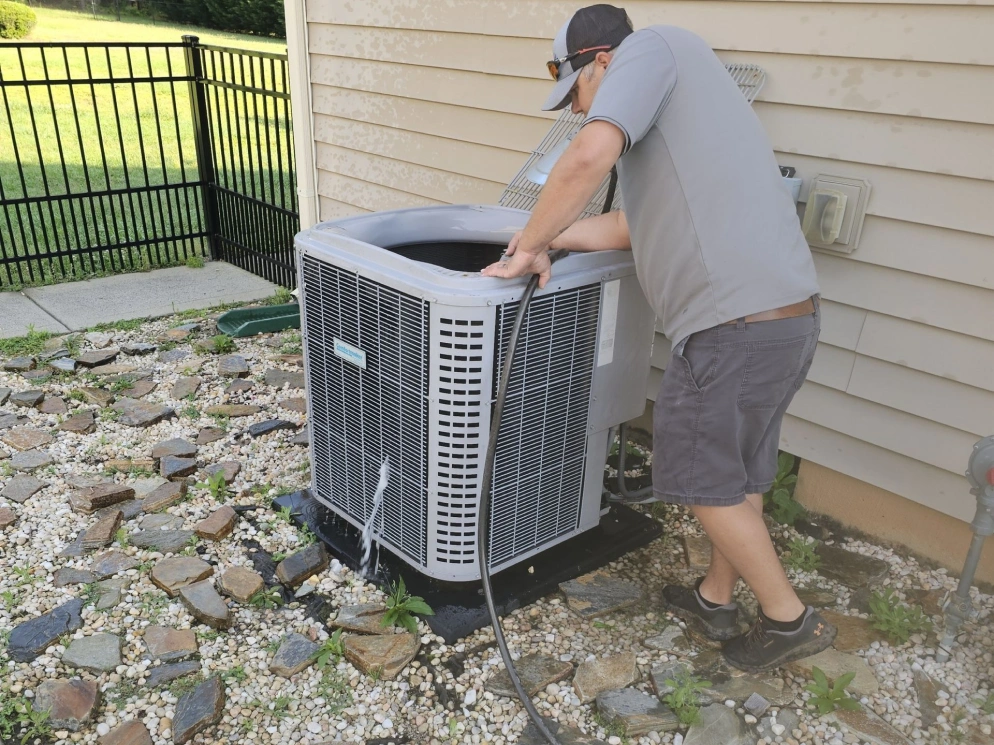
Condenser service, done properly.
The river’s standing agenda
Living in the Catawba’s atmosphere
Belmont’s peninsula position between the river and its tributaries writes moisture into every mechanical story in town: humidity baselines running above the metro average, crawlspaces holding damp long after rains, drain-clog seasons that outlast inland ones, and the musty baseline that owners stop noticing until they leave town and return. The riverside agenda is daily and non-negotiable, and the service answer starts with instruments.
The readings-first sequence holds here as across the county: sources found before hardware sold, drainage and sealing where the crawl demands it, duct restoration up off the damp ground, and dedicated dehumidification where the numbers justify the machine. Riverside owners who take the sequence watch their houses change character within weeks.
Storms across the water
The river corridor hosts the county’s summer cells enthusiastically, and the electrical toll follows: boards and contactors taken annually, brownout stress on every compressor, and the occasional direct hit that turns a system check into an insurance conversation. Surge protection at the condenser earns its modest price in every riverside quote, and post-storm checks catch the casualties before the next heat wave conducts its own inspection.
The moisture-and-storms combination makes the twice-yearly rhythm earn more in Belmont than almost anywhere: equipment working harder deserves scheduled attention, and the maintained riverside households watch both seasons from the comfortable side. The town’s maintenance calendar grows every year by referral, which is the revival economy working as intended.
The town’s growth and its patterns
The newer edges, familiar script
Belmont’s popularity filled its edges with newer construction running the metro’s standard script: builder-grade equipment at volume, tight envelopes holding the river’s humidity indoors with special enthusiasm, and the aging-in-formation arithmetic beginning its rounds. The pattern file applies intact, the year-two checkup catches the volume corners early, and right-sizing at replacement fixes the clammy-house cause permanently.
The tight-build-plus-riverside combination makes dehumidification land harder here than in the inland corridors, and the readings justify the machine more often. New-edge owners who book the early inspection meet both the pattern and the river on their own terms, which is the cheap version of every lesson this page contains.
Main Street and the destination economy
The revival’s commercial side, Main Street’s restaurants, shops, and the destination traffic they draw, runs on our light-commercial lane: written prices, maintenance that respects business hours, and equipment recommendations sized to how each space actually operates. Small-town commercial with big-town standards, honestly scoped as everywhere.
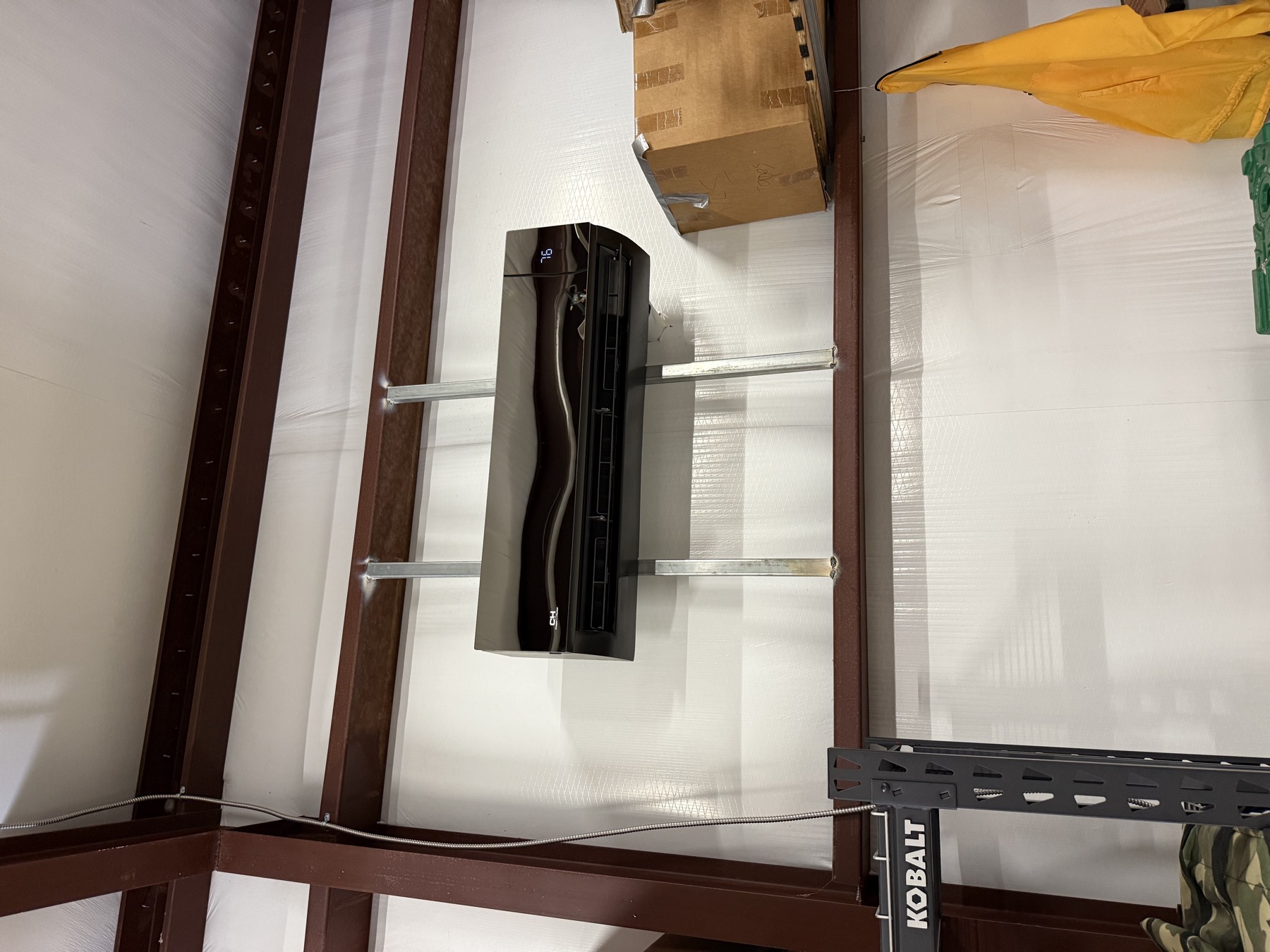
The workshop-and-studio economy rides alongside: converted spaces behind the village houses, garage studios, and the accessory buildings the revival’s creative class accumulates, each one mini-split territory sized to its exposure and use. The black head in a converted space in our gallery is Belmont-style work exactly, and the genre keeps our western calendar interesting.
A revival-town year, in service calls
The warm half
Spring books the riverside maintenance early, the pollen loads the village’s mature trees, and the renovation season opens with its coordinated rough-ins; summer runs the cooling campaign with the river’s amplification, drain seasons outlasting inland ones, moisture readings at their most instructive, and the storm cells taking their annual electrical toll. The maintained households demonstrate their spring service in the margins, as designed.
The destination economy peaks with the heat, Main Street’s commercial systems working their hardest weekends, and the workshop projects that were sketched over winter become installs by June across the town’s accessory spaces.
The cold half
First snaps examine the town’s range at dawn, renovated systems performing to their commissioning, veterans explaining their skipped fall service, and strips-heated village houses meeting December with the conversion calculator close behind. The 24/7 line works its no-surcharge western shift at honest travel times, vulnerable households first as always.
The renovation economy works straight through winter, mechanical phases sequencing with the trades, and shoulder seasons bring the planned replacements and the maintenance rhythm’s new signatures. Then spring returns to the river first, and the revival town’s year restarts with the readings already scheduled.
The Belmont promise
Restoration-grade mechanical work for the revival’s houses, instrument-led moisture service for the riverside, honest veteran math for the streets awaiting their turn, and pattern efficiency on the newer edges, all at flat Fort Mill prices with zero mileage theater. NC paperwork invisible, the 10% teacher and service-personnel discount working town-wide, and the 24/7 line covering Belmont without a surcharge at any hour.
The town rebuilt itself to a standard, block by block and storefront by storefront, and never asked permission to do it. The mechanical work behind those walls should hold the very same line: specified carefully, installed cleanly, documented properly, and priced in writing before anyone touches a tool. That is the version we drive the river route to deliver: (803) 573-2473, any hour Belmont needs it.
Stuck between repair and replace?
Call and describe what the system is doing. We run the math at your kitchen table, in writing, and the decision stays yours.
Belmont questions, answered to the revival standard
Can you match the quality of our renovation work?
That is precisely the assignment we drive west for: systems specified to the restoration’s standard, routing that spares every original detail, equipment sized to the frames’ real volumes, and commissioning documented for the appraisals these houses command. Our Belmont befores-and-afters are some of our proudest, and the renovation trades who have sequenced with us keep calling.
Is riverside humidity really different here?
Measurably and daily: baselines above the metro average, crawlspaces holding damp longer after every rain, and drain seasons that outlast the inland calendar. The readings confirm it address by address, the fixes sequence sources-first as everywhere, and riverside owners who run the sequence watch their houses change character within weeks.
Do you serve the village houses that have not been renovated yet?
With the same care and better economics: veteran systems given honest instrument-led math, conversions closing their strip-heat arithmetic, ductless retrofits sized to the compact frames, and second opinions free wherever the condemnation scripts have visited. The pre-revival streets deserve the standard too, and their turn at the renovation usually goes smoother for having the mechanical file already honest.
How fast can you get to Belmont?
The honest western run, quoted truthfully on every call: routine work clusters with the river-town route for efficiency, emergencies jump every queue with the real travel time stated while the truck loads, and night calls run faster than Charlotte’s rush hour allows by day. The no-surcharge policy holds at the river exactly because that is where it means something.
Can you condition my converted workshop or studio?
Enthusiastically, and the town keeps that calendar full: mini-splits sized to each space’s exposure and use, placement respecting dust and equipment, electrical to code with proper disconnects. The revival’s creative class accumulates accessory spaces steadily, and the converted-space install in our gallery is the genre exactly.
Do storms off the river really take out equipment?
Annually and measurably: the corridor hosts the county’s cells enthusiastically, boards and contactors pay the toll, and surge protection at the condenser is the cheap insurance we quote into every riverside install without embarrassment. Post-storm system checks catch the casualties early, with documentation that supports the insurance conversation when the hit was real.
What do you work on most in Belmont?
The revival’s full catalog: renovation-grade installs and coordinated rough-ins, riverside moisture work by measurement, village-street conversions and ductless retrofits, pattern service on the newer edges, and the Main Street commercial lane. The town’s transformation keeps the craft side of our roster employed, which suits the western route perfectly.
Do you offer maintenance plans for Belmont homes?
The twice-yearly rhythm, priced flat like everything else: a spring cooling visit before the river’s humidity arrives and a fall heating visit before the first snap, with the riverside’s drain and moisture particulars checked on both. Belmont households get more from the rhythm than most towns on our map because the Catawba makes equipment work harder for the same calendar, and the maintained houses show it in both seasons’ margins.
Around Belmont
The river towns and the county page carry the wider western story between them, and the services linked below are the ones that make the Belmont run weekly: the renovation craft, the moisture instruments, and the conversion math that keeps closing on the village streets.
Gaston County·Mount Holly·Gastonia·Mini-Splits·Dehumidification·Heat Pumps
Want proof before the phone call? The gallery is all real jobs, and the financing page covers the big-ticket math.