
Ductless repair · We speak blink code fluently, for every major brand
Mini-split repair for ductless heads that suddenly stopped behaving themselves
Mini splits announce their problems in a language of blinking lights, drips, and sulks, and a crew that services them weekly reads that language fast. Whatever yours is doing, from the head dripping down a bedroom wall to the outdoor unit wearing an ice sculpture, we diagnose it with instruments and fix it with the right part, usually on the first visit.
Every major ductless brand, both sides of the state line, 24/7 with no extra emergency fee, and the same written-price honesty as everything else we do. Hold the phone up to the weird noise if you want. It genuinely helps.

The ductless symptom dictionary
Drips, ice, and smells
Water running down the wall under a head is the most common ductless emergency in Carolina humidity, and it is almost always the condensate drain clogged with algae or the head hung slightly off level. Shut the unit off at the remote to stop the pan refilling, put a towel down, and call: caught early it is a quick fix, ignored for a week it becomes a drywall project with an HVAC footnote.
Ice on the indoor coil or a solid frozen block on the outdoor unit means refrigerant or airflow trouble, and running through it grinds real damage into the compressor, so power down and let it thaw before we arrive. Musty smells from the head are biofilm on a coil overdue for a deep clean, and a sharp electrical smell is an immediate shutdown, no exceptions, followed by a phone call we will answer at any hour.
Blinks, beeps, and silences
That blinking pattern on the head is a fault code, and it narrows the diagnosis enormously: count the blinks, note the sequence, and tell us on the phone, because it often decides which parts ride out on the truck. Boards, sensors, fan motors, and communication faults between head and outdoor unit each blink their own confession, and we carry the decoder ring for the major brands.
A head that ignores its remote is usually a battery, a sensor, or a board, in roughly that order of hope. A system that runs but neither heats nor cools convincingly points at charge or a struggling compressor. And a dead-silent system after a summer storm points at the board or the circuit, both of which our lightning-heavy metro produces in steady supply every storm season. Each story has a test, and the tests beat guessing.
How we repair ductless properly
Diagnosis with the right instruments
Ductless repair rewards specific tooling and punishes improvisation: inverter systems speak in variable frequencies and DC voltages that confuse crews raised exclusively on conventional equipment, and misdiagnosis is how healthy compressors get condemned. We test boards, sensors, and windings by the service manual’s numbers, read fault histories where the platform stores them, and verify charge by weight and superheat rather than by feel.
The blink code you reported gets confirmed on site rather than trusted blindly, because codes point at circuits, and circuits contain more than one suspect apiece. The visit ends with the actual cause named in plain English, the fix priced in writing before work starts, and the honest read on whether this repair is an isolated event or your system starting a pattern that belongs on the watch list.
The fix, and the verification after
Most ductless repairs finish the same visit: drains cleared and treated, sensors and capacitors swapped, boards replaced where the testing convicted them, leaks addressed with the seriousness leaks deserve. Refrigerant work gets done to spec with proper recovery and weighing, never topped off by vibes, because an inverter system running a careless charge eats its own efficiency and eventually its compressor.
Then the whole system proves itself before we pack: both modes run, temperatures verified at the head, drain tested with actual water, and the panel buttoned up clean. If the repair uncovered a deeper story, an aging compressor, a line set problem, a head that was never sized for its room, you hear it straight with numbers, including when the honest number belongs on the replacement page instead of a repair invoice.
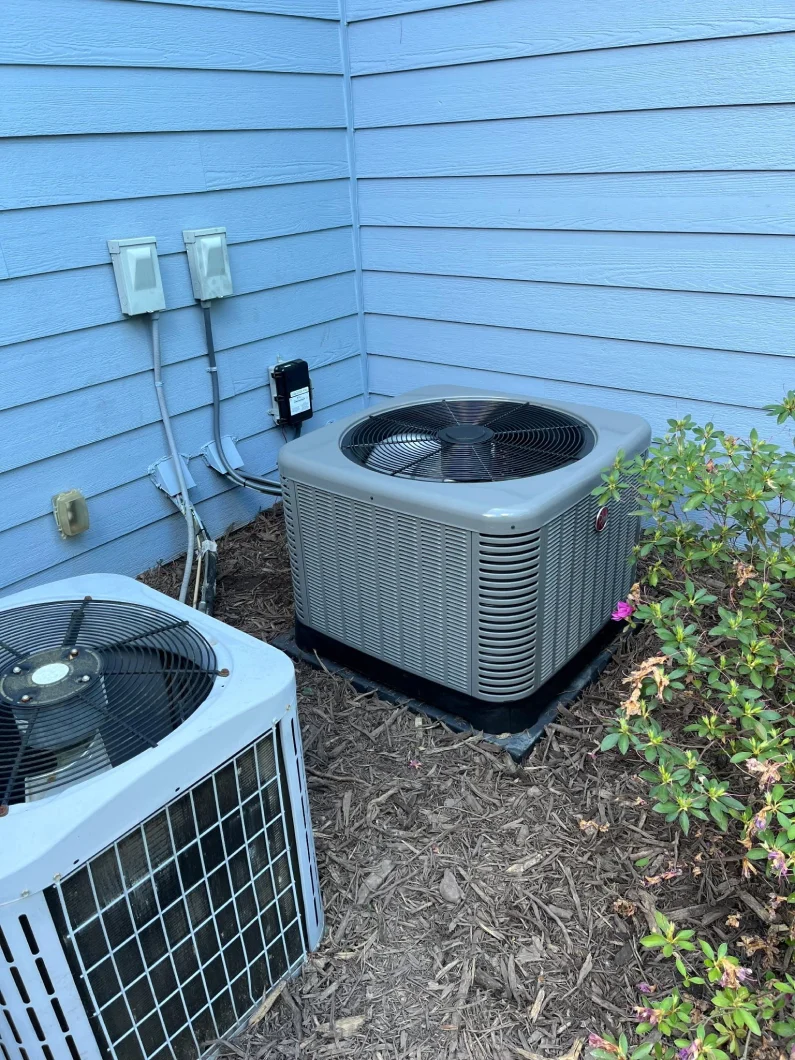
A new Rheem condenser, set and wired.
Carolina conditions and ductless health
What this climate does to these machines
Our humidity keeps condensate systems working overtime from May through September, which is why drain problems dominate the summer call log, and our pollen season wraps outdoor coils in a yellow blanket that taxes efficiency in both directions. Summer lightning takes its annual tax on boards, and the long cooling season simply puts more hours on every component than milder regions ever ask.
None of this is a flaw in ductless technology. It is the operating environment, and it rewards owners who rinse their head filters monthly in heavy seasons and let us deep-clean the coils and verify the system once or twice a year. The repair page and the maintenance habit are enemies, professionally speaking, and we are comfortable telling you the maintenance habit usually wins.
Repairs we see weekly around the metro
The greatest hits: bedroom heads dripping in July from algae-clogged drains, bonus room units icing from slow leaks at flare connections, workshop cassettes blinking board faults after storms, and remotes replaced after mysterious losses that correlate suspiciously with toddlers and couch cushions. We stock for the pattern, which is why first-visit fixes are the norm rather than the pitch.
We also inherit other companies’ ductless confusion regularly: systems condemned as dead that needed a sensor, charges blamed when the drain was the whole story, and heads declared unrepairable by crews who simply do not carry inverter diagnostics on the truck. Second opinions on ductless verdicts are free, occasionally hilarious in hindsight, and they remain some of our favorite phone calls to take all year.
Know before you call
What helps us fix it faster
The brand and model if you can read it off the head, the blink pattern if there is one, when the symptom started, and whether anything changed around the same time, a storm, a renovation, a new remote battery. Photos help enormously: the head, the outdoor unit, and any error display travel well by text and often let us arrive with the exact part instead of the diagnostic kit alone.
And the honest history: if another company already had a look, tell us what they said, including the verdict you did not like. We promise to evaluate the machine rather than the previous invoice, and if the earlier diagnosis was right, we will say that too. The system does not care about pride, and neither do we when your bedroom is dripping.
What it costs, and the promise attached
One upfront diagnostic rate quoted on the phone before anyone drives, applied toward the repair when you proceed, and the repair itself priced in writing before work starts. Nights, weekends, and holidays cost the same as Tuesday because the no-extra-emergency-fee rule covers ductless like everything else, and teachers and service personnel take their 10% here too.
If the diagnosis lands in replacement territory, the conversation moves there honestly, with both numbers side by side and zero pressure on the trigger. And if the fix turns out to be a battery, a rinse, or a switch someone bumped, we will tell you on the phone for free and cancel the visit with a clear conscience. That trade has built this company one embarrassing-but-free answer at a time.
The short version
Ductless problems announce early, escalate cheaply, and reward owners who call at the first drip, blink, or sulk. We answer around the clock, read the fault language fluently for every major brand, fix most problems the first visit, and put every number in writing before touching the machine.
Shut off anything icing or dripping, note the blink pattern, and call (803) 573-2473 from anywhere in the 30-mile radius, on either side of the state line. The repair itself usually takes less time than the worrying already has, and the price will be in writing before anyone touches the machine.
Want a straight answer first?
Ten minutes on the phone usually tells us plenty. The visit puts real numbers on it, in writing, before any work starts.
Mini-split repair questions, answered straight
My mini split is dripping water down the wall. How bad is it?
Caught today, it is usually a clogged condensate drain and a genuinely quick fix. Ignored for a week, the drywall and the paint join the invoice alongside it. Shut the head off at the remote so the pan stops refilling, towel the wall, and call us. Summer humidity makes this the single most common ductless call we run, and the trucks carry everything the fix normally needs.
What does the blinking light on my unit mean?
It is a fault code, and it is genuinely useful information: the pattern maps to a specific circuit or component in the service literature for your brand and model. Count the blinks, note the sequence, and tell us on the phone, and we will often know the likely suspect and the likely price range before the truck ever leaves the shop. Just resist the urge to keep power-cycling the unit into performing, because several of those fault codes exist specifically to protect the compressor while they blink at you.
Why is my outdoor unit covered in ice?
Light winter frost that comes and goes is normal defrost behavior. A solid ice block, or icing in summer, means refrigerant or airflow trouble, and running the system through it damages the compressor with every hour. Power it down, let it thaw, and call. The thaw costs you a warm afternoon. The alternative can cost the machine.
Can you repair my brand? It came with the house and nobody recognizes it.
Almost certainly. The major brands cover most walls in this metro and we service all of them, and the physics inside the lesser-known badges is the same physics. Genuinely orphaned equipment with unobtainable parts exists, and if yours is that rare case we will say so honestly and price the practical path instead of hunting unicorn boards on your dime.
The head works but smells musty when it starts. Fix or live with it?
Fix, and the fix is a deep clean rather than a part: biofilm builds on the coil and blower in our humidity, and it announces itself every startup. A proper cleaning restores the airflow the film was stealing, and the monthly filter rinse habit keeps it from returning on schedule. Living with it mostly means breathing it, which we do not recommend as a strategy.
Another company said my system is dead. Is a second opinion worth it?
On ductless verdicts, emphatically yes. Inverter systems get misdiagnosed by crews without the right instruments constantly, and we have revived more than one condemned system with a sensor, a board, or simply a correct reading. The second opinion is free, and either answer helps: a real death gets an honest replacement quote, and a false one gets a much smaller invoice and a story for your neighbors.
Do you handle warranty repairs?
Where the manufacturer warranty applies, we work with it: proper diagnosis documentation, correct parts, and the paperwork handled so the claim actually exists. Warranties reward systems with service history, which is one more argument for the maintenance rhythm, and if your claim needs the original installer instead, we will tell you that up front rather than burning your time.
When repair is not the whole story
Some ductless repairs close the file and some open the bigger conversation. These are the pages that conversation lives on.
Mini-Split Replacement · Ductless Overview · Mini-Split Installation · Emergency HVAC · Heat Pump Services
Want proof before the phone call? The gallery is all real jobs, and the financing page covers the big-ticket math.