
Heating · Measured, sized, vented to code, verified safe with instruments
Furnace installation where the venting and the math get done right
A furnace install is the most safety-critical job in residential HVAC, and it is also where cut-rate crews cut hardest: venting run on hope, gas connections torqued by feel, combustion never measured. We do the opposite, because a furnace either burns clean and vents completely or it does not belong in your house.
We are Zach and Eric Massey out of Fort Mill, 25 years in the trade between us, installing furnaces across York, Lancaster, and Chester counties and the Charlotte side of the state line. The pricing visit is free, the number arrives in writing, and the commissioning readings come with the paperwork.

What a proper furnace install includes
Sizing from the house, never the old sticker
Furnace sizing has the same trap as cooling: the industry loves matching whatever was there before, and whatever was there before was frequently wrong from day one. An oversized furnace blasts, overshoots the thermostat, and shuts down in short cycles that stress the heat exchanger, which is the one component you never want stressed. An undersized one runs endlessly on cold snaps and loses the coldest mornings of the year, which in this area is exactly when you need it most.
So we measure the actual house. Square footage, insulation, windows and their orientation, air leakage, duct condition, and how the structure actually holds heat overnight. The result is a BTU number derived from your specific rooms rather than a rounded guess, and it is part of every quote at no charge. Twenty minutes of math at the start decides fifteen years of comfort, and we have never understood the crews that skip it.
Venting and gas work without shortcuts
Combustion appliances live and die by their venting. Flue pipes need correct diameter, correct slope, correct clearances, and terminations that actually clear the roofline and stay clear of windows and intakes. High-efficiency condensing furnaces add PVC intake and exhaust runs plus condensate management that must drain reliably through a Carolina winter. Every one of those details has a code line and a reason, and every one gets done to it.
Gas connections get pressure-tested, never soap-bubbled and assumed. Combustion gets verified with an analyzer, not eyeballed by flame color like it is 1975. And a carbon monoxide check of the finished installation is standard, because the difference between a furnace and a hazard is measured in parts per million and we own the instruments that measure it.
Install day, staged and finished properly
The warehouse habit, applied to heat
Like every big job we run, furnace installs get staged at our warehouse first. The equipment arrives to us, gets uncrated and inspected on the bench, and is confirmed complete and undamaged before your install ever lands on the calendar. Transition pieces and plenum work get fabricated ahead of time in our sheet metal shop, which is the single biggest reason our installs finish in a day while others stretch across two or three.
At the house, floors get covered from the door to the work area, the old furnace comes out clean, and the new one goes in level, sealed, and supported correctly. Electrical, gas, venting, condensate, and duct connections all get finished to spec, and the work area gets left cleaner than we found it. The last hour belongs to verification, never to packing up early.
Commissioned with instruments, explained in English
Startup is a measured event. Gas pressure set to manufacturer spec, temperature rise across the heat exchanger confirmed inside the rated range, blower speed dialed to the duct system, combustion analyzed, safety switches tested, and the condensate path proven with actual water. Those numbers go in your file, because installed right should be a checkable claim rather than a vibe.
Then the walkthrough: thermostat behavior, filter location and schedule, what the shutoff switch does, what normal sounds like, and which smells in the first hour are burn-in versus concern. Ten minutes of explanation saves a winter of wondering, and it is standard on every install. You also get the warranty registered before we leave, so it exists when it matters.
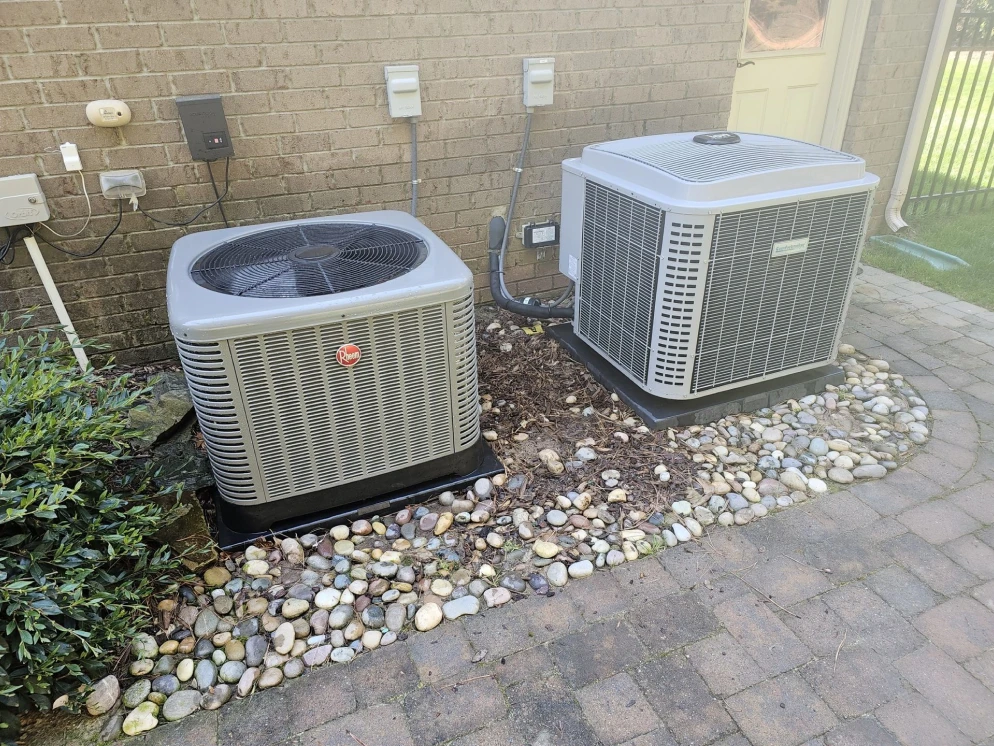
Two condensers on fresh paver pads.
Choosing a furnace for Carolina winters
Our winters are milder, and that changes the math
Charlotte metro heating season is real but short, roughly November through February, with most days in the 30s and 40s and a handful of teens-and-twenties snaps that do the complaining for the whole season. That profile changes the efficiency conversation honestly: the jump to a premium modulating furnace pays back slower here than in Minnesota, and we will say so. For many homes, a well-installed mid-tier unit is the smart-money answer.
Where spending more genuinely earns it: two-stage or variable-speed equipment in houses with uneven rooms, quieter blowers where the furnace lives near bedrooms, and high-efficiency condensing units where gas usage or venting layout favors them. The recommendation comes from your house and your bills, never from a dealer incentive sheet.
Furnace, heat pump, or both together
This region is genuine dual-fuel country, and the honest install conversation includes it. Heat pumps carry mild Carolina winters extremely efficiently, and a furnace paired with one as backup gives you cheap heat most days with gas muscle on the coldest mornings. If your situation points that way, we will lay out the pairing honestly, including the real costs, instead of selling whichever box has the best margin this quarter.
Electric-only households have their own version of the conversation, because heat strips are the most expensive heat sold in the Carolinas and a heat pump install often rescues those power bills dramatically. Whatever direction fits, the point of the quote visit is that you leave understanding your options in plain English, with numbers attached to each one.
The install details that separate crews
Where cheap installs go wrong
The furnace install corners we get paid to fix later are depressingly consistent. Flue runs that slope the wrong way and collect condensate until they rot. Returns starved because cutting a bigger one took an extra hour. Gas flex lines snaked through cabinets where code forbids them. Plenums attached with cosmetic screws and faith. Condensate lines that drain nowhere in particular. None of it visible at handshake time, all of it expensive by year five.
The uncomfortable truth of this trade is that two quotes for the same furnace are rarely the same job, and the difference lives in exactly these details. It is why our quotes read longer than the franchise one-liners, and why we photograph our closets and attics like we expect them to be inspected. We do expect it. You should inspect them.
What you will notice the first winter
A correctly sized, correctly vented furnace changes the house in ways owners describe the same way every year: longer, quieter cycles instead of blasts, rooms that stop arguing with each other, and a system you simply stop thinking about, which is the actual product. If the old unit was oversized, the steadier warmth of proper cycling is usually the first thing families comment on.
The first-season check matters too. We confirm the system settled into spec after real-world use, verify the condensate path survived its first months, and answer the questions that only come up after living with new equipment. That visit gets scheduled before we leave install day, because follow-through is cheaper than follow-up and considerably better for reviews.
The furnace install quote, complete and calm
One written number covering equipment, labor, venting materials, gas and electrical work, permits where required, haul-away of the old unit, and instrument commissioning. Good, better, and best options only when they genuinely exist for your house, each explained in one plain sentence. The price is identical whether you pay outright or run qualifying work through Optimus Financing, and teachers and service personnel take 10% off before any other math happens.
No countdown pricing, no tonight-only discounts, no fear-based upsells about your family’s safety to close a sale. A furnace is a fifteen-year appliance and the decision deserves daylight. Take the quote home, compare it whole-job against whole-job with anyone in the metro, and call when you are ready. Good numbers keep.
Same crew. Same price. Any hour.
No after-dark surcharge and no phone tree. If your system cannot wait until morning, neither do we.
Furnace installation questions, answered straight
How long does a furnace installation take?
Most single-furnace replacements finish in one day because fabrication and staging happened at our warehouse beforehand. Adding significant venting corrections, duct transitions, or gas line work can stretch the job, and you will know the realistic schedule before anything starts. In winter we plan the work so your house is never left cold overnight without a plan you agreed to.
Do I need a permit for a new furnace?
In most jurisdictions on both sides of the state line, yes, and we pull it as part of the job. Permits and inspections protect you twice: once at install time and again at home-sale time, when unpermitted mechanical work becomes a negotiating problem. It is included in the written number and handled without you chasing paperwork.
Should I replace the AC coil at the same time?
If the indoor coil is aged, matched to outdated refrigerant, or physically in the way of a proper furnace fit, doing it together saves real labor money and avoids opening the same cabinet twice. If the coil is young and healthy, we leave it alone and say so. You get both versions priced so the decision is a comparison, never a leap of faith.
What efficiency rating should I buy?
The honest answer for this climate: a well-installed 80% or mid-90s unit covers most homes sensibly, and the premium tiers earn their price mainly in specific situations, long occupancy plans, high gas rates, or comfort problems that modulating equipment solves. We run your usage against the options and show the realistic payback, and we regularly talk customers down a tier when the math says to.
Is a bigger furnace better for cold snaps?
No, and this myth wrecks comfort constantly. An oversized furnace overshoots and short cycles, wearing the heat exchanger and leaving rooms uneven, while a correctly sized unit runs longer, steadier, and warmer-feeling cycles. Cold-snap performance comes from correct sizing plus healthy ducts, never from brute force. The load calculation settles it with math instead of instinct.
Can you install a furnace in my attic or crawlspace?
Yes, both are common around here, and each has details that matter: service clearances, drain pans and float switches in attics, moisture and support considerations in crawlspaces. Our attic and crawlspace installs get photographed, and the platform and drainage work is part of the quote. Awkward locations are half our portfolio, honestly.
What happens to my old furnace?
It leaves on our truck the same day, gets its useful metals recycled, and never decorates your curb. If the old unit failed in an interesting way, ask for the autopsy: seeing a cracked heat exchanger or a scorched board explains the replacement better than any brochure could.
Do you install furnaces on both sides of the state line?
Yes, the whole 30-mile radius from Fort Mill: York, Lancaster, and Chester counties in South Carolina plus the Mecklenburg, Union, and Gaston sides of the Charlotte metro. Permit rules differ slightly by jurisdiction and we handle each correctly, with no travel surcharge anywhere on the map.
Around the furnace decision
Furnace installs travel with a few sibling conversations: whether the old unit deserved one more repair, whether a heat pump pairing fits your bills, and whether the ductwork can carry what the new furnace delivers.
Furnace Repair · Furnace Replacement · Furnace Tune-Up · Heat Pump Services · Air Balancing
Want proof before the phone call? The gallery is all real jobs, and the financing page covers the big-ticket math.