
Air quality · Winter air that finally stops fighting you and your furniture
Whole-home humidifier installation for the static-shock half of the Carolina year
Carolina winters are not brutal, but they are dry, and heated indoor air makes them drier still. The result is the annual festival of static shocks, cracked knuckles, sinus headaches, creaking wood floors, and a house that feels colder than the thermostat claims because dry air steals warmth off your skin. A whole-home humidifier ends the entire festival from one cabinet on your ductwork.
We install bypass, fan-powered, and steam humidifiers matched to your square footage and your system, plumbed and wired properly, with the control set so it runs only when it should. The pricing visit is free anywhere in the 30-mile radius, on both sides of the state line, and the whole thing usually installs in a single morning, floors covered throughout.
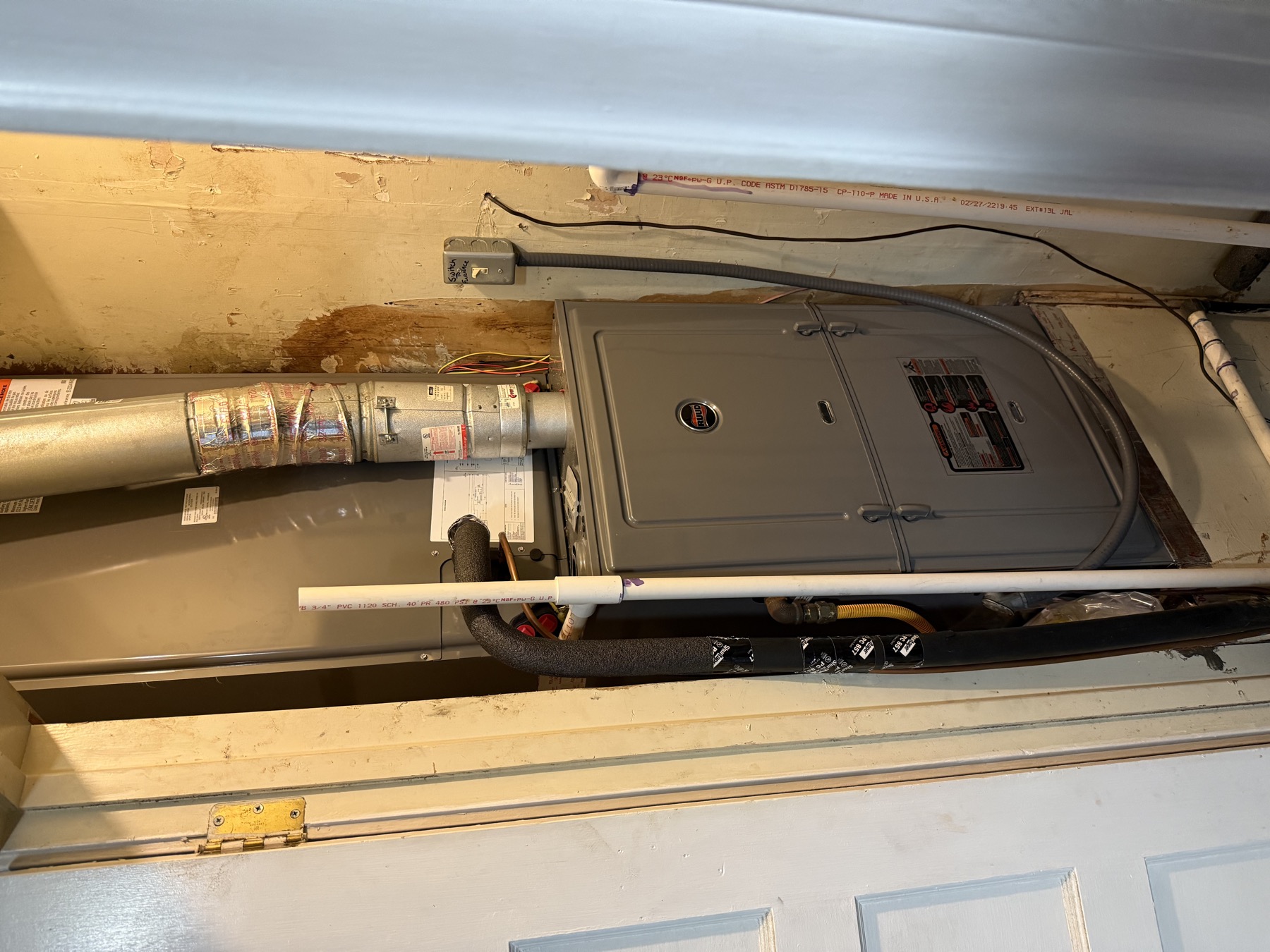
What dry winter air actually does to a house
The comfort case, made honestly
Furnace-heated air in January routinely drops indoor humidity far below the range where humans are comfortable, and the body notices before the brain does: skin and sinuses dry out, sleep quality slips, everyone catches every cough that visits, and the thermostat creeps upward because dry air at 70 genuinely feels cooler than properly humidified air at 68. That last fact is the quiet money in this trade, since every degree you stop demanding from the furnace is a degree you stop paying for, all season long.
The static tells the same story with more drama. When the doorknob bites you every single evening and the dog flinches when you reach for him, your air has gone desert-dry, and no amount of lotion is a mechanical solution. One properly sized humidifier retires the whole phenomenon, which alone has justified the invoice for more than one family we serve.
The house itself votes for it too
Wood lives and dies by moisture content. Hardwood floors gap and creak through every dry winter, trim pulls away at the miters, doors shrink out of their latches, and the piano goes flat in a way the tuner can only apologize for. Seasonal swings between muggy Carolina summers and desert-dry heated winters work every joint in the structure, and the humidifier flattens the winter half of that swing.
Electronics and furnishings cast quieter votes: static discharge is genuinely hostile to sensitive equipment, leather dries and cracks, and houseplants spend February impersonating potpourri. None of these alone sells a humidifier. All of them together, plus the comfort case, is why the whole-home unit has become a standard recommendation for the homes we service rather than a luxury add-on.
Choosing the right type for your system
Bypass, fan-powered, and steam, translated
Bypass humidifiers are the workhorses: mounted on the supply or return plenum, they use the furnace’s own airflow through a water panel to evaporate moisture into the airstream. Simple, quiet, affordable, and right for most homes with forced-air heat and reasonable square footage. Their one honest requirement is that the furnace must be running for them to humidify, which in our mild climate occasionally matters.
Fan-powered units add their own small fan, pushing more moisture without depending on long furnace cycles, a genuinely better fit for larger homes and for our climate’s shorter heating runs. Steam humidifiers are the premium tier: they generate humidity independently of the furnace entirely, deliver the most precise control, and serve big homes, heat pump systems with cooler supply air, and households with firm humidity requirements. Each tier costs more than the last, and we will tell you plainly which one your house actually justifies.
Sizing and the heat pump caveat
Sizing runs on square footage, ceiling heights, and how leaky the house is, because a humidifier that cannot keep up runs constantly and disappoints, while an oversized one invites condensation problems on cold windows. We size from the real house, the same discipline as every other measurement on this site, and we set expectations honestly for very leaky older homes where air sealing should come first.
Heat pump homes get a specific honest conversation: heat pump supply air runs cooler than furnace air, which reduces how much moisture a bypass unit can evaporate into it. Fan-powered units handle it better and steam handles it best, and we will match the recommendation to your actual equipment rather than selling the default box. This caveat is exactly the kind of detail that separates an installed humidifier from a working one.

The truck and trailer, loaded for an install day.
The installation itself, done properly
Water, drain, and duct work
A humidifier install touches three trades at once: duct work for the mounting and, on bypass units, the crossover; plumbing for the water feed with a proper saddle-free connection and shutoff; and drainage routed to a legitimate drain rather than a hopeful puddle. Each connection has a right way, and the wrong ways all end in the same place, which is water damage discovered months later behind a furnace.
We cut the mounting cleanly, seal it airtight, run the quarter-inch feed with a real shutoff you can reach, and route the drain with fall the whole way. The damper gets labeled for summer and winter positions, and on units with seasonal settings we show you the flip rather than leaving it as folklore. The whole job typically wraps in a morning, floors covered, closet cleaner than we found it.
Controls that keep it honest
The humidistat is the difference between a humidifier and a moisture problem. We set the control to sane winter targets, wire it to run only when the system can actually distribute moisture, and on smarter setups tie it into the thermostat platform so the whole comfort system reads from one page. Outdoor-temperature compensation, which automatically lowers targets in cold snaps to protect your windows from condensation, gets configured where the hardware supports it.
Then commissioning with water actually flowing: feed verified, panel wetting evenly, drain draining, no weeping joints, and the control cycling the unit the way it will all winter. You get the walkthrough, the maintenance schedule in plain English, and the spare-panel part number written down so next fall is a five-minute errand instead of a mystery.
Owning one, and the honest maintenance story
The annual rhythm
Humidifiers are low-maintenance, never no-maintenance. The water panel captures minerals as it evaporates moisture, and around here it wants replacing at the start of each heating season, a cheap part and a five-minute job we fold into every fall tune-up automatically for our maintenance customers. The damper flips seasonally on bypass units, and the drain line earns a quick check while everything is open.
Skip the rhythm and the unit tells on you: scale chokes the panel, output drops, and eventually the solenoid or the drain complains. The repair page covers the consequences honestly, but the truthful summary is that this appliance rewards five minutes of annual attention with a whole winter of quiet service, which is about the best deal in the mechanical world.
When we talk customers out of it
Honesty requires the other list. Very leaky houses lose humidity as fast as any unit adds it, and air sealing beats hardware there, which we will say even though we do not sell weatherstripping. Homes with existing moisture problems, damp crawlspaces or condensation-prone windows, need those problems handled first, because adding humidity to a house that cannot manage what it has is buying trouble at retail.
And homes that already sit comfortable through winter, tighter new construction sometimes does, get told exactly that. The free visit includes an honest read of your actual winter humidity, and no is a complete recommendation. When the answer is yes, it is because your house made the case, never because the truck needed a reason to have visited.
The whole-home number, in writing
One written price for the unit, the mounting and duct work, water and drain connections, controls, and commissioning, tiered honestly across bypass, fan-powered, and steam where more than one fits your home. Teachers and service personnel take 10% off, the whole radius pays the same rates, and the fall panel change joins your maintenance rhythm if you have one with us, automatically.
Most installs land closer to a nice dinner-for-the-family than to a mechanical project, which surprises people pleasantly every time, and the comfort difference arrives the first cold week of the season and then reports for duty every winter after, asking only for its annual five minutes of panel attention in return.
Want a straight answer first?
Ten minutes on the phone usually tells us plenty. The visit puts real numbers on it, in writing, before any work starts.
Humidifier installation questions, answered dry
What humidity level should my house run in winter?
The comfortable range for most homes sits between the mid-30s and mid-40s percent in winter, adjusted downward during hard cold snaps so windows do not condense. We set the control to sane targets and show you how to nudge it, and outdoor-compensating controls handle the snap adjustments automatically where installed. The right number is the one where your sinuses and your windows are both happy.
Will a humidifier make my windows sweat?
A correctly sized and correctly set one should not. Condensation appears when humidity targets exceed what your windows can handle at a given outdoor temperature, which is why setpoints matter and why cold snaps want lower targets. If your windows fog at reasonable settings, that is information about the windows or the house, and we will read it with you honestly rather than just cranking the dial down and leaving.
Can you install one on my heat pump system?
Yes, with the type chosen to match the equipment: heat pump supply air runs cooler than furnace air, which handicaps bypass units, so fan-powered or steam usually earns the recommendation. It is a solved problem when the install matches the physics, and an annual disappointment when someone bolts the default box to the wrong system.
How much water does it use, and does it need a drain?
Flow-through units use modest amounts of water, with a portion carrying minerals down the drain by design, and yes, a legitimate drain connection is part of a proper install. The water cost is small change against the comfort delivered, and the drain is non-negotiable, because the no-drain shortcuts are how closets grow water stains.
What maintenance will it actually need from me?
A water panel at the start of each heating season, a seasonal damper flip on bypass models, and a glance at the drain, all of which we handle inside the fall tune-up for maintenance customers. That is the entire curriculum. It is the least demanding appliance we install, provided the annual five minutes actually happens.
Does a whole-home unit beat the portable ones we run in bedrooms?
Comprehensively. Portables humidify one room while demanding daily refills, weekly cleaning, and floor space, and the mold discipline is on you forever. The whole-home unit serves every room from the ductwork, feeds itself, drains itself, and asks for one panel a year. If you are already refilling tanks every night, you have been paying the installment plan on a whole-home unit without receiving it.
How long does installation take?
Most installs finish in a single morning: mounting, water connection, drain, control wiring, and commissioning all included. Steam units and complicated closet layouts can stretch the day slightly, and you will know the realistic schedule with the written quote. The first improvement usually shows up the same evening, and the static shocks formally retire by the end of the weekend.
Humidity is a two-season conversation
The winter half lives on this page. The summer half, and the repair and replacement chapters, live next door.
Dehumidifier Services · Humidifier Repair · Humidifier Replacement · Smart Thermostats · Furnace Tune-Up
Want proof before the phone call? The gallery is all real jobs, and the financing page covers the big-ticket math.