
Ductless · Reuse whatever earns it, replace whatever does not, in writing
Mini-split replacement for ductless systems that are past their best Carolina summer
Early-generation mini splits are hitting retirement age all over the Charlotte metro, and undersized ones never really had a working age to begin with. When a head can no longer hold its room through a Carolina August, or a repair quote starts flirting with replacement money, this is the page for that conversation, held honestly and priced in writing.
We replace ductless equipment across both sides of the state line, reusing whatever infrastructure genuinely earns its keep and replacing what does not. The judgment call between those two is where 25 years in the trade pays for itself, and it is a call we make with you standing there, reasons attached, at the free pricing visit.

How ductless systems age, and how to read yours
The honest signals of a system at the end
Ductless equipment ages more gracefully than most HVAC, but it does age. The signals worth taking seriously: cooling that used to conquer the room and now merely argues with it, heating mode that quit being worth using, refrigerant top-ups arriving more than once, boards failing on equipment old enough that the parts hunt takes weeks, and remotes commanding a head that responds like it is thinking it over. Any two of those together on a system past its tenth Carolina summer is the machine filing its notice.
Efficiency drift is the quieter signal. Early mini splits were efficient for their day, but the gap between a fifteen-year-old unit and a modern inverter system is genuinely wide, and on a head that runs most of the year the difference lands on every power bill. When the repair math and the efficiency math point the same direction, replacement stops being an expense and starts being the cheaper path forward.
Undersized from birth: the other replacement story
A big share of our ductless replacements were never old at all, just wrong. A head chosen off a catalog page instead of a load calculation, installed in a bonus room with a sun-baked roof and knee walls bleeding heat, running flat out from its first July and losing anyway. The owner assumes ductless was oversold. The truth is arithmetic was skipped.
Those replacements are satisfying because the fix is definitive: measure the room properly, size the new head to the real load it carries, and the space finally behaves the way the brochure promised a decade ago. If your mini split has never once held its setpoint on a peak July afternoon, do not let anyone sell you a bigger version of the same guess. Ask for the measurement instead, which with us arrives free with the written quote.
What gets reused and what gets replaced
The infrastructure audit
Replacement day starts with an honest audit of what is already on the wall. Line sets in good condition and correct diameter for the new equipment can often stay, saving money and wall work, but old lines that are undersized, kinked, or contaminated by a dead compressor get replaced without debate, because flushing a compromised line set to protect a new system is a gamble we decline on your behalf. Mounting plates, electrical circuits, and disconnects each get the same keep-or-replace judgment, stated plainly with reasons.
Refrigerant compatibility drives some of this: older systems ran refrigerants that modern equipment cannot share plumbing with unless the lines are properly flushed and verified, and sometimes the diameters simply changed between generations. We would rather explain a line set replacement at quote time than explain a dead compressor eighteen months later. One conversation is cheaper.
Swap day, start to finish
The old refrigerant gets recovered legally, the old head and outdoor unit come down, and whatever the audit approved for reuse gets inspected one more time under better light. The new equipment mounts on fresh or verified hardware, connections get nitrogen-tested and pulled to a deep vacuum confirmed by gauge, and the charge goes in by scale to manufacturer spec, never by guesswork against a beat-up manifold.
Then commissioning in both directions, heating and cooling, plus a condensate test with real water and a walkthrough of whatever changed: new remote, new modes, the filter rinse habit if you are new to it. Most single-zone replacements finish in well under a day, and the room usually feels different by the first evening, because the new head is finally sized and charged like the room deserved all along.
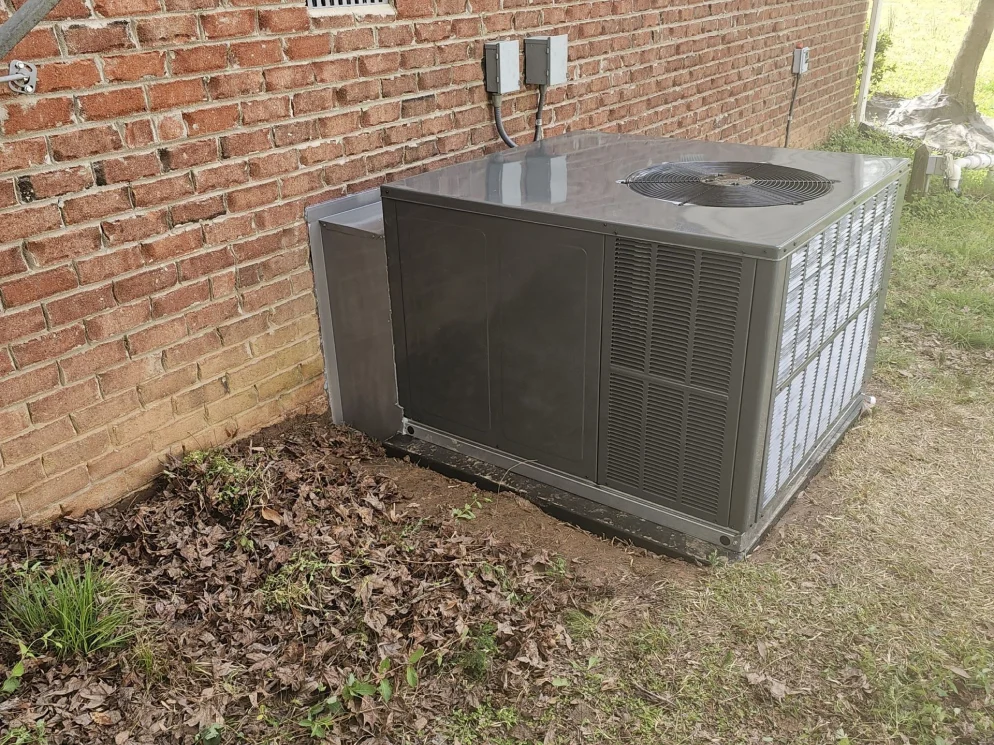
A package unit set at an older brick home.
Decisions that come bundled with replacement
Same zones, or a better map
Replacement is the cheapest moment to redraw the zone map. The upstairs that gained a home office since the original install, the garage that became a gym, the sunroom addition that never got its own head: extending or reshaping the system while equipment is already moving costs far less than a second project later. We will sketch the options with real prices and zero pressure, because sometimes the honest answer is that the original map was right.
Multi-zone owners face a specific fork: replace the whole system as a set, or swap components piecemeal. Sets cost more today and less over time, since mixed-generation systems can strand you on compatibility when the next component fails. We lay out both paths with their real trade-offs, and the decision stays yours with the math visible.
What a decade of progress buys you
Owners replacing early-generation ductless get a genuine upgrade, and it shows up in daily life quickly: markedly quieter heads, better humidity handling from smarter inverter logic, heating performance that holds usefully into much colder mornings, and controls that finally include schedules and phone apps that work. Efficiency gains land on the power bill from the first month.
Cold-climate models deserve a mention for the workshop and garage crowd: modern low-ambient heating means the space stays genuinely usable through the January snaps that made the old unit surrender. If winter use was the weak half of your original system, say so at the quote, because the current generation fixes exactly that weakness for sensible money.
The replacement conversation, held straight
Repair one more time, or replace now
The framework is the same one we use on every system in every house: weigh the repair in front of you against the age of the equipment and the realistic odds of the next failure, then add what the efficiency gap costs you monthly. A board on a six-year-old system is a repair, comfortably. The same board on a fourteen-year-old unit with a slow leak is a down payment on disappointment, and we will say so with the numbers on the table.
Plenty of these conversations end with us fixing the old unit, because that is where the math landed, and those customers come back when the math finally flips. The replacement quote and the repair quote arrive together, in writing, so the decision is a comparison you make rather than a pitch you survive.
Pricing without the fog
The replacement number is the whole job: equipment, recovery, any line set or electrical work the audit flagged, mounting hardware, commissioning, and haul-away of the old gear. It is the same total whether you pay outright or run qualifying work through Optimus Financing, and teachers and service personnel take 10% off before anything else gets calculated.
No trade-in theater, no this-week-only pricing, no mystery line items appearing after the wall is open. If something unexpected turns up mid-job, work pauses and the conversation happens before the number changes, which is exactly the promise we make on every other page of this site and keep for the same reason: we live here, and you will see us at the grocery store.
The short version
If your ductless system is past its tenth Carolina summer and failing, or never once held its room on a peak afternoon, the replacement conversation is worth an hour of your time and none of your money. The visit is free anywhere in the 30-mile radius, both paths get priced in writing, and the reuse-or-replace audit means you only buy the hardware your wall actually needs.
Bring us the system’s history if you know it, or just point at the wall and describe the disappointment in your own words. We have heard every version of the story around this metro, and the fix is usually one honest measurement away from starting.
Want a straight answer first?
Ten minutes on the phone usually tells us plenty. The visit puts real numbers on it, in writing, before any work starts.
Replacement questions from ductless owners
Can you reuse my existing line set?
Sometimes, and we would genuinely rather reuse it when it earns the call: correct diameter for the new equipment, good physical condition, and no contamination history. Lines that are kinked, undersized, corroded, or attached to a system that died of compressor failure get replaced, because protecting a new system with a compromised artery is a false economy. The audit happens at quote time and the reasoning comes with it.
My mini split is twelve years old and needs a board. Replace instead?
Probably, and here is the honest math: boards on aging systems are often special-order, the repair lands near real money, and the system it rescues remains twelve years old with the same compressor and the same efficiency. If the unit has been reliable and the price is modest, repair can still win. We price both and tell you where we would put our own money, which customers seem to find refreshing.
Will a new head fix the room that never cooled properly?
Only if the new head is sized from an actual load calculation, which is the step the original install skipped. A bigger guess is still a guess. We measure the room, its sun, its insulation, and its leaks, then size to that number, and the difference on a July afternoon is the entire point of doing it right the second time.
How long does a ductless replacement take?
Single-zone swaps usually finish in well under a day, since mounting points and routing already exist and the design work happened at the quote. Multi-zone replacements or jobs with line set and electrical corrections can run a full day or slightly beyond, and the schedule arrives with the written number so nothing about the day surprises you.
Is it worth upgrading a working-but-old system for efficiency alone?
Occasionally, and we will be straight about when. On heads that run most of the year, the efficiency gap between generations is real money, and pairing that with quieter operation and better humidity control can justify a planned upgrade. On lightly used zones, the math usually says run it until it argues. Bring us a power bill and the honest answer takes ten minutes.
What happens to the old equipment?
Refrigerant recovered legally with proper equipment, metals recycled, and everything off your property the same day. If the old unit died an instructive death, ask for the tour before it leaves: seeing a scaled-up coil or a scorched board makes the whole decision feel less abstract, and we enjoy the show-and-tell more than is probably normal.
Can you switch brands from what I have?
Yes, freely. Replacement severs the compatibility constraints that lock repairs into one manufacturer, so the new system gets chosen on merit: reliability, cold-weather performance, parts availability, and fit for your rooms. We install a lot of Mitsubishi on exactly those grounds, and we will tell you plainly when another badge fits your budget better.
The rest of the ductless shelf
Replacement sits between repair and fresh installation, and the overview page holds the map of the whole territory.
Ductless Overview·Mini-Split Repair·Mini-Split Installation·Heat Pump Services·Financing
Want proof before the phone call? The gallery is all real jobs, and the financing page covers the big-ticket math.