
Heating maintenance · October’s smartest appointment, priced flat, no commission games
The annual furnace tune-up that quietly earns its keep on the first cold morning of January
Every single winter, the same story plays out across the Charlotte metro: the first hard cold snap arrives, and the furnaces that skipped their fall checkup all fail together on the coldest morning of the year. The tune-up exists to take your house out of that story entirely, for less than the cost of any emergency it prevents.
This is not a drive-by filter change with a sticker. It is a full inspection and service by the same two owners who handle our installs, with instruments on the combustion, eyes on the heat exchanger, and a plain-English report at the end.

What the tune-up actually covers
The mechanical pass
The burners come out and get cleaned, because eight months of idle Carolina humidity leaves corrosion that makes ignition lazy and combustion dirty. The flame sensor gets cleaned or replaced before it can fail on the first cold morning, which is the single most preventable no-heat call in this climate. The igniter gets tested for resistance drift, the blower gets inspected and cleaned, and every electrical connection gets checked and tightened.
Drainage matters more than people expect on modern equipment: high-efficiency furnaces produce condensate all winter, and a clogged trap or cracked drain line shuts the whole system down through its safeties. We flush and verify the path. Filters get checked and changed, and if your filter location is the reason it never gets changed, we will say so and talk through fixes.
The safety pass
The heat exchanger gets inspected, with a camera where the design demands it, because cracks there put combustion gases into your ductwork and no other check matters if this one fails. Gas pressure gets measured and set to manufacturer spec rather than assumed. Combustion gets analyzed with an instrument, flue draft gets verified, and carbon monoxide gets measured where it would matter, in the airstream your family breathes.
Safety controls get exercised rather than merely observed: limit switches, pressure switches, flame proving, and the shutdown sequence all demonstrated working. Then everything goes in a plain-English report, with photos where they help, so you know exactly what condition your heating system carried into winter and what, if anything, is on the watch list for spring.
Why fall timing is the whole trick
Book it before the furnace needs it
A tune-up in October finds the weak flame sensor while the fix is a calm Tuesday appointment. The same sensor discovered in January costs you a cold morning, an emergency slot, and the special misery of shopping for help when every company in the metro is triaging the same cold snap. The part is identical. The experience is not, and the difference is entirely calendar.
October also catches the problems money actually cares about: drifting gas pressure quietly burning extra fuel, a blower running weak against a loaded filter, duct leaks bleeding heat into the crawlspace. Small corrections in fall show up as smaller bills all winter, which is why the tune-up is the rare service visit with a return on investment you can watch monthly.
The maintenance rhythm that keeps systems old
The full rhythm for this climate is two visits a year: heating side in fall, cooling side in spring, and between them your equipment simply stops surprising you. Customers on that rhythm almost never meet us on an emergency basis, their warranties stay happy, and their systems reach the far end of their lifespan instead of the near end. The math is boring and overwhelmingly in your favor.
If your furnace has never been serviced, do not be embarrassed and do not skip the visit out of dread. First-time tune-ups on neglected systems are some of our most satisfying work, and the honest report at the end tells you what you actually own: plenty of neglected furnaces check out healthier than their owners feared, and the ones that do not are far better discovered in October than January.
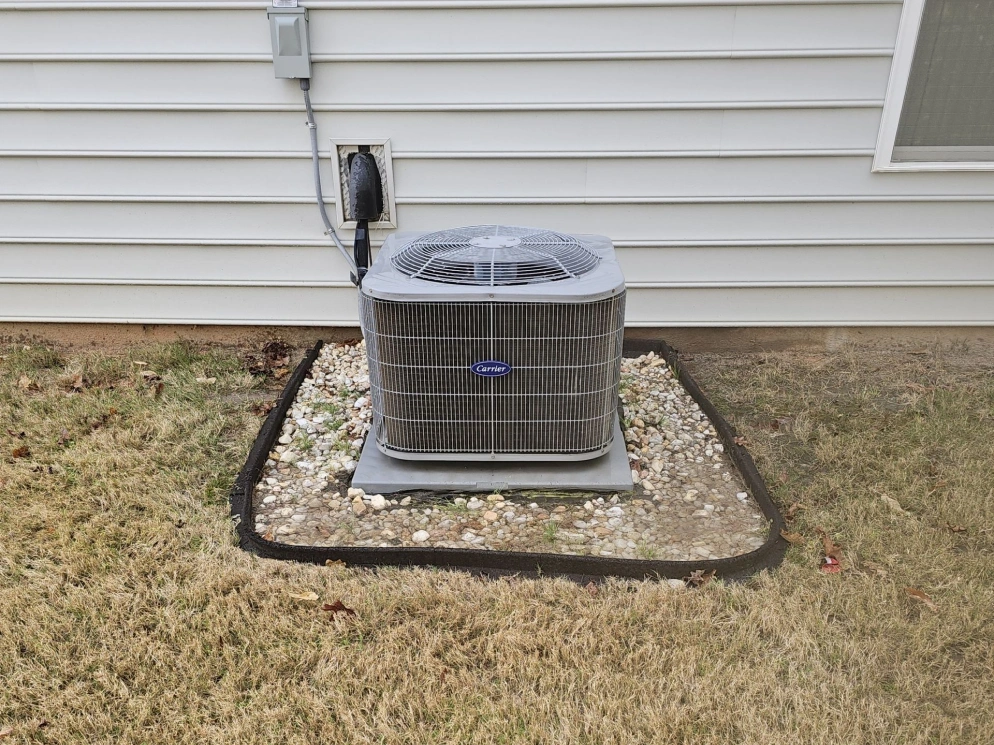
A Carrier condenser after its maintenance visit.
Straight answers about maintenance
What a tune-up is not
It is not a sales visit wearing a service uniform. The industry is full of cheap tune-up offers that exist to put a commissioned tech in your basement, where every furnace inspected somehow needs a new system by Christmas. Nobody at EZ earns commission on anything, our tune-up findings come with photos and measurements you can check, and most reports end with the words looking good, see you in spring.
It is also not a guarantee against every failure, and we will not pretend otherwise. Parts fail between visits occasionally, physics being physics. What the tune-up does is shift the odds heavily, catch the predictable failures early, and leave you with a system whose condition you actually know instead of hope.
Heat pumps and dual-fuel homes too
Plenty of homes around here heat without gas, and the fall visit matters just as much. Heat pump fall service covers the defrost cycle, reversing valve, auxiliary heat strips, refrigerant charge, and airflow, because a heat pump limping into winter quietly hands your bills to the backup strips, which cost multiples per delivered degree. Dual-fuel setups get both halves checked and the handoff between them verified.
Whatever heats your house, the fall visit is the same bet: a small scheduled cost against winter’s worst-case timing. Across both Carolinas sides of our radius, the customers who take that bet every year are the ones whose names we only see attached to good news.
A tune-up visit, minute by minute
What the appointment actually feels like
We show up inside the window, boot covers on, and start with two minutes of questions: any cold rooms, strange noises, smells, or bill surprises since last winter. Owner intel routinely points instruments at the right suspect faster than instruments alone. Then the furnace comes apart to the degree the checklist demands, and the next hour is methodical: burners, sensor, igniter, blower, drainage, electrical, safeties, combustion, and the exchanger inspection that anchors the whole visit.
You are welcome to hover, and plenty of customers do exactly that with coffee in hand. The running commentary is free, and homeowners who watch one full tune-up tend to become the people who catch their own filter problems in February before the furnace ever complains. We would rather build that customer than protect a mystique. The trade survives explanation just fine.
The report you keep
The visit ends with a plain-English rundown: what got cleaned, what got adjusted, what measured healthy, and what belongs on the watch list with photos attached. No grades, no scare matrix, no traffic-light charts engineered to sell replacements. Just the actual condition of the machine, in sentences, with numbers where numbers exist.
That report compounds. Two or three years of them tell the true story of your system better than any single visit can, turn warranty claims from arguments into paperwork, and make the eventual replacement conversation, whenever it honestly arrives, a calm review of history instead of a stranger’s surprise verdict. Boring documentation is quietly one of the best things we sell.
Tune-up pricing without the gotcha
One flat, honest price for the full inspection and service, told to you on the phone before booking, with no arrival upcharges and no commission-driven findings waiting at the bottom of the visit. Teachers and service personnel take their 10% here like everywhere else. If the tune-up finds something that needs real repair, you get the written price and the choice, with zero pressure and the same no-drama standard as every EZ visit.
Book fall service in September or October for the best calendar, spring cooling service in March or April, and if you want both on autopilot, say so and we will simply call you when each season comes due and schedule around your life. Easiest maintenance program in the Carolinas: we remember so you do not have to, and the only paperwork involved is the report you keep. Teachers and service personnel, the 10% applies here too, every single visit.
Stuck between repair and replace?
Call and describe what the system is doing. We run the math at your kitchen table, in writing, and the decision stays yours.
Tune-up questions homeowners actually ask
Is a furnace tune-up really necessary every year?
For the cost-to-consequence math of this climate, yes. The furnace sits idle for eight months, corrodes quietly, and then gets asked to perform on demand in front of your whole family. An annual service catches the predictable failures cheap, keeps efficiency from drifting, protects most manufacturer warranties, and produces the one thing money cannot buy in January: a furnace you have actual reasons to trust.
How long does the visit take?
Plan on roughly an hour to ninety minutes for a thorough single-furnace visit, longer for dual-fuel setups or first visits on neglected equipment. Speed is not the product. The checklist is, and rushing it defeats the entire point of the appointment. If a company’s tune-up finishes in twenty minutes, you bought a sticker, and the sticker will not help you in January when the un-inspected parts get their say.
What will you find wrong? Be honest.
Statistically: dirty flame sensors, tired igniters, loaded filters, sluggish drainage, and connections that needed tightening, most of it handled within the visit. A minority of furnaces show something bigger, and those owners get photos, measurements, and options rather than pressure. And a healthy share of reports say exactly what you hope: clean bill, see you in spring.
Can you check my carbon monoxide risk?
Yes, and we do it with instruments rather than reassurance. Heat exchanger inspection, combustion analysis, flue draft verification, and CO measurement in the supply air are standard parts of the safety pass. If your home lacks CO detectors near sleeping areas, we will say so plainly, because the ten-dollar detector is the cheapest safety device your house can own.
Do you offer a maintenance plan?
The EZ version is deliberately simple: tell us you want spring and fall covered, and we call you when each season comes due and book around your schedule. No membership card, no monthly fee engineering, no fine print. The value lives in the visits, so that is what you pay for.
What does skipping maintenance actually cost?
The honest ledger: a slow efficiency drift on every gas bill, parts failing at emergency timing instead of appointment timing, warranty claims weakened by missing service history, and lifespans landing at the short end of the range. None of it dramatic in any single month, all of it real across a decade. The tune-up is boring precisely because it converts those surprises into scheduled non-events.
Can you service a furnace another company installed?
Of course, and most of the furnaces we maintain were installed by someone else. No lectures about the previous crew either, unless something genuinely unsafe turns up, in which case you get photos and plain talk. Every system deserves competent maintenance regardless of whose sticker is on the cabinet, and plenty of our longest customer relationships started with exactly this visit.
My furnace is brand new. When does maintenance start?
Next fall, and every fall after. New equipment earns its warranty and its lifespan through maintenance history, and most manufacturers expect documented service. The first-year visit also confirms the system settled into spec after a real season of use, which is exactly the check a young furnace deserves.
Maintenance has a family too
The tune-up is one half of a yearly rhythm, and it borders every other heating decision on this site: what repairs it prevents, what replacements it postpones, and what the heat pump version looks like.
Furnace Repair · Furnace Replacement · Heat Pump Services · Air Filtration · Smart Thermostats
Want proof before the phone call? The gallery is all real jobs, and the financing page covers the big-ticket math.