
Service area · From the panhandle boom to the old courthouse town
Lancaster County HVAC, from the fastest-growing strip in the Carolinas on down
Lancaster County runs two stories at once. The panhandle, Indian Land and Van Wyck, is one of the fastest-growing corridors in the Carolinas, packed with new neighborhoods whose builder-grade systems are now aging out of warranty in unison. Down US-521, the city of Lancaster keeps the older, slower story: established streets, character homes, courthouse-town bones, and ductwork with decades of layered renovation history behind the walls.
We run both stories daily from Fort Mill, fifteen minutes from the panhandle line, with the full 21-service roster, written pricing at every address, and the 24/7 no-extra-fee line covering everything in between. The county sits squarely inside our 30-mile radius, and the thickness of our Indian Land pattern file alone justifies the page you are currently reading.
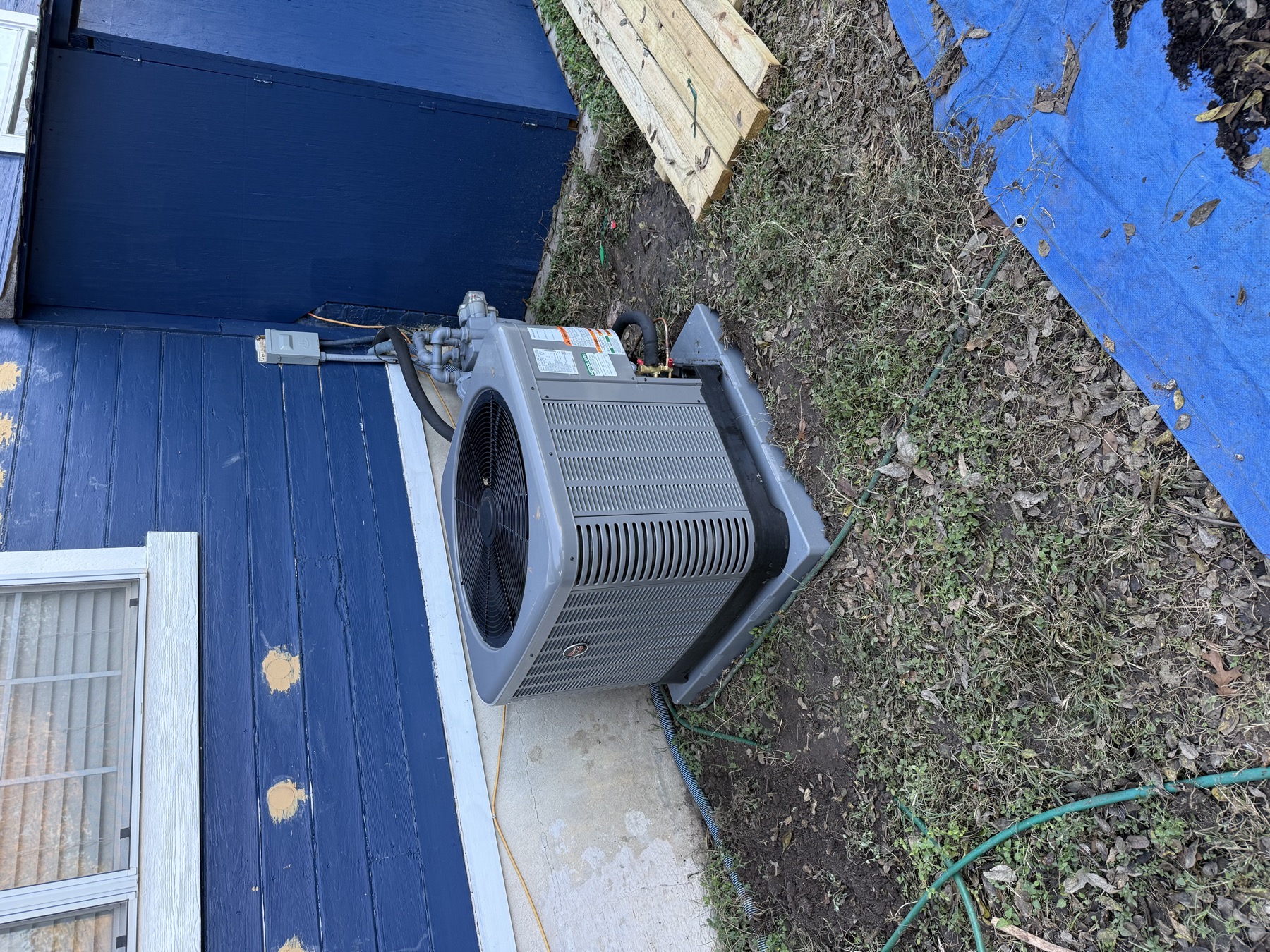
The county, corner to corner
Where we work
Indian Land anchors the northern panhandle and most of our county volume: the Highway 521 corridor’s neighborhoods, townhomes, and new construction as far as the eye can see. Van Wyck holds the quieter panhandle ground beside it, and the city of Lancaster carries the county seat’s established streets a half hour down the road. All three have their own pages, and all three get the same trucks.
Distance math from Fort Mill: the panhandle starts practically next door, and even the far side of Lancaster proper sits comfortably inside the radius. Same-day repair standard across the county, hour-class response for genuine emergencies in the panhandle, and honest arrival windows everywhere, quoted on the phone before the truck moves.
The short version
One county, two distinct housing generations, every service on the 21-page roster, and a crew that already knows your neighborhood’s equipment by its first name and its usual cause of death. The pricing visit is free at every address on the map beside this paragraph, and the number it produces arrives in writing before anything else happens.
Indian Land: the pattern we know by heart
Boom construction, shared destiny
Indian Land grew faster than nearly anywhere in either Carolina, and the equipment tells the story: the same handful of builder-grade systems installed by the thousand across a decade of subdivisions, all aging on the same curve. The first wave is past its warranty years now, which means capacitors, boards, and coils failing in recognizable order, street by street, and replacement math starting to win arguments across the corridor.
For homeowners, the pattern is leverage: we diagnose these systems fast because we service their identical siblings weekly, our trucks stock their common failures, and our replacement quotes come with the context of what the same unit two doors down decided last summer. When your neighborhood’s HVAC destiny is shared, hiring the crew that has memorized it is just efficient.
Townhomes, HOAs, and the corridor’s quirks
The corridor’s townhome communities add their own chapters: shared walls changing load math, outdoor units in tight courtyards where placement and noise matter, and HOA guidelines that we navigate without drama because we have read most of them already. Smart thermostats and zoning tricks earn their keep in three-story floor plans where the top level runs its own climate.
And the panhandle’s commuter rhythm shapes service too: half of Indian Land works in Charlotte, so garage-code installs, precise arrival windows, and evening-friendly scheduling are standard practice rather than special requests. The 10% teacher and service-personnel discount rides along here like everywhere, and the panhandle’s schools keep it busy.
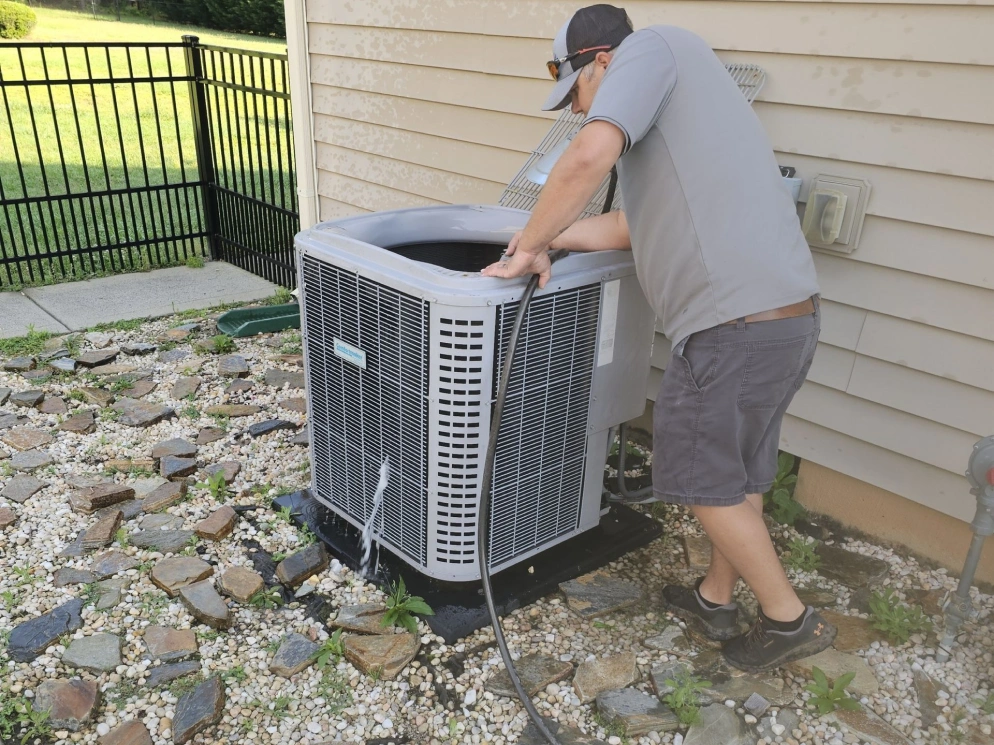
Condenser service, done properly.
Lancaster and Van Wyck: the other half of the county
The county seat’s older bones
The city of Lancaster runs on an older housing clock: established neighborhoods, mill-era streets, and homes that have been renovated in layers, each layer leaving its opinion in the ductwork. Air balancing is real work here, veteran systems deserve honest repair-versus-replace math instead of reflexive replacement pitches, and crawlspaces have the kind of personality that rewards a crew that genuinely does not mind crawling.
We keep older Lancaster systems alive for customers happily when the math supports it, and we say plainly when it stops supporting it. The county seat deserves the same written-price, no-pressure standard as the boom corridor, and the drive down 521 has never once changed a number on our quotes.
Van Wyck and the in-between
Van Wyck holds the panhandle’s quieter acreage: bigger lots, older farmhouses beside newer builds, outbuildings and workshops that mini-splits were invented for, and wells and crawlspaces that shape the moisture story. It is five minutes from the Indian Land boom and a world apart in housing character, which is exactly the range this county demands from its HVAC crew.
The in-between stretches of 521 carry every mix at once, and the service answer stays constant: measure first, quote in writing, stock the truck for the county’s actual patterns, and keep the 24/7 line surcharge-free from the state line to the far side of the county seat. Geography changes the drive, never the discipline.
What Lancaster County calls us for
The corridor’s greatest hits
Indian Land’s call log is dominated by the builder-grade lifecycle: AC repairs in the year-eight-to-twelve window, replacements where the math has flipped, and smart thermostat corrections on heat pumps whose staging was never configured, quietly burning auxiliary heat. Bonus rooms over garages keep the mini-split calendar full corridor-wide, and the three-story townhome floor plans keep the zoning conversations interesting.
Summer humidity runs its usual campaign, drain clogs and clammy houses, and dehumidification conversations land especially well in the newer, tighter construction that holds moisture like a promise. The county’s power bills fund a lot of our honest-math conversations, and the conversions from strips-only heat to heat pumps down-county are some of the most satisfying arithmetic we run anywhere.
Maintenance, the county-wide answer
Both halves of the county share one truth: the systems that skip fall and spring service meet us at emergency prices, and the ones that keep the rhythm meet us at coffee-hour prices. The tune-up sermon plays in Indian Land cul-de-sacs and Lancaster porches alike, and the maintenance calendar is the cheapest thing we sell across every zip on this page.
For the multi-property crowd, and the corridor has plenty, portfolio service runs exactly as it does everywhere: one number, per-address records, honest triage, and tenants treated as customers. HVAC becomes the quiet line item, which is the entire product, delivered county-wide on the same written-price terms as every single-family visit.
Two housing generations, one standard
What the corridor teaches us weekly
The panhandle’s newest neighborhoods are tight, well-insulated construction, which changes the physics: less heat loss, better envelope, and humidity that lingers indoors because the house no longer leaks it away. Right-sizing matters even more here, oversized equipment short cycles brutally in tight homes, and dehumidification conversations land well because the symptom is felt in every townhome with a south wall of glass.
New construction also means young systems with correctable sins: staging never configured, filters undersized by the builder, and duct runs value-engineered to the inspection minimum. Catching those in year two beats discovering them in year nine, and the corridor’s tune-up appointments regularly upgrade a merely functional system into the one the homeowner actually paid for.
What the county seat teaches us right back
Lancaster proper is the counter-education: houses that predate every assumption in the builder-grade playbook, systems installed across five decades of different codes, and homeowners who know their houses deeply and expect their tradespeople to listen. We listen. The house history a Lancaster owner gives at the kitchen table routinely shortcuts an hour of diagnosis.
Between the two halves, the county keeps our range honest: the same week can hold a townhome staging correction and a century-home ductless design, and the crew that can do both without changing its pricing or its manners is the crew this county actually needs. That is the standard we drive down 521 to keep.
The county promise
Every service on the roster at every address in the county, same-day repair standard, 24/7 with no extra emergency fee, prices in writing before work starts, and 10% off for teachers and service personnel on every visit. Free pricing visits from the panhandle to the county seat, and Optimus Financing behind the qualifying big jobs.
Fifteen minutes from Indian Land, one honest phone call from everywhere else in the county: (803) 573-2473, answered by a Massey at any hour of any day, holidays included, with the drive time quoted straight and the price quoted identical from the state line to the far side of the county seat.
Want a straight answer first?
Ten minutes on the phone usually tells us plenty. The visit puts real numbers on it, in writing, before any work starts.
Lancaster County questions, answered locally
How fast do you reach Indian Land?
Fast: the panhandle starts practically next door to Fort Mill, and Indian Land response times match our home-county standard, with genuine emergencies frequently seeing a truck inside the hour. The corridor is core territory rather than an outer ring, and our daily route sheet proves it.
My Indian Land home just left its builder warranty. What should I do?
Book the tune-up, honestly. The year the warranty ends is exactly when the builder-grade failure pattern begins, and one thorough inspection tells you where your system sits on the curve we have watched play out across the whole corridor. Cheap intelligence now beats emergency pricing in August, every time.
Do you really come all the way to the city of Lancaster?
Really, and at the same prices, with no mileage theater. The county seat sits comfortably inside the 30-mile radius, its older housing stock is work we genuinely enjoy, and its veteran systems get the honest keep-it-alive-or-retire-it math instead of a reflexive sales pitch.
Can you work with my HOA’s rules about outdoor units?
Yes, and in the corridor’s communities we usually already have. Placement guidelines, screening requirements, and noise considerations are all navigable with equipment siting done thoughtfully, and modern units run quiet enough to make most disputes theoretical. Tell us the community and odds are decent we have installed in it.
Is the 24/7 line real for the whole county?
The whole county, both halves, at the same no-surcharge price. A midnight failure in Van Wyck or Lancaster proper gets the same answered-by-an-owner treatment as one in Fort Mill, with the honest drive time quoted on the call and nothing added to the invoice for the hour on the clock.
We heat with electric strips down-county. Is that why winter bills hurt?
Almost certainly. Resistance heat is the most expensive warmth sold in the Carolinas, and older down-county homes running strips-only are our favorite conversion candidates: a heat pump doing the season’s real work drops those bills dramatically. Bring us one winter power bill and the honest math takes ten minutes.
Do you serve the new construction going up along 521?
Yes, and we like arriving early: mini-split rough-ins before drywall, duct designs reviewed while changes are still cheap, and builder relationships that outlast the punch list. The corridor’s growth means our new-construction calendar stays honestly busy, and the year-two checkups on those same houses close the loop.
Which services do you actually run in the county, versus dispatch elsewhere?
All of them, ourselves: the full 21-service roster from AC installation to air purification, plus the warehouse duct fabrication, runs county-wide with our own crew. Nothing on this site gets subcontracted to a mystery van, in this county or any other, which is precisely why the reviews keep using our first names.
Lancaster County, street level
The county’s three town pages carry the local detail, and the full service roster runs identically at every address.
Indian Land · Lancaster · Van Wyck · All Services · All Service Areas
Want proof before the phone call? The gallery is all real jobs, and the financing page covers the big-ticket math.