
Our work, unstaged
Real jobs · Real phones · Fort Mill, SC and the Charlotte metro · Zero stock photos
Every photo below came off our own phones on real jobs around Fort Mill, Rock Hill, and the Charlotte metro. Hot attics, crawlspaces with opinions, and brand new systems humming on their pads. No stock photos, no models in spotless polo shirts pointing at thermostats, and no borrowed pictures of other people’s work, which is more common in this industry than anyone admits.
We keep the gallery honest for a simple reason: this is the actual standard you are hiring. The level pads, the tidy line sets, the sealed duct joints, even the filthy before shots. Scroll through, then read below the grid where we explain what you are looking at and how to judge any HVAC company’s work, including ours.
If you want your place in this gallery, send us the details and we will make it happen. Before-and-after pairs are our favorite, so if your current system is photogenic in the wrong way, that dusty coil or rattling closet unit is one visit from being a very satisfying after shot.






Brand spotting, for the curious and the comparison shoppers
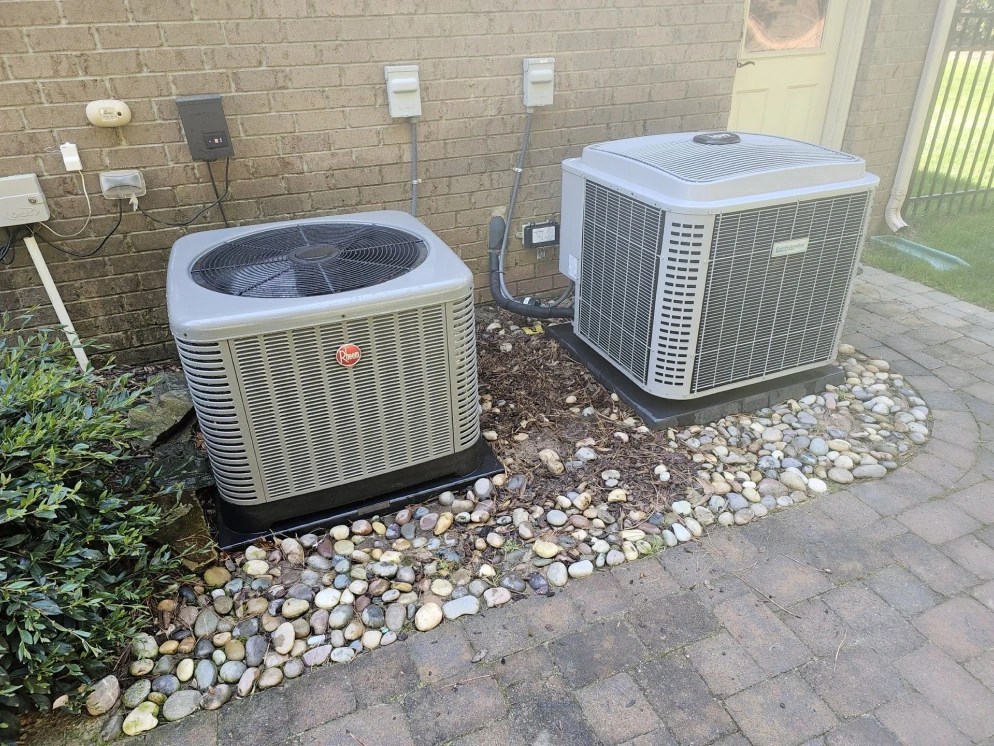
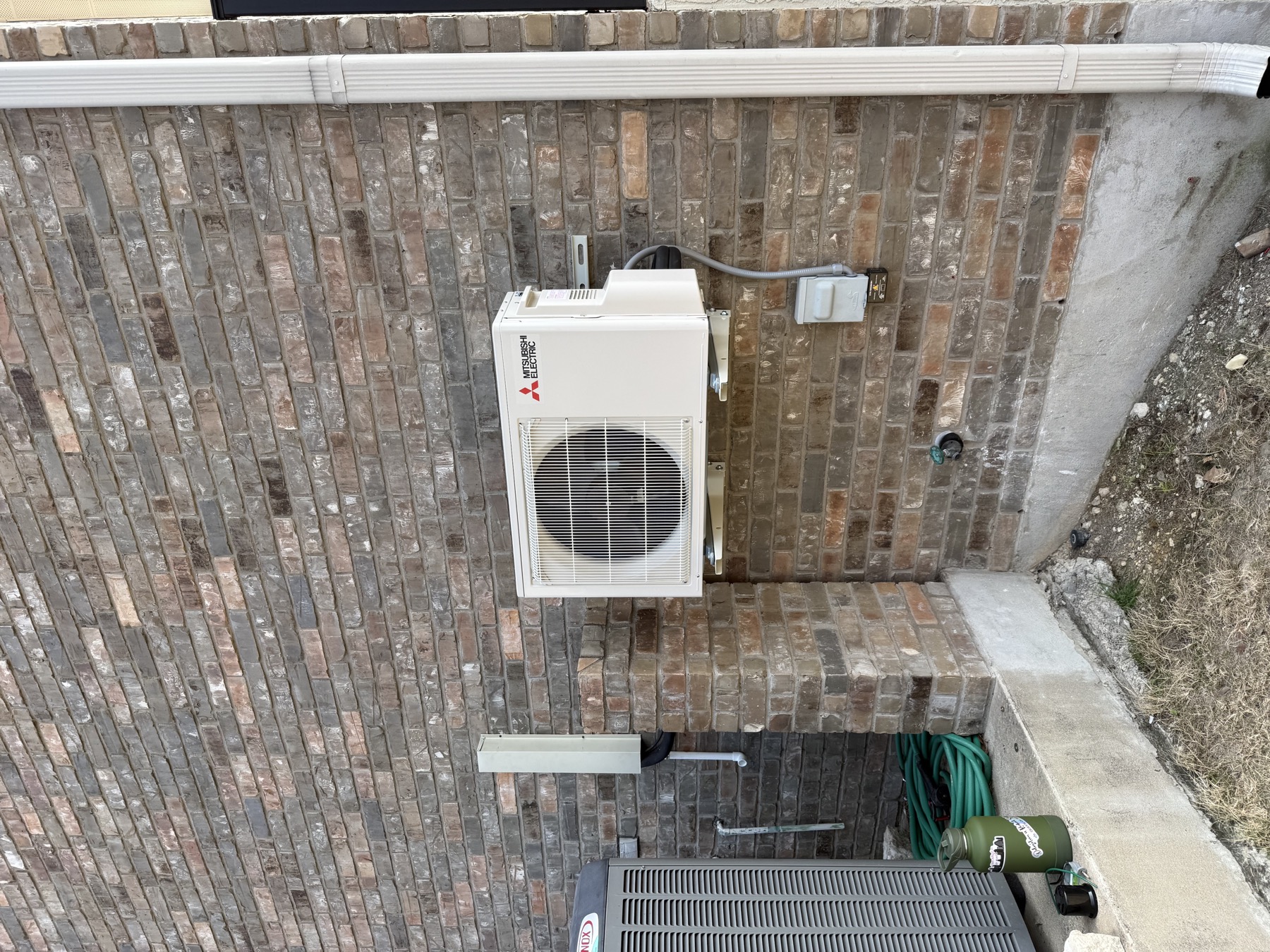
Sharp eyes will catch Rheem, Carrier, Goodman, and Mitsubishi badges in these photos, which is a fair summary of what we install and service around the metro. Rheem earns a lot of our replacement work for its price-to-durability math in this climate, and one customer specifically praised the expert precision on his new Rheem and warehouse-built ductwork. Mitsubishi dominates the ductless shots because their mini-splits have simply earned it.
But notice the badges on the maintenance and repair photos too, including brands we do not sell. That is the point: we service everything, and the recommendation you get is about your house, not our dealer agreements. The best brand in HVAC is correct sizing and a careful install, which photographs less dramatically but pays the longest.
What you are actually looking at
The installs
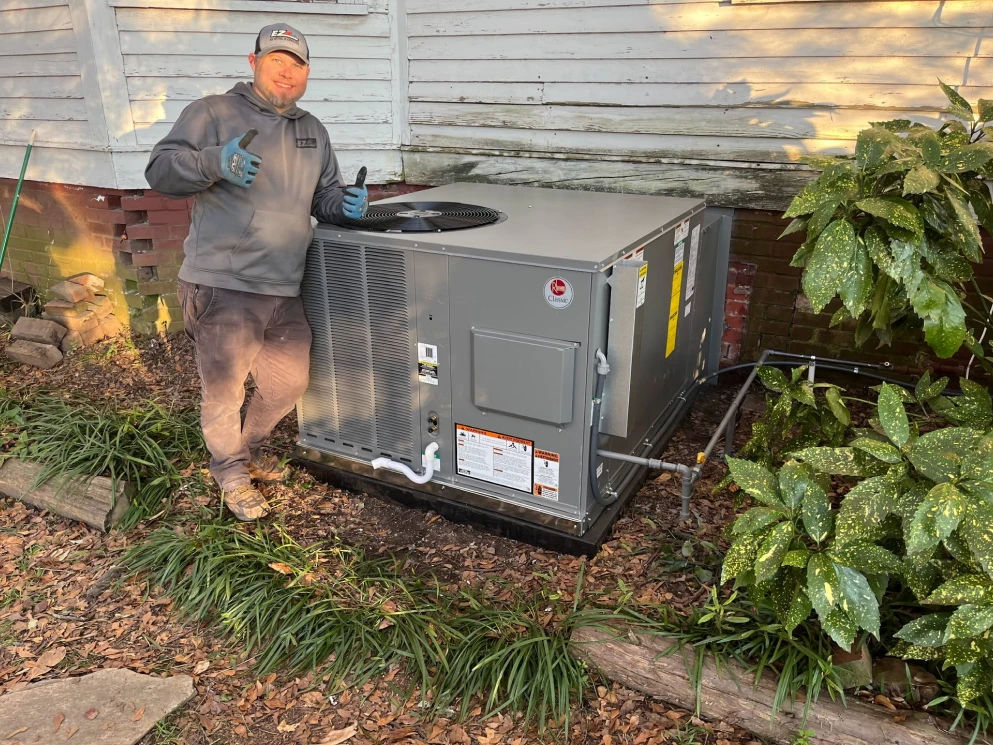
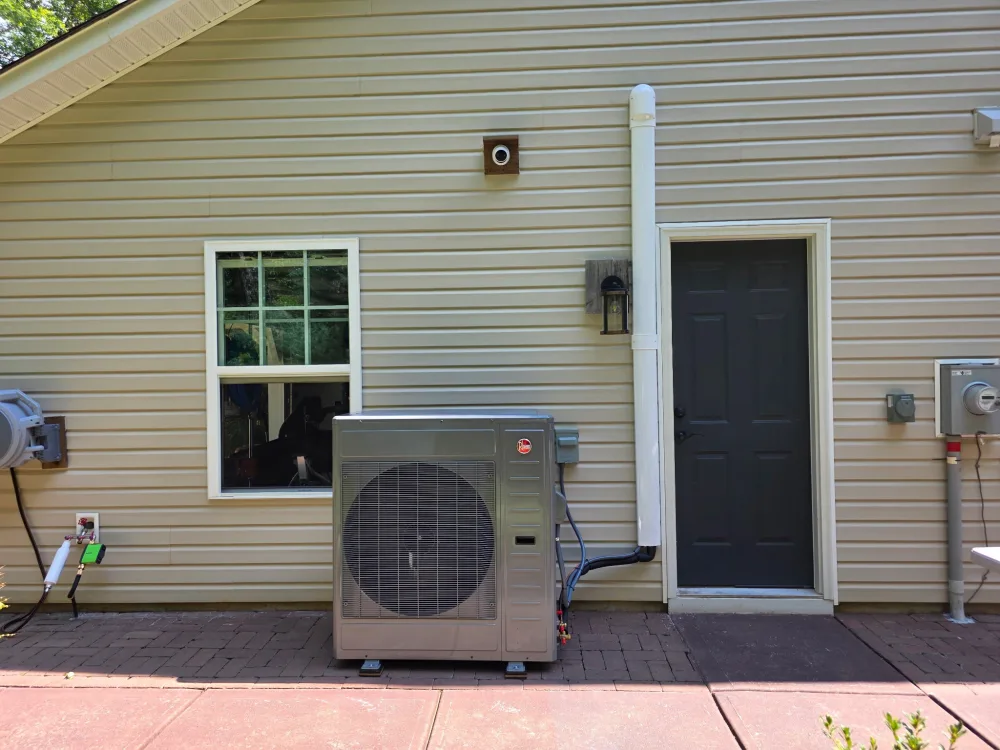
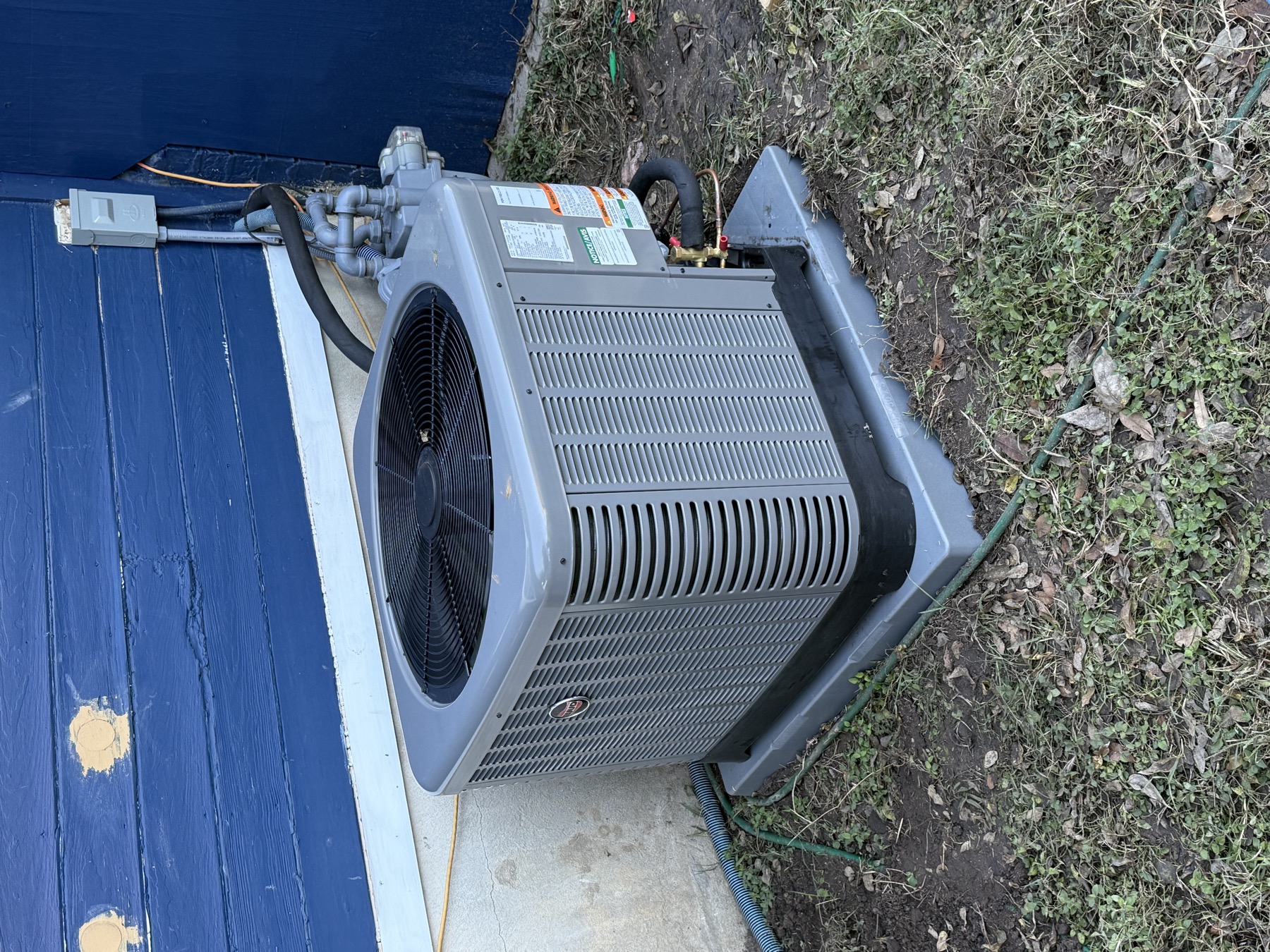
Most of the equipment shots above are replacement day: a Rheem, Carrier, or Goodman system taking over from something that earned its retirement. Look for the details that separate installed from installed right. The condensers sit dead level on proper pads, because a tilted condenser wears its compressor bearings unevenly for its entire life. The line sets run in clean, sleeved paths instead of drooping across the siding. Electrical whips and disconnects are mounted straight and weathertight. None of that shows up on a spec sheet, and all of it decides how the system ages.
The duct work
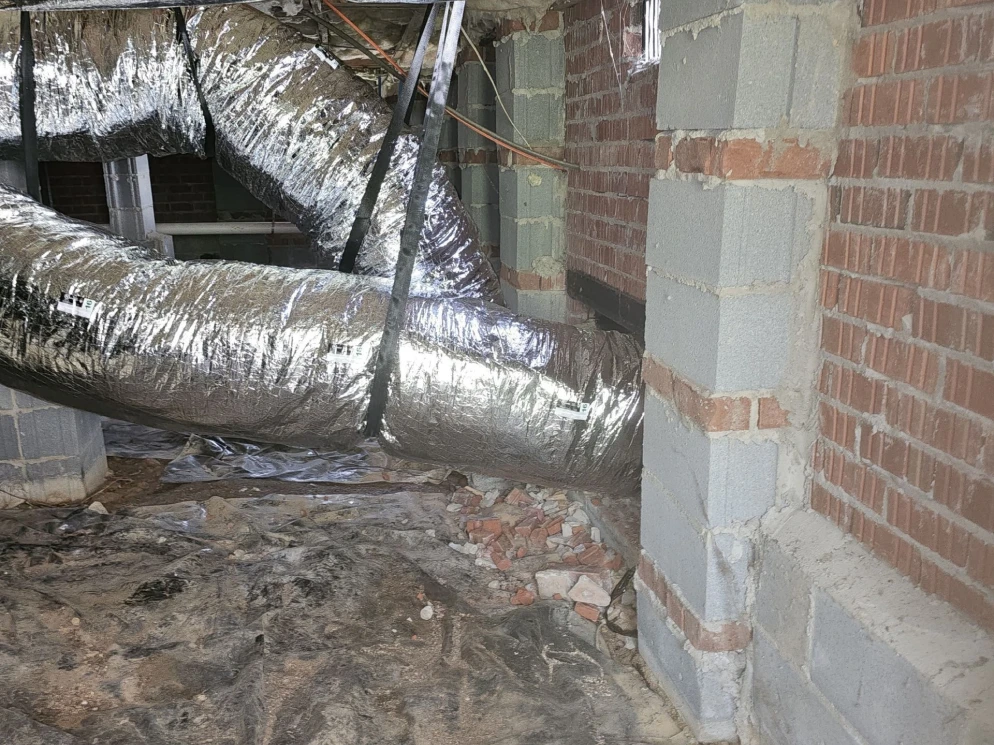
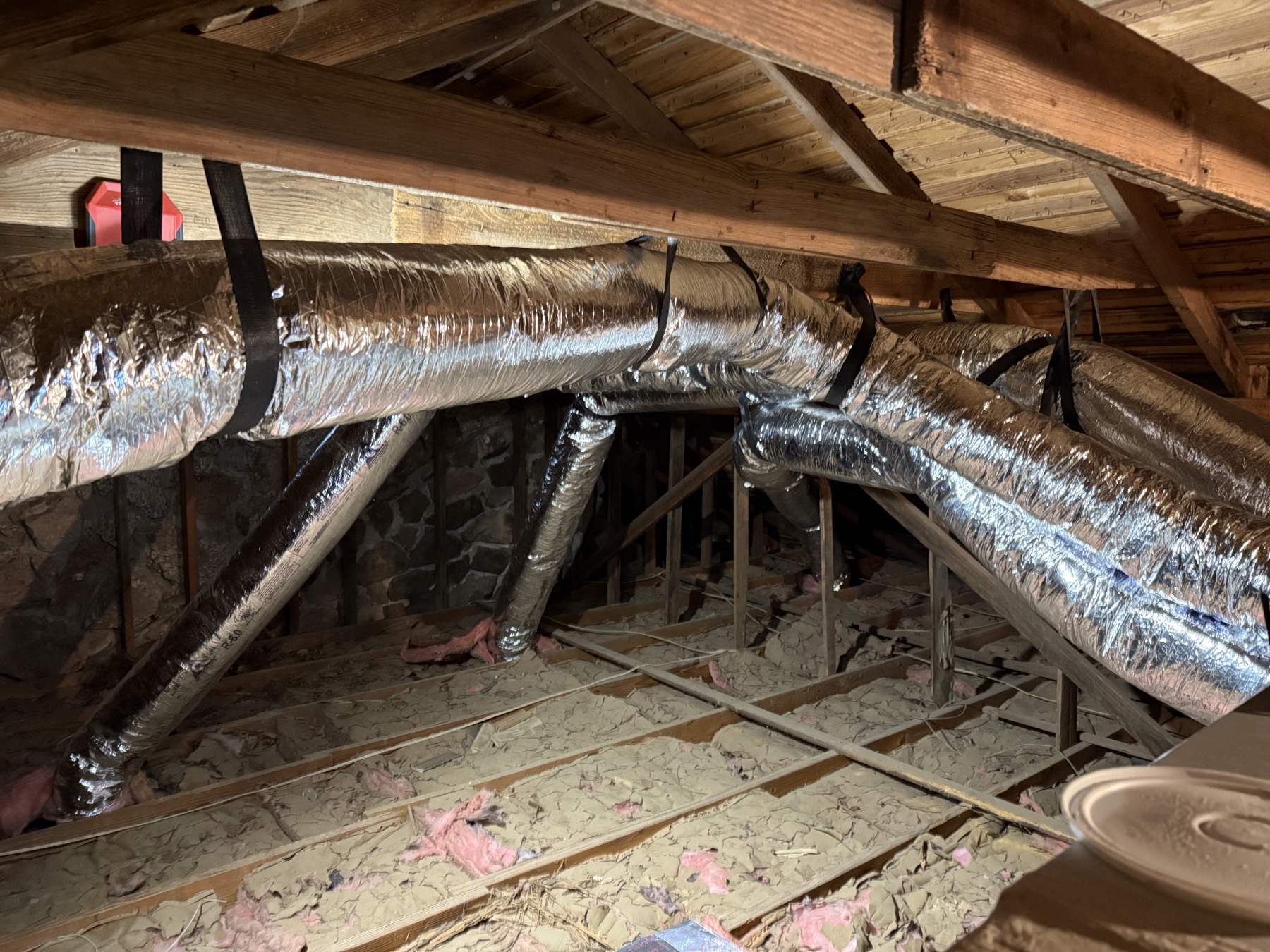
The silver runs you see snaking through attics and crawlspaces are the part of HVAC nobody photographs and everybody lives with. Ductwork moves every cubic foot of air you pay to heat and cool, and leaky, kinked, or undersized runs quietly waste a chunk of it in unconditioned space. Ours get fabricated in the warehouse first, then installed with proper supports and sealed joints, strapped so they stay where physics wants them for the next couple of decades. The one-day whole-home replacements our reviews mention happen because the fabrication already happened on our bench.
The mini-splits
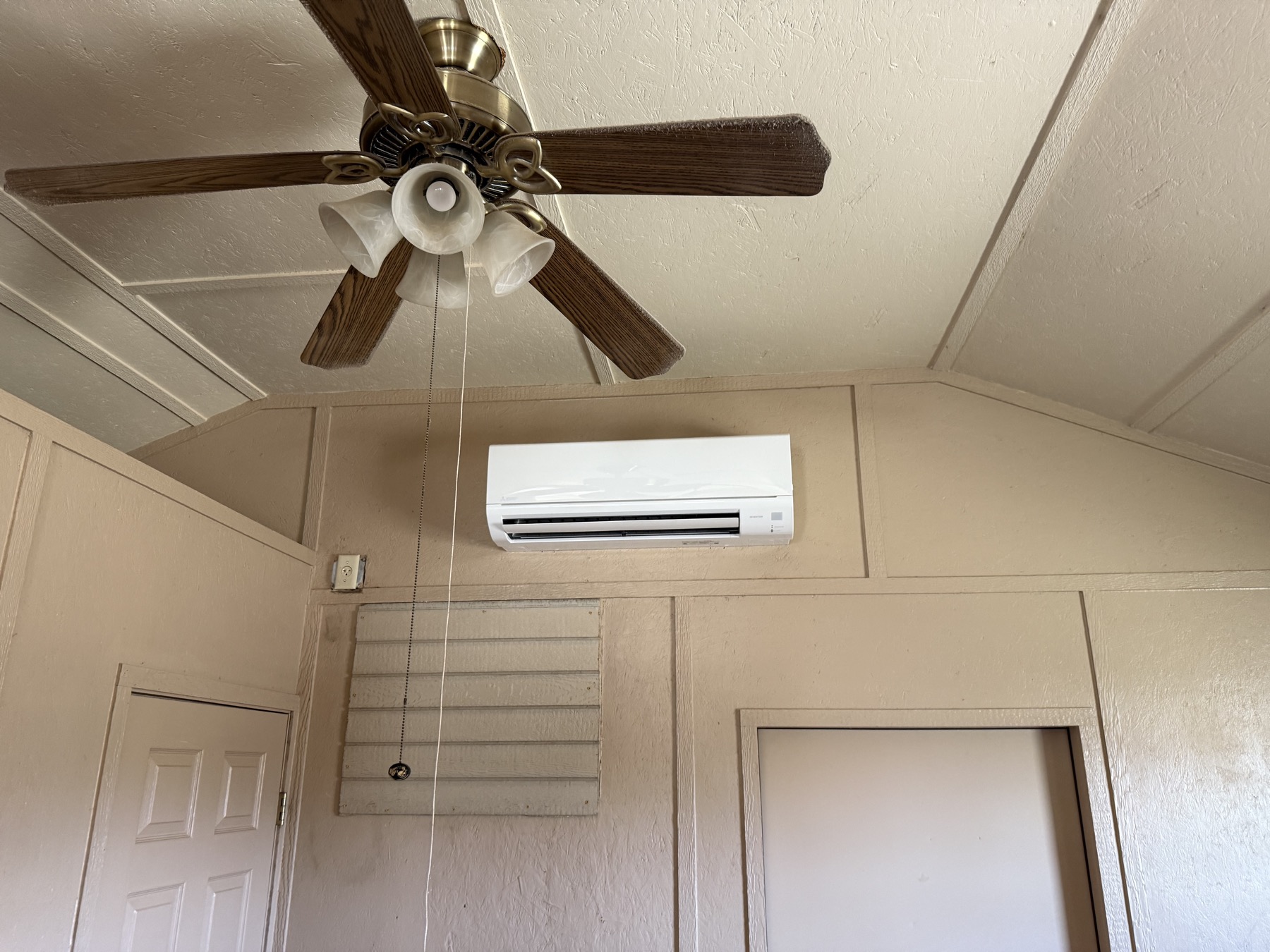
The wall-mounted heads and compact outdoor units are ductless systems doing what they do best: bonus rooms, garages, workshops, additions, and that one bedroom central air never conquered. Notice the heads hung level and the line sets routed tight to the structure. A mini-split install is carpentry, refrigeration, and electrical work meeting on one wall, and sloppy versions of it advertise themselves from the street.
The maintenance shots
The service shots are the honest part of the gallery. A gray blanket of Carolina pollen, grass clippings, and cottonwood chokes condenser fins every season, and it makes your compressor work harder on every single cycle. That is what a maintenance visit actually removes, and why the systems we maintain keep hitting their birthdays. If your outdoor unit is wearing that gray coat right now, your power bill already knows.
The diagnostics
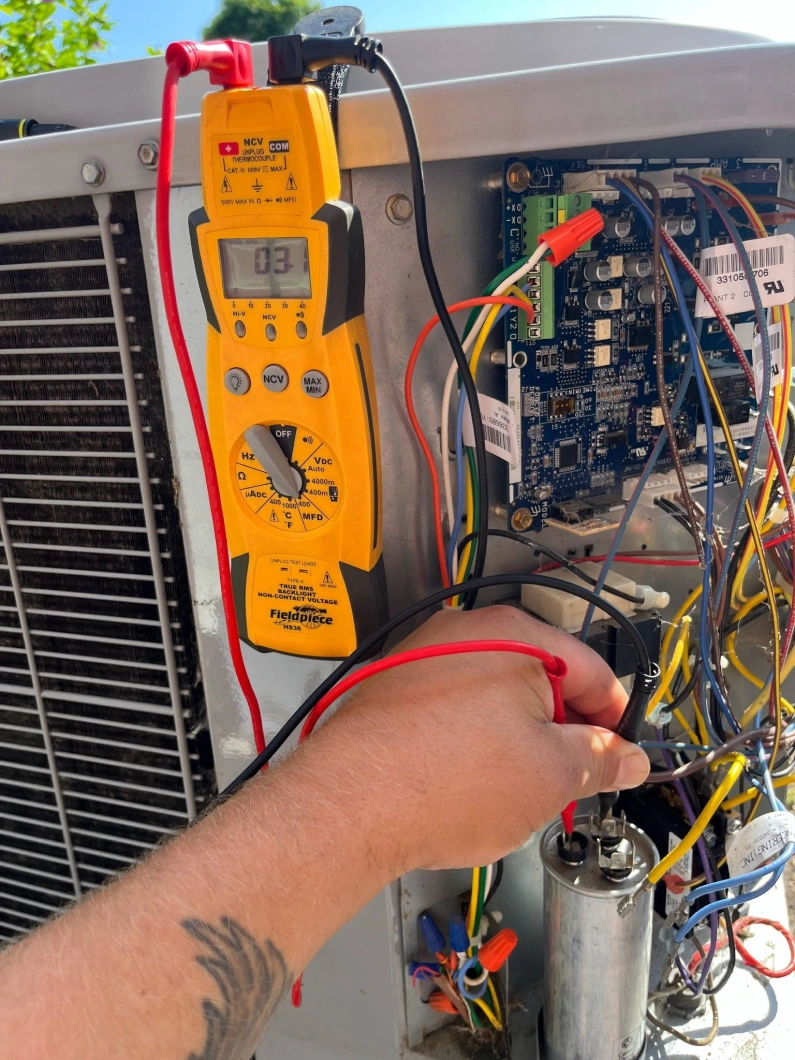
The multimeter and gauge shots are there on purpose. Diagnosis by instrument is the whole difference between fixing the actual problem and replacing parts until something works, which is a real strategy some outfits bill by the attempt. One reviewer specifically praised a wiring diagnosis after another company had called it a dead control board. Readings first, conclusions second, your money third. That order never changes here.
The trucks
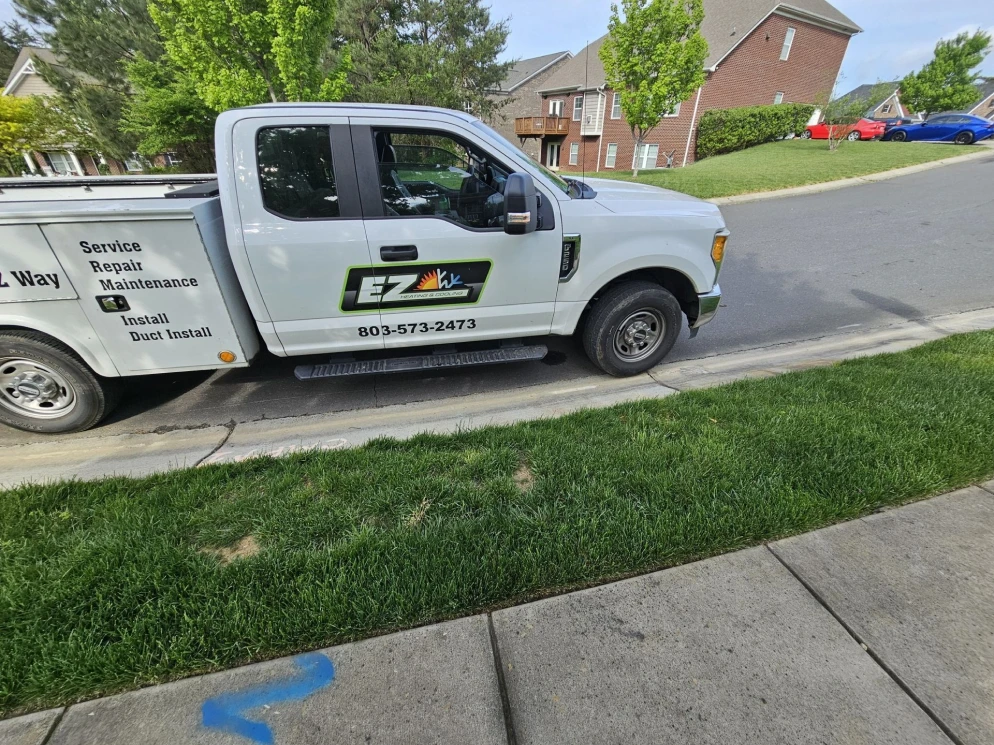
And yes, the rig. White truck, black trailer, the EZ logo, and (803) 573-2473 on the door. If it is parked in your neighborhood, somebody nearby is about to be comfortable. Wave at whichever Massey is driving.
The stories behind a few of these
The double-thumbs-up between two Rheem condensers was a two-system house where another company had quoted the homeowner a laundry list of problems on six units across the property. She was leery, a friend sent her our way for a second opinion, and we found exactly one real issue. We fixed that one, shook hands, and gained a customer who now sends us her friends and family. The thumbs are for the five systems that did not need anything.
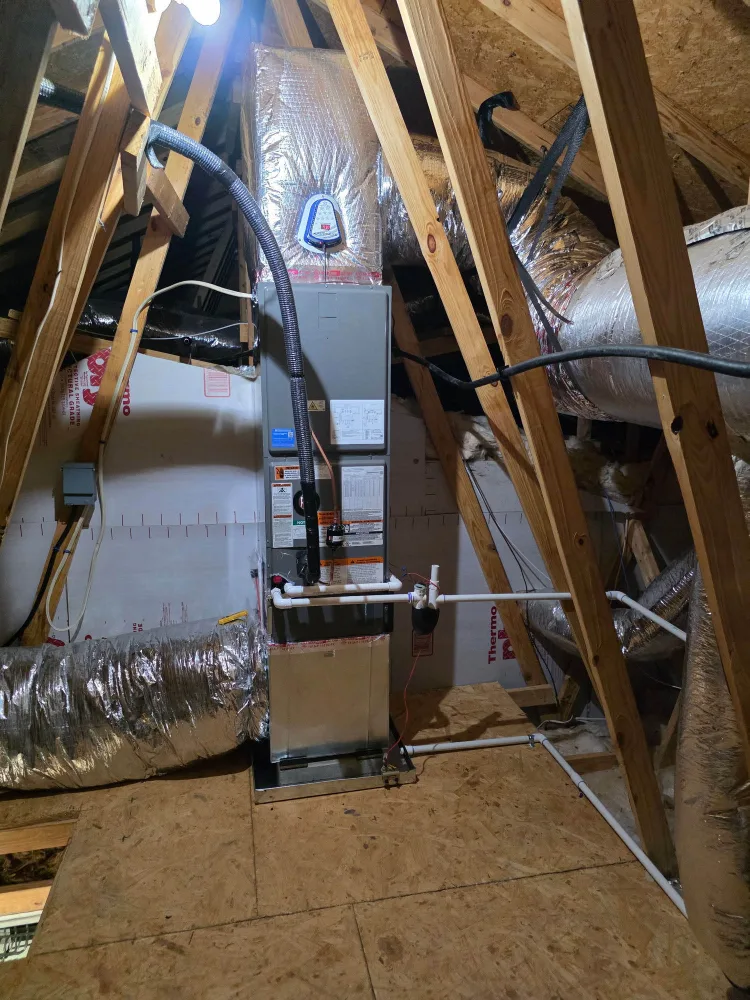
The attic furnace with the fresh venting belongs to the kind of job we like bragging about quietly. The old unit had a warranty part four weeks out, the house had no heat, and the homeowner called us after getting that timeline. We quoted a fair replacement, showed up on time, laid drop cloths through the whole house, and had the old system out and the new one heating the same day. His review mentions the workmanship. We mention that he checked our math on everything, which is exactly what homeowners should do.
The crawlspace and attic duct shots are from whole-home replacements where the ductwork was fabricated in our warehouse days before anyone touched the house. One of those customers wrote that the air distribution improved so much the far bedrooms finally matched the thermostat, which is the entire point of duct work done right. Another said the off-site build made install day, in her words, amazingly EZ. We put that word on the trucks, so it is nice when customers hand it back.
And the maintenance stops behind this gallery are routine visits around the metro, because every outdoor unit in the Carolinas grows a coat of pollen eventually. Pollen season alone guarantees it, and shady yards near the lakes speed it up. The owners on our maintenance list get twice-a-year checkups and their power bills came down measurably. The moral of the gallery is not that equipment gets dirty. It is that somebody local answers the phone when it does, at any hour, without an emergency surcharge.
How to read an HVAC photo like a pro
Next time any contractor shows you their work, run this checklist. Is the outdoor unit level, and is it sitting on a real pad rather than dirt or a wobble of pavers? Is there clear breathing room around it, or is it jammed against the wall it needs to exhaust away from? Are the refrigerant lines insulated the whole way, with the sleeve intact instead of crumbling in the sun?
Inside, look at the closet or attic unit. Straight, supported drain lines with a proper trap. A filter you can reach without gymnastics, in a rack that seals instead of whistling. Wiring loomed and secured, not draped. A unit that looks cared for usually was, and a unit that looks like a bird nest of tape and zip ties is telling you about every corner that got cut where you cannot see.
On ductwork, the tells are sag and seams. Flex duct should run in supported, gentle lines, not droop between joists like old power lines, and every joint should be mechanically fastened and sealed rather than taped and hoped. In a crawlspace, look for runs up off the ground and insulation that is dry and intact. Wet, crushed, or snaking duct is comfort leaking into dirt.
We are teaching you to grade our competition, obviously. But we are also teaching you to grade us, because we photograph our own work knowing exactly what a trained eye looks for, and we like our odds. Hold every crew in the Charlotte metro to this standard, including the two brothers on this page, and your house wins either way. That is the kind of arms race we are happy to start.
Your system could look this good, and probably should
A few things you might notice scrolling back up. The line sets are strapped and sleeved, not flopping loose. The condensers sit level on real pads. The attic furnace stands upright on a solid platform with its venting run clean. None of that is luck. It is the difference between installed and installed right, and it is why our reviews keep using the word workmanship. Your job gets photographed with the same pride, assuming you are okay with your closet becoming slightly famous.
Get an honest number on an install, replacement, or cleanup anywhere in the 30-mile radius. The visit is free, the number is in writing, and the 10% teacher and service-personnel discount applies here like everywhere else.