
Rock Hill · Measured first, fixed once
Cold air back in the house, starting with the real fault
Weak air out of every vent, a house that holds through the morning and gives up after lunch, a breaker that will not stay set, or an outdoor unit sitting dead silent in the worst of the heat. We come out to Rock Hill homes, measure what the system is actually doing, tell you what failed and why, and put the number in writing before the work starts.
We are Zach and Eric Massey, a family HVAC crew with 25 years in the trade. Rock Hill is a short run for our trucks. We answer 24/7, we charge the same price at midnight as at noon, and we repair every major brand.
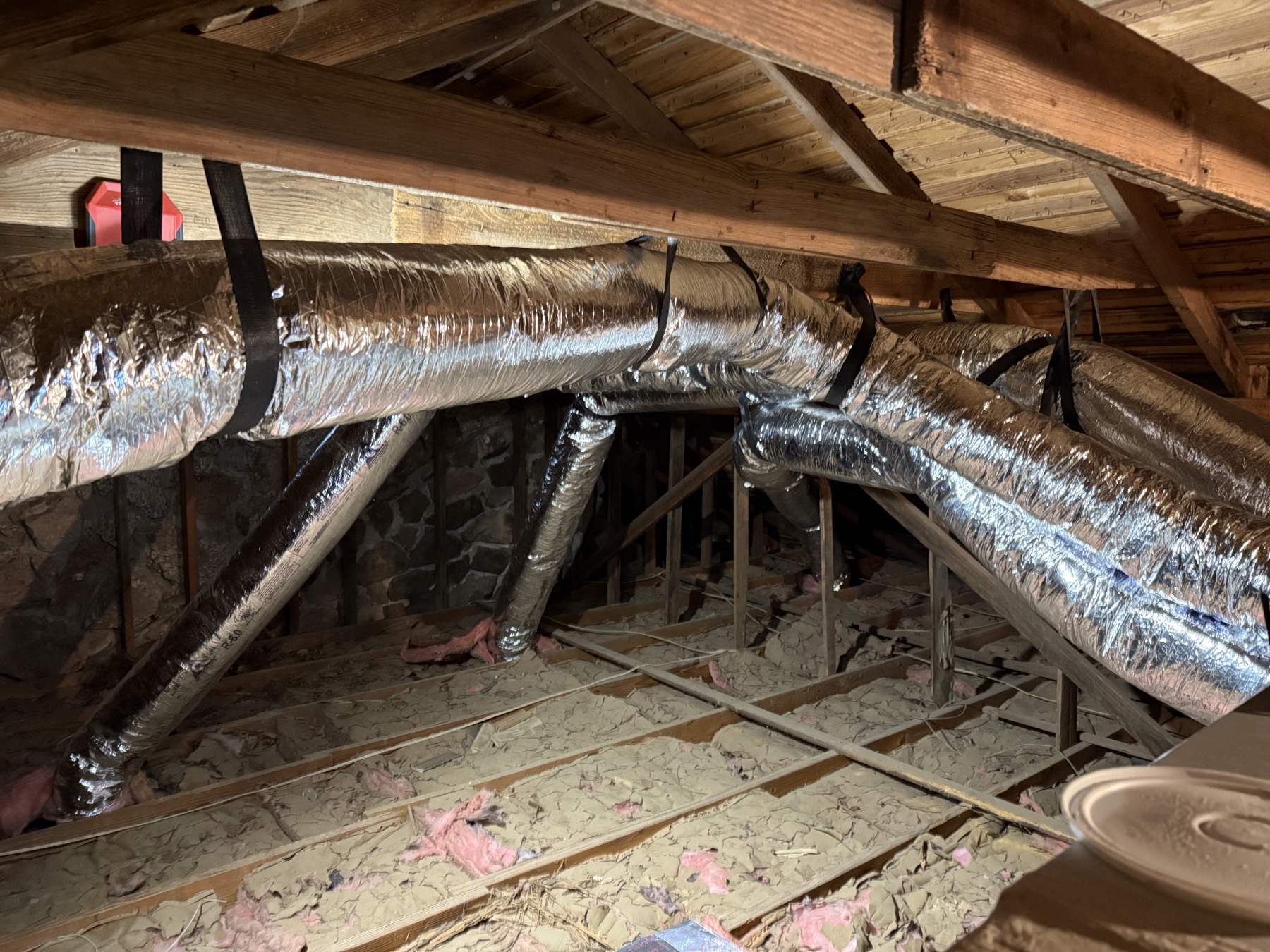
Weak air that turns out to be a duct under the floor
Old Town and the mill house crawlspaces
A great deal of Rock Hill housing sits on a crawlspace, and the supply ducts run down there in the dark where nobody looks. On the 1920s and 1930s mill houses around Old Town, that ductwork has been patched by several generations of trades. A joint pulls loose from a boot, a flex run gets crushed by somebody crawling past to reach a pipe, and one end of the house stops holding temperature.
The complaint that reaches us is almost always that the AC feels weak. The equipment gets blamed, and sometimes the equipment is perfectly healthy. Cold air dumped under the floor never reaches the back bedroom, so we check static pressure and vent temperatures before anyone reaches for a part. Finding a disconnected duct makes for a much cheaper afternoon than replacing a compressor that was never sick.
The ranch belt, and rooms that gave up
The 1960s through 1980s ranches spread across the middle of the city share a pattern: long duct runs out to the far bedrooms, insulation that has flattened over decades, and returns that were undersized the day they went in. Those homes tend to cool the center of the house beautifully and lose the back rooms every July afternoon, year after year, while the thermostat in the hallway reports that everything is fine.
That is a distribution problem wearing a repair problem’s clothes. We measure room by room, then say plainly whether the answer is a duct repair, a sealing and insulation issue, or genuinely the equipment. If it is the equipment, we tell you that too. What we will not do is sell you a condenser to solve a crawlspace problem.
When the thermostat is satisfied and the house still feels wet
Clammy at seventy four is a real complaint
Rock Hill summers stay humid for months at a stretch, and an air conditioner has two jobs down here: drop the temperature and pull water out of the air. A system can do the first and quietly fail the second. The thermostat reads exactly what you asked for, the house still feels like a locker room, and you start wondering whether you are imagining it. You are not.
Sticky air at the set temperature usually points at runtime. A system that cools in short bursts never runs long enough for the indoor coil to condense much moisture, so humidity climbs while the temperature looks correct. Low refrigerant, restricted airflow, and equipment that is simply too large for the house all produce that same clammy result from three different causes.
Short cycling and oversized equipment
Oversized cooling shows up often on houses that got a replacement system picked by rule of thumb instead of by an actual load calculation. The unit slams the thermostat to its setting in a few minutes, shuts off, then repeats all afternoon. Every start is hard on the compressor, the power bill climbs, and the house never gets a chance to dry out.
We can tell the difference between a system short cycling because it is oversized and one short cycling because a component is failing. Those two situations have completely different answers, and only one of them is a repair. Knowing which one you have is worth more to you than any part we could sell you that day.
What a real diagnostic looks like
A parts swap guess sounds like this: the tech hears the symptom, changes the part that usually causes it, and leaves. Sometimes that lands. When it misses, you paid for a part your system did not need and the fault is still sitting in the house. Our visits start with gauges, meters, and temperature probes instead, because a weak capacitor can imitate a failing compressor and a starved coil can imitate a leak.
Once the numbers say what failed, you get it in plain English, along with anything sitting right behind it. The diagnostic carries one upfront rate, quoted on the phone before anyone drives, and it applies toward the repair when you go ahead. The repair price is in writing before a part comes off the truck. Nights and weekends cost the same as a Tuesday afternoon, and teachers and service personnel take ten percent off.
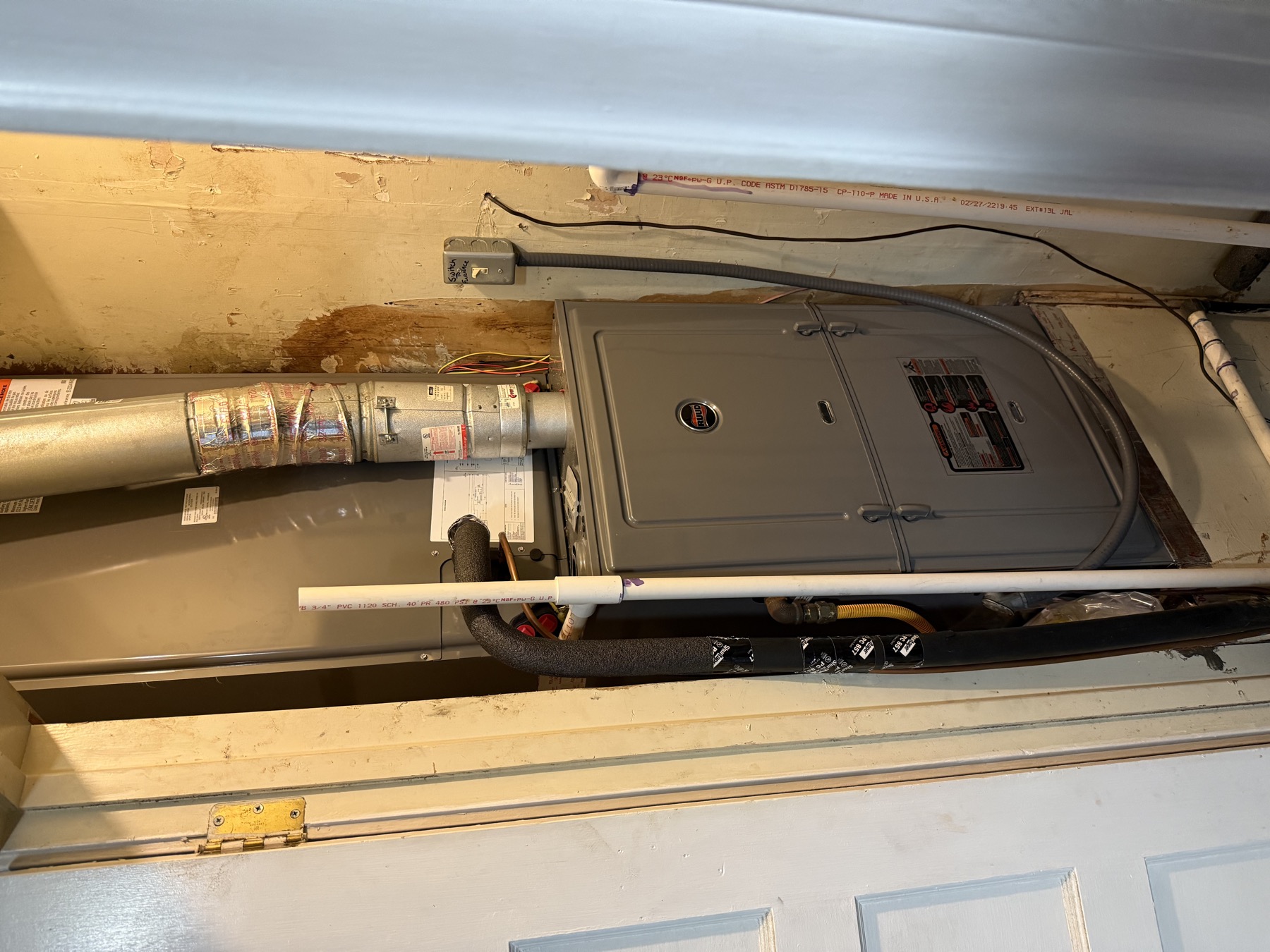
Loaded and out the door for a Rock Hill service call.
Heat pumps, and why a July repair often starts in January
One machine working both seasons
Most of the newer construction around Rock Hill, and there is plenty of it as Charlotte keeps spilling south, runs a heat pump rather than a gas furnace. That means the same outdoor unit works all twelve months. It cools you in August and heats you in January, so it piles up roughly twice the runtime of a system that gets to nap for half the year.
The practical result is that a summer no-cool call frequently uncovers wear that started back in heating season. A reversing valve that hesitated in February, a defrost control that was already flaky, a contactor pitted from winter cycling. The symptom finally shows up in cooling because that is the season when you are paying attention to it.
What we check before naming a part
On a heat pump we look at both modes even when you called about cooling. Charge, reversing valve operation, defrost board behavior, and the outdoor fan all get checked, because the part that failed in July often has a partner that will fail in December. Telling you now is cheaper for you than a second trip in the cold.
If the conversation moves past a single repair, our heat pump service page covers full systems and the Rock Hill heat pump page covers the same ground closer to home. The winter half of the same house lives on our Rock Hill furnace repair page.
July failures, and the honest refrigerant conversation
Why parts die in clusters during a heat wave
Capacitors and contactors are the two parts we replace most between June and September, and they fail in bunches for a reason. Heat is what wears a capacitor out. A run of upper nineties days pushes attic and outdoor temperatures higher still, the component that was already weak finally crosses its limit, and half the county calls us in the same week.
That is also why our trucks stay stocked around exactly that list all summer. Common capacitors, contactors, motors, and drain tooling ride with us from spring on. When a Rock Hill house goes warm on a Saturday afternoon, the difference between fixed today and fixed next week is usually whether the part was already on the van.
Leaks, and older refrigerant
Refrigerant does not get used up. If a system is low, it leaked somewhere, and adding more without finding the leak is renting cool air by the month. We look for the leak, show you where it is, and price the repair against the age and condition of the equipment. Sometimes the coil itself is the leak, and that changes the math considerably.
Older systems around Rock Hill often run a refrigerant that is no longer produced, which makes recharging progressively harder to justify on equipment that leaks. We will tell you plainly where your system sits on that curve. If replacement makes more sense, our AC installation page lays out how that goes, and you decide without pressure.
Want a straight answer first?
Ten minutes on the phone usually tells us plenty. The visit puts real numbers on it, in writing, before any work starts.
Rock Hill AC repair questions, answered straight
My AC keeps up in the morning and loses the house after lunch. What is that?
That pattern usually means the system has just enough capacity for a mild morning and not enough for a Rock Hill afternoon. Causes range from a dirty outdoor coil to low charge to duct losses under the floor. We measure temperature split and pressures at peak load, because a system tested at nine in the morning can look fine and still fail you at four.
Could weak airflow really be a duct problem under my house?
Often, yes, especially on the older crawlspace stock around Old Town and the mill neighborhoods. A supply run that pulled loose from its boot dumps conditioned air into the crawlspace, and the room at the end of that run never catches up. We look under the floor before we condemn equipment. It is a common find and usually a smaller repair than the one people brace for.
The thermostat says seventy four and the house still feels damp. Is that a repair?
It is a real symptom and worth a call. Humidity control depends on runtime, so a system that satisfies the thermostat in short bursts never removes much moisture. Low charge, restricted airflow, and oversized equipment all cause it, and the correct fix depends on which one you actually have. That is why we measure instead of guessing.
My house is newer and has a heat pump. Does that change a summer repair?
Somewhat. The same outdoor unit runs in both seasons, so a cooling failure often traces back to wear that began during heating months. We check reversing valve operation and defrost behavior on a no-cool call even though you did not ask about heat, because catching the winter half now saves you a December visit.
How fast can you get to Rock Hill?
Rock Hill is a short run from the shop, so emergencies usually see a truck the same day and often within a couple of hours, depending on where our crews are working. Scheduled repairs book into a window that suits you and we show up inside it. The price does not change with the hour or the zip code.
My system uses an older refrigerant. Should I keep repairing it?
It depends on what failed. A capacitor or contactor on an older system is still worth fixing. A leaking coil on equipment running a refrigerant that is no longer produced is a different conversation, because every recharge gets harder to justify. We price the repair, sketch the replacement math, and tell you which way we would go at our own house.
Do you charge extra for nights and weekends?
No. The 24/7 line carries no emergency surcharge. Your compressor did not check the calendar before it quit, and charging extra for bad luck never sat right with us. A Saturday midnight repair costs what the Tuesday afternoon version costs.
The rest of the Rock Hill picture
Repairs are one piece of how a house behaves. When the fix stops making sense, replacement and sizing are the next honest conversations, and when the trouble shows up in January instead of July, that is a different visit entirely.
Rock Hill · York County · AC Repair · Rock Hill Mini Splits · Rock Hill Emergency HVAC
Want proof before the phone call? The gallery is all real jobs, ours, photographed on the day.