
York County · Waterfront, woods, and everything mechanical between
Lake Wylie HVAC, tuned specifically for life right at the water line
The Lake Wylie community wraps its long shoreline in everything from decades-old lake cottages to brand-new waterfront builds worth every inch of the view, with wooded neighborhoods rolling back from the water on both sides and River Hills anchoring the established end of the story. What the spread shares is the lake itself, whose humidity, storms, and seasonal rhythms write the first chapter of every mechanical story on this side of the county.
We run the whole community from Fort Mill, an easy arc around the water, with the full roster and the lake-country specialties leading: moisture control by measurement, dock-adjacent equipment given honest weather-exposure advice, veteran cottage systems treated with respect, and the 24/7 no-extra-fee line covering every address from the dam to the state line.
The lake community, mapped honestly
Where we work
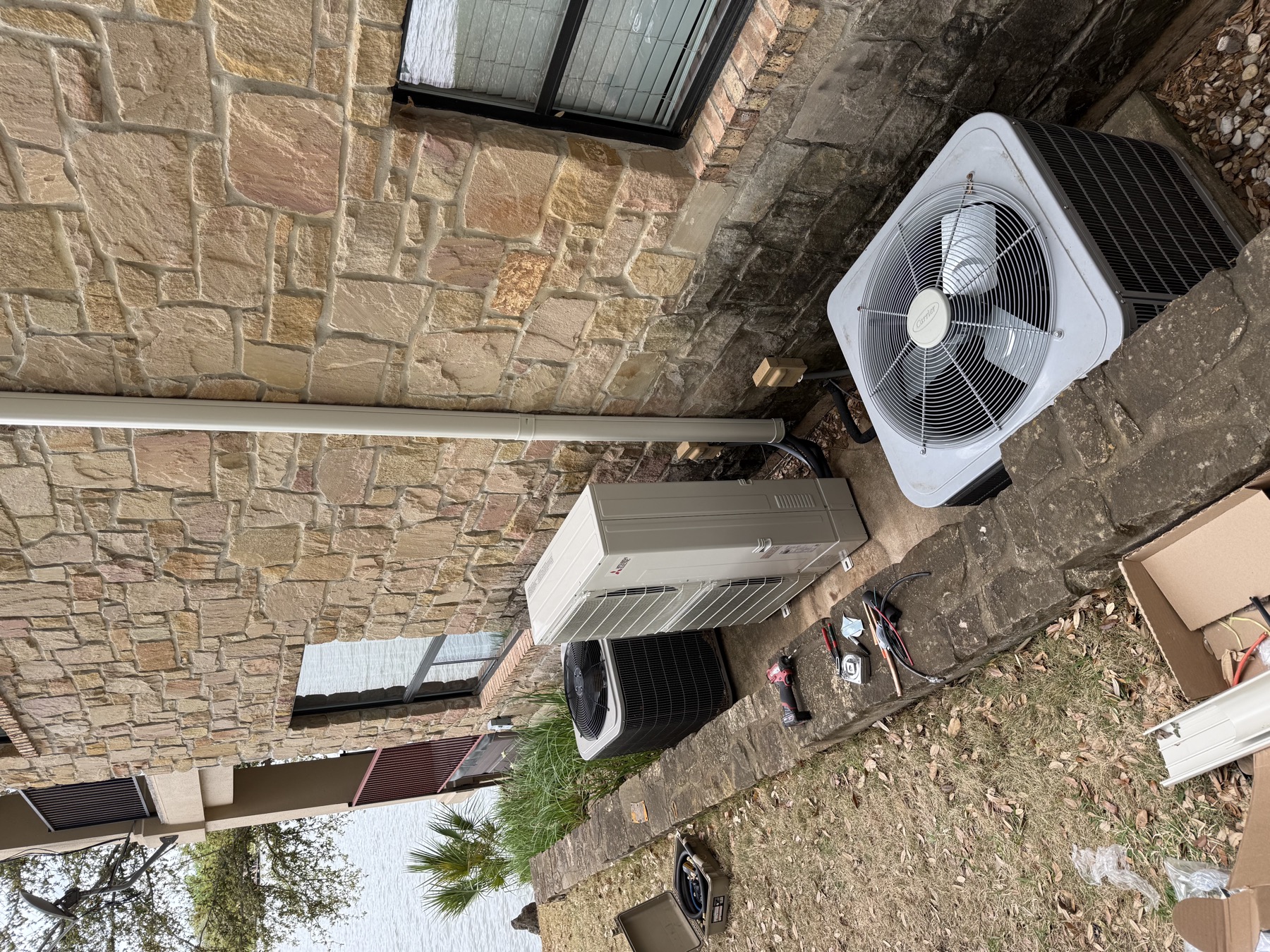
From River Hills’ established loops to the newer builds off Highway 49 and the wooded streets rolling back from every cove, the Lake Wylie community sits an easy arc from our shop, close enough for same-day standards, honest emergency response at any hour, and follow-up visits that cost us nothing to promise. The hero photo above is a lakeside job from exactly this stretch of shoreline: a stone house, a mini-split earning its keep, and the water sitting fifty feet away with opinions about everything.
The community’s spread across coves and peninsulas rewards local routing knowledge, which we have accumulated the honest way, and the county page holds the wider context. Waterfront or woods, the prices and the standard never change with the view.
The short version
Lake-country moisture handled by instruments and readings, cottage veterans handled with the respect their decades earned, new waterfront builds handled to the standard their architecture expects, and every quote on every cove written down before any work begins, exactly as it works everywhere else we go.
Waterfront equipment and the weather’s opinion
Living fifty feet from the humidity source
Waterfront systems work inside the lake’s immediate atmosphere every day of their lives: humidity baselines that inland houses simply never see, morning condensation as a routine daily event, and cooling seasons that quietly ask more of every component from the coil to the drain line. The mechanical consequences arrive on schedule, drain clogs leading summer, coil biology accelerating, crawlspaces near the water staying damp long after rains, and we plan lakeside service around exactly that calendar.
The waterfront answers are measurement-led: dehumidification where readings justify it, coil treatment where biology has a head start, drainage engineered to work without human memory, and equipment placement that respects splash, runoff, and the occasional flood-adjacent surprise. The lake will not negotiate, so the installations have to.
Storms across the water
Lake Wylie’s summer cells are dramatic to watch and expensive to host: lightning across open water takes boards, contactors, and the occasional compressor every season, and the community’s storm-damage file is the thickest on our map. Surge protection at the condenser is standard advice in every lakeside quote, cheap against what it prevents, and post-storm system checks catch casualties before the next heat wave conducts its own inspection.
Power interruptions add their chapter: brownouts and restarts stress equipment in ways clean shutdowns never do, and hard-start kits earn their modest price on the lake side of the county more obviously than anywhere. When the big storms do damage, the documentation we generate supports the insurance conversation properly, which owners appreciate exactly once and remember forever.

A Rheem furnace standing tall in an attic.
Cottages, new builds, and the honest range
The veteran cottages and their keepers
The lake’s older cottages and River Hills’ established homes carry veteran systems with real decades of service behind them, and they get our full veteran-system honesty: instruments before verdicts every time, repairs priced beside replacements in writing, and plenty of old workhorses earning genuine extra seasons because the math, run openly at the kitchen table, actually supported it. Cottage owners tend to know their houses deeply, and the kitchen-table history they provide routinely shortcuts an hour of diagnosis.
Where the cottages want modern comfort, ductless zones respect their bones: heads that spare original walls, right-sized equipment for compact volumes, and additions conditioned without stretching whatever the seventies installed. The stone-house install in the hero photo is the genre exactly, and the genre is one of our favorites.
The new waterfront standard
The lake’s newer builds bring bigger volumes, wall-of-glass views, and owners who expect mechanical systems to match the architecture: multi-zone designs mapped on paper, load calculations that respect the glass and the exposure, humidity control engineered in rather than bolted on, and controls that manage it all from wherever the owners happen to be.
Two-system and three-zone homes are ordinary at the waterfront, and the coordination discipline, staging configured, borders set, systems cooperating rather than competing, is where instrument commissioning shows its worth. The view is the house’s argument; the comfort should never have to be.
Lake-community service, practically
The seasonal file
Summer runs the waterfront campaign: cooling triage, drain seasons that outlast inland ones, and the humidity conversations that the lake schedules annually. Winter brings the cold snaps across open water, furnace and heat pump work in equal measure, and the vacation-home checks that keep empty houses from surprising their owners in February.
The twice-yearly rhythm earns lakeside keep more than anywhere: equipment that works harder deserves scheduled attention, and the maintenance households watch the storm and snap seasons from the comfortable side of the glass. Second-home owners get the rhythm adapted to their calendars, with reports that travel by phone.
The standard, delivered at the shoreline
Everything on this site reaches the lake intact: written prices, the no-surcharge 24/7 line, warehouse-fabricated duct work, the 10% teacher and service-personnel discount, and Optimus Financing behind the waterfront-scale projects. The free pricing visit covers every cove, and the quotes are written to survive comparison with anyone in the metro.
And the crew that arrives is the crew that quoted: two brothers from ten minutes east, uncommissioned, instrument-led, and honestly fond of this particular stretch of shoreline. The lake writes the first chapter of every mechanical story here. We write the rest, in plain English, with the readings attached.
The lake year, season by season
From first pollen to last cell
The lake’s year opens with pollen riding the water’s breezes into every coil and filter on the shoreline, and spring service season books the waterfront first for good reason. By June the humidity campaign is fully open, drains work their overtime, and the afternoon cells begin their summer residency over the water, taking their annual tax of boards and contactors from the unprotected.
August is the shoreline’s annual endurance test, with equipment running its hardest exactly when the storms are most frequent overhead, and the maintained systems show their spring service in the margins: cleaner coils holding capacity, treated drains staying open, and surge-protected condensers shrugging off what the cells throw. The unmaintained systems, meanwhile, keep our emergency line honest.
From first snap to last frost
Fall arrives across the water carrying the year’s best service weather, and the smart end of the shoreline books it early: heating sides verified while the calendar is open, vacation homes buttoned properly for the quiet months, and the veteran cottages given their honest instrument-led pre-winter reads. The first snap runs its dawn exam countywide, and the lake’s exposed positions feel it first and hardest.
Deep winter runs quieter at the shoreline, second homes sleeping soundly under managed humidity, cottages heating their compact volumes economically, heat pumps working the mild weeks at their efficient best, until the annual teens-and-twenties mornings arrive on schedule to sort the prepared households from the surprised ones. Then the light turns, the pollen loads the breeze again, and the lake’s mechanical year restarts with our instruments already calibrated for it.
The Lake Wylie promise
Moisture expertise by measurement, storm-season preparedness by default, cottage honesty and new-build standards in the same truck, and every price in writing from River Hills to the state line. The 24/7 line answers the lake at the same no-surcharge rate as everywhere, and the free pricing visit covers waterfront and woods alike.
The water gets its vote on every mechanical system at the shoreline, daily and without appeal. So do you, and yours comes with a written quote attached: (803) 573-2473, any hour of any season, answered by a Massey who knows exactly which cove you mean.
Same crew. Same price. Any hour.
No after-dark surcharge and no phone tree. If your system cannot wait until morning, neither do we.
Lake Wylie questions, answered at the water line
Is waterfront HVAC really different from regular service?
Measurably: humidity baselines, storm exposure, and equipment workloads all run higher at the shoreline, and the service calendar follows. The answers are ordinary once measured, dehumidification, surge protection, drainage discipline, twice-yearly rhythms, but skipping the measurement is how waterfront owners end up buying the same repairs annually. The instruments settle it house by house.
Do you service River Hills?
Regularly, and the community’s established homes get exactly the treatment their veteran systems deserve: honest instruments-first diagnosis, repairs priced beside replacements, and the keep-or-retire math run without a sales script. Gate logistics are ordinary for us, and the community’s word-of-mouth has been generous.
Can you maintain our lake house while we are away?
Yes, and the second-home rhythm is a real service line: seasonal checks adapted to your calendar, systems verified before your summer arrivals and after the storm seasons, humidity managed so the empty months do no quiet damage, and reports that travel by phone with photos. Empty houses surprise their owners expensively; checked houses do not.
What should waterfront owners do before storm season?
Three cheap things: surge protection at the condenser, a hard-start kit where the equipment benefits, and a pre-season check that verifies drainage and connections before the cells arrive. After close strikes, the quick system check catches casualties early. The lake hosts the storms either way; the preparation decides what they cost.
Our cottage’s system is twenty years old but running. Replace it?
Not automatically: veteran systems that were installed well and maintained occasionally can earn real extra seasons, and we keep plenty of lake cottages running on exactly that honest math. The instruments read the system’s actual condition, both paths get priced in writing, and the decision stays yours without a countdown timer attached.
How fast can you reach the lake side in an emergency?
An easy arc from Fort Mill, honestly quoted on the call and prioritized at the standard emergency order: vulnerable households first, genuine emergencies next, honest windows for all. The no-surcharge policy covers the shoreline at every hour, and the routing knowledge accumulated across the coves keeps the windows tight.
Do dock and boathouse spaces ever get conditioned?
More often than you would guess: boathouse lofts, dockside bars, and lake-office conversions all run on mini-splits sized for their exposure, with equipment placement that respects spray and flood lines honestly. Some placements are genuinely unwise and we say so, but the feasible ones make some of the most enjoyable installs on our calendar.
What do you work on most around the lake?
Moisture leads: dehumidification, drain seasons, and coil biology, with storm-damage boards close behind every summer. The cottage-and-new-build range keeps ductless retrofits and multi-zone commissioning steady, and the replacement waves arrive as the newer neighborhoods hit their birthdays. The lake keeps the roster fully employed, which suits us fine.
Around the lake
The lake towns and the county page hold the wider water story, and the services below run shoreline duty daily.
Tega Cay · York County · Clover · Dehumidification · Mini-Split Installation · Emergency HVAC
Want proof before the phone call? The gallery is all real jobs, and the financing page covers the big-ticket math.