
Cooling
A new air conditioner sized to the house York actually built
Plaster rooms with tall ceilings near the old courthouse. A ranch on the edge of town whose builder-grade unit is at the end of its run. A farmhouse addition that has never once been comfortable in August. Each of those wants a different system, and a catalog cannot tell them apart. We measure the house, run the load math, and put the honest number in writing before anything gets ordered.
We are Zach and Eric Massey, a family crew with 25 years in the trade behind us. The pricing visit costs you nothing, second opinions are free as well, and somebody answers the phone around the clock.
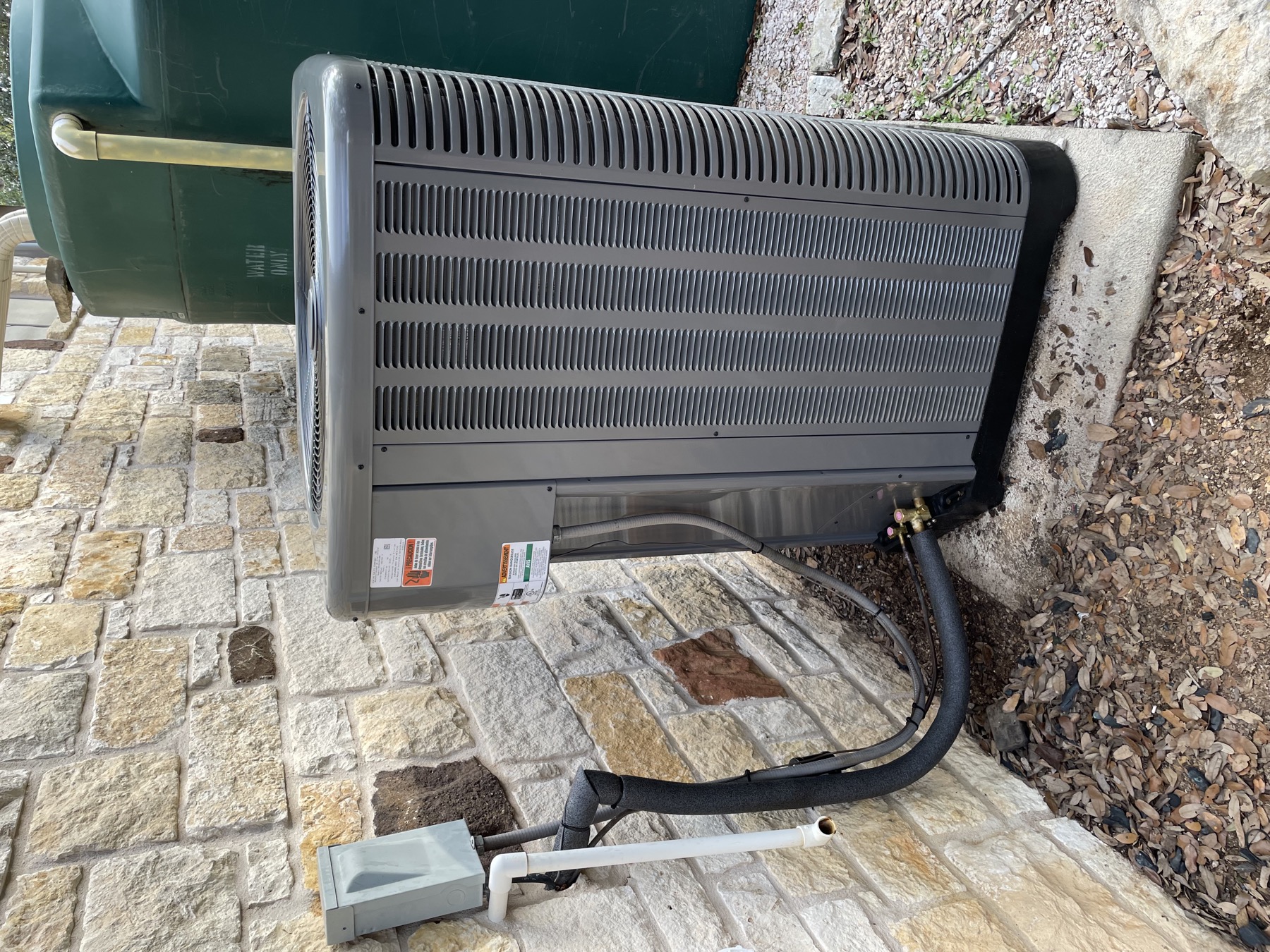
Load math for rooms with real ceilings
Why the catalog guesses wrong here
Most replacement quotes start from the square footage on a tax card and a rule of thumb written for a suburban house with eight foot ceilings. York’s older homes break that rule in both directions. Tall ceilings hold more air than the floor area suggests, while thick walls and deep porches can keep a room cooler than its size would predict. A guess built on square feet alone tends to land oversized.
Oversized equipment is the quiet failure. It drops the temperature fast, shuts off before the coil has pulled much water out of the air, and leaves you at the right number on the wall in a house that feels sticky. It also starts and stops far more often, and every start wears on the compressor.
What we actually measure
Before we recommend a size, we walk every room. Ceiling heights, window count and exposure, the insulation we can see, the condition of the ductwork, and how your family really uses the house all go into a proper load calculation. It takes longer than reading a model number off the old unit and ordering the same thing again. That extra hour is the whole point.
Sometimes the answer matches what was there. In the historic district it often comes in smaller, and a house that has grown an addition occasionally needs more. Either way you see the numbers behind the recommendation, so you can hold every other quote up against the same yardstick.
Where the condenser sits on a street people photograph
Siting before the order goes in
In the historic district an outdoor unit becomes part of the streetscape whether anyone likes it or not. Equipment facing a celebrated front elevation draws attention in review, and a project that has to move its condenser after the pad is poured burns time and money. So placement comes first for us: side and rear yards, the sightlines from the sidewalk, and screening that suits the house.
Clearance still has to work. A condenser jammed against a wall or boxed in by a tight fence breathes its own hot exhaust and runs harder every afternoon. We look for the spot that satisfies review and airflow at once, and when those two disagree, you hear about it while it is still a sketch.
Paperwork that moves
Exterior equipment in the district comes with review realities attached, and we treat them as part of the job from the first visit. We prepare the documentation ourselves. You get the steps laid out in order at the start, including which pieces of the job need sign-off and how long that tends to take.
If the first-choice spot cannot be approved, the alternatives come to you with their costs written beside them. Working in this order looks slower on paper and runs faster in practice, because nothing goes in that later has to come back out.
When a veteran unit still deserves another summer
Plenty of systems in town are past fifteen years old, and some of them still run well. Age alone is a poor reason to replace anything. When we look at an older air conditioner, the instruments go on first, and then the repair gets priced beside the replacement on the same sheet of paper so you can see both roads at once.
If the repair is reasonable and the rest of the system is sound, we say so and fix it. Reviewers have noticed that we would rather salvage a system than sell one. When the math leans the other way (a leaking coil on equipment that runs a refrigerant nobody makes anymore, or a compressor failing on a unit already patched twice) we show you the readings that tipped it. Our AC installation overview explains how we approach every replacement, wherever the house is. And if another company already told you the whole system has to go, that second look costs you nothing.
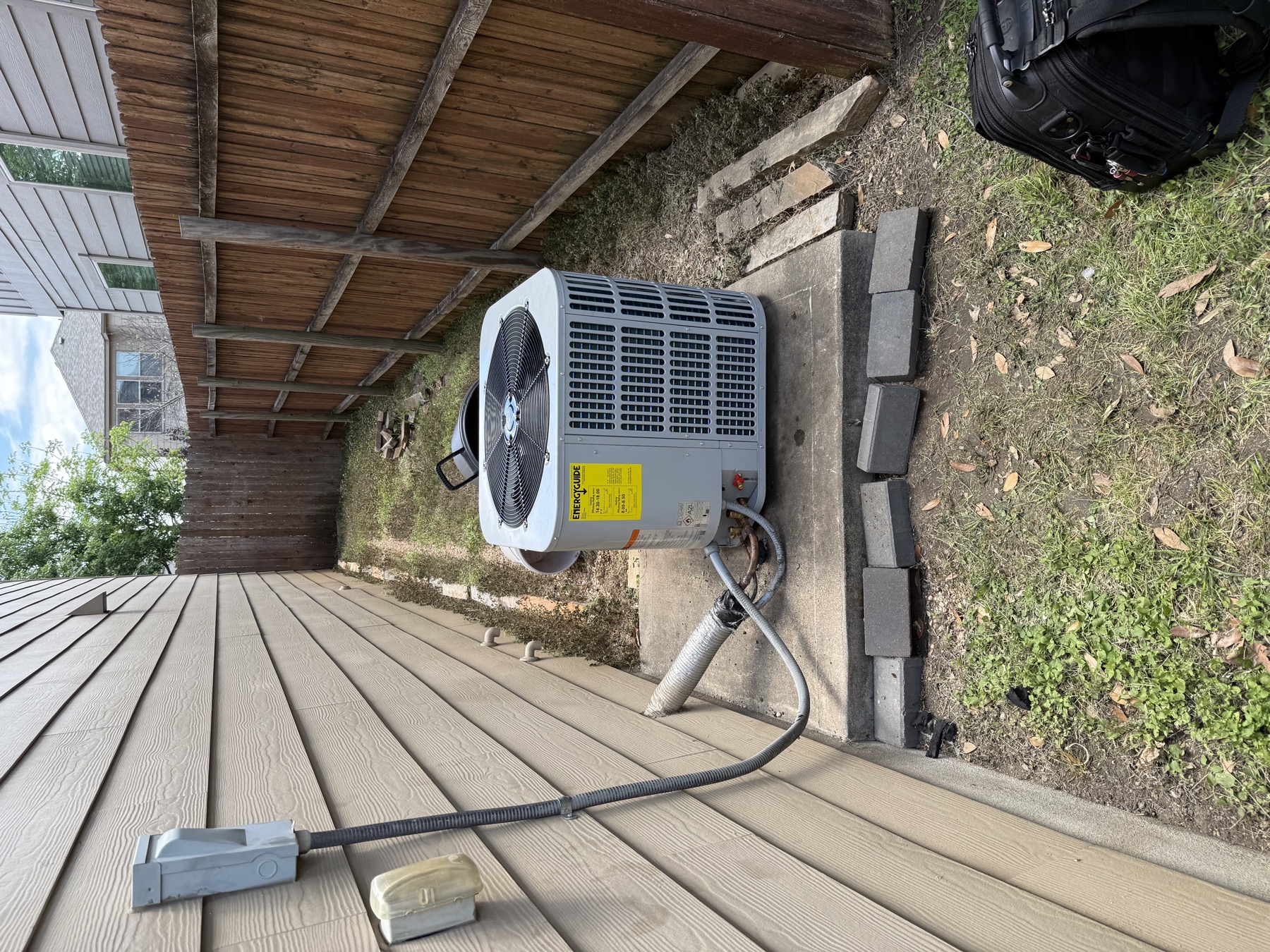
A narrow side yard and a privacy fence: placement like this is decided by clearance, with the yellow label still on.
Line sets, chases, and walls that stay closed
Routing through the house you already have
A new system usually means a new refrigerant line set and fresh control wiring between the indoor and outdoor equipment. In an old house the cheap route runs straight through the nearest wall, and plaster never patches invisibly. We plan routes through closets, chases, and spaces nobody looks at, and we agree on any visible inch with you before a single hole is drilled.
Every penetration through the exterior gets sealed so weather and insects stay outside. On a structure that has stood for a century, that seal keeps doing its job for decades, long after anyone remembers who ran the line.
The ductwork your new system inherits
A new air conditioner can only perform as well as the air path behind it allows. Many York homes carry ductwork reworked through several renovations, with returns that are too small and runs that were extended off whatever trunk sat closest. We test static pressure and airflow before we settle on equipment, because a perfect unit pushing through a choked duct system still struggles.
When sections need replacing, we measure them on site and build them on our own bench in the warehouse. That is what makes a one-day changeout realistic. The fittings arrive ready, and the crew spends its day installing with no sheet metal getting cut in your driveway.
Builder-grade units on the newer edge of town
What came with the house
New construction on the town’s edges arrived with the usual builder package: equipment chosen for its price per house, a basic thermostat, and duct runs laid out in a hurry. None of it is defective. It was built to a budget, and by the time the original system wears out, owners usually want more than the builder paid for.
A careful replacement fixes what the first install skipped. We correct undersized returns, seal the duct joints that were taped once and forgotten, and look honestly at whether a variable-speed system would handle the humid months better than another single-stage unit.
If your house is only a few years old, the system is probably nowhere near replacement. A checkup in its second year catches the corners that got cut, at a tune-up price, and tells you what to plan for once the original equipment reaches the age where boards and capacitors start to give out.
Out on the farm roads
Past the town line come bigger lots, longer drives, and farmhouses with additions built in different decades. Those additions are often where cooling falls apart, because the original system was never sized to carry them. Sometimes the right answer is a larger central system with a redrawn duct layout. Other times we leave the main system alone and give the addition its own ductless zone, which our mini split installation page for York covers in detail.
Distance changes nothing about the price. There is no mileage charge out to the last gravel turnaround, and the trucks leave the shop stocked for a full install.
Rather see the load numbers first?
One visit covers the measuring, the placement question, and the duct check. You get all of it in writing, free, before you commit to anything.
What homeowners ask before a new system goes in
How do you decide what size air conditioner my house needs?
We run a load calculation room by room. Ceiling height, windows, insulation, duct condition, and how you use the house all count. Older homes with tall ceilings and thick walls often come out differently than square footage suggests, so we show you the numbers behind the size we recommend and leave the tax card out of it.
My house is in the historic district. Can the new condenser go anywhere?
Placement there takes planning. Equipment visible from a celebrated front elevation tends to draw attention in review, so we look at side and rear locations, sightlines, and screening first, while keeping enough clearance for the unit to breathe. We prepare the documentation so approval keeps moving, and if the first choice will not work we price the alternatives.
My system is old but still runs. Should I replace it now?
Not automatically. We put instruments on it and price any repair beside a replacement so you can compare them directly. A sound older system with one failed part often deserves another season. A leaking coil on equipment that uses a discontinued refrigerant usually does not. You decide with both numbers in front of you.
How long does an installation take?
Most straight replacements finish in one day. Duct sections are measured on the first visit and built in our warehouse ahead of time, so the crew arrives with the fittings ready. Jobs that add new duct runs, move equipment, or wait on district approval take longer, and you hear the realistic timeline before anything is scheduled.
Will you have to cut into my plaster to run the lines?
Only where you have agreed to it, and usually not at all. We route line sets and wiring through closets, chases, and hidden spaces first. Any visible run is walked and approved with you before a drill comes out, and every exterior penetration is sealed so the wall stays tight against weather.
Another company said my whole system has to go. Will you take a look?
Yes, and the second opinion is free. Sometimes the verdict holds up and we tell you so plainly. Sometimes the failure turns out to be a sensor, a board, or a single component, and the system has years left in it. Either way you get readings and a written price, with no pressure attached.
Do you offer financing or discounts on a new system?
Financing is available through Optimus for customers who would rather spread out the cost of a replacement. Teachers and service personnel take ten percent off. Ask about both during the pricing visit and we will write the figures down alongside everything else we quote.
The rest of the York lineup
Cooling is one chapter of how an older house behaves through the year. Heating, humidity, and the controls that tie them together each get their own page for this town.
Start at the York service page, or go straight to furnace installation, smart thermostats, and dehumidifier work.
Curious what a finished install looks like? Our gallery shows real jobs, photographed by the crew that did them.