
Clover · Porch streets, the lake road, and the long drives
The AC gave up in July, so the meters come out before the wrenches do
Clover summers find out which air conditioners were only hanging on. A capacitor finally quits on an older in-town unit, a coil out on an acreage lot gets so packed with grass and pollen it cannot shed heat, or a builder system on the lake road runs fine for years and then starts tripping. We come out, put gauges and meters on it, tell you which one you have, and write the price down before anything comes apart.
We are Zach and Eric Massey, brothers running a family crew with 25 years of hands-on HVAC work. Clover is a short drive west of our Fort Mill shop. The phone gets answered around the clock, and a call at 10 p.m. costs exactly what a weekday call does.
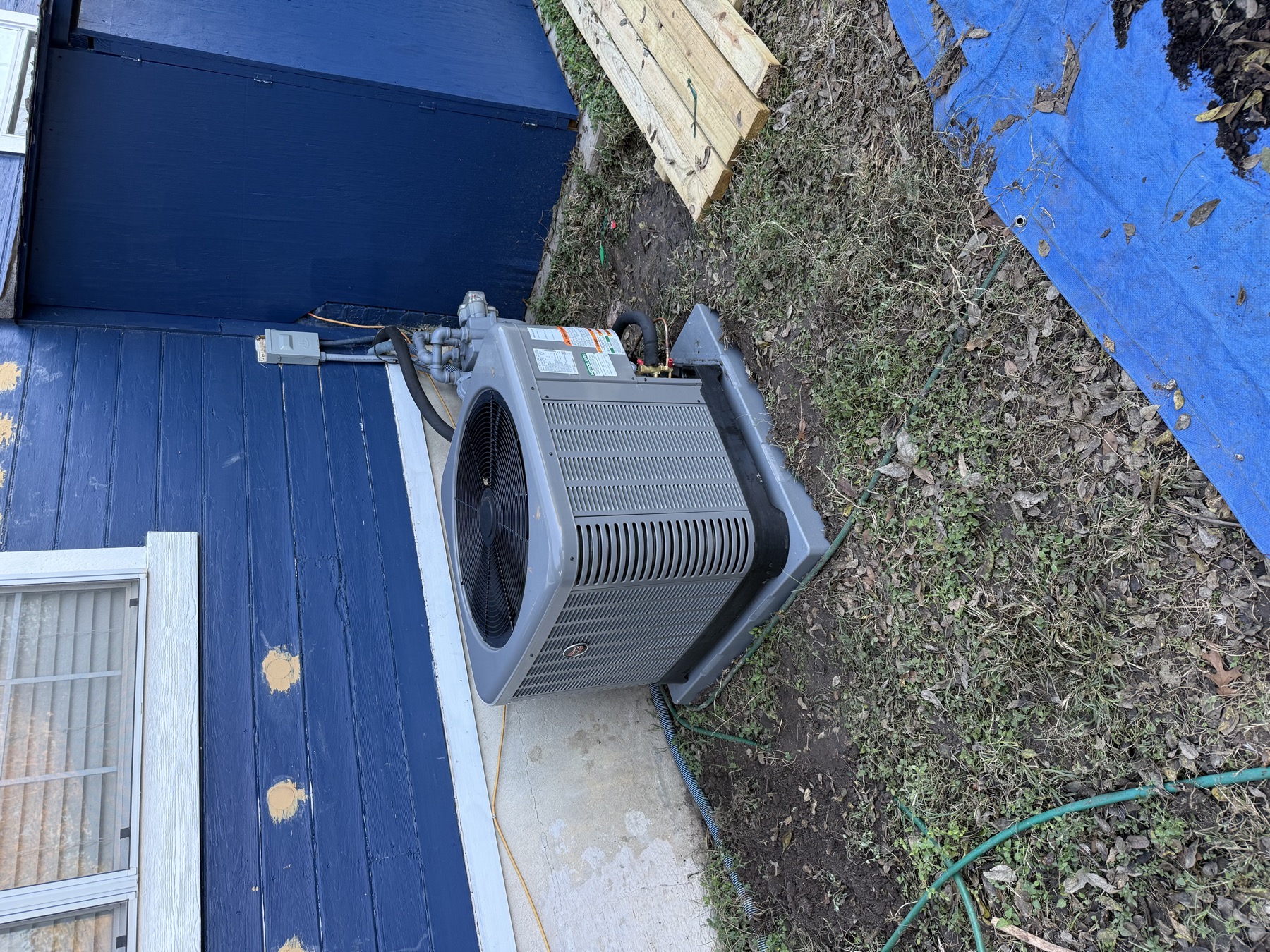
One town, three ages of air conditioner
Porch streets and mill blocks
The in-town core of Clover runs older: big-porch frame houses, small mill houses, and decades of renovations, each done by whoever was handy that year. The outdoor units on those streets skew veteran, and the ductwork behind them skews improvised. When one of those systems stops cooling, the cause is rarely exotic. Usually a part simply ran out of summers.
Veteran equipment deserves a straight read. Plenty of old workhorses on these blocks have earned more seasons from us with one good repair, and we say so when the readings back it up. When they do not, we show you the numbers and you make the call at your own kitchen table.
The corridor and the acreage
Out the Highway 55 corridor toward Lake Wylie, newer neighborhoods run builder-grade equipment put in a whole street at a time and sealed into tight modern houses that hold humidity. West and south of town, acreage properties bring farmhouses with generations of additions, converted workshops, and outdoor units sitting in grass that gets mowed around all summer long.
Each of those houses breaks its own way, so the trucks carry for all of them: parts for veteran systems beside builder-grade stock, plus drain tooling from the first hot week to the last. That preparation is why so many Clover repairs wrap up on the first visit.
Coils that spend the summer in the grass
What a packed coil does
An outdoor coil has one job, which is dumping the heat your house collected. Every fin that fills with lint and clippings makes that job harder, so pressures climb, the compressor runs hotter, and the capacitor wears out faster. The house gets warmer and the power bill climbs anyway.
On acreage lots it happens quicker. Tall grass grows right up against the cabinet, the mower throws debris straight at the fins, and western pollen loads the surface early every spring. By July some units are breathing through a felt blanket.
People rarely connect the pollen to the breakdown. A coil that looked fine in March can be coated by May, and the first real heat wave is when the tired capacitor finally gives out and the phone rings.
Clearing it properly
We pull the top grille, look at the fins from the inside, and clean the coil so air can actually move through it. Then we check what the heat already did to everything else: capacitor readings, fan motor draw, and refrigerant pressures that show whether the compressor has been suffering.
Washing a coil and leaving a failing capacitor beside it only brings us back in two weeks, so both get looked at on the same trip. A few feet of cleared ground around the unit afterward buys more than most homeowners expect, and we will show you where to trim.
How a Clover repair visit runs
It starts on the phone. You tell us what the system is doing, what brand it is if you know, and how hot the house has gotten, and we sort out whether the truck needs to roll today or whether Tuesday serves you fine. That conversation also tells us what to load before we leave Fort Mill.
At the house, instruments come first. A weak capacitor can sound exactly like a compressor on its way out, and a starved coil can look like a leak, so we measure before anyone names a part. You get the finding in plain language and an honest number in writing, and nothing gets repaired until you agree to it. If another company already handed you a verdict, our second opinion costs you nothing. Optimus financing is there for the bigger jobs.

A coil matted this solid cannot shed heat, and the compressor pays for it all summer.
Builder equipment on the road toward the lake
The year-two look
The neighborhoods filling in between Clover and Lake Wylie follow a pattern we know from the rest of the county. Equipment goes in by the street, and when we open those systems at their second-year checkup we keep finding the same shortcuts: staging never configured, filters a size too small, and duct runs built to the bare inspection minimum.
None of that stops a system from cooling in its first summers. It does decide how the equipment ages. Owners who book that early look end up with the system they actually paid for, at tune-up prices.
The year-eight calls
The owners who skipped it tend to meet us around year eight, when a string of summers spent working too hard catches up with the motor, the capacitor, or the drain. Summer drain clogs are a steady call along the lake road, where tight houses give the coil plenty of water to pull out of the air.
When a clogged line trips the safety switch, the system shuts off to protect your ceiling and the call sounds like a dead AC. We clear the line and find out why it filled. For rooms that never cooled right to begin with, our Clover mini split page covers the fix, and heat pump service in Clover covers the systems that handle both seasons.
Keep it running or let it go
The math, laid out
Every repair price we write sits beside the question of whether the equipment deserves it. Age matters, and condition matters more, so a well-kept veteran can be a better bet than a neglected unit half its age. We put what the repair costs now next to what replacement would buy, and we are glad when the answer is to keep it running.
Our reviews put it plainly: no games, no upsell. The repair that saves a unit is the one we lead with, and customers across the county have watched us salvage equipment somebody else told them to scrap.
Refrigerant and the older units
Refrigerant never gets used up, so a low system has a leak somewhere. Topping it off without finding that leak means paying for the same cool air again and again. We locate it, show it to you, and price the fix against the age of the equipment. A leaking coil changes that math far more than a leaking fitting.
Some veteran systems on the in-town streets run refrigerant that is no longer produced, which makes every recharge harder to defend. When replacement does win, we lay out the options and the timing plainly. The main AC repair page walks through the rest.
Tell us what it’s doing
A few minutes on the phone usually narrows it down. The visit confirms it with readings and puts the price on paper first.
Questions we hear on Clover porches
My outdoor unit is humming but the fan will not spin. What is that?
Most often a capacitor has failed, the part that gives the fan and compressor their starting kick. Heat wears them down, so they tend to go during hot spells. Shut the system off at the thermostat so the compressor stops straining, then call us. We test the capacitor before replacing it, because a seized motor can present the same way.
The unit sits in tall grass on our property. Does that really matter?
It matters a lot. Grass against the cabinet blocks airflow, and mowing throws clippings and lint right into the coil fins. A packed coil runs high pressures, shortens the life of the capacitor and compressor, and cools the house less for more power. Keep the ground cleared back around the unit and have the coil cleaned when it looks matted.
Our house on the lake road is only a few years old. Why is it already acting up?
Builder-grade systems often go in with shortcuts that do not show up right away: staging left unconfigured, undersized filters, ducts built to the minimum. The system cools, but it works harder than it should. A checkup in the first couple of years catches those corners while they are still simple to set right.
Should I repair my old unit or replace it?
That depends on condition, the refrigerant it runs, and what the repair involves. We give you the repair price and the replacement picture side by side and let you decide. Plenty of older units have more seasons in them. When one does not, we explain why with readings, and nobody leans on you.
Another company told me I need a new system. Will you look at it?
Yes, and the second opinion is free. We put our own instruments on the system and tell you what we find. Sometimes we agree with the first verdict. Often enough the problem turns out to be a part, and the system keeps running for a good while longer.
Do you charge more to drive out to acreage west of town?
No. Pricing is flat across our whole map, so a long drive to a farmhouse costs the same as a street in town. On the two-lane roads we give you a realistic arrival window and keep you posted if it shifts. The drive is our logistics to handle, and it never shows up as a line on your bill.
Why is ice forming on my refrigerant lines?
Ice on the lines or the indoor coil usually means the coil is starved for air or the system is low on refrigerant. A clogged filter, a blocked return or a weak blower can starve it, and so can a leak. Turn the cooling off and run only the fan so it thaws, then call us before starting it again.
More from our Clover route
Summer repairs are one part of how a Clover house gets through the year. The Clover service area page covers the whole town, and furnace repair in Clover handles the winter side of the same equipment.
When something quits after hours, our Clover emergency HVAC page is worth a read on the way to the phone.
Want to see the work before you call? Our gallery is real jobs, every photo from a system we worked on.