
Cooling · Old unit out, the right unit in, same day
AC replacement without the funeral pricing or the pressure
Every air conditioner has a last summer. When yours reaches it, the job is a clean handoff: old refrigerant recovered legally, old equipment hauled off, and a properly sized replacement running by dinner. What the job is not, at least with us, is an ambush of urgency, add-ons, and payment-plan fog.
We are the Massey brothers, Fort Mill born, 25 years in the trade, and we treat replacement day as the one chance to fix everything the last installer got wrong. Half the value of a replacement done right never appears on the equipment sticker: it lives in the pad, the line set, the duct connections, and the commissioning numbers we put in writing before we leave.
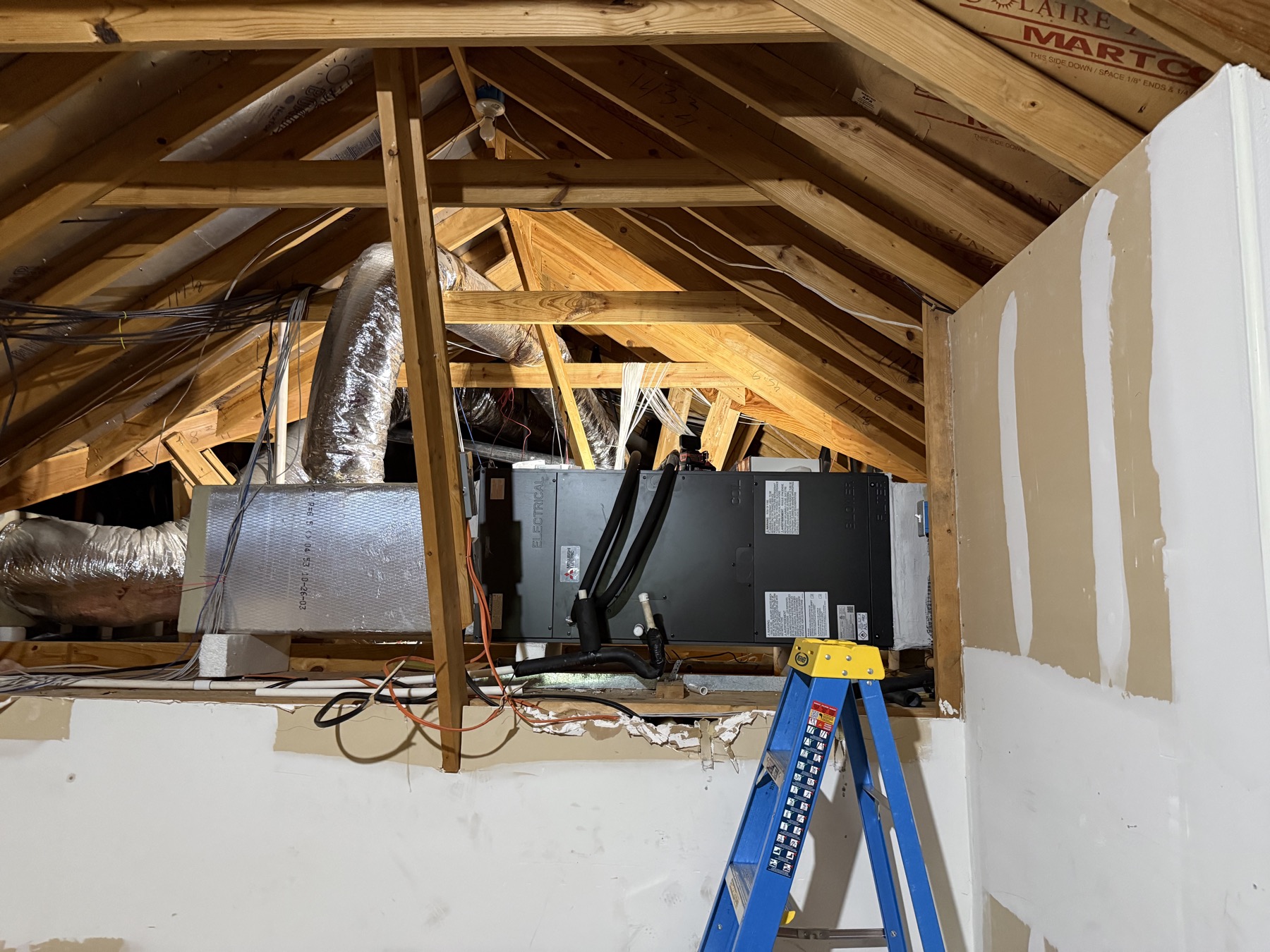
Knowing when it is actually time
The honest signals
Age alone is not a verdict. We keep fifteen and eighteen year old systems alive for customers all the time, happily. The verdict comes from a pattern: repair bills arriving yearly instead of rarely, a compressor or coil failure on equipment past its warranty, refrigerant that costs a fortune because the system runs an outdated type, and power bills climbing while comfort falls. When three of those show up together, the machine is telling you its plans.
There is also the comfort test nobody talks about. If the system has never really conquered your house, if the upstairs runs four degrees behind and August afternoons are a negotiation, replacement is your one clean chance to fix the sizing or duct mistakes that no repair was ever going to touch.
The math we run with you
The framework is simple enough to do on a napkin, and we do it in front of you. Weigh this repair against the system’s age and the realistic odds of the next failure. Compare what the old unit costs you monthly in efficiency against what a new one would. Then look at the timing: a planned replacement in shoulder season beats an emergency one in a heat wave on price, selection, and stress, every single time.
Sometimes the math says keep it, and we say so, in writing, with the repair priced beside the replacement so the comparison is real. Our reviews include a lot of systems we refused to bury early. When the math says replace, you will see exactly why, in your numbers rather than our sales targets.
What replacement day looks like
Out with the old, properly
The old system does not simply get unplugged and dumped. Refrigerant is recovered legally with proper equipment, because venting it is both illegal and lousy for everyone downwind. The old condenser, coil, and line set leave on our truck. The pad gets assessed, releveled, or replaced, and the electrical disconnect and whip get brought up to current code instead of inherited on faith.
This is also the moment we correct history. Undersized line sets, kinked or leaky duct connections, drains routed on hope, condensers installed tight against walls where they recirculate their own hot exhaust. Whatever shortcuts the last crew took, replacement day is when they finally get undone.
In with the new, verified
The new system is chosen by load calculation, never by whatever matches the old sticker, because the old sticker may have been wrong since the day it was printed. Once set, the system gets charged to manufacturer spec, and then commissioned: temperature split measured, amp draws checked, airflow confirmed at the registers, drainage tested with actual water.
Most swaps finish the same day, thanks to the warehouse staging habit we apply to everything. Drop cloths through the house, a vacuum pass at the end, and a walkthrough of the thermostat and filter before we leave. One reviewer put it best after his old system with the four-week warranty wait became a same-day replacement: on time, clean, and running perfectly by afternoon.
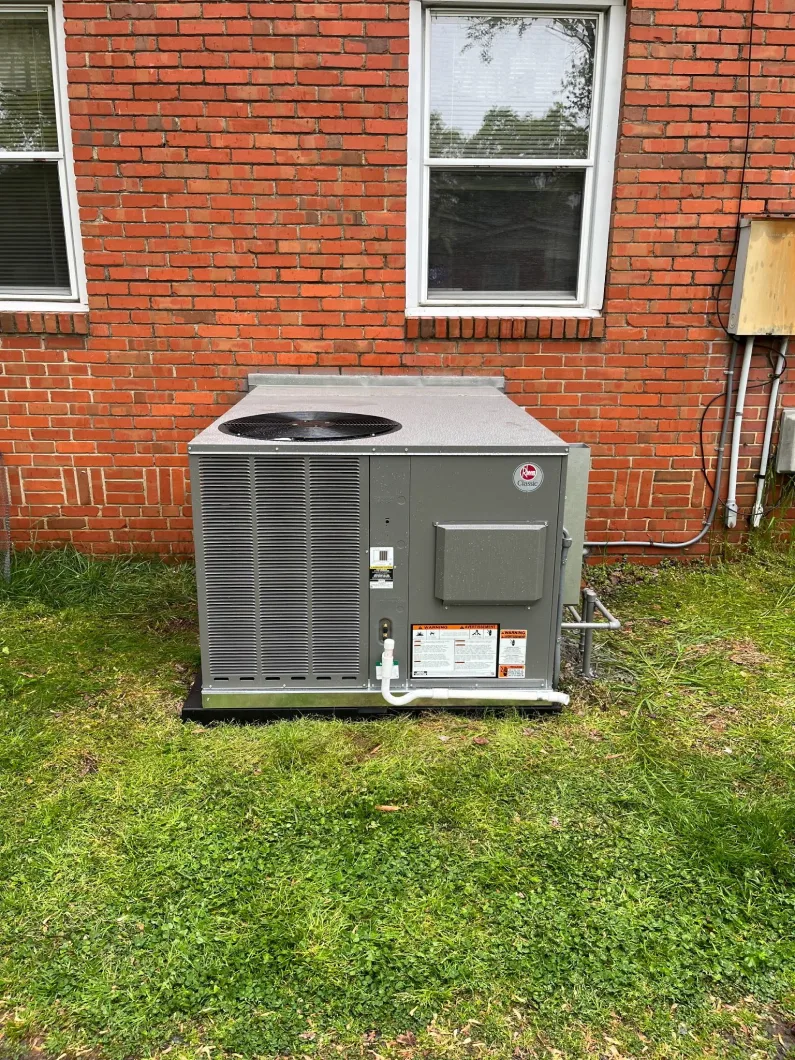
A fresh package unit against the brick.
Replacement decisions specific to the Carolinas
Our summers change the equation
In a mild climate, limping an old AC along another few years is often fine. Charlotte metro summers are not mild. A struggling system here means months of discomfort, not a bad week, and the efficiency gap between old and new equipment gets multiplied across a cooling season that runs May to October. That is why replacement math that would not pencil in Ohio pencils here.
Humidity belongs in the decision too. Newer systems, sized correctly, are dramatically better at pulling moisture out of Carolina air, and many customers report the sticky-at-72 feeling disappearing entirely after a right-sized replacement. Comfort is not only a temperature number, and neither is the upgrade.
Builder-grade endings and what follows them
A huge share of our replacement work around Fort Mill, Tega Cay, and Indian Land is builder-grade equipment finishing its first and only decade. Those systems were chosen by a spreadsheet during construction, installed at volume speed, and they age exactly like it. If your neighborhood went up in the same two years, you have watched the condenser trucks arrive street by street.
The upgrade path from builder-grade is genuinely satisfying, because the bar is low and the gains are real: quieter equipment, honest sizing, sealed duct connections, and a power bill that stops creeping. We have replaced enough identical units in identical cul-de-sacs to know the before and after by heart, and neighbors comparing notes over the fence is how most of our replacement calls in those neighborhoods arrive.
Replacement myths, retired here daily
Myth: bigger is safer
The instinct is understandable: if the old three-ton struggled, surely a four-ton wins. But an oversized system short cycles, dehumidifies poorly, and wears itself out sprinting. The old system usually struggled because of sizing done wrong, duct problems, or age, and the fix is measuring, never supersizing. We run the load calculation and let the house pick the tonnage.
Related myth: matching the old sticker is safe. The old sticker was sometimes wrong on day one, and your house has changed since, with new windows, insulation, or an addition. Replacement is the moment to get the number right, because you live with it for fifteen years.
Myth: all installers produce the same result
Identical equipment, installed by two different crews, can differ by double-digit percentages in delivered efficiency and by years in lifespan. Charge accuracy, duct connections, line set work, and commissioning discipline are the gap. It is the least visible part of the purchase and the most consequential, which is why we photograph our work and put the commissioning numbers in writing.
And the myth that matters most in a sales-heavy industry: that today’s price disappears tomorrow. Real pricing does not evaporate at midnight. Any quote built on a countdown clock is telling you about the seller, and what it is telling you is worth listening to. Take the days you need, get the second opinion, ask your neighbors on Nextdoor who they use. The good decision keeps, and we would rather win the comparison than the ambush.
The replacement quote, itemized and calm
One written number covering everything: equipment, labor, recovery and haul-away, pad and electrical corrections, permits where required, and commissioning. Good, better, and best options when they genuinely exist, each explained in one plain sentence. The same total whether you pay outright or finance through Optimus on qualifying jobs, and 10% off for teachers and service personnel before any other math.
No countdown-timer discounts, no tonight-only pricing, no manufactured urgency. A replacement is a ten-to-fifteen-year decision, and we quote it at the speed of good information. Take the quote home, compare it, sleep on it. Good numbers survive daylight, and ours are written to be compared.
Want a straight answer first?
Ten minutes on the phone usually tells us plenty. The visit puts real numbers on it, in writing, before any work starts.
Replacement questions, answered like neighbors
Can you replace just the outdoor unit to save money?
Usually a false economy, and sometimes not even possible. Indoor and outdoor coils are matched sets, and modern refrigerants often make mixed pairings illegal or warranty-voiding. A mismatched pair runs inefficiently and dies young, which converts the savings into a slow-motion loss. When a partial swap genuinely makes sense, usually on younger systems with one failed component, we will say so plainly, but the honest default is matched equipment sized to the house.
How long will my new system last?
In this climate, a properly sized, properly installed system with a maintenance rhythm typically serves ten to fifteen years, and installation quality is the biggest variable you control. The same equipment installed carelessly gives up years early, usually starting with the compressor. That is why we commission by the numbers, why the pad and line set work gets photographed, and why the twice-a-year maintenance visits afterward are the cheapest life insurance the system will ever have.
What happens to my old unit?
Refrigerant recovered legally with proper recovery equipment, metals recycled, and the whole thing off your property the same day. Nothing gets left beside your garage as a monument. If you want the old unit’s autopsy explained before it goes, we are happy to show you exactly what ended it, because seeing a corroded coil or a scorched compressor terminal makes the replacement decision feel a lot less abstract.
Is there a best time of year to replace?
Spring and fall, comfortably. Scheduling is flexible, the house survives a day without the system, and you decide calmly instead of sweating through quotes mid-heat-wave. If your system is wobbling, the smartest money in HVAC is replacing on your calendar instead of the machine’s, and a spring tune-up on the old unit is often the cheap bridge that gets a shaky system to a shoulder-season swap.
Do you handle the permits and inspections?
Yes, wherever the jurisdiction requires them, on both sides of the state line, and the paperwork happens without you chasing it. Permits protect you, and skipping them is the kind of corner-cutting that surfaces at home sale time when a buyer’s inspector starts asking questions. It is all included in the written number, never a surprise line item.
Will you match the quote I got from a franchise?
We will read it with you line by line, which is usually more useful than matching a number blind. Sometimes the other quote is fair and we say so, because honest competitors deserve the acknowledgment. More often it hides thin scope: no permit, no pad work, no duct corrections, commissioning nowhere in sight. Compare whole jobs against whole jobs and our number tends to explain itself. Either way you leave the conversation knowing exactly what you are buying, from whoever you end up buying it.
My house never cooled evenly. Will a new unit fix that?
Only if the real cause was the equipment, and often it is only half the story. Uneven rooms usually involve duct routing, insulation gaps, or airflow balance, and a shiny new condenser bolted to the same problems delivers the same hot bedroom. Replacement day is the cheapest moment to fix distribution, which is why our quotes flag duct and balancing issues honestly instead of letting the new unit take the blame next summer.
Can I finance the replacement?
Qualifying replacements can run through Optimus Financing, with the application done online in minutes and the price identical to paying outright. The details live on our financing page, and the honest version of the conversation happens at your kitchen table with the total in plain view.
The decisions around a replacement
Replacement conversations usually begin as repair conversations and sometimes end as duct or heating conversations, because replacement day is the cheapest moment to fix everything at once.
AC Repair · AC Installation · Furnace Replacement · Heat Pump Services · Financing
Want proof before the phone call? The gallery is all real jobs, and the financing page covers the big-ticket math.