
Tega Cay · The lake gets a vote, the meters get the last word
Cool and dry again, once we know which one you actually lost
An outdoor unit gone quiet in a heat wave, a breaker that will not stay set, or the peninsula’s own particular complaint: the thermostat says you got what you asked for and the house still feels like a towel. We come out, put instruments on the system, tell you which of those problems you have, and put the number in writing before anything gets taken apart.
We are Zach and Eric Massey, a family crew with 25 years in the trade behind us. Tega Cay is one of the shortest runs our trucks make. We answer 24/7, a midnight call costs what a Tuesday afternoon does, and we repair every major brand.

Cold is only half the job on a peninsula
The complaint that does not sound like a breakdown
An air conditioner has two assignments here. Drop the temperature, and pull water out of the air on the way past the coil. Within sight of Lake Wylie the second gets harder, because the moisture baseline here sits above what the same house would see a few miles inland. A system can pass the first test and quietly flunk the second all summer.
That is why so many calls from this side of the water start with an apology. People tell us they know it sounds crazy, the thermostat reads exactly what they set, but the sheets feel damp and something is wrong. Nothing about that is crazy. It is the most reliable symptom the lake produces, and it is measurable with a hygrometer and a temperature probe.
Runtime is what dries a house
Moisture leaves your house only while the indoor coil is cold and air is moving across it. Short bursts of cooling satisfy a thermostat without giving the coil time to condense much water, so the temperature looks correct while humidity climbs behind it. Three different faults produce that sticky result: a low charge, restricted airflow, or equipment carrying more capacity than the house needs.
Those three have three different answers, and only two of them are repairs. We take readings at the coil, at the vents, and at the thermostat before anyone names a component, because on this peninsula the wrong guess is an expensive way to stay damp.
Drain lines, and the season that runs long out here
All that water has to go somewhere
Every gallon your system pulls out of the air ends up in a pan and heads for a drain line. More humidity means more condensate, and more condensate means the clog season on the peninsula opens earlier and closes later than it does inland. When that line plugs, the safety switch does its job and shuts the system off, and the call that reaches us is a no-cool call rather than a plumbing one.
That is a good outcome, incidentally. The alternative is a pan overflowing into a closet or a ceiling. When we clear a line we also look at why it filled, and clearing the clog without fixing the cause books your next appointment for you.
Coils that live wetter lives
A coil that stays damp for months grows things. Biological film on the fins acts like insulation nobody ordered, so heat transfer drops, the system runs longer for less cooling, and the power bill climbs while comfort falls. Near the water this happens faster, which is the honest reason coil cleaning earns its keep here.
When we are already on site for a repair, we look at coil condition as a matter of course. Not as an upsell audit. A fresh capacitor bolted next to a coil wearing a blanket is a return visit with a date on it, and we would rather tell you the whole story in one trip.
What we do before we name a part
A parts swap guess sounds like this: the technician hears the symptom, changes whatever usually causes it, and drives off. When that misses, you have paid for a component your system did not need and the fault is still living in your house. Our visits start with gauges, meters, and temperature probes instead, because a tired capacitor can imitate a failing compressor and a starved coil can imitate a leak.
Once the readings say what actually failed, you get it in plain language, along with anything sitting right behind it. The diagnostic carries one upfront rate, quoted on the phone before a truck rolls, and it applies toward the repair if you go ahead. The repair price is in writing before a part comes off the van. Nights and weekends cost the same as a weekday, and teachers and service personnel take ten percent off.
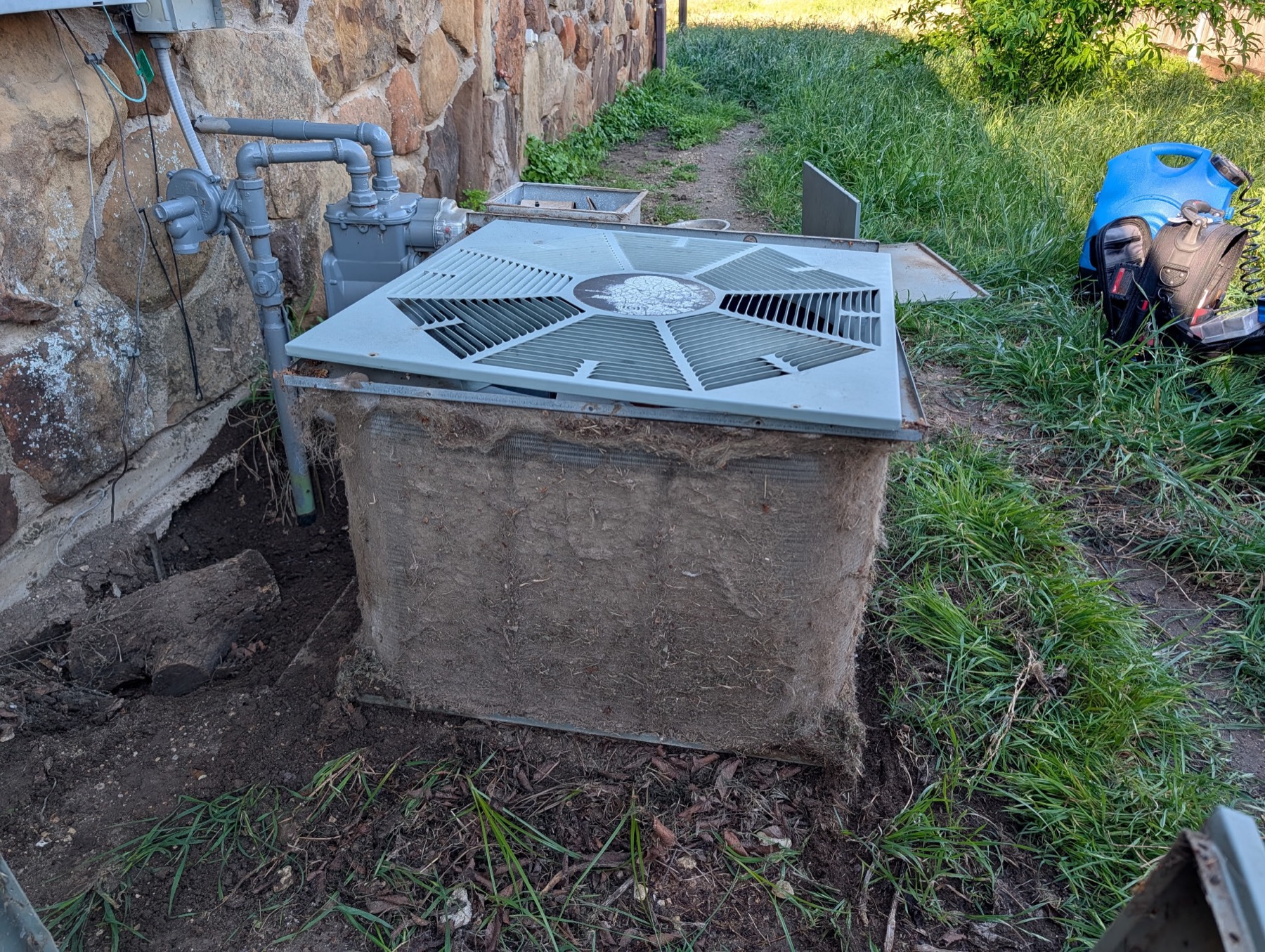
Fins packed like this are why a system that ran fine in May quits in July.
Neighborhoods that were built together and break together
Equipment aging in formation
Tega Cay filled in fast, street by street, and the systems went in the same way. A whole loop of houses can be running the same builder-grade equipment installed the same construction season, which means it wears on the same curve and reaches the same failures in roughly the same summers. That is not a knock on the equipment. It is what happens when everything starts its life on the same day.
Practically, it means we usually have context before we arrive. When your neighbors two doors down have been losing capacitors and blower motors, we know what to carry and what to check first, and we can tell you honestly where your unit sits in that queue instead of pretending every house is a mystery.
Two systems, one argument
Larger houses here often run two systems, and a repair call on one is regularly tangled up with how the other behaves. Upstairs cannot keep up, downstairs freezes everyone out, and the border between them wanders depending on which thermostat is winning. Sometimes that is a genuine failure. Sometimes it is a staging problem blamed on a machine for years.
We check both when you have both, even if you only called about one. Sorting out which system is actually broken and which one is only badly configured is worth more to you than any part we could sell that afternoon. The heat pump side of that conversation lives on its own page, and the winter half of the same house is covered on our furnace repair page for Tega Cay.
Heat waves, storms off the water, and the refrigerant question
Why parts fail in clusters
Capacitors and contactors are the two components we replace most between June and September, and they go in bunches for a plain reason. Heat is what wears a capacitor down. A run of upper nineties days pushes outdoor and attic temperatures higher still, the part that was already weak finally crosses its limit, and half the county calls in the same week.
Summer storms rolling in across open water add the other half of that story. Lightning takes control boards and contactors around the lake every season. Our trucks stay stocked around exactly this list all summer, which is usually the difference between fixed today and fixed next week.
Leaks, and older equipment
Refrigerant does not get used up. If a system is low, it leaked, and adding more without finding the leak is renting cool air by the month. We look for it, show you where it is, and price the repair against the age and condition of the equipment. Sometimes the coil itself is the leak, and that changes the math considerably.
Older systems run refrigerants that are no longer produced, which makes each recharge harder to justify. We will tell you where yours sits on that curve. Our repair overview and the Tega Cay service page both cover how we handle that, and you decide without anyone leaning on you.
Want a straight answer first?
Ten minutes on the phone usually tells us plenty. The visit puts real numbers on it, in writing, before any work starts.
What peninsula homeowners ask us most
The thermostat reads seventy four and the house still feels damp. Is that even a repair?
It is a real symptom and worth a call. Moisture only leaves while the coil is cold and air is moving over it, so a system that satisfies the thermostat in short bursts never removes much water. Low charge, restricted airflow, and oversized equipment all produce it, and the right fix depends on which one you actually have. Living near the lake makes the symptom show up sooner and louder, which is exactly why we measure instead of guessing.
My system shut itself off and there is water near the indoor unit. What happened?
Most likely the condensate drain clogged and the safety switch did its job. That switch is protecting your ceiling, so the no-cool call is the good outcome. We clear the line, then look at why it filled: slope, trap condition, growth in the pan, and whether the switch is properly wired. Clearing a clog without addressing the cause just schedules the next visit.
Does living close to the water actually change the repairs I need?
It changes the odds more than the parts list. Higher humidity means more condensate, so drain issues run a longer season here. Coils stay damp longer, which grows film that hurts heat transfer. And storms coming in over open water take their share of boards and contactors every summer. The components are ordinary. Their failure rate out here is what shifts.
Upstairs and downstairs never agree. Is that a broken system?
Sometimes, and sometimes it is two systems that were never set up to cooperate. Houses with two units want their zones mapped and their staging configured deliberately, or the two thermostats spend all summer arguing across the stairwell. We check both systems when you have both, even if you only called about one, because a configuration problem and a mechanical failure feel identical from the hallway.
How fast can you get to Tega Cay?
Quickly. Tega Cay is one of the shortest runs our trucks make, so emergencies usually see somebody the same day and often much sooner, depending on where our crews are working when you call. Scheduled repairs book into a window that suits you and we show up inside it. The price does not move with the hour or the address.
My neighbors have all been replacing their units. Should I be worried about mine?
Worth knowing about, not worth panicking over. Whole streets here went in during the same construction season, so the equipment ages on a similar curve and reaches the same failures around the same time. A tune-up establishes honestly where yours sits in that line. Knowing in April beats finding out in August with the house at eighty five.
Do you charge extra for nights and weekends?
No. The 24/7 line carries no emergency surcharge. Your compressor did not check the calendar before it quit, and charging extra for bad luck never sat right with us. A Saturday midnight repair costs what the Tuesday afternoon version costs.
The rest of the Tega Cay picture
Repairs are one chapter of how a house behaves. Ductless work solves the rooms that were never going to cooperate, and the emergency line covers the hours nobody plans for.
More on the Tega Cay page; the other Tega Cay pages cover mini splits and emergency HVAC.
Want proof before the phone call? The gallery is all real jobs, ours, photographed on the day.