
York County · Ten minutes from our shop, three housing eras deep
Rock Hill’s three housing eras, one honest HVAC crew
Rock Hill is the biggest city in our home county and the most varied ten minutes of driving we do: Winthrop-area rentals and their hardworking systems, Oakland Avenue’s older streets with their layered renovation histories, mill village blocks with ductwork from another century, and the new subdivisions off Dave Lyle where builder-grade equipment ages street by street in formation.
We run all of it daily from Fort Mill, close enough that Rock Hill response times match our home-turf standard: same-day repairs as routine, hour-class emergency response as the honest norm, and the 24/7 line answering with no extra fee at any hour. Every service on the roster, every price in writing, every era of the city’s housing treated on its own terms.
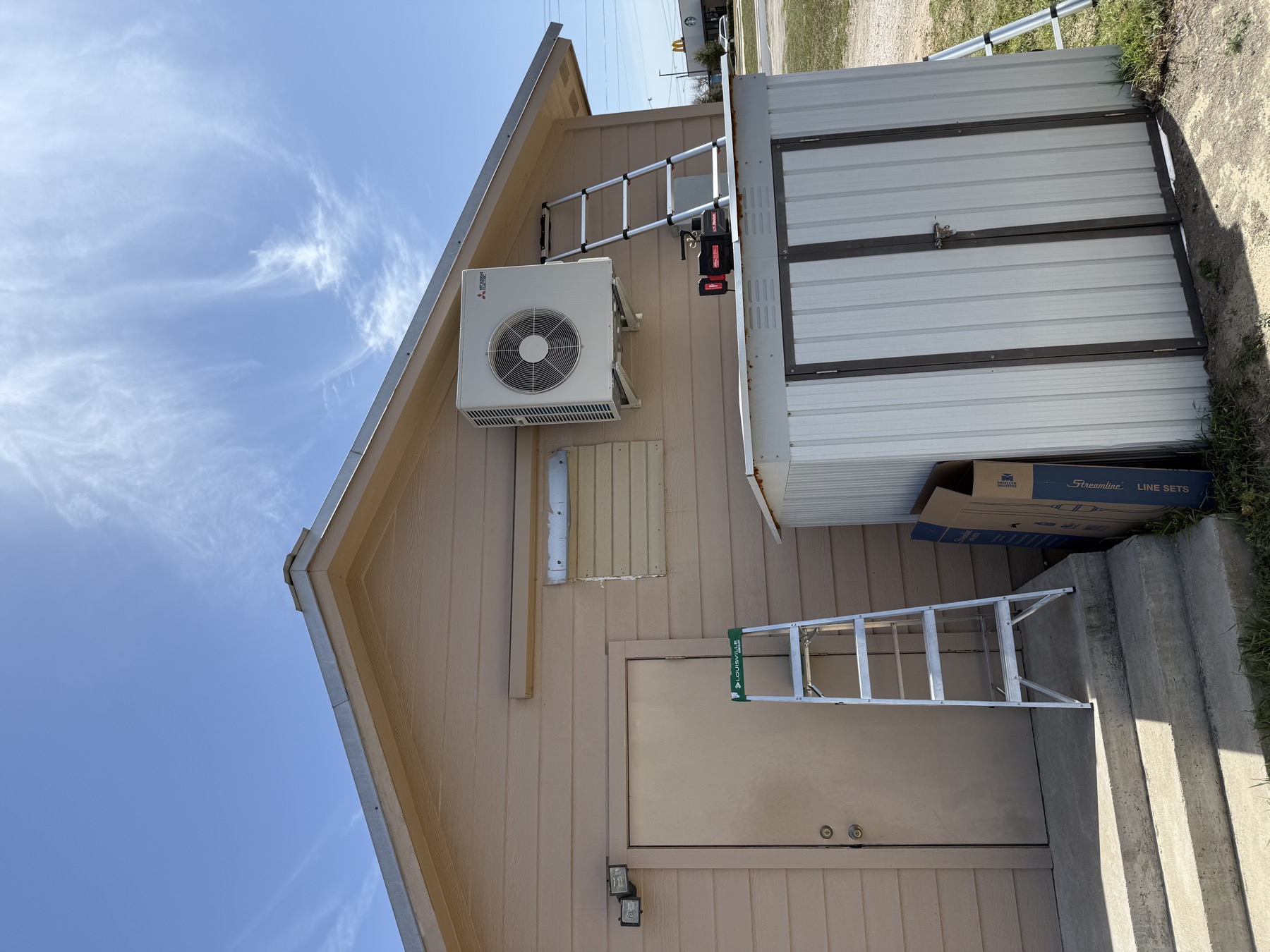
Rock Hill, ten minutes from the shop
The city we cover, corner to corner
From the Winthrop campus orbit through downtown’s Old Town revival, out Cherry Road’s commercial spine, and into every subdivision between India Hook and Dave Lyle, Rock Hill sits inside our fastest response band. The trucks pass through daily, the pattern file on the city’s neighborhoods runs deep, and the drive time is short enough that arrival windows here read like home-county promises because they are.
The city’s scale also means portfolio work: landlords running Winthrop-area rentals, property managers with houses scattered across the eras, and small commercial spaces along the corridors, all handled on one number with per-address records. The county page holds the wider map; this one is the city’s own story.
The short version
Three housing eras, one written-price standard, response times that match Fort Mill’s, and a crew that already knows which streets flood, which builders wired what, and which rental filters have not been changed since orientation week.
The Winthrop economy and its hardworking systems
Rental equipment lives a harder life
College-area rentals run their HVAC like fleet vehicles: filters changed on academic calendars if at all, thermostats operated by committee, and systems expected to survive tenants who have never once wondered where the air handler lives. Equipment in that duty cycle fails younger and less politely, and the landlords who thrive here are the ones who put their systems on a maintenance rhythm instead of an emergency budget.
That is exactly the service we run for the Winthrop belt: batched spring and fall visits across portfolios, filters and drains handled before they become August phone calls, honest triage when tenants report symptoms, and per-address records that turn every unit’s history into a one-glance story. The emergency line covers the 10 p.m. failures either way, at the same no-surcharge price the owner-occupied houses pay.
Student-proofing, honestly
Some of the best rental money spent in this city is unglamorous: media filter cabinets that survive a semester of neglect, smart thermostats with configuration limits that end the setpoint wars, drain treatments before every cooling season, and float switches that shut systems down before ceiling stains happen. None of it is expensive, and all of it beats the alternative invoices.
We will walk any Rock Hill landlord through the honest list at a free visit, portfolio-wide, with the numbers in writing per address. HVAC is usually a rental’s biggest mechanical liability and its most preventable one, and the difference between those two states is mostly a calendar and the right hardware choices made once.
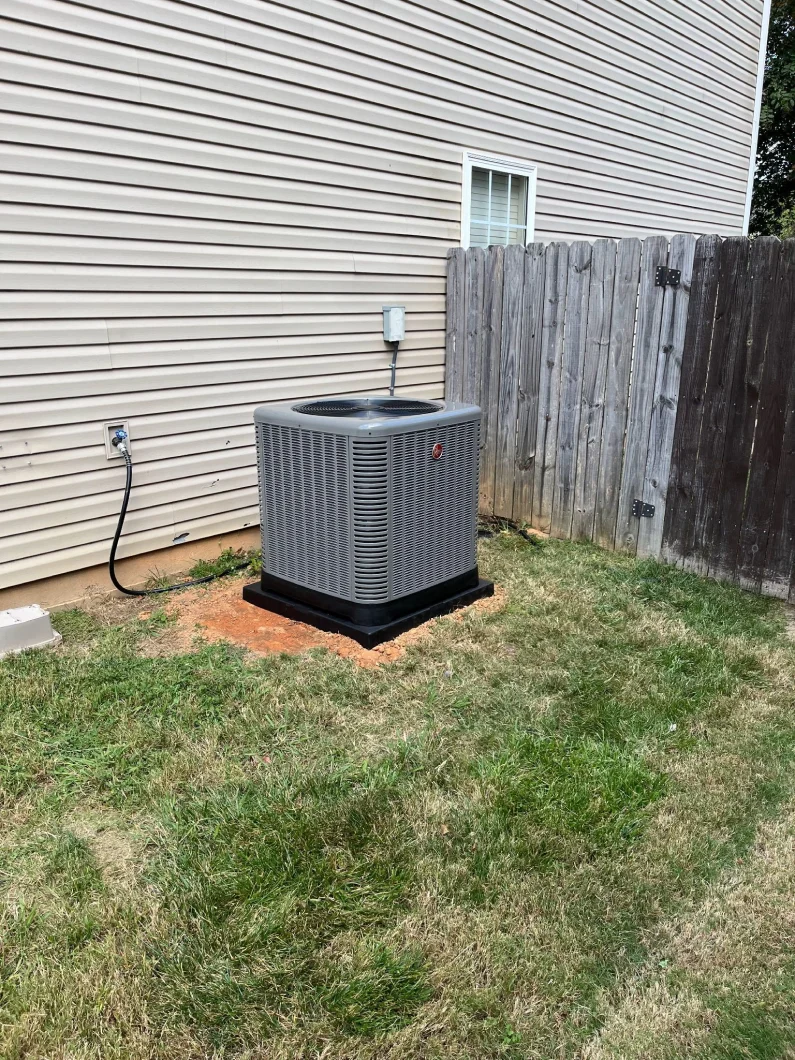
A Rheem condenser, installed and running.
Old Town, the mill blocks, and the balancing craft
The older streets and their layered systems
Rock Hill’s older neighborhoods, the Oakland Avenue orbit, the downtown blocks, the mill village streets, carry housing renovated in layers across a century, and the ductwork tells the whole archaeology: original trunk lines resized by one decade’s remodel, extended by another’s addition, and patched by every handyman philosophy in between. Air balancing here is real craft, and it is some of our favorite work in the county.
The approach is the same measurement-first discipline as everywhere: airflow read at every register, the duct paths walked with a flashlight, and corrections priced cheapest-first so the house’s rooms finally agree with each other. Veteran systems in these blocks get the honest keep-or-retire math, and plenty of Old Town equipment has earned extra seasons from us that a franchise script would have condemned on sight.
Retrofit work that respects the houses
Where the older stock wants modern comfort without butchering its character, ductless zones earn their keep: heads that spare the plaster, additions conditioned without stretching tired trunks, and upstairs rooms that finally match the thermostat. The revival energy downtown runs through the housing too, and renovated homes get mechanical work specified to match the craftsmanship upstairs.
The strips-to-heat-pump conversion math also runs strong in the city’s older stock, where resistance heat still carries too many winters at the most expensive rate in the Carolinas. One power bill and ten minutes at the kitchen table tells the story, and Rock Hill has funded some of our most satisfying conversions.
The subdivisions and their shared birthdays
Builder-grade equipment, aging in formation
The city’s newer neighborhoods run the same pattern as the rest of the boom-era county: identical builder-grade systems installed street by street, aging on identical schedules, with year-eight capacitor season and year-twelve replacement math arriving in waves. When the condenser trucks start appearing in your subdivision, your unit is telling you where it sits in the queue, and our pattern file on the city’s builders is thick enough to quote from memory.
The homeowner’s advantage is the same everywhere the pattern runs: our trucks stock those systems’ common failures, diagnosis is fast because we service the identical siblings weekly, and replacement quotes come with the honest context of what the neighborhood’s matching units have been deciding. Shared destiny, at least, comes with shared intelligence.
The calls the city makes most
Summer: cooling repairs and the drain-clog season, led by the rentals and the year-eight subdivisions. Winter: no-heat mornings on the cold snaps, with the 24/7 line earning its reputation at dawn. Year-round: balancing in the older blocks, mini-splits into bonus rooms and additions, and tune-ups for the households who prefer watching cold snaps from the comfortable side.
The 10% teacher and service-personnel discount works hard in this city, Winthrop faculty and staff included, and the free pricing visit covers every address from campus to the city line. Rock Hill is ten minutes from our shop and all the way inside our standard, which is exactly how a home-county city should have it.
A Rock Hill year, in service calls
Semester rhythms and pollen season
The city’s calendar has a rhythm no other town on our map shares: August move-in season stress-tests every rental system simultaneously, filters meet their first students, and the landlord phone runs warm for three weeks. April’s pollen paints the campus and the older tree-lined blocks alike, spring service books out fast, and the systems that skipped it spend May explaining themselves one drain clog at a time.
Summer proper runs the county-standard cooling campaign with the rental belt amplifying it, and the year-eight subdivisions contribute their capacitor season on schedule. By the time Winthrop’s semester turns over again, the maintenance households have watched the whole show from the comfortable side, which is the entire argument for the rhythm in one sentence.
The cold months and the planning months
First-snap mornings hit the city’s three housing eras at once, and the triage order holds: vulnerable households, genuine emergencies, honest windows for everyone else. The older blocks feel winter honestly, uneven rooms and veteran furnaces, while the rental belt discovers which units skipped fall service, and the 24/7 line works its no-surcharge shift at dawn.
Late winter belongs to the planners: shoulder-season replacements booked calmly in the subdivisions, balancing projects in the Old Town blocks while the weather forgives, and landlords batching spring maintenance before the semester ends. Then the pollen returns, the move-in vans line up, and the city’s year starts over with our route sheets already stocked for it.
The Rock Hill promise
Home-county response times, written prices before any work, no emergency surcharge at any hour, portfolio service for the rental belt, honest craft for the older blocks, and pattern-file efficiency for the subdivisions. Every service on the 21-page roster runs here daily, and the free pricing visit reaches every corner of the city.
Ten minutes from our shop and all the way inside our standard, from Winthrop’s orbit to the Dave Lyle subdivisions: (803) 573-2473, answered by an actual Massey at any hour Rock Hill happens to need one, which history suggests will eventually be 10 p.m. in July.
Same crew. Same price. Any hour.
No after-dark surcharge and no phone tree. If your system cannot wait until morning, neither do we.
Rock Hill questions, answered from up the road
How fast can you actually get to Rock Hill?
Ten-odd minutes from our Fort Mill shop to most of the city, which puts Rock Hill in our fastest response band: same-day repairs as the routine standard, and genuine emergencies frequently seeing a truck inside the hour. The arrival window you hear on the phone is real, and the city’s daily presence on our route sheet keeps it that way.
Do you work with Winthrop-area landlords?
Constantly, and the portfolio model was practically built here: one number for tenant calls, honest phone triage, batched maintenance across properties, per-address records, and student-proofing hardware that pays for itself in prevented emergencies. Tenants get treated as customers, owners get HVAC as their quietest line item, and August stops being a phone-call season.
My older Rock Hill house heats unevenly. Is that fixable?
Usually, and measurably: the older blocks’ layered renovation ductwork is exactly what air balancing exists for. We read airflow room by room, walk the duct paths, and correct cheapest-first until the rooms agree. Where the honest answer is a ductless zone or a duct correction instead, you get that answer with numbers, and the house’s character survives either way.
Our subdivision’s systems are all failing at once. Coincidence?
Formation aging: identical builder-grade equipment installed the same season fails on the same curve, and your street’s condenser-truck season was scheduled the year the neighborhood was built. A tune-up tells you where your unit sits on the curve, and a replacement quote in the drawer turns the eventual failure into a phone call instead of a crisis.
Do you charge Rock Hill differently than Fort Mill?
Identically: same diagnostic rate, same written pricing, same no-surcharge 24/7 line, same 10% teacher and service-personnel discount, which the city’s schools and Winthrop community use enthusiastically. Ten minutes of driving was never going to change a number on an invoice.
Can you handle small commercial spaces along Cherry Road?
Light commercial, yes: shops, offices, and small buildings get the same written-price treatment as the houses, with maintenance rhythms that respect business hours. True big-building work gets an honest referral instead of an expensive fumble, and we will tell you which category your space is on the phone.
Do you serve the new construction off Dave Lyle and India Hook?
Yes, from builder rough-ins to the year-two checkups that catch value-engineered corners early: staging never configured, filters undersized, duct runs at inspection minimum. New-construction owners who book that early inspection routinely upgrade a merely functional system into the one they actually paid for, at tune-up prices.
What do you fix most in Rock Hill?
The trifecta: rental-belt cooling repairs and drain clogs in summer, cold-snap furnace mornings in winter, and the balancing-and-retrofit craft in the older blocks year-round. Add the subdivision replacement waves and the bonus-room mini-splits, and the city keeps every page of our services roster honestly employed.
Around Rock Hill
The county page holds the wider map, the neighboring towns have their own stories, and every service linked below runs in the city daily.
York County · Tega Cay · Lake Wylie · AC Repair · Air Balancing · Mini-Splits
Want proof before the phone call? The gallery is all real jobs, and the financing page covers the big-ticket math.