
Heating
A furnace tune-up booked while the lake is still warm
Fall is the best service weather on the water, and the households that use it come through the first cold snap with nothing to tell the neighbors. A tune-up from us is a full check of the gas furnace, flame to flue, with every finding written in plain English and anything that needs fixing priced before we touch it.
We are Zach and Eric Massey, a family crew with 25 years in the trade. The findings are yours to keep, nothing gets replaced without your yes, and the line answers 24/7 with no extra emergency fee if the first frosty morning beats your appointment.
What the visit actually checks, burner by burner
The fire side
We start at the burners, clearing rust flakes and dust so the flame lands where it should. The flame sensor gets cleaned and its signal measured, since a dirty sensor sits behind a large share of furnaces that light and then shut themselves off. The igniter is checked for cracks and resistance, and gas pressure is measured against the furnace’s own data plate.
Then we look over the heat exchanger with a light and mirror wherever the cabinet allows, and test for carbon monoxide around the furnace and at the supply side. Any reading that concerns us gets explained on the spot, with the number shown to you.
The air side
Heat only helps once it moves. We measure the blower motor’s amperage, look at the wheel for buildup, and test the capacitor on motors that use one. The filter gets checked and swapped if you have a spare on hand, and we note the size so the next one is easy to buy.
Safeties come last: the high limit, the pressure switch on induced-draft furnaces, and the draft up the flue. You get a written report listing every item, what we found, and anything we would keep an eye on next year.
Closet furnaces in the older cottages
Flue pipe and combustion air
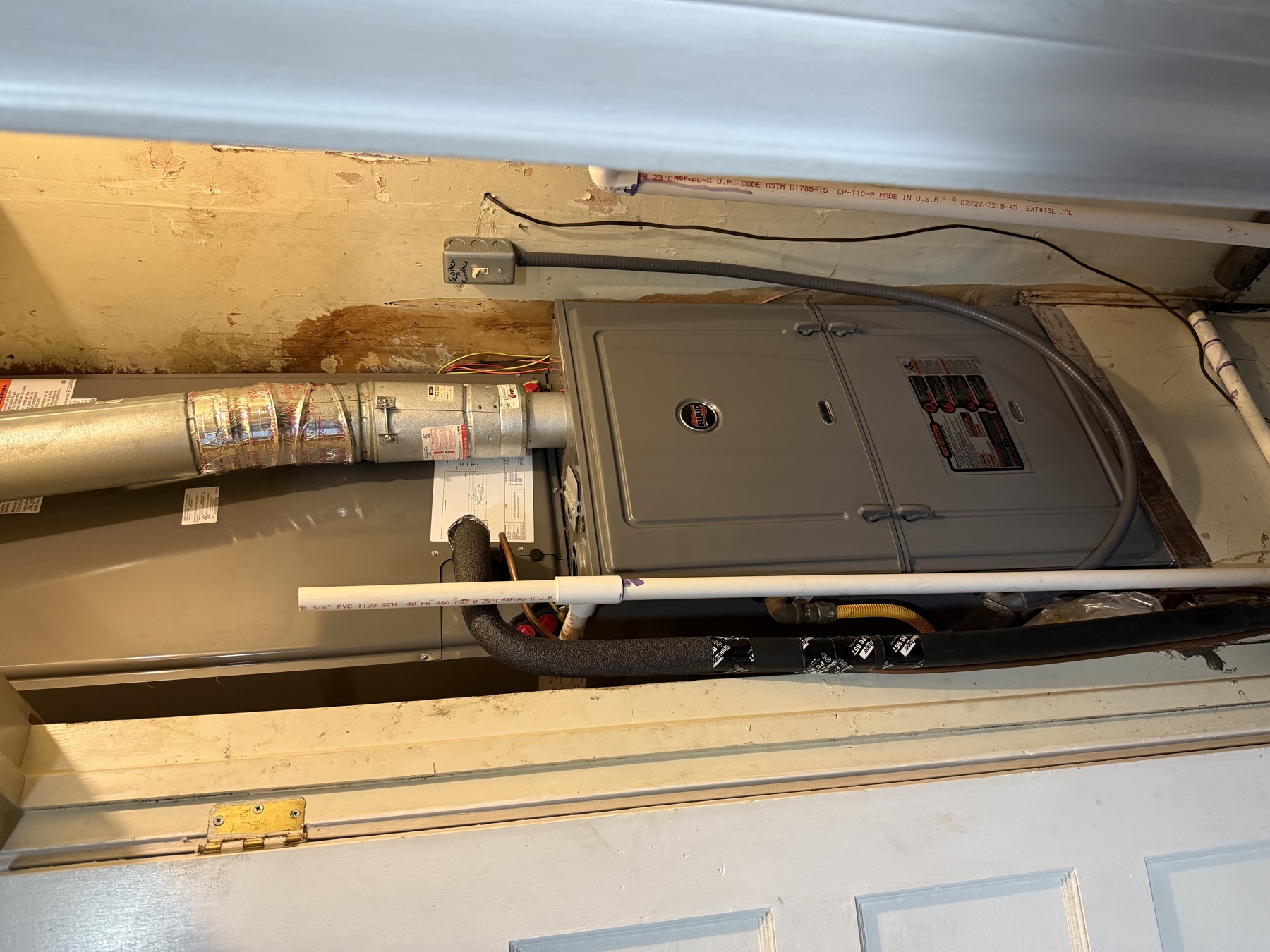
Many of the lake’s older cottages tuck the furnace into a hallway closet, much like the one pictured at the top of this page, with the flue rising through the ceiling. A closet furnace needs air to burn, and a door weatherstripped tight or a closet packed with storage can starve it. We check that the combustion air path is open and that the flue pipe is sloped, sealed, and fastened at every joint.
Rusted flue sections and joints that have pulled apart over the decades turn up often in these closets. They get flagged in writing, with the price to replace them sitting right beside the note.
Older closets also tend to hold older furnaces, and those get the most patient read. A unit with decades behind it can still be safe and serviceable, and plenty are. What we look for is the combination that ends a furnace’s useful life: a cracked or badly rusted heat exchanger, a draft that will not hold, or parts nobody makes anymore. If we find that, you see it with your own eyes before anything else gets said.
Drains and stacked coils
Higher-efficiency furnaces make water, and so does the cooling coil stacked on top of many of them. Both drain lines run through the same tight closet, and in a humid lake house a clog in either one can soak a floor or trip the furnace off on a cold night. We clear and test both drains while the panels are off.
In a narrow closet, we also check the clearance around the cabinet. Furnaces boxed in by shelving, stored paint, or cleaning supplies get a plain warning, because open flame and combustibles do not belong in the same small room.
Closing up a lake house for the quiet months
Second homes on the lake often sit empty from fall into spring, and a furnace that fails in January in a closed house can leave the plumbing at risk long before anyone notices. When owners are leaving for the season, we tune the furnace, confirm the thermostat holds a safe setback temperature, and make sure the system restarts reliably on its own after a power blip, since the weather keeps doing what it does whether or not anybody is home.
We can also come back mid-winter for a quick look and send the findings and photos by phone, so a house you are not living in still gets watched. Owners who like a standing schedule set it once and stop thinking about it. Our furnace tune-up overview covers the full checklist we use wherever we work.

Attic furnaces get the same flame, flue and drain checks as the closet units, just with a ladder involved.
The first teens-and-twenties morning sorts the houses
What a cold snap finds
Most winters around the lake are mild enough that a furnace loafs through December. Then a morning in the teens or twenties arrives and asks the system to run for hours without a break. That long run is when a weak igniter cracks, a marginal flame sensor drops out, and a blower capacitor that was barely hanging on finally quits.
Houses that had a fall tune-up usually ride that morning out, because those parts were measured weeks earlier and replaced if they were close. We hear from the rest before breakfast.
Power interruptions add a test of their own. When the lights flicker in a winter storm, the furnace has to relight from scratch, and a tired igniter or a sticky inducer motor is exactly what fails on that restart. So we cycle the furnace off and on several times during the visit and watch it come back each time, which beats finding out from a cold house at dawn.
Heat pump homes with a gas backup
Plenty of lake houses heat with a heat pump most of the season and keep a gas furnace for the coldest days. In those homes the furnace can go weeks without lighting, so a tune-up confirms it fires cleanly and takes over properly when the heat pump steps aside.
If the cooling side looks near the end of its life, we note it while the cabinet is open. Our AC replacement page for the lake explains how we price that decision, and a fall visit is a calm time to start thinking about it.
Readings you can keep, in words you can read
The written report
Every tune-up ends with a report in plain English: what we checked, the readings we took, what passed, what is wearing, and what we would replace and when. Gas pressure, temperature rise across the furnace, flame sensor signal, and the carbon monoxide readings are written down as numbers, so next year’s visit has something to compare against.
Nothing gets replaced during a tune-up without your go-ahead. If a part is failing, you see the reading and the written price, and you decide.
What the furnace pushes through the house
A tune-up is also a good moment to ask whether the filter slot is doing its job. A thin filter that leaks around its edges lets dust coat the blower and the coil stacked above the furnace. When that seems to be happening, we say so and point you to our air filtration page for Lake Wylie.
Rooms that still run cold behind a clean, healthy furnace usually point to the ductwork instead. That is air balancing territory, and the tune-up readings give it a head start.
Want a slot before the first frost fills the schedule?
Fall visits go quickly once a chilly forecast shows up. Pick a day now and get the findings written down while there is still time to act on them.
Tune-up questions from lake homeowners
What does your furnace tune-up include?
Burners cleaned, flame sensor cleaned and measured, igniter checked, gas pressure set against the data plate, heat exchanger inspected where the cabinet allows, carbon monoxide tested, blower and capacitor measured, drains cleared, safeties tested, and the filter checked. You get every reading in a plain-English report at the end of the visit.
When is the best time to schedule a furnace tune-up?
Early fall, before the first cold snap. The weather is mild, the schedule is open, and any part that tests weak can be replaced before the furnace has to run hard. Waiting for the first teens-and-twenties morning means competing with every house whose heat just quit.
My furnace is in a hallway closet. Is that a problem?
Not by itself. Closet furnaces are common in older homes around the lake. The closet does need an open path for combustion air, a sound flue, and clear space around the cabinet. We check all three and tell you plainly if storage, weatherstripping, or a rusted flue joint needs attention.
Can you prepare our second home’s furnace before we leave for the winter?
Yes. We tune the furnace, confirm the thermostat holds a safe setback temperature, and make sure the system restarts on its own after a power interruption. Owners who want it can add a mid-winter check, with findings and photos sent by phone so the house is watched while it sits empty.
Do you test for carbon monoxide during a tune-up?
Every time. We test the air around the furnace and at the supply side, and we look over the flue and the heat exchanger. If any reading concerns us, we show you the number and explain what it means before we leave the house.
My heat pump does most of the heating. Does the gas furnace still need a tune-up?
Yes. A backup furnace that barely runs can sit idle for weeks, then get called on during the coldest mornings of the year. A tune-up confirms it lights, burns cleanly, and takes over properly when the heat pump steps aside, which is exactly when you need it working.
Will you try to sell me a new furnace during the visit?
No. The visit is a tune-up, and plenty of older furnaces earn more seasons with good care. If a part is failing, you see the reading and a written price for that repair. Replacement only comes up when the readings make the case, and we show you which ones did.
More Lake Wylie service pages
A healthy furnace is the winter half of the year. The summer half, and the air in between, have their own pages.
Heating is one piece; our Lake Wylie page lists the rest of the work we do along the shore. For cooling, see AC replacement, plus mini split repair for the ductless heads in sunrooms and additions. Uneven rooms belong to air balancing, and the dust that coats furnace blowers is the subject of air filtration systems.
See the kind of closets and equipment we work in every week in our gallery, all real jobs shot by the crew.