
Rock Hill · Ductless, room by room
Mini splits for Rock Hill homes that never had ductwork
A ductless mini split is a heat pump with no ducts. One compact outdoor unit, one or more slim indoor heads, and a refrigerant line set running between them through a three inch hole in the wall. It cools through a Carolina August, heats through January, and it goes into rooms where there is no honest place to run a duct. In this city, that describes a lot of houses.
Old Town cottages, the mill houses off the main drag, converted attics, bonus rooms over garages, enclosed porches, garage shops, rental units near campus. This page is about what ductless solves here, where it is the wrong answer, and what a clean install looks like on a narrow lot. The broader ductless overview and the installation page carry the rest.
Why so many houses here end up ductless
Mill houses and Old Town cottages
The 1920s and 1930s mill houses sit on crawlspaces with low headroom, tight joist bays, and ceilings that were never built to give anything up. There is usually no chase from the crawl to the second floor and no attic worth the name. Retrofitting real ductwork into one of those means surrendering a closet, boxing a soffit down the hallway, or dropping a ceiling in the one room with original trim. Owners look at that trade and stop.
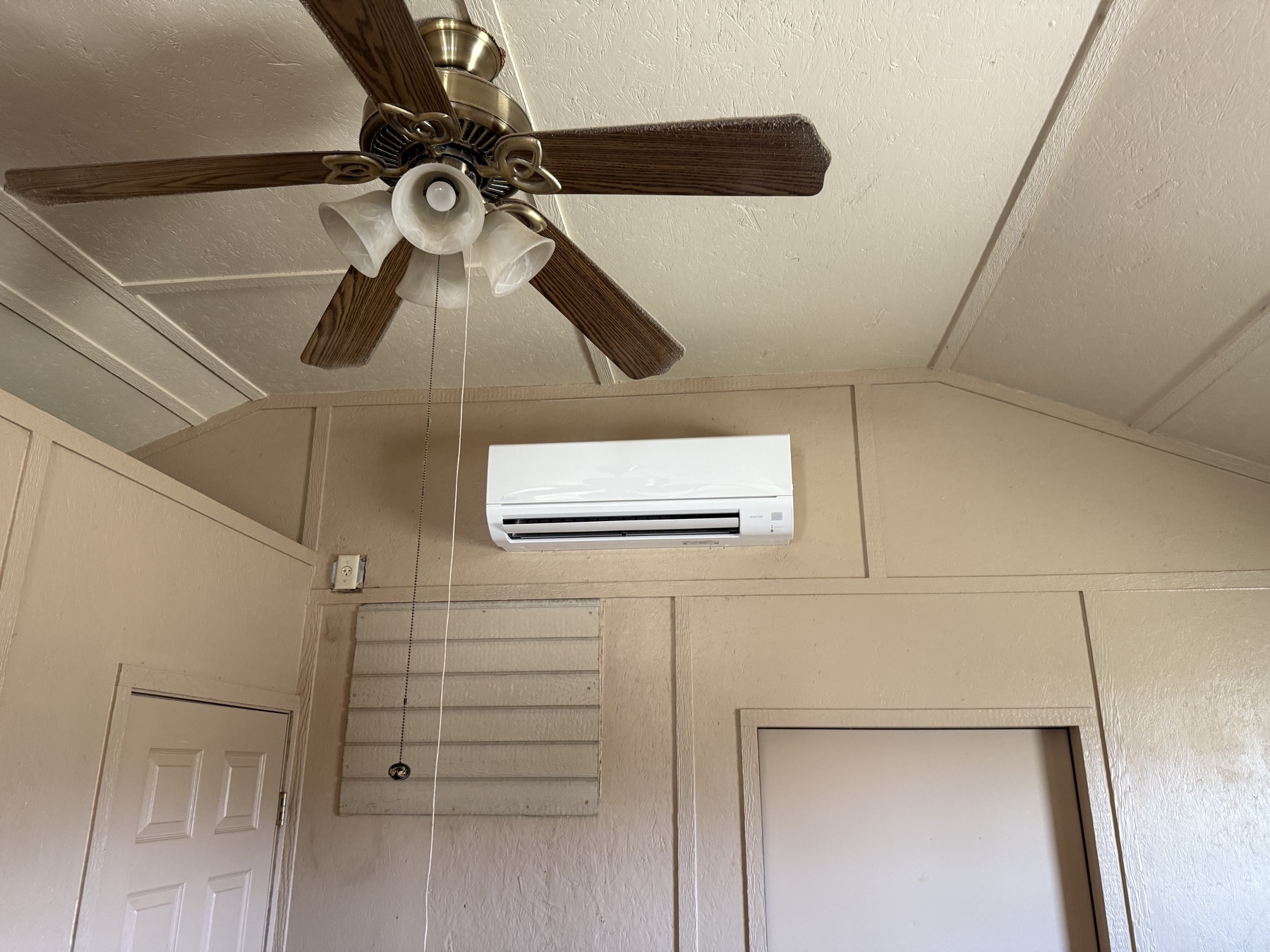
Ductless skips the whole argument. A head goes on an exterior wall, the line set drops straight through behind it, and the outdoor unit sits on a pad or on brackets at the side of the house. No closet lost, no ceiling dropped, no framing opened up. On the Old Town cottages we work in, that is often the difference between a house getting conditioned properly and living another decade on window units.
The ranch belt and the newer subdivisions
The 1960s through 1980s ranches have ducts and most of them are fine. Where we get called is the room somebody added later: a carport closed in, a den bumped off the back, a garage finished into a bedroom. The system was sized for the original footprint and nobody resized it when the square footage grew. The house has heat and air everywhere except the newest room, which is the room the family actually uses.
The rooms your system was never asked to reach
Attics, bonus rooms, enclosed porches
A converted attic, a bonus room over a garage, and a glassed in porch all have the same problem from three directions. They sit above or outside the conditioned envelope, they have far more exterior surface per square foot than any other room in the house, and the duct run that feeds them is the longest one in the system. By the time that air arrives in July it has given back most of what the coil did to it.
The reflex is to add another supply register up there. That usually makes the whole house worse. The blower moves a fixed amount of air, so every cubic foot pushed toward the far room is pulled away from somewhere else, and the added run raises static pressure on a system that had none to spare. You get a slightly less miserable bonus room and two bedrooms that used to be comfortable and now are not.
Garages, shops, and the building out back
Garages and detached shops are the cleanest ductless case there is. Nothing to tie into, a load that has nothing to do with the house, and a schedule that has nothing to do with the house either. Somebody wants the shop at seventy two on a Saturday and does not care what it does Tuesday afternoon. One head on its own control does exactly that and costs nothing to run the rest of the week.

The outdoor half of a ductless install, mounted high on the wall of the building it serves.
Rentals near campus, and what humidity does at part load
Per unit control in a rental
The off campus market around Winthrop runs on subdivided houses, converted duplexes, and garage apartments, and a lot of them share one system between units that do not share a schedule. The landlord wants control that does not depend on a tenant remembering anything, and the tenant wants a room that is genuinely comfortable in September. One central system split between two households satisfies neither, and it is behind most of the calls we take at those addresses.
Ductless gives each unit its own head, its own control, and its own usage. Turnover gets simpler too, because a head is wiped down and a filter is rinsed instead of a shared duct system being inspected and argued over. If you own several addresses in town, the contact form is the fastest way to get all of them looked at on one trip rather than four.
Humidity at part load
The thing an oversized central system does badly in a Carolina summer is run at part load. It satisfies the thermostat quickly, shuts down, and never runs long enough to pull real moisture out of the air. The house reads seventy four and feels clammy, so the owner drops the setpoint to fix a humidity problem with temperature, which works about as well as it sounds and shows up on the power bill.
An inverter driven ductless head does the opposite. It ramps down and runs long, gentle cycles, and long cycles are what actually dry a room out. That is why a bonus room that used to be hot and sticky often ends up the most comfortable space in the house afterward, and why we size heads from the room’s real load instead of rounding up. Oversizing a mini split gives back the exact advantage you bought it for.
Single zone, multi zone, and where the equipment actually goes
One outdoor unit or several
A single zone pairs one outdoor unit with one head, and it is the simplest and most forgiving version of this equipment. Multi zone runs several heads off one outdoor unit, which saves wall space outside and usually saves money against separate systems. The honest tradeoff is that those heads share a compressor, so they share its condition. If the outdoor unit goes down, every room it feeds goes down with it on the same afternoon.
There is a comfort side to it as well. A shared compressor has to serve whatever mix of heads is calling at that moment, so a lightly loaded head can run less gracefully than it would on its own. For a house with three or four rooms to solve, multi zone is usually right. For a shop or a single rental unit, one dedicated system is almost always the better buy. We walk through both at the free pricing visit.
Line sets, penetrations, and drains on a narrow lot
Old Town lots are tight, and the side yard is often the only place an outdoor unit can go without sitting under a gutter or in the neighbor’s bedroom window. We set units clear of roof runoff and mud splash, on a pad or on wall brackets where the grade is bad, and we route the line set where the house wants it to run rather than straight across the front elevation.
The wall penetration gets cored, sleeved, pitched slightly to the outside, and sealed on both faces. Condensate leaves through a drain that actually drains, not onto a walkway or down the foundation, and the line set gets covered rather than left bare in the Carolina sun. Those three details are boring on install day and they decide everything at year five. The gallery is all real jobs if you want to see the standard first.
Not sure ductless is the right answer?
Tell us which room is losing and what the rest of the house does. We will say plainly whether a head fixes it or whether the problem is somewhere else.
What a bad install looks like a year later
You can spot one from the driveway. Line set taped instead of covered and chalking in the sun, an outdoor unit set right in the drip line so the coil eats roof grit all winter, condensate staining down the siding, a penetration foamed instead of sleeved. Inside, the head runs but the room never quite gets there, because the charge was set by feel rather than weighed in and the line was never properly evacuated before startup.
None of that shows at the handshake. It shows in the second summer, and by then correcting it costs close to what doing it once would have. We commission with instruments, write down what we set, and leave the paperwork with you. Every quote goes out in writing, the pricing visit is free, and if ductless is the wrong call for your house we will say so before you have spent anything on it.
Ductless questions we get around here
Will a mini split heat through a winter here?
Comfortably. Our winters sit mostly in the thirties and forties, which is squarely inside where this equipment is efficient, and cold weather models keep producing useful heat well below freezing for the cold snaps. For a bonus room, a shop, or an addition, one properly sized head carries the whole season without a backup heater running alongside it.
Can one outdoor unit run my whole house?
Sometimes, but it is rarely the best buy in a house that already has decent ductwork. Whole house ductless means four or five heads, and by then a central replacement usually serves the same square footage for less. Ductless earns its keep in the rooms ducts cannot reach. We will tell you which case your house is before anyone starts drilling.
Where does the indoor head have to go?
On an exterior wall in most installs, high on the wall, with clear throw into the room and a straight shot for the line set behind it. Ceiling cassettes and slim concealed units exist where a wall head will not do. Placement is the single biggest factor in whether the room feels right afterward, so we walk it with you rather than picking a wall on our own.
Will it fix the humidity in my bonus room?
Usually yes, as long as it is sized correctly. Long, low speed cycles pull moisture steadily, and most units have a dry mode that prioritizes humidity over temperature for the soupy stretches in August. If the room is damp because of a crawlspace or an envelope issue underneath it, we will say so, because a head alone will be fighting that all summer.
Is ductless a good idea in a rental?
For subdivided houses and garage apartments near campus, it is often the cleanest solution available. Each unit gets its own control and its own usage, which ends the shared thermostat fight, and maintenance between tenants is a wipe down and a rinsed filter. Owners with several addresses usually have us look at all of them in one visit.
Can you install one in a 1930s mill house without tearing up walls?
That is exactly what this equipment is for. The only opening we make is the penetration for the line set, roughly three inches, cored and sleeved behind the head. No soffits, no dropped ceilings, no closet surrendered to a duct chase. On a crawlspace house with no attic, ductless is often the only way to condition the second floor properly.
How long does an install take, and how loud is it?
A single zone job typically wraps in one day including commissioning and cleanup. Multi zone runs one to two days depending on head count and routing. Indoor heads are quiet enough that people regularly do not believe the system is running, and the outdoor unit is a low hum you stop noticing from inside the house within a week.
Ductless work around Rock Hill
Related pages, plus the neighbors a ductless decision usually touches.
Ductless Overview · Mini-Split Installation · Mini-Split Repair · Heat Pumps · Furnace Repair · Emergency Service
We cover the rest of York County from the same trucks, and the Rock Hill page lists everything we handle in the city.