
Airflow
Lake Wylie houses where one room never matches the thermostat
The newer builds along Lake Wylie put their best rooms on the water side. Tall ceilings, a wall of glass, a bonus room stacked over the garage. Those are the rooms that run hot at four in the afternoon while a hallway thermostat reports a perfectly comfortable house. The system is doing exactly what it was told. The air just is not landing where the people sit.
Air balancing fixes that, and it starts with readings. We measure what comes out of every register, what the returns pull back, and what the blower is fighting along the way. Then we change the parts that are wrong, write it all down, and put the before and after numbers on the same sheet so you can see what moved.
Tall rooms with the view, and the heat that comes with them
Two floors on one thermostat
Heat rises, and a two-story house with an open stairwell gives it a straight road up. Upstairs bedrooms in the newer waterfront builds usually sit right under an attic that bakes all afternoon, so they gain heat faster than anything downstairs. A single thermostat in the downstairs hall knows none of this. It shuts the system off when the hall is happy, and the bedrooms stay warm long after.
Two-system homes are supposed to solve that, with one unit for each floor. In practice they can fight. The downstairs unit pushes cool air up the stairwell, the upstairs thermostat reads a cooler house than the bedrooms really are, and both units start running odd, short cycles. We set the thermostats, the staging and the supply split so each unit carries its own floor and leaves the other one alone.
Zoned homes add another layer. Three-zone setups are ordinary on the waterfront, and a zone damper stuck half open, or a bypass set by feel during the build, quietly undoes every adjustment made downstream of it. We run each zone open and closed before trusting a single room reading.
The wall of glass facing the water
A big run of windows facing the lake pulls in sun all afternoon, and the water throws more light back at it. That room’s heat gain can run far ahead of what the same floor area would carry behind ordinary walls, and the duct runs feeding it were usually sized off a floor plan before anybody thought hard about the glass.
So that room gets read the hardest. Supply temperature, airflow at each register, the return path back to the unit, and how the space behaves late in the day when the sun is lowest over the water. Sometimes the fix is more air into the room. Sometimes it is a better return, so the air going in has a way back out. Either way, it gets measured before anything is cut, moved or replaced.
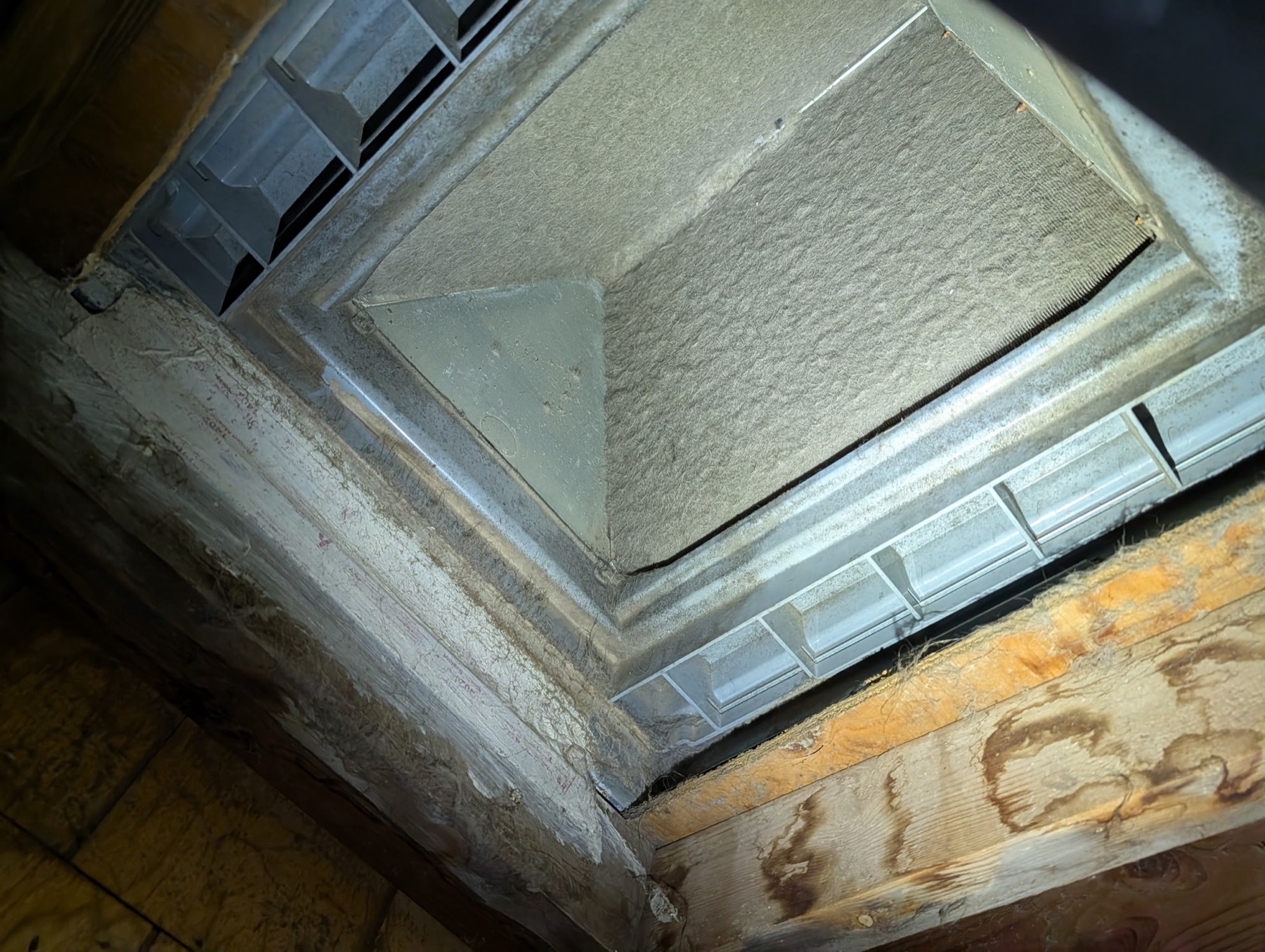
A coil face matted with dust like this starves every register in the house before anyone has touched a damper.
What the attic does to the air on its way to you
Flex duct that sags, kinks, or was never sized
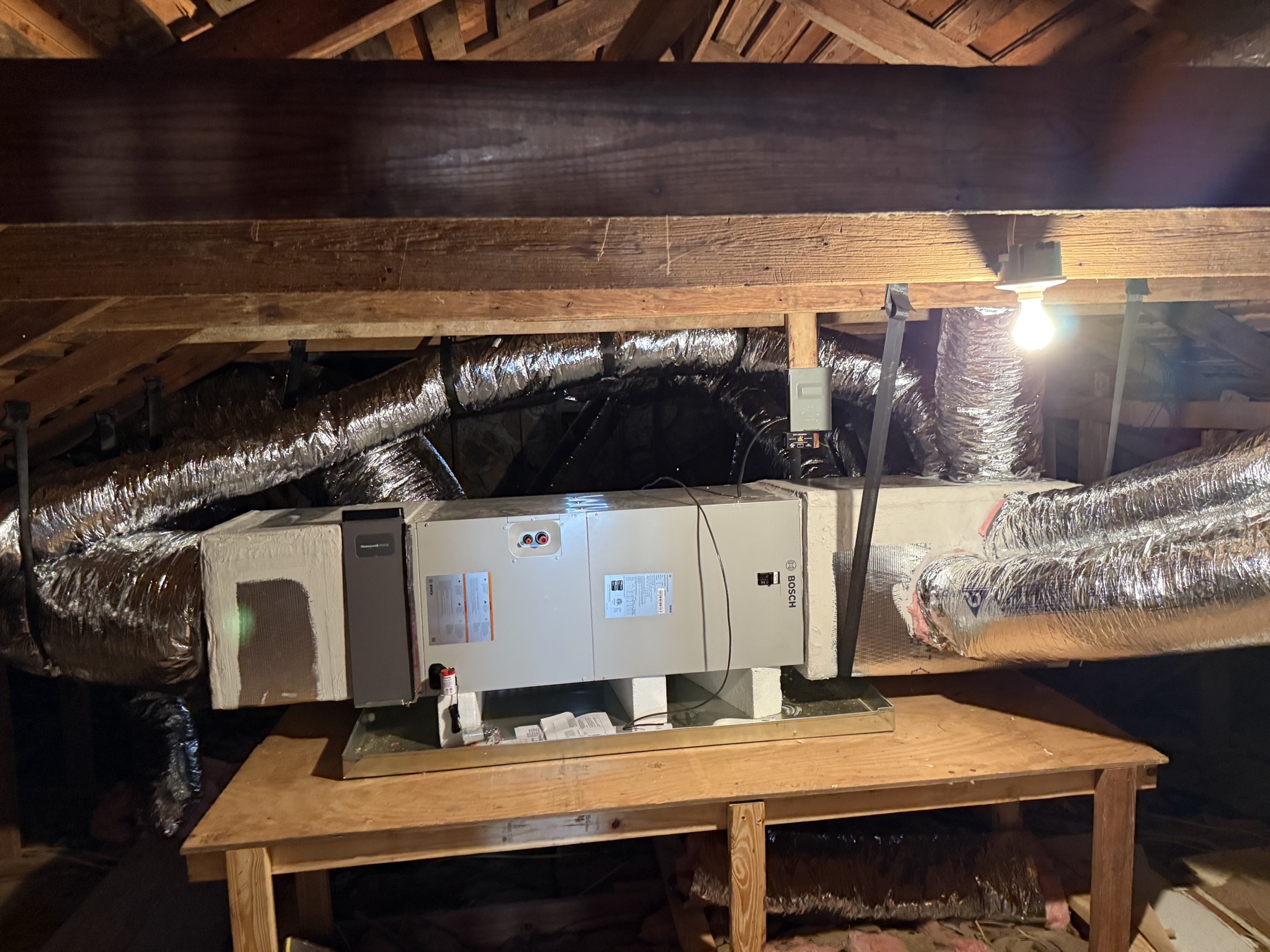
Most of the newer houses around the lake carry flexible duct in the attic, run from the air handler out to each ceiling register. Flex works fine when it is pulled tight, strapped often enough to stay straight, and sized for the room at the far end. Left loose, it droops between straps, and every belly in the run cuts what reaches the register. A hard bend right at the boot can choke a run nearly shut.
We walk the attic with a light and follow each run end to end. Some only need restrapping. Some were the wrong size from the first day and get replaced. When a trunk or fitting has to be rebuilt, it gets fabricated in our own warehouse, which is how a duct job that sounds big still wraps up in a day.
Dampers, returns, and closed bedroom doors
Plenty of houses have balancing dampers on the supply runs that nobody has touched since the builder’s crew left, or that someone slammed shut chasing a cold room one January. We find them, set them from readings, and mark the positions so the next person does not have to guess.
Returns matter as much as supplies. A bedroom with a supply and no return of its own pressurizes when the door closes, and the air quits coming in. You can feel it happen: crack the door and the room cools off. The fix may be a jumper duct over the door or a transfer grille in the wall, and we will tell you which one fits that room and why.
A single central return in the upstairs hall is common in newer builds. It leaves every closed bedroom choking on air it cannot push back out, and adding a return path often helps more than adding another supply.
Got a room that never catches up?
Tell us which room, what time of day it gets bad, and whether the house runs one system or two. The pricing visit costs nothing, the readings come with it, and the honest number shows up in writing before anybody touches a duct.
How a balancing visit runs, start to finish
Starting at the blower
Balancing a house with a weak blower or a choked coil wastes everybody’s afternoon, so we start at the equipment. Static pressure across the system tells us whether the blower is fighting restrictions it was never built for. The filter, the coil face and the blower wheel all get a look, because dust on any one of them starves every register in the house at the same time.
That last one shows up more than people expect. A coil matted with dust can cut airflow across the entire system, and the rooms at the end of the longest runs feel it first. Cleaning it is sometimes the whole fix. Keeping it clean afterward is what our air filtration systems in Lake Wylie are for.
Then every room, one at a time
With the equipment sorted, we go room to room. Airflow at each supply, temperature at each supply, the return side, and the doors both open and shut. The numbers get written against what each room should be getting for its size, its windows and the direction it faces.
Then the adjusting starts: dampers set, runs restrapped or replaced, a return added where a room has none, thermostat or staging settings changed in a two-system house. And we measure again, because moving air at one register shifts it at all the others. You keep both sets of readings, so the result is on paper with the numbers to back it. The main air balancing page has the service as we run it across the rest of the area.
When balancing will not fix the room
Some rooms are short on air because the equipment is short on capacity. If an older system in one of the River Hills homes or a veteran lake cottage has lost its edge, no amount of damper work will make it carry a west-facing room in August. We say so when we see it and put the repair-or-replace math on the table in writing, which is the conversation our AC replacement page for Lake Wylie walks through.
Add-ons get the same straight talk. A sunroom or bonus room that somebody conditioned by tapping a duct off the nearest trunk often steals air from the rooms that were there first. A ductless head can be the cleaner answer for a space like that, and when one is already hanging on the wall and acting up, our mini split repair work picks it up.
Winter exposes balancing problems too, just upside down: the downstairs runs cold while warm air pools against the upstairs ceilings. If the heating side is the one being tested this year, pair a balancing check with a furnace tune up and the crew handles both while the attic is already open.
Airflow questions from lake homeowners
What is air balancing, in plain terms?
It means measuring how much air reaches each room and adjusting the duct system until every room gets its share. Dampers, duct runs, returns and thermostat settings are the usual tools. The goal is a house where the thermostat reading matches how each room actually feels when you walk into it.
Why is my upstairs always hotter than my downstairs?
Heat rises, upstairs rooms sit under a hot attic, and a thermostat downstairs shuts the system off before they catch up. Sagging or undersized supply runs and missing returns make it worse. Room-by-room readings tell us which of those is doing the damage in your particular house.
Can closing vents in unused rooms balance the house?
Usually not. Closing registers raises the pressure the blower works against and can push air out of leaky attic ducts instead of into the rooms you use. A couple of partly closed registers is fine. Shutting down a third of the house is hard on the equipment and rarely helps.
Do I need a new system to fix uneven rooms?
Most of the time, no. Sagging flex, closed dampers, a missing return or a dirty coil cause more uneven rooms than worn-out equipment does. When the system really is too small or near the end, we show you the readings that prove it and write the repair and the replacement side by side.
What about a house with two systems that fight each other?
That usually comes down to thermostat placement, staging settings and how much air each unit sends up or down the stairwell. We read both systems together, set them so each one carries its own floor, and recheck them running under load, when any fighting between them is easiest to spot.
Does balancing help with humidity near the lake?
It can. A system pushing too much air across its coil pulls less water out, and rooms starved of air stay clammy. Setting the airflow right helps the coil do its drying. If the house still runs damp after that, we measure humidity and talk through dehumidification as its own question.
Will I get to see the readings?
Yes. You get the before and after numbers for each room on one sheet, written so a homeowner can follow them. If you own a second home and cannot be there for the visit, the report goes to your phone along with photos of what we changed up in the attic.
More from the Lake Wylie lineup
Uneven rooms tend to lead into one of these conversations, so here is the rest of the work we do on this side of York County.
When the readings show the equipment, not the ducts, is the problem, the answer is AC replacement; a sunroom head that will not keep up goes to mini split repair; a weak heating side to a furnace tune up; a choked coil to air filtration. The Lake Wylie page ties them together.
Want to see what a tidy attic platform and straight flex runs look like? Browse the gallery.