
Clover · Winter bills read, strips checked
Strip heat is the costly way through a Clover winter
A heat pump moves heat instead of making it. In summer it carries heat out of the house. In winter it pulls heat out of the outdoor air and brings it inside, even on mornings that feel far too cold for that to work. Electric resistance strips do something cruder: they turn power straight into heat, one unit in and one unit out, and few ways to heat a house here cost more.
Plenty of the older frames on Clover’s in-town streets still heat with strips, and a lot of them would do better on a heat pump. The heat pump service page has the wider overview.
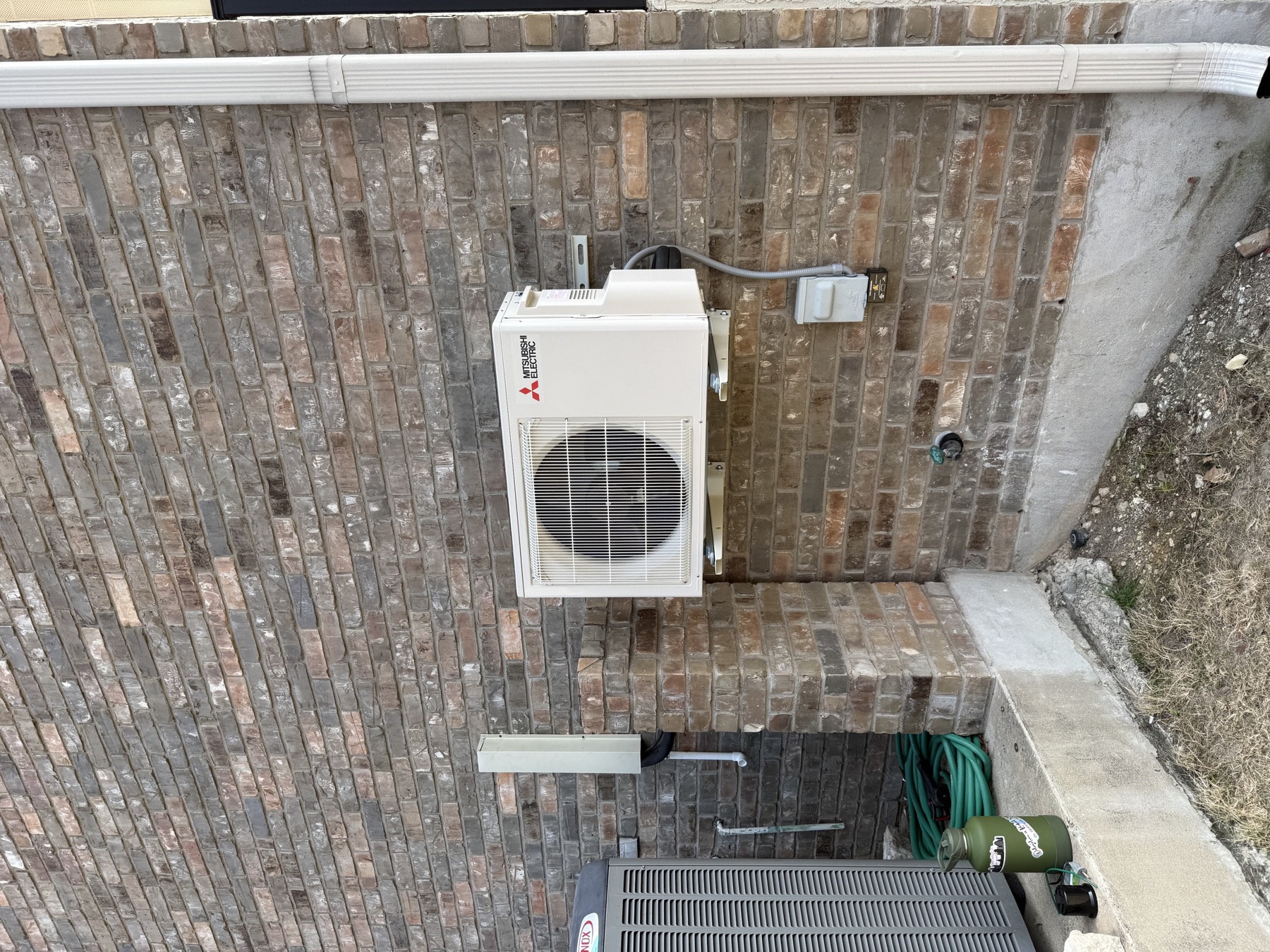
Retiring the strips in the older houses
Figuring out what heats your house now
Plenty of Clover owners are not sure what they have. A gas furnace has a flue. A heat pump has an outdoor unit that keeps running in January. An electric furnace has neither, only an air handler full of resistance coils, and the power bill tells that story every December.
Some houses carry a mix: an old cooling-only condenser outside, strips in the air handler, and nobody left who remembers why. That setup cools fine and heats at the steepest rate you can buy.
What a conversion actually involves
Converting usually means a heat pump outdoor unit where the old condenser sat, a matched air handler or coil inside, and a thermostat that knows what it is running. The strips often stay, demoted to backup duty, so they only help on the coldest mornings and during defrost.
In a house with sound ductwork, that is the whole job. Where the ducts are improvised, which is common in the older in-town frames, we look at them on the same visit, because a new heat pump pushing air through leaky runs hands back part of what the conversion saved. Optimus financing is there when the numbers work and the timing is tight, and we give you the math in writing before anyone asks you to sign.
Cold mornings, aux heat, and the defrost cycle
What aux heat is supposed to do
On a hard cold morning a heat pump sometimes needs help, and that help comes from the strips in the air handler. The thermostat calls them in when the house falls too far behind the setting, and the system brings them on briefly during defrost so the vents do not blow cool. An aux heat light on a frosty morning is normal.
Trouble starts when the strips never step back. A thermostat configured for the wrong equipment, a dead outdoor sensor, a relay stuck closed, or a charge low enough that the heat pump never catches up can leave the strips carrying the house for weeks. It feels perfectly comfortable. The bill is where it shows up.
Your own thumb on the thermostat can cause it too. Bumping the setting up three or four degrees because the vents feel cool for a minute tells the system the house is far behind, and the strips answer. Deep overnight setbacks do the same thing at sunrise. On a heat pump, a steady setting you leave alone usually beats chasing comfort one degree at a time.
Steam, a whoosh, and a short pause
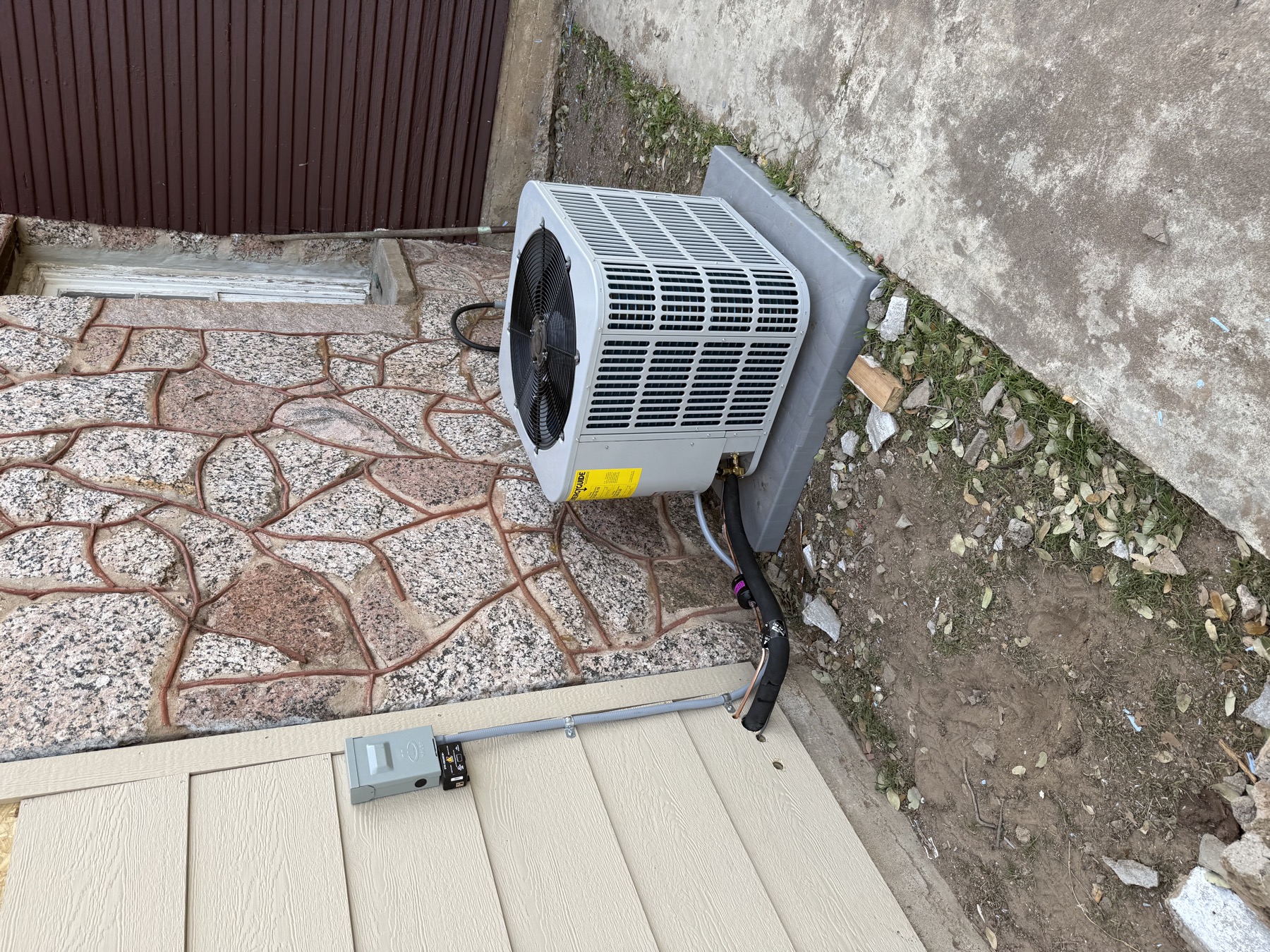
When frost builds on the outdoor coil, the system reverses for a few minutes to melt it off. The outside fan stops, there is a whoosh as the valve shifts, the unit may throw a cloud of steam, and the air indoors softens for a bit. Then it switches back. People who moved here from gas heat sometimes call convinced the unit is dying. It is doing exactly what it was built to do.
What deserves a call is ice that stays: a coil packed solid, a base pan frozen over, or defrost that seems to run all morning. That points at a sensor, the defrost control, the reversing valve, or the refrigerant charge.
Is your heat pump doing something strange?
Tell us what the outdoor unit and the thermostat are doing, and most of the time we can say over the phone whether it is normal. If it needs a truck, you get a written price before anybody picks up a tool.
Lake-road houses and the settings nobody finished
Builder heat pumps along the corridor
The neighborhoods filling in between Clover and Lake Wylie include plenty of builder heat pumps, and they do run. What the year-two checkups keep turning up is how much got left unfinished: staging never configured, thermostats sitting on factory settings, filters a size too small, and duct runs built to inspection minimum and not an inch further.
A two-stage unit stuck on high stage short cycles through mild weather. Getting it set up right costs about what a tune-up costs, and it turns the system you have into the one you paid for. Skip that early look and the pattern tends to catch up with the house around year eight.
Where the outdoor unit sits on acreage
On the bigger lots west of town, outdoor units end up wherever the installer found a spot: behind a shed, down in a low corner where rain collects, or right where the mower throws clippings. A heat pump needs more clearance than a cooling-only unit, because it sheds meltwater all winter and that water has to drain away instead of refreezing in the base pan.
We look for a raised, level pad, open air on every side, and a spot clear of roof runoff and mowing debris. If moving a unit a few feet would help more than any part, you hear that. The long drive out costs you nothing extra either, since pricing is flat with no mileage charge.
Two visits a year, and why fall matters more than people think
One outdoor unit does both seasons’ work, so it never gets a quiet stretch where a small fault can sit harmlessly. We see heat pumps twice a year. Spring is the cooling side: coils cleaned, the condensate drain cleared, charge measured with instruments, and the electrical parts read before the first long week of heat. Pollen lands early in the western county, and the outdoor coil wears it.
Fall is the heating side. We force a defrost and watch it all the way through, confirm the reversing valve shifts and seats, test that the strips come on in the right stage and drop out again, and check the thermostat setup against the equipment actually in the house. Summer storm cells take out a control board now and then, so surge protection is a small line worth asking about while we are there.
Every repair is priced in writing before work starts, a second opinion on someone else’s verdict is free, and the 24/7 line never adds a fee for the hour. Teachers and service personnel get ten percent off. If your system has good years left, that is what Zach and Eric will tell you, and if the real complaint is one room the heat pump never reaches, a ductless head may be the smaller fix.
What Clover owners ask about heat pumps
Is converting from strip heat to a heat pump worth it in an older house?
In most older Clover houses that heat with strips, the change on winter bills is big enough that neighbors ask about it. The only way to know for your house is to look at a real winter bill and the ductwork together. Bring us one bill and we will walk through the numbers with you before recommending anything.
Why is my aux heat light on every cold morning?
Some aux heat on a cold morning or during defrost is expected. If the light stays on for hours on mild days, something is off: a thermostat set up for the wrong equipment, a failed outdoor sensor, a stuck relay, or a low charge. Each of those costs less to fix than a whole winter of running on strips.
My outdoor unit is steaming and made a whoosh. Is it broken?
Probably not. That is the defrost cycle melting frost off the outdoor coil, and it usually lasts a few minutes before the unit goes back to heating. Give us a call when the coil stays packed with ice, the base pan freezes solid, or defrost seems to repeat over and over without the house ever warming up.
My new build heat pump short cycles in mild weather. Is that normal?
It is common, but it is not how the equipment should run. Builder installs often leave two-stage units on high stage only, with the thermostat still on factory defaults. The system hits the setting fast and shuts off. Configuring the staging and the thermostat properly usually fixes it on the same visit.
Should I switch to emergency heat when it gets really cold?
No. Emergency heat shuts the heat pump off and runs the house on strips alone, which is the priciest way to stay warm. Use it only if the heat pump has quit and you need heat until a truck gets there, then call us that same day rather than leaving it switched on for a week.
How much clearance does the outdoor unit need?
Enough for air to move freely on every side and for meltwater to drain off in winter. Keep shrubs, firewood and stored equipment back, and keep grass clippings off the coil. A unit sitting low where water gathers, or boxed in behind a shed, struggles in both seasons. We check placement on every visit.
How often should a heat pump be serviced?
Twice a year. The spring visit looks after the cooling side before summer, and the fall visit covers defrost, the reversing valve and backup heat staging before the cold arrives. Because one outdoor unit does both jobs, skipping a visit sends half the system into its hardest season unchecked.
Other work we do around Clover
A heat pump touches both seasons, so these pages tend to come up in the same phone call.
The Clover page ties the town together, and the other Clover pages cover AC repair, furnace repair, ductless mini splits and emergency HVAC.
Want to see the work first? Our gallery holds real jobs only, and the rest of York County gets the same trucks.