
Talk to a Massey, not a phone tree
Fort Mill, SC and the whole Charlotte metro · Open 24/7, actually 24/7 · (803) 573-2473
Call any hour and a person answers. Or send the details below and we will call you back fast. Either way, you get a straight answer about what is going on and an honest number before any work starts.
Tell us what your system is doing
Or just call
(803) 573-247324 hours a day, 7 days a week, with no extra emergency fee. A January 2nd no-heat call gets the same price as a Tuesday tune-up, and both get answered by someone who can talk you through the first steps before the truck even starts.
Home base
Fort Mill, SC 29715. We run a 30-mile radius covering York, Lancaster, and Chester counties in South Carolina plus the Charlotte side of the state line: Mecklenburg, Union, and Gaston counties. Same crew, same pricing, and no travel surcharge anywhere on the map.
Worth asking about
10% off for teachers and service personnel, and financing through Optimus for qualifying projects. Details on the financing page. Want to see the work first? Browse the gallery.
What happens after you reach out
First, a real conversation. We ask what the system is doing, how old it is, and what you have already tried. Half the time we can tell you over the phone whether you are looking at a small fix or a bigger decision, before anyone drives anywhere. If you caught it early, we might even talk you through fixing it yourself and save everyone the visit, which has happened more times than our accountant would prefer.
Then we schedule a visit that fits your day, show up inside the window, and diagnose properly before recommending anything. You get the findings in plain English and an honest number in writing. What happens next is entirely up to you, and no is a perfectly acceptable answer that will not change how we treat you on the next call.
Good things to mention
The age of your system if you know it, any error codes on the thermostat, and whether the problem is constant or comes and goes. A photo of the nameplate sticker on your outdoor unit is worth three paragraphs of description. Teachers and service personnel, mention that too, because 10% comes off your bill every visit. And if you are thinking about financing a bigger project, say so and we will bring the Optimus details along.
While you wait for the truck
A few safe things worth checking after you call. None of them require tools, and any one of them might save you the visit entirely, which is fine by us.
No cooling
Check the breaker panel first: AC breakers trip more than people expect, especially in the first heat wave, and one reset is fair game. If it trips again immediately, stop there and tell us, because a breaker that will not hold is protecting you from something real. Look at the thermostat and make sure someone did not bump it to heat or off, and swap the batteries if the screen looks dim. Then check the filter. A filter choked with Carolina pollen can freeze the whole system, and if you see ice anywhere on the copper lines, switch the system off and leave it off so the ice can melt before we arrive. Running it frozen is how a cheap fix becomes an expensive one, and the meltwater always finds something you care about.
No heat
Same breaker and thermostat checks apply. For gas furnaces, confirm the gas is on and nothing has blocked the intake or exhaust pipes outside, which happens more than you would think after storms and leaf season. Heat pump owners: frost on the outdoor unit in winter is normal for short stretches while it defrosts itself, so do not panic unless it turns into a solid block of ice or the house keeps losing ground. And the non-negotiable one: if you ever smell gas, skip the checklist, get everyone out of the house, and call the gas company from the driveway before you call us. Furnaces are our job. Gas leaks are theirs.
Water where it should not be
Water around the indoor unit usually means a clogged condensate drain, and the right move is switching the system off at the thermostat so the pan stops filling. Put a towel down, take a photo for us, and resist the urge to poke at it with a coat hanger, which mostly relocates the clog somewhere worse. Most drain problems are quick fixes when they have not been marinating for a week, and Carolina humidity keeps them common from May through September.
Strange noises and smells
Grinding, screeching, or repeated clicking are shut-it-off noises. A dusty burning smell for the first minutes of the season’s first heat cycle is normal, but anything electrical-smelling is not, and that is another shut-it-off. Hold the phone up to the noise when you call. We have genuinely diagnosed units by ear more than once, and it saves everyone time.
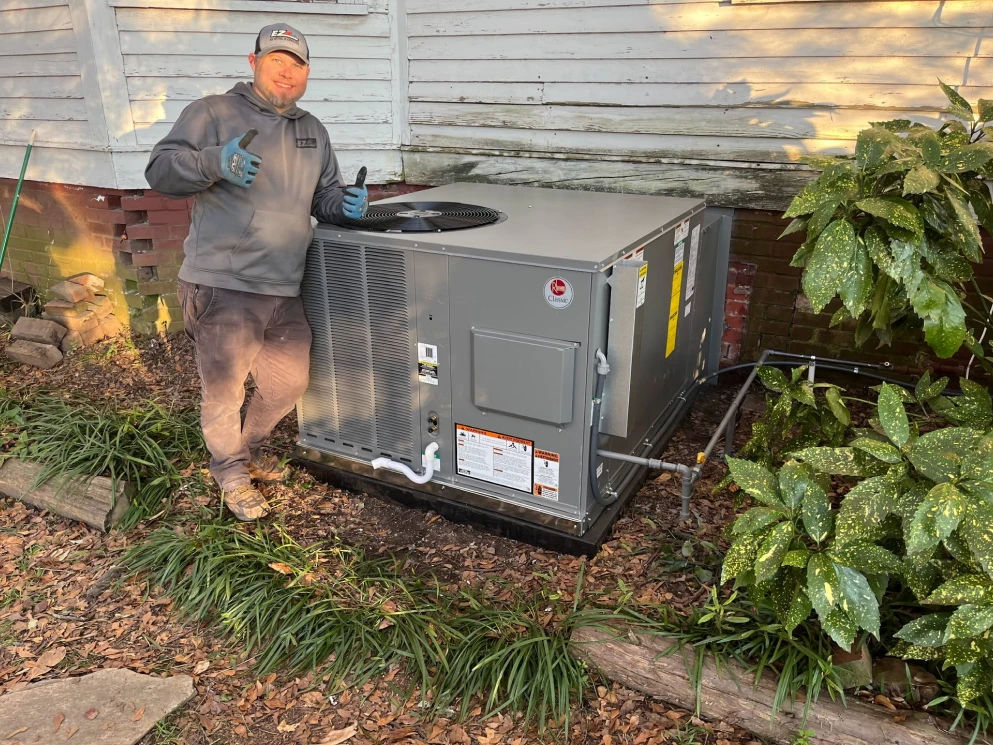
A newly set package unit and the tech who set it.
Call now, or keep an eye on it?
Call right now
No heat with temperatures dropping, no cooling in a heat wave with kids or older folks in the house, water actively spreading, ice on the refrigerant lines, breakers that re-trip immediately, or any electrical smell. These are the calls the 24/7 line exists for, and waiting until morning usually makes them worse and never makes them cheaper.
Fine to book normally
Rooms that never quite match the thermostat, bills creeping up, weak airflow, a system that seems to run longer than it used to, or the tune-up you have been meaning to schedule since spring. Book a regular window and we will dig in properly with the full diagnostic kit. Mention everything you have noticed, even the weird stuff, because the weird stuff is usually the clue that cracks it.
Honestly, just ask
Not sure which bucket you are in? That is what the phone call is for, and the phone call is free. Describe what the system is doing and we will tell you straight whether it can wait until morning. We would rather talk you off a midnight panic than bill you for one, and your future self will remember which company did which.
The anatomy of an EZ service call
It starts on the phone, where we ask more questions than you might expect: what the system is doing, when it started, what kind of equipment you have if you know it, and whether anything else changed around the same time, like a renovation, a new thermostat, or a lightning storm. Those five minutes routinely save an hour on site, and they decide which parts ride out on the truck. If the fix sounds like something you can do yourself, a tripped breaker, a clogged filter, a thermostat set by a toddler, we will tell you on the phone for free.
When we arrive, the first stretch is diagnosis, not conversation. Gauges on, readings pulled, the whole system looked at rather than just the loudest symptom, because a weak capacitor and a dirty coil often travel together and fixing one without the other buys you a second breakdown in August.
Then comes the talk. Plain English, the actual cause, the honest number in writing, and every reasonable option laid out, including the do-nothing option when it is genuinely reasonable. You decide. Nobody hovers, nobody adds countdown-timer pressure, and no means no without a speech.
If you approve the work, most repairs happen the same visit because the trucks are stocked around what this climate breaks. Bigger jobs get scheduled tight, and installs get staged in our warehouse first so install day at your house is short. Payment is easy: card, check, cash, or financing through Optimus for the qualifying big stuff.
Before we leave, the workspace gets cleaned to better than we found it, the old parts are yours to inspect if you want them, and you get the plain-English version of what we did plus what, if anything, to watch. Then the part most companies skip: if anything feels off in the days after, you call and we come back. The job is done when your house feels right, not when the invoice prints.
That whole rhythm is why our reviews keep mentioning communication. It is not a script. It is just how you treat people when you plan to see them at the grocery store for the next thirty years.
Property managers and landlords
A good chunk of our steady work is multi-property: landlords with a handful of rentals, managers juggling units on both sides of the state line, and one longtime customer whose three properties we have serviced for years with, in their words, excellent communication and fair prices. The pitch is simple. One number to call, honest triage over the phone, tenants treated with the same respect as owners, and clear written records of what was done at which address. Emergencies at a rental get the same 24/7 no-extra-fee treatment as everywhere else. If HVAC is currently the loudest part of your management job, we can make it the quietest line on your spreadsheet.
Prefer email or social?
The phone is fastest, the form is easiest, but we answer everywhere. Email zach@ezheatingcooling.net with photos of your setup if you like, or reach us through Facebook and Nextdoor, where half of Fort Mill seems to find us anyway, usually after typing who do you all use for HVAC into a neighborhood thread. Photos help more than descriptions: a shot of the nameplate on your outdoor unit tells us its age, size, and refrigerant before we ever roll a truck, and a photo of the thermostat error code is even better.
Before you call: the practical stuff
What does the diagnostic visit cost?
One simple upfront rate for broken-equipment diagnostics, quoted on the phone before anyone drives, and applied toward the repair if you go ahead with it. Pricing visits for new work, replacements, installs, and upgrades cost nothing at all. Either way you know the number before the truck moves.
How fast will someone actually answer?
The phone gets answered around the clock, and callbacks on form submissions happen fast, usually within the hour during the day. One reviewer called at 7 a.m. on a Monday and had a callback in ten minutes and a fixed system the same day. We will not promise that every time, but it is the standard we aim at.
Do I need to be home for the visit?
For diagnosis, yes, at least for the conversation part, because the decision is yours to make. For scheduled installs and maintenance, plenty of customers head to work and let us in through a garage code or a lockbox. Tenants, dogs, and nap schedules are all workable. Tell us the situation and we will plan around it.
What areas does this line cover?
The full 30-mile radius from Fort Mill: York, Lancaster, and Chester counties in South Carolina, plus Mecklenburg, Union, and Gaston counties across the line in North Carolina. The whole list of towns lives on the service areas page, and the answer to close-but-not-listed is usually yes.
Can you just tell me if my quote from another company is fair?
Happily. Second opinions are some of our favorite calls, because half the time we get to save somebody real money and the other half we get to confirm the other outfit was being straight, which deserves saying too. Send the details through the form and we will give you an honest read.