
York County · The town that keeps its houses, and expects them kept
Sharon HVAC for the town that keeps what it owns
Sharon is the kind of town the county’s boom forgot to disturb: a small grid of streets around a little downtown, houses that stay in families for generations, and a habit of keeping things rather than replacing them that extends from the trucks in the driveways to the furnaces in the crawlspaces. Word travels the whole town in about a day, which means every trade that ever oversold a widow a replacement she did not need has been remembered here for a decade, and every one that fixed something honestly has too. We compete happily on those terms.
We serve Sharon on the western circuit from Fort Mill with the keep-what-you-own edition of the roster: veteran systems given instrument-led verdicts and keep-alive sequencing, repairs priced beside replacements in writing every time, second opinions free wherever the condemnation scripts have visited, and a maintenance rhythm that has been spreading through town referral by referral, which is the only distribution channel Sharon respects. Flat Fort Mill prices on every street, honest windows on every call, and the 24/7 line covering the town without a surcharge at any hour.
The town, mapped
Where we work
From the little downtown out along the streets that hold the town’s generational houses, and past the edges where the farm roads take over, Sharon sits on the western circuit with Hickory Grove and Smyrna sharing the drive. The routing keeps the west end efficient, the windows stay honest, and the prices never notice the mileage.
The county page holds the home-county story, and Hickory Grove, McConnells, and Smyrna hold the neighboring corners. This page belongs to the town that keeps its houses.
The short version
A town that keeps what it owns, served by a trade that respects the habit: veteran systems kept alive by craft and instruments, replacements recommended only when the math genuinely flips, and a reputation maintained one honest visit at a time, because in Sharon there is no other kind of marketing.
The keep-alive discipline, practiced properly
Veteran systems as family property
Sharon’s houses hold their mechanical systems the way they hold everything else: long past the age the trade’s sales scripts call terminal, maintained by owners who know every sound the equipment makes, and repaired sensibly across the decades rather than replaced at the first expensive part. The standing treatment applies at full strength: instruments before verdicts, repairs priced beside replacements in writing, and genuine extra seasons earned wherever the readings support them, which in this town is often.
Keep-alive craft is a discipline with real content: knowing which failing part threatens the system and which just needs replacing, sequencing repairs so money spent this winter still counts toward next winter, and telling the truth about the year the math finally flips. The per-address mechanical files we keep make every next decision cheaper than the last, and in a town of long ownership those files compound like savings accounts.
The scripts, and the town’s memory
Small towns full of old equipment attract the trade’s condemnation habit, and Sharon’s long memory has catalogued every instance: the systems declared dead that a sensor would have saved, the replacement quotes that assumed nobody would check, and the crews that never came back because the town compared notes by Sunday. The second opinion rides the circuit free, and the reversals get remembered exactly as long as the offenses did.
When a verdict holds, we say so plainly and price the replacement in writing, with financing through Optimus shown beside it and a keep-it-limping option quoted honestly wherever one exists. Budget reality and long ownership shape every decision here, and the service that respects both is the one the town’s referral channel carries forward.

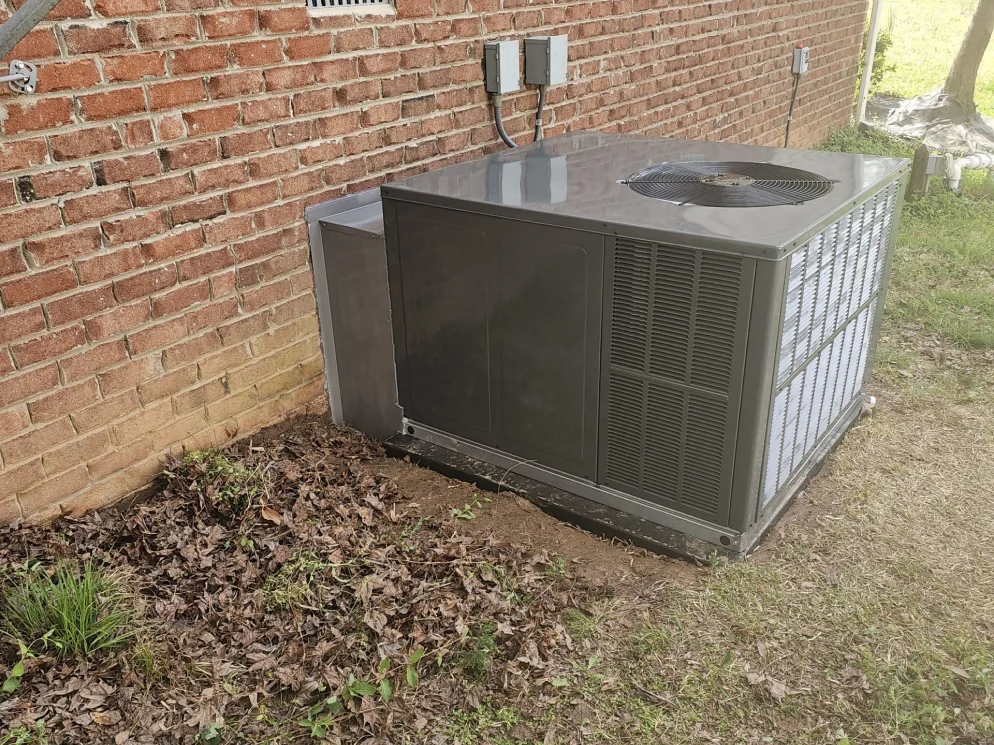
Mid-service on a Goodman package unit.
The maintenance rhythm, as town custom
Twice a year, house by house
The maintenance rhythm suits Sharon better than any town on our map, because scheduled care is precisely how this town already treats everything it owns: a spring cooling visit before the humidity arrives, a fall heating visit before the first snap, drains cleared, capacitors tested under load, heat exchangers inspected, and refrigerant verified by gauge rather than guess. Veteran equipment that gets the rhythm delivers extra seasons the skipped-service versions never see.
The rhythm spreads here the only way anything spreads: a neighbor’s furnace surviving a January the street remembers, a repair invoice that came in under the number feared at the kitchen table, and the town’s referral channel doing the rest. Our Sharon maintenance list grows a few houses every season, which by local standards is practically viral.
The houses themselves, era by era
The town’s stock spans its own history: compact early-century frames near the downtown with plaster worth sparing, mid-century brick with the additive renovations their decades always write, and the farm-edge properties where the acreage agenda takes over. Ductless retrofits spare the older walls, balancing sorts the room-to-room disagreements the additions accumulated, and the corrections price cheapest-first as everywhere.
The crawlspaces run the western moisture agenda underneath it all: damp after rains, duct insulation failing from below, and the readings-first sequence applied without shortcuts. Old houses kept well deserve crawlspaces kept honest, and the before-and-after readings make the case the way Sharon prefers: without a word of salesmanship.
The conversions, and the working edges
Strips, propane, and the December bills
The strips-and-propane share runs high across the older streets, and the conversion arithmetic runs its honest course: resistance heat at the Carolinas’ most expensive rate, propane’s delivered pricing stacked across the cold months, and a heat pump carrying the mild season stepping both down on a schedule shown in writing, dual-fuel keeping the backup where the coldest snaps demand.
The kitchen-table math settles each house on its actual usage, including the houses where keeping the current setup wins, and in Sharon that honesty is not a nicety but a survival strategy: the town compares notes, and the trades that ran sales scripts on it are not invited back. The conversions that close pay for themselves on schedules their owners can recite to the neighbors, which is how the next three close.
The working lane and the manufactured stock
The town’s working economy, the businesses at the center and the operations along the roads, runs on our light-commercial lane at written prices with honest scoping, and the manufactured homes on the town’s edges get served as a real category: package units and their patterns, under-home ducts and their moisture logic, right-sized replacements that respect the structure.
The rental stock stays modest but real, and landlords get the standing portfolio model: one number, honest triage, batched maintenance, per-address records, and tenants treated as customers for the hour we are there. Every construction and every arrangement gets the same flat pricing and the same instruments, which in a town that compares notes is the only sustainable policy anyway.
A Sharon year, in service calls
The warm half
Spring loads the old trees with pollen and books the western maintenance batch, the rhythm’s town list getting its cooling visits before the humidity arrives; summer runs the campaign across the veteran fleet, capacitors and contactors failing on the season’s schedule, drains earning their spring service, and the crawlspace moisture work at its most instructive. The storm cells take their toll of boards, and surge protection earns its quiet line in every quote.
The maintained houses watch the season from the comfortable side, exactly as the rhythm promised the street they sit on, and the conversion conversations peak with the power bills as the town compares its own numbers.
The cold half
First snaps examine the town’s veterans at dawn, and Sharon’s fall-serviced share performs its preparation street by street: strips meeting December pricing where the conversions have not yet reached, propane tanks meeting their winter invoices, and the 24/7 line working the western shift at honest windows, vulnerable households first without exception, which in a town this size means we usually know the house.
Shoulder seasons belong to the keep-alive craft and the planners: repairs sequenced so money counts twice, the rare replacement booked calmly where the math finally flipped, conversions closing at kitchen tables, and the maintenance list adding its few houses per season through the only channel that matters here. Then the pollen returns to the old trees, and the town’s patient year restarts.
The Sharon promise
The town that keeps its houses, served by the discipline that keeps them: instruments before verdicts on every veteran, keep-alive craft sequenced properly, second opinions free wherever the scripts have visited, the maintenance rhythm delivered as promised twice a year, conversions shown straight at the kitchen table, and every price in writing before any work. Flat Fort Mill prices on every street with zero mileage theater, financing through Optimus shown honestly, the 10% teacher and service-personnel discount working town-wide, and the 24/7 line covering Sharon without a surcharge at any hour.
In a town where word travels by Sunday, the only marketing that works is the work: (803) 573-2473, any hour Sharon needs it.
Stuck between repair and replace?
Call and describe what the system is doing. We run the math at your kitchen table, in writing, and the decision stays yours.
Sharon questions, answered the way the town prefers
Do you charge extra to come out to Sharon?
Never: flat Fort Mill pricing at every address, no fuel surcharges, no radius markup, and the western circuit running weekly regardless. The invoice from a Sharon street reads exactly like one from our home zip code, which in a town that compares notes is the only policy that survives anyway.
Our furnace has been in the family as long as the house. Can you keep it going?
Very possibly, and we will tell you honestly either way: keep-alive craft is a real discipline, instruments deciding which parts threaten the system and which just need replacing, repairs sequenced so money spent this winter counts toward next, and the truth told plainly about the year the math finally flips. The town keeps plenty of veterans running on exactly this treatment.
Another company said we need a whole new system. Should we believe them?
Get the free second opinion first: a meaningful share of condemned systems reverse under actual instruments, needing sensors or capacitors rather than funerals. When the verdict holds we say so just as plainly, price the replacement in writing with financing beside it, and quote a keep-it-limping option wherever one honestly exists. Sharon has a long memory for both kinds of verdicts, and we are comfortable being remembered.
What does the maintenance plan actually include?
The twice-yearly rhythm: a spring cooling visit before the humidity, a fall heating visit before the first snap, drains cleared, capacitors tested under load, heat exchangers inspected, refrigerant verified by gauge, and the readings logged to your house’s file. Veteran equipment that gets the rhythm delivers extra seasons the skipped versions never see, which your neighbors on the list can confirm.
We still heat with strips and the winter bills are rough. Options?
The conversion arithmetic usually offers one: a heat pump carrying the mild Carolina season steps December bills down hard, with dual-fuel keeping backup for the coldest snaps. The free visit runs your actual usage at the kitchen table and shows the payback in writing, including the cases where keeping what you have wins.
How fast can you get here in an emergency?
The honest western quote: a real drive, prioritized ahead of everything routine, faster at night than by day, and moving the moment the call ends with the actual travel time stated. No-heat calls jump every queue at the standard no-surcharge price, vulnerable households first, and in a town this size we usually know the house.
Do you service the manufactured homes on the edges of town?
As a real category at full honesty economics: package units and their failure patterns, under-home duct runs and their moisture logic, right-sized replacements that respect the structure, written prices, financing shown. Every construction in town gets the same flat pricing and the same instruments.
What do you work on most in Sharon?
The keep-what-you-own catalog: veteran repairs and keep-alive sequencing across the long-ownership stock, the maintenance rhythm’s town list, second opinions wherever the scripts have visited, conversions closing their December math, ductless retrofits sparing the older walls, and crawlspace moisture work by instrument. The town’s habit is keeping things, and the roster is built to help it.
Around Sharon
The county page carries the home-county story, the western neighbors share the circuit, and the services linked below are the ones the town’s houses assign weekly: the veteran care, the rhythm, and the conversion math.
York County · Hickory Grove · Smyrna · Furnace Repair · Maintenance · Heat Pumps
Want proof before the phone call? The gallery is all real jobs, and the financing page covers the big-ticket math.