
Leaving strip heat behind in an older Clover house
A lot of Clover’s older housing still heats with electric strips: resistance coils inside the air handler that glow hot whenever the thermostat calls, the same way a toaster does. They are simple and they are dependable, and they are also about the most expensive way there is to make heat in a house. Most owners learn that from the power bill the first cold month after they move in.
Converting one of these houses to a heat pump is some of the most satisfying work we do in town, mostly because the owner feels it on the first winter bill. The visit, the way the rooms feel afterward and the job the old strips keep are all worth knowing before anyone signs anything.
What to know
- A heat pump carries heat in from outdoors rather than generating it, so it runs for far less than strips.
- The visit checks the air handler, the ducts, the electrical panel, outdoor placement and the thermostat wiring.
- Winter air at the vents feels cooler to the hand, while the house itself stays steadier.
- The strips usually stay in place as backup for the coldest mornings and during defrost.
What a heat pump does that strips cannot
Strip heat converts every bit of electricity it draws into heat and gets nothing extra for the trouble. A heat pump uses electricity to move heat that already exists in the outdoor air into the house, the same way an air conditioner moves heat out in summer, run in reverse. Even on a cold morning there is heat out there to collect, and moving it takes much less power than making it from scratch.
In most of these houses, the outdoor unit that handles cooling gets replaced with a heat pump that does both jobs. Summer works the way it always has. Winter is where the difference shows up. Bring one winter power bill to the visit and we can sit at the kitchen table and see how big the gap would be for your house. The heat pump services page for Clover covers the rest of our heat pump work in town, including the builder systems on the newer streets.
What the house visit looks at
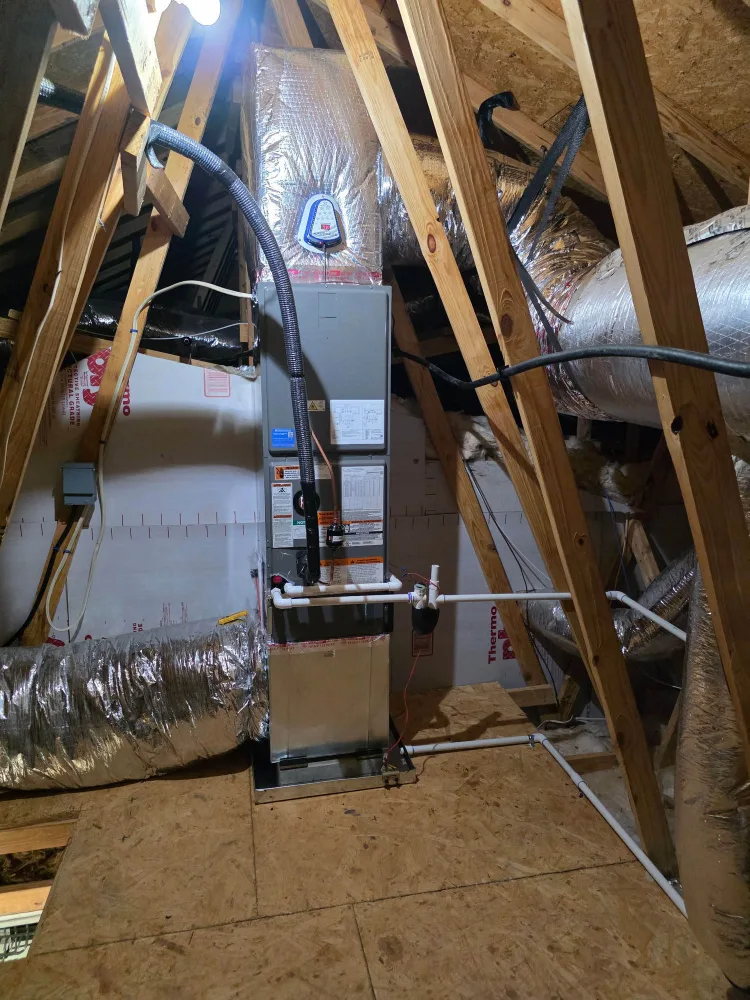
A conversion starts with the air handler that holds the strips. Sometimes it can stay and pair with the new heat pump. Sometimes its age or size means it should be replaced along with the outdoor unit. We check the blower, the coil and the cabinet before deciding.
Then the ducts. Older houses often have ductwork that grew in pieces over the decades, and a heat pump delivers air at a lower temperature than strips, so leaks and undersized runs show up more. We look at what is there and tell you what, if anything, needs to change.
The electrical side comes next: the panel, the breaker space, and the circuits feeding the air handler. After that, where the outdoor unit can sit with proper clearance on every side and a clean path for the line set. Last is the thermostat wiring, since a heat pump needs a few more conductors than an old strips-and-AC setup, and some original runs simply do not have them.
Summer gets a look too. The heat pump takes over the cooling as well, so it inherits whatever the old air conditioner struggled with. If an upstairs bedroom never cooled down in July, we want to know why before the new equipment goes in, because the answer is usually in the ducts and it is cheaper to fix once.
The visit is free, and none of it is a sales pitch. Strip heat is common in Clover’s older houses, so we have walked a lot of them. If the numbers do not favor a conversion in yours, we say so at the table, and the strips keep doing their job until the day it does make sense.
How the house feels in winter afterward
The biggest adjustment happens at the register. Strips push out air that feels hot to the hand. A heat pump delivers warm air at a lower temperature, so a palm held over a vent can read it as almost cool. The house is still warming. A heat pump runs longer, steadier cycles, so instead of a blast of hot air followed by the house sliding back down, rooms hold closer to the setpoint through the day. A room that used to run hot near the register and cold in the far corner tends to even out, since the air keeps moving for longer stretches.
Most owners come to like the steadiness once they stop testing the vents. We suggest picking a setpoint and leaving it there, since big swings up and down ask the system to make up a lot of ground at once, and that is exactly when the backup heat comes on.
Frost on the outdoor coil
On cold, damp mornings a heat pump will stop now and then to melt frost off its outdoor coil, and the strips cover that short gap so nobody inside feels it. The heat pump page explains the steam and the sound that come with it. A unit that stays white with ice is the one worth a call.
What the strips still do, and planning the switch
The strips do not get thrown away. In most conversions they stay in the air handler as backup heat. On the coldest mornings, or when the setpoint gets raised a lot at once, the thermostat brings them on to help the heat pump catch up. If the heat pump ever needs service in winter, they can carry the house alone as emergency heat. They become the occasional helper, where before they did all the work.
Fall and late winter are both good times to plan a conversion, ahead of the coldest weeks or ahead of cooling season. Tell us about the house and bring that winter bill. We will look at everything above and put an honest number in writing on the table before you leave it. The Clover service page has the rest of our work in town.
Asked often
What should I have ready for the visit?
One winter power bill, and a rough idea of where the air handler and the electrical panel are. Notes help too: which rooms run cold, which run warm, and whether anything was added onto the house over the years. If you know the thermostat model, write it down. Everything else we check in person.
What if the house has no ductwork at all?
Then a ducted heat pump is not the answer, and a ductless system usually is. A ductless system is a heat pump too, with heads in the rooms instead of registers. It suits older houses where running new ducts would mean opening walls, and we size it room by room.
Can the conversion happen in the middle of winter?
Yes. Winter is when the savings start, so plenty of owners do not want to wait for spring. We pick the day with the forecast in mind and tell you ahead of time what will be off and when.
Still heating with strips?
Send us a winter power bill and a little about the house. We will check the air handler, the ducts, the panel and the placement, then walk you through the conversion with an honest number for it.
Call (803) 573-2473 Make It EZ →Want to see what we work on? The gallery is all real jobs.