
Sizing a new AC for an old York house
Most replacement quotes for an old York house begin in the side yard. Somebody reads the tonnage off the label on the old condenser, writes the same number down for the new one, and the job is sized before anyone has walked through the front door. It is quick, and in a house that predates every assumption modern equipment is built around, it is usually a guess.
The old system was sized by whoever put it in, for a house that may have had different windows, a porch that has since been closed in, or an attic nobody had insulated yet. Copying its label copies every one of those decisions. This is how we size, place and run a new system in the White Rose City instead, and where the newer houses on the edges of town fit in.
The short version
- A new system gets sized to the house as it stands today, room by room, never to the label on the old unit.
- On a system past fifteen years, we price the repair next to the replacement and tell you when the repair still wins.
- In the historic district, where the condenser sits matters as much as what it is.
- Line sets travel through closets and chases, and every hole gets sealed like the wall was never opened.
Somebody else’s guess, printed on a label
A load calculation is the unglamorous part of an install and the part that decides how the house feels for years afterward. We measure the rooms, note ceiling heights, count and size the windows, look at which walls take the afternoon sun, check what insulation is actually in the attic, and see how air gets from the equipment to each room.
In the historic district that walk tends to surprise people. Proportioned rooms with real ceiling heights hold more air than the floor area suggests, while thick plaster walls slow the heat coming through them. Those two facts pull in opposite directions, and only the numbers settle which one wins in a given house.
The answer can come back bigger than the old unit, smaller, or the same. Smaller surprises owners most, usually in houses that have had windows replaced or an attic insulated since the last install. Equipment sized to the house runs longer, gentler cycles, pulls moisture out of the air as it goes, and keeps the far bedroom closer to the room with the thermostat in it. An oversized unit cools the hallway fast and leaves the rest of the house to catch up.
When the old system has earned one more summer
York runs a lot of veteran equipment, and plenty of the calls that end in a new system start as a repair visit on something past fifteen years old. Before anybody talks about replacement we put instruments on the old one and find out what is actually wrong, because a failed part on an otherwise healthy system is a repair, whatever the age on the data plate.
Then you get both numbers side by side, in writing: what the repair costs, what replacement costs, and what we honestly expect from the old system afterward. Sometimes the repair wins clearly and we say so. Sometimes the old system has a pattern of failures, a coil that has been patched before, or a refrigerant it no longer makes sense to keep feeding, and the math leans the other way.
Either way, the decision gets made on numbers, never on a sales script that condemned the unit before the panel came off. If you already have a quote in hand that says your system is finished, send it over. Second opinions are free.
Where the condenser lives on an old lot
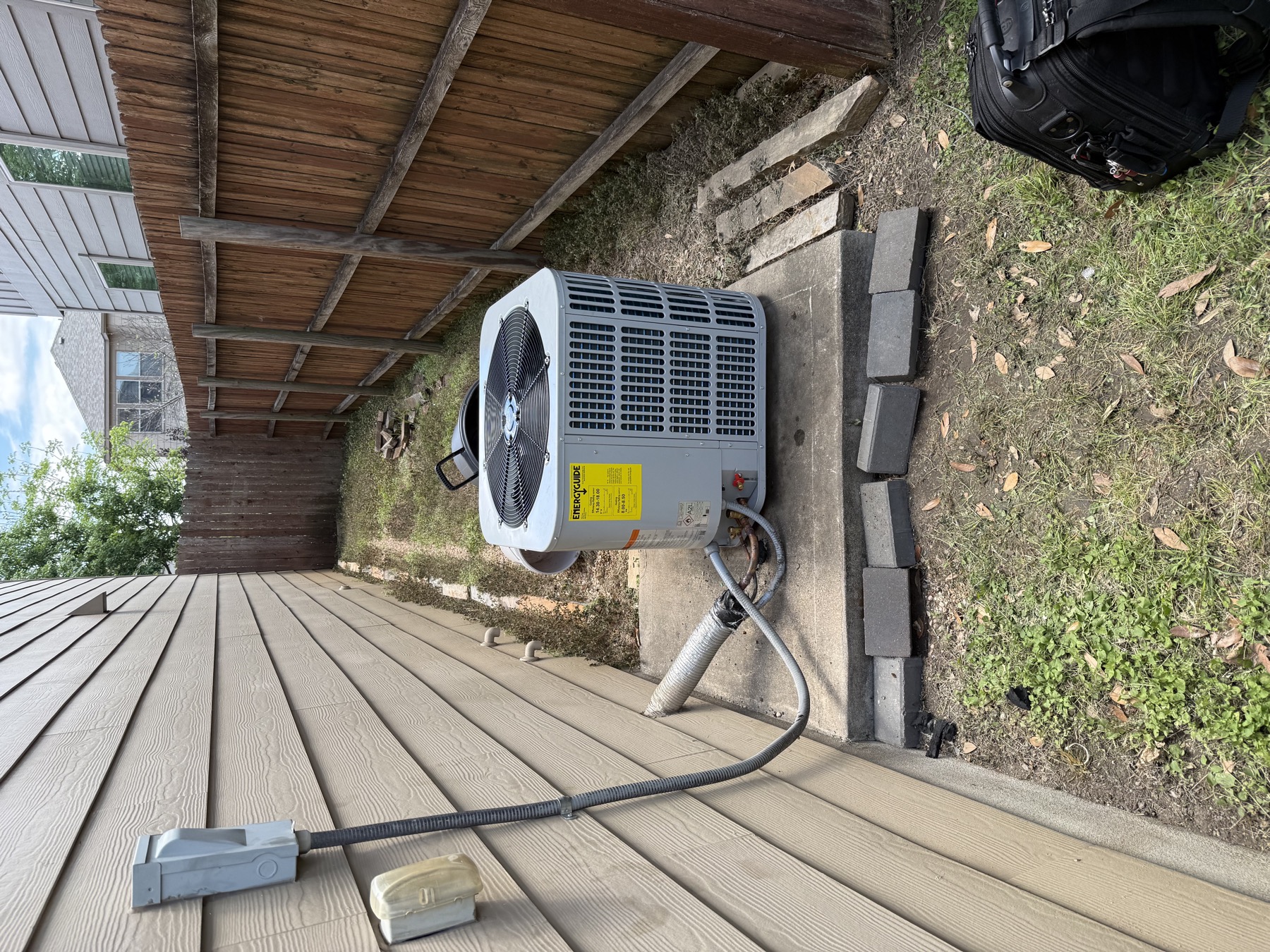
On a historic street the outdoor unit becomes part of the streetscape whether anybody planned it that way or not. We site condensers away from the facades people walk past to look at, screen them where the guidelines call for it, and keep the pad level and clear of the drip line.
Exterior equipment in the historic district comes with a review step, and we treat that as part of the job: what needs approval, what does not, and what the timeline realistically holds, all said before anyone books an install date. Getting the documentation ready early is what keeps an approval moving. A placement that cannot fly gets an alternative with its own honest number attached, so you choose between real options before the pad is poured.
From the side yard to the coil, out of sight
The copper line set and control wire have to get from the condenser to the indoor coil, and in an older house that path deserves more thought than it usually gets. We route through closets, chases and other places nobody will see, and agree on every visible inch during the planning walk before a drill comes out. Every penetration through an exterior wall gets sealed so weather stays out of a century-old wall.
Some houses do not have a sensible path at all. A room on the far side of the house, an addition with no attic over it, or plaster nobody wants opened can make central air the wrong tool for part of the house. When that happens we will tell you, and the ductless option for York homes can cover that room while the central system handles the rest. Mixing the two is common in the district and nothing to apologize for.
Install day, and the newer houses on the edges
Ductwork changes are measured at your house and built on the bench in our own warehouse, so install day is spent installing. Most systems go in on a single day, with the old equipment hauled away, the new one started, and the readings taken before the crew leaves. Our page on AC installation in York covers what we check at startup.
The newer builds on the town’s edges bring a different pattern: builder-grade systems put in by the dozen, often sized and set up to a minimum. When one of those comes due, a careful replacement is the chance to fix what came with the house, from a thermostat left on factory settings to returns that were always too small. Either way, the York service page has the rest of what we do in town.
Quick answers
Can the new condenser go exactly where the old one sat?
Often, and when the old spot works we keep it, because the pad, the line set path and the electrical are already there. It does not work when the old spot was always too tight for airflow, sits under a roof edge that dumps water on it, or faces the street in a way review would not approve today. We look at all of that during the walk.
Will a historic district replacement need approval?
It depends on what changes. Swapping like for like in the same hidden spot is a different conversation from moving equipment somewhere visible. We tell you at the first visit what we expect needs approval and what does not, prepare the documentation, and give you the realistic timeline so nobody books an install date the paperwork cannot meet.
Is a bigger system safer in a house with tall ceilings?
No. Tall ceilings add volume, and the load calculation already counts it. Going bigger on top of that gets you a unit that cools the air near the thermostat quickly, shuts off, and leaves the humidity and the far rooms behind. Sized correctly, the system runs longer and steadier, which is what an old house with real proportions wants.
Thinking about a new system for an old house?
Tell us about the house and the system in it. We will walk it, run the numbers, and put repair and replacement side by side in writing at no charge. If the old unit has another summer in it, you will hear that first.
Call (803) 573-2473 Make It EZ →Want to see the work first? Real jobs, in the gallery.