
When the AC quits on a hot Clover afternoon
The house creeps up a degree at a time, the vents push air that feels like the inside of a parked car, and somebody walks outside to find the condenser either silent or running without doing much good. We take a lot of these calls in Clover once summer settles in, from the porch streets in town to the newer houses along the lake road and the acreage past them.
Most of them come down to one worn part. The visit runs in a set order, panel first and gauges second, and knowing that order tells you what you are paying for before anyone picks up a wrench.
What to know
- Most summer no-cool calls trace to a capacitor, a contactor or a dirty outdoor coil, and all three are repairs.
- We read the system with a meter and gauges before naming any part.
- An older unit gets keep-or-retire math in writing, with both options side by side.
- Grass and mowing debris packed into a condenser coil can stop a system on its own.
The access panel comes off first
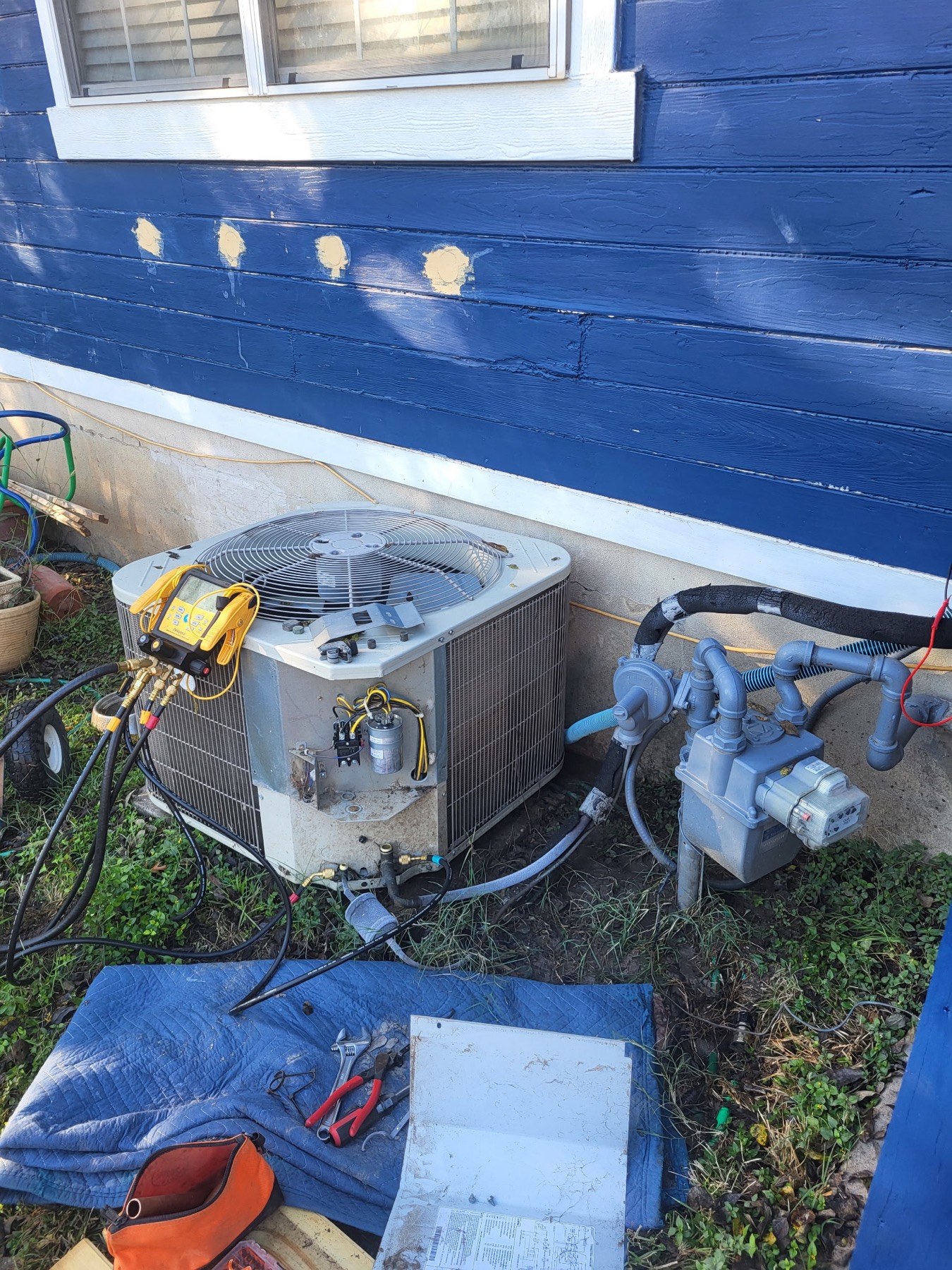
The first stop is the outdoor unit, and the first thing we do there is kill the power at the disconnect and pull the access panel. Behind it sit the two parts that cause the most summer trouble. The capacitor is the metal can that gives the compressor and the outdoor fan the jolt they need to start. The contactor is the switch that closes when the thermostat calls for cooling and sends power to both of them.
Heat wears on each one. A capacitor weakens over the seasons, sometimes bulging at the top, sometimes looking perfectly normal while testing well under its rating. A contactor’s points get pitted and burned until they stop making a clean connection. We test both with a meter instead of trusting how they look, because a part that looks fine can still be the reason your house is warm.
If either one is bad, it gets replaced with a part off the truck, the system gets restarted, and we stand there and watch it run. For a good share of the hot afternoons we get called out on, that is the whole job.
Gauges on the service ports
With the electrical side checked, a gauge set goes on the service ports. Those readings show how the refrigerant side is behaving: whether the system is charged correctly, whether the coil inside the house is picking up heat the way it should, and whether something is choking the flow. Paired with temperatures on the lines and at the supply vents, the numbers turn a hunch into a diagnosis.
When the gauges say the system is low, it is leaking somewhere, because refrigerant does not get used up like gas in a mower. Topping it off and driving away just books the same call for later in the summer. We tell you that plainly, look for where it is getting out, and price the leak repair separately from the recharge so you can see what each line on the bill is for.
Why the old workhorses in town still earn a repair
A bad capacitor on an older unit is a repair, not a verdict. It says nothing about whether the compressor is finished, and we will not use a cheap part as the opening line of a replacement pitch. Clover’s older in-town streets run a lot of veteran equipment, and plenty of those condensers have earned extra seasons from us for exactly that reason.
The math changes when repairs start stacking up. A unit that needs a compressor, has a leaking coil, or keeps losing parts summer after summer deserves a real conversation about retiring it. Then you get both numbers in writing, the repair and the replacement, side by side, and the decision stays yours. If another company already told you it is time for a new system, we will look at it again at no charge. The Clover AC repair page lays out how we handle repairs across town, out the lake road and on the acreage.
Grass, clippings and the acreage condenser
West and south of town, the outdoor unit often sits close to grass that gets cut with a big mower, and every pass throws clippings, dust and seed at it. A condenser pulls air through its coil fins to shed the heat it carried out of the house. When those fins pack solid, the heat has nowhere to go. Pressures climb, the compressor strains, and on the hottest afternoons the system can shut itself off or limp along blowing barely cool air.
Sometimes that is the entire service call: a coil so matted it looks like felt. We clean it properly, check what the heat did to the parts while it was choked, and show you what came out of it. Keeping a clear ring around the unit and aiming the mower discharge away from it prevents a lot of these visits. Spring pollen settles into the same fins, which is one more reason a spring tune-up is worth the booking.
A written number before anything gets replaced
Every one of these visits ends the same way. We explain what the instruments showed, name the part, and hand you an honest number in writing before work begins. There is no surcharge for the time of day, no mileage for a long drive, and no pressure to decide on the spot if the talk turns to replacement.
Zach and Eric Massey started EZ in 2023 with more than 25 years of hands-on HVAC experience behind them, and they run it like neighbors who expect to see you at the grocery store. If the condenser in your yard has gone quiet, send us a note about it, or call and describe the sound it made last. Our Clover service page covers the rest of what we do in town.
Asked often
Should I keep running the AC while it blows warm air?
Turn it off at the thermostat. A system that runs without cooling may have a compressor trying to start against a failed part, or a coil that is overheating, and running it longer can turn a small repair into a bigger one. Set the fan to on if you want air moving, close the blinds on the sunny side, and call us.
Can I swap a capacitor myself?
We would rather you did not. A capacitor can hold a charge even with the power off, and the wiring around it is easy to mix up. A bad capacitor is also sometimes a symptom of something else, like a struggling fan motor. When we replace one, we check why it failed so you are not buying another one later in the summer.
Will a bigger unit fix a house that never gets cool enough?
Usually not. A unit that is too big for the house satisfies the thermostat quickly and quits before the far rooms ever catch up, so the warm bedrooms stay warm and the air turns sticky. Those rooms tend to have duct or airflow problems. We measure before recommending any size, whether we are repairing what you have or pricing a replacement.
AC give out on you this afternoon?
Tell us what the outdoor unit is doing and roughly how old it is. We will bring the likely parts, check it with instruments and give you an honest number before anything gets replaced.
Call (803) 573-2473 Make It EZ →Want to see what we work on? The gallery is all real jobs.