
Whole-home or standalone dehumidifier for a York house
From May through September, Carolina air carries more water than most houses want, and the older homes and farmhouses around York feel it from the bottom up. Generous crawlspaces, old framing and ductwork running through damp air all soak up that season. Air conditioning removes some moisture while it cools. In plenty of houses it does not remove enough.
When owners start asking about a dehumidifier, the first real question is which kind. A standalone unit in one space and a whole-home unit tied into the duct system solve different problems, and buying the wrong one wastes money either way. This is how we decide, one house at a time.
What to know
- A standalone unit fits one defined space with a clear problem, like a crawlspace or a single damp room.
- A whole-home unit tied into the ductwork treats the air the whole house breathes.
- Oversized cooling equipment leaves moisture behind, and a dehumidifier only partly makes up for that.
- Every dehumidifier makes water, and where that water drains matters as much as the unit.
Reading the house before choosing the equipment
The decision starts with where the moisture lives. In an older York house or a farmhouse past the town line, it often starts in the crawlspace: vents open to summer air, bare ground, ductwork and framing sitting in humidity for months. Upstairs it shows up as musty closets, floors that feel tacky underfoot, and rooms that feel damp at a temperature that ought to be comfortable.
We look at the crawlspace, the ductwork, the equipment and how the house is used before recommending anything. A house where one space is the problem needs a different answer from a house where every room feels heavy.
The pricing visit is free, and it often turns up a cause no dehumidifier should be asked to fix: a drain line spilling under the house, or a return duct that came apart and is pulling crawlspace air straight into the system. Those get repaired first, and sometimes the house dries out enough that the dehumidifier conversation ends right there.
Where a standalone unit is the right call
A standalone dehumidifier earns its place in one defined space with a clear moisture problem: a closed crawlspace, a basement, a single room the main system cannot keep dry. It runs on its own controls, does one job, and can be placed exactly where the water is.
The trap is asking one portable unit to dry a whole house. It ends up in a hallway, fills a bucket somebody has to remember to empty, and lowers the humidity in its own corner while the rest of the house stays damp. Placed in the right space and drained properly, it does fine work. Placed as a fix for the whole house, it disappoints, and the owner concludes dehumidifiers do not work.
For a crawlspace unit, we also look at how it will be reached for service. A machine nobody can get to without crawling the length of the house tends to get ignored until it quits. Farmhouses out on the farm roads get the same flat, no-mileage pricing as a house in the historic district, so distance never decides which unit you end up with.
Whole-home dehumidification through the ducts
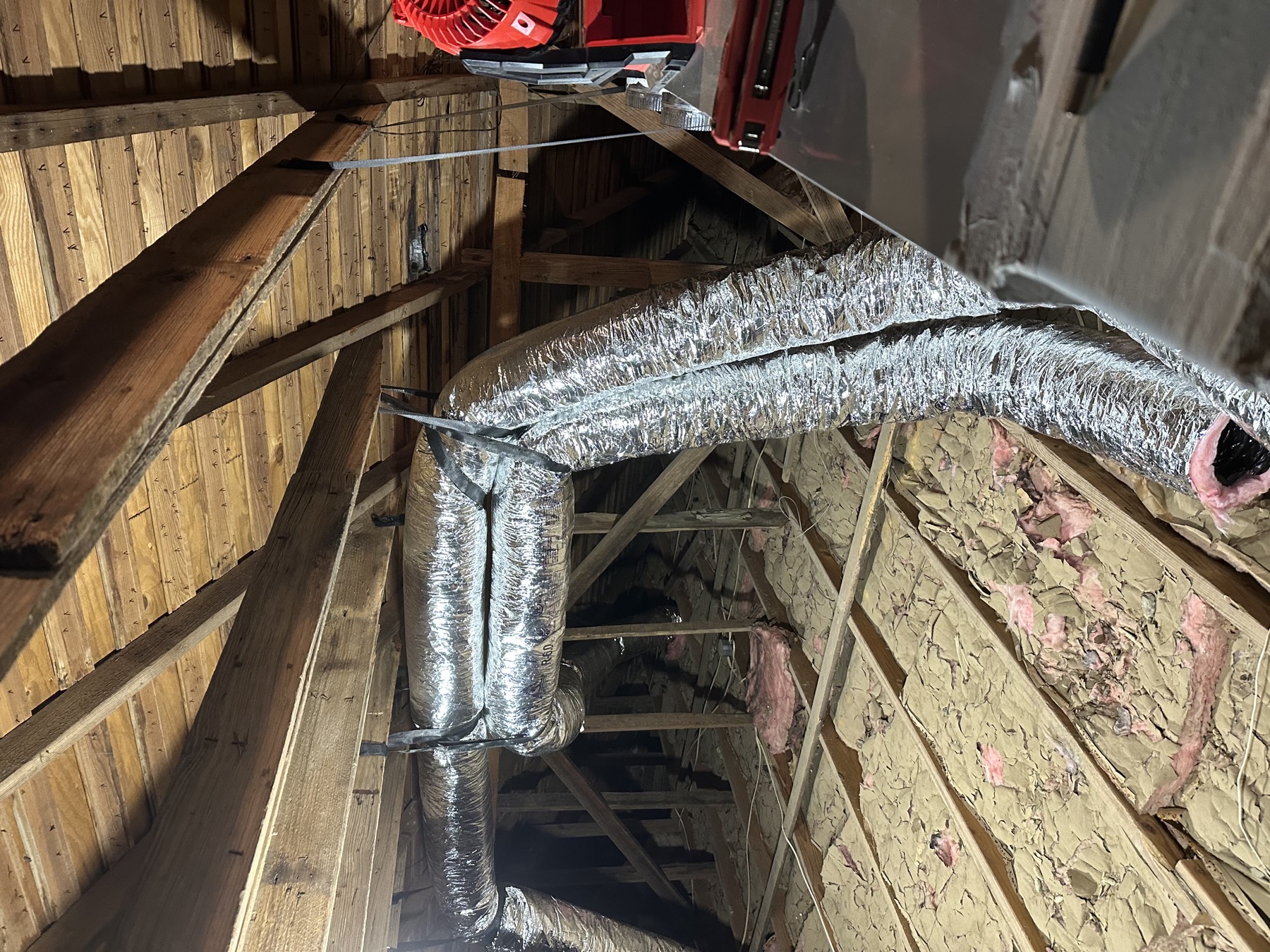
A whole-home unit ties into the duct system, pulls air from the house, dries it and sends it back out through the supply ducts to every room. It works whether or not the air conditioning is running, which matters in the mild, muggy weeks when the house is not warm enough for the AC to run long but still feels sticky.
This is the better choice when the whole house feels damp, when the ductwork reaches every room you care about, and when there is space for the unit near the air handler. We look at how the ducts are laid out and where the unit can sit so it can be serviced later.
Sizing matters here as much as anywhere. A whole-home unit chosen too small runs constantly and never catches up in August. One chosen too big costs more to buy and to run than the house needs. We size it from the house, the crawlspace under it and how tightly the place is sealed, the same way we size cooling equipment. The full picture, including what an install involves, is on the dehumidifier services page for York.
When the real problem is the air conditioner
Sometimes the dampness traces back to the cooling equipment. An oversized system cools the air near the thermostat fast, shuts off, and never runs long enough to pull much moisture out. The house reaches its setpoint and stays clammy. A dehumidifier helps in that house, though it is treating a symptom of equipment that was sized wrong.
When the AC is old enough that replacement is already on the table, sizing the new system properly to the house fixes a good share of the humidity on its own, and our York AC installation work starts with exactly that load calculation. When the AC is young and sized correctly, a dehumidifier is the honest answer. Either way, we tell you which situation you are in before you spend anything.
Drainage, and getting ready in spring
Every dehumidifier makes water, and a lot of it in a humid summer. That condensate has to go somewhere: a floor drain, a condensate line tied in correctly, or a pump where gravity cannot do the job. A unit whose drain clogs either shuts itself off or puts water where nobody wants it, usually in a crawlspace or attic nobody checks until something stains.
The best time to sort all of this out is spring, before the humidity season opens. That is when we clean coils, treat drains, check the ductwork under the house and overhead, and install new equipment without a house full of damp air waiting on it. If you book the visit in spring, the house is ready before May. The York service page covers the rest of our work in town.
Asked often
How do I know my house is too humid?
The signs are usually physical before they are numbers: musty smells in closets, floors that feel tacky, condensation on windows or ducts, and rooms that feel damp at a setpoint that should be comfortable. An inexpensive humidity meter confirms it. If readings stay high through the summer with the AC running, it is worth having us take a look.
Will a dehumidifier make my AC work less?
It can let you keep the thermostat a little higher and still feel comfortable, because dry air feels cooler. It will not fix an AC that is struggling, oversized or low on refrigerant, and it uses power of its own. We look at the whole system before suggesting one, so you know which problem you are actually paying to solve.
Can a dehumidifier go in the crawlspace?
Yes, if the crawlspace is set up for it. A unit under the house with open vents letting summer air in fights a losing battle all season. In a closed, sealed space, a properly drained unit does good work protecting ductwork and framing. We look at the crawlspace first and tell you honestly whether it is ready for one.
House feeling damp all summer?
Tell us where you notice it and how old the system is. We will look under the house, through the ducts and at the equipment, then tell you which kind of fix fits, with an honest number for each.
Call (803) 573-2473 Make It EZ →Want to see what we work on? The gallery is all real jobs.