
Why is my AC freezing up in the middle of July?
Every summer, right about the time the Carolinas hit their first proper heat wave, the calls start coming in with the same confused opening line: there is ice on my air conditioner and it is ninety four degrees outside. It feels like the machine is playing a joke on you. The house is getting warmer, the unit is running around the clock, and somewhere out there a copper line is wearing a sleeve of frost like it is January.
Ice on an air conditioner in July is one of the most common calls we run between Rock Hill and Charlotte, it is completely diagnosable, and it is almost never a reason to panic. But it is absolutely a reason to shut the system off and make a phone call, because everything you do after you spot the ice determines whether this is a small repair visit or a compressor funeral. Here is the whole story, in plain English, the way we would explain it standing in your driveway.
The short version
- Ice means something is starving the system: low airflow or low refrigerant, almost every time.
- Shut the cooling off and run the fan alone. A frozen coil cannot cool anything anyway.
- A dirty filter is the cheapest, most common cause. Check it before you call anyone.
- Running it frozen for days is how a fixable problem becomes a dead compressor, and the compressor is the one part nobody enjoys pricing.
- Second opinions on ice-based death sentences are free. We reverse plenty of them.
What the ice actually is
Your air conditioner does not make cold air the way a stove makes heat. It moves heat from inside your house to outside, using a refrigerant that gets very cold as it expands inside the indoor coil. When everything is working, warm house air blows across that freezing-cold coil constantly, and the coil stays just above the temperature where the moisture condensing on it would freeze. It sweats instead of icing, and the sweat drains away down the condensate line.
The whole arrangement depends on a balance: cold refrigerant on one side, a steady river of warm air on the other. Break the balance in either direction and the coil temperature drops below freezing. The moisture in the air stops dripping off and starts freezing on. Ice builds, airflow drops further because the ice is now blocking the coil, which makes the coil even colder, which makes more ice. It is a snowball, literally, and it does not stop on its own while the system keeps running.
Cause one: something is choking the airflow
The most common version of this story starts with a filter that has not been changed since last fall. A loaded filter chokes the warm air the coil needs, the balance tips, and the ice begins. We have pulled filters out of Rock Hill and Fort Mill returns that looked like gray carpet. The fix costs a few dollars at the hardware store, and it is the first thing to check before you call anyone, including us.
Airflow problems come in other flavors too. Supply vents closed off in unused rooms, a return grille blocked by a couch, a blower wheel packed with dust, ductwork that has partially collapsed in the crawlspace, or an indoor coil so dirty that air cannot pass through the fins. Every one of these starves the coil the same way, and every one of them ends in ice when the humidity is high and the system runs long enough.
The tell for airflow trouble is weak air at the vents before the freeze even starts. If the house has felt stuffy, if rooms have gone uneven, if the system seems to run forever without moving much air, the freeze was on its way for weeks. The ice is the last chapter, never the first.
Cause two: the refrigerant is low
The second version is a refrigerant leak. Less refrigerant means lower pressure inside the coil, and lower pressure means colder refrigerant, cold enough to drop the coil below freezing even with perfect airflow. The ice shows up, the cooling fades, and homeowners often notice the power bill climbing at the same time because the system runs longer and longer trying to do the same job.
Here is the part worth remembering: air conditioners do not use up refrigerant. It is a sealed loop, like the fluid in your car’s brake lines. If it is low, it leaked, and the leak has a location. Topping off the charge without finding the leak is a rental fix. The refrigerant leaves again, the ice comes back, and you pay for the same visit twice. When we find a low charge we look for the leak with instruments, tell you where it is and what fixing it costs, and let you decide with the numbers in front of you.
Refrigerant work is also where honesty matters most, because the charge is invisible to the homeowner and easy to sell against. If a company diagnoses your freeze as low refrigerant without ever weighing the charge or running a leak search, ask questions. If they suggest a top-off every summer like it is maintenance, ask better ones.
What to do the moment you see ice
Turn the cooling off. Not the whole thermostat, just switch the system from cool to off, and set the fan from auto to on. The fan alone pushes warm house air across the frozen coil and melts it from the inside, usually in a few hours. The system cannot cool anything through a block of ice anyway, so you are losing nothing by shutting it down, and you are saving the compressor from trying to pump liquid refrigerant, which is the thing that turns a repair into a replacement.
While it thaws, check the filter. If it is gray and furry, swap it and you may have solved your own problem. Check the vents and returns for anything blocking them. Look at the condensate line outside for a steady drip once melting starts, because all that ice has to go somewhere, and a clogged drain line can turn the thaw into a ceiling stain.
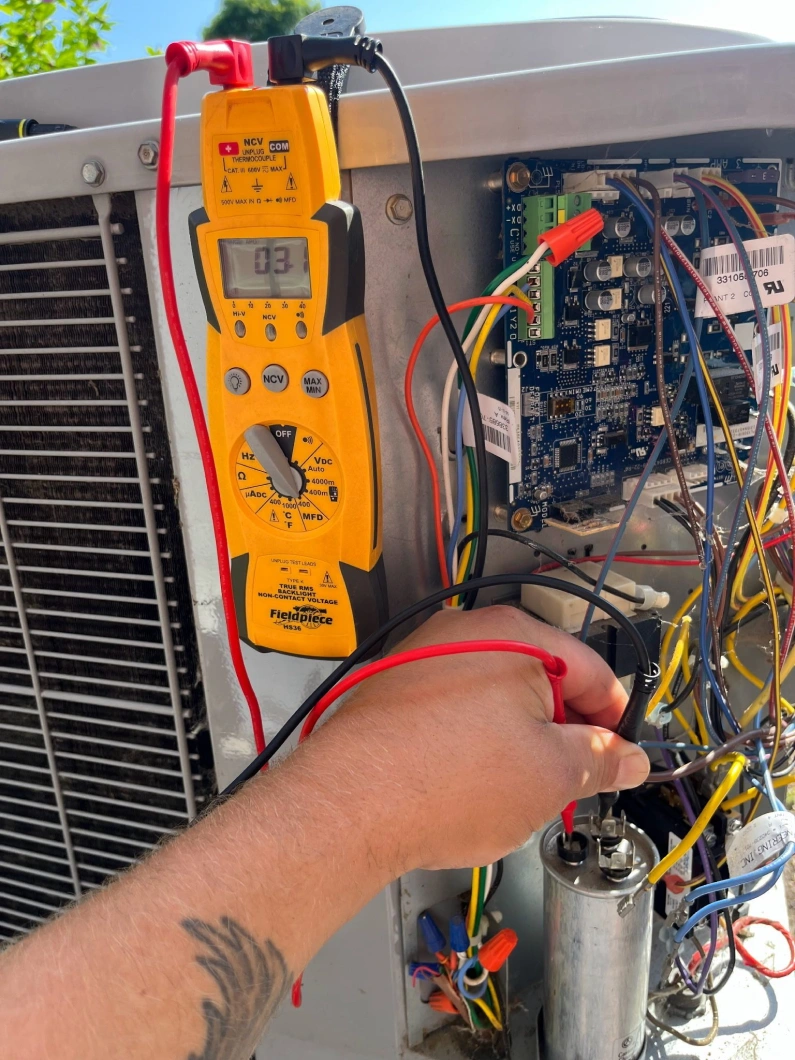
If the filter was clean and the ice comes back after a thaw, stop experimenting. The second freeze tells you the cause is refrigerant or something mechanical, and each freeze-thaw cycle stresses the compressor a little more. That is the moment to call, and the visit is a diagnosis with instruments, never a guess.
Why running it frozen wrecks the compressor
The compressor is the heart of the system and the most expensive single part in it. It is designed to pump refrigerant vapor. When the coil is frozen, refrigerant that should have boiled into vapor comes back to the compressor still liquid, and liquid does not compress. Mechanics call it slugging, and it beats the valves and internals apart a little more every hour the system runs iced.
This is why the freeze itself is rarely the expensive part. The expensive part is the week of denial where the system runs frozen day after day while everyone hopes it sorts itself out. A frozen coil caught on day one is usually a filter, a cleaning, or a leak repair. A frozen coil pushed through a July heat wave can take the compressor with it, and at that point the conversation changes from a repair invoice to a keep-or-replace decision nobody wanted this summer.
If your system is older and the freeze turned into that bigger conversation, we run the math honestly at your kitchen table: repair priced beside replacement, in writing, with the age and the readings in front of you. Some systems earn another season. Some have given all they had. The instruments decide, never a sales quota.
How to keep it from happening again
Most July freezes are prevented in April. A spring cooling visit catches the loaded filter, the dirty coil, the weak blower capacitor, and the slow leak while they are cheap and the weather is kind. The refrigerant charge gets checked by gauge, the drain line gets cleared before the sweating season, and the airflow gets verified at the vents rather than assumed.
Between visits, the homeowner’s whole job is the filter. Set a reminder for every month in summer if you have pets or a dusty house, every two or three months otherwise. Keep the vents open even in rooms you do not use, because closing them raises pressure and starves airflow in ways that surprise people. And when the system starts acting different, longer runs, weaker air, new noises, pay attention early. Machines confess slowly, then all at once.
Quick answers
Why does it only freeze at night?
Because nighttime is when the thermostat finally catches up and run times stretch long and unbroken, and because cooler overnight air lowers the load on the coil. A system teetering on the edge of the freeze balance tips over during those long quiet runs. Morning ice with afternoon melting is still the same problem, and it is still headed the same direction.
Is it the same problem if my heat pump ices up in winter?
Different story entirely. Winter frost on a heat pump’s outdoor unit is normal, and the machine runs a defrost cycle on purpose, complete with steam that scares half the neighborhood. A solid block of winter ice that never clears is a service call. Summer ice on the indoor coil or the copper lines is what this article is about, and it is never normal.
Can I just chip the ice off and keep running it?
Please do not. The fins under that ice bend if you look at them wrong, and chipping usually punctures the coil, which turns a filter problem into a refrigerant leak. Fan-only mode melts it safely in a few hours with zero risk.
The ice melted and it cools fine now. Am I in the clear?
Maybe. If the filter was filthy and you replaced it, quite possibly. But if the filter was clean, the cause is still in there, and the freeze will circle back on the next long humid stretch. One freeze with a found cause is a story. Two freezes is a diagnosis waiting to happen.
How much does a freeze-up visit usually run?
The diagnostic is the same flat rate as any call, and the fix prices in writing before we touch anything: cheap if it is airflow, more if it is a leak, with repair-versus-replace math laid out honestly if the system is old enough for that conversation. No after-dark surcharge if it happens on a Saturday night, either.
Does a frozen AC mean I need a new system?
Usually not. Most freezes are filters, coils, or repairable leaks on systems with years left in them. The freeze only ends in replacement when it was ignored long enough to take the compressor, or when it happens on a system already at the end of its story. That is exactly what the instruments sort out, and if another company already used the ice to condemn your system, the second opinion is free and occasionally very satisfying. We reverse more freeze-based death sentences than any other kind.
Ice on the lines right now?
Switch it to fan-only, check the filter, and call us at any hour. We will talk you through the thaw on the phone for free, and if it needs a visit, you will know the flat price before the truck moves. Midnight ice costs the same as Monday ice, because your compressor does not check the calendar and neither do we.
Call (803) 573-2473or send us the detailsWant proof first? The gallery is all real jobs.