
What to check yourself, and what to leave alone entirely
We are not going to pretend every call needs us. A fair share of the systems we get called out to were never broken, and the owner is standing there feeling foolish while we explain that a switch got bumped. Nobody enjoys paying for that visit, and we would rather you kept the money.
So this is the honest version. A handful of things genuinely worth checking before you pick up the phone, and then the half that matters more: the things where a reasonable person with a screwdriver turns a small repair into a large one. That second half is what most homeowner advice skips.
The short version
- Four checks are worth doing yourself, and they are all things you can see rather than things you take apart.
- Anything behind a panel, carrying refrigerant, or connected to line voltage is not a homeowner job.
- A breaker that trips straight back is information, not something to keep resetting.
- What you noticed, and when, is worth as much to the diagnosis as anything you could touch.
The thermostat, honestly checked
Start here because it costs nothing and it ends more calls than anything else on the list. Is the screen alive? Is it set to the mode you assume it is in, rather than the mode somebody switched it to in April? Is the setpoint where you think it is, or did a scheduled program take it somewhere else this afternoon?
Batteries deserve a specific mention. Plenty of thermostats run on ordinary batteries, and a set going flat can produce behavior that looks like a system failure: a screen that works but a system that will not respond, or intermittent operation that comes and goes. Replacing them takes a minute and rules out a whole category.
Also worth knowing is where your thermostat lives. If it sits in a hallway that catches a supply register, or on a wall that gets afternoon sun, it is reporting conditions that are not representative of the rooms anybody is in. That is not a fault you fix on the spot, but it is very much worth mentioning when you call.
The filter, and what a bad one causes
A filter nobody has touched since spring restricts airflow badly, and restricted airflow causes problems that look nothing like a dirty filter from where you are standing. The system runs and does not cool much. It shuts down early to protect itself. In the worst version the coil gets cold enough to start icing, and once ice forms the system stops moving air at all.
So check it, and look at it against a light rather than eyeballing it in place. If you cannot see light through it, it is done. This is genuinely a homeowner job, it is cheap, and a real share of the calls we run in the middle of a hot week end at the filter.
One caution: if you find ice on the copper lines outside or on the indoor coil, changing the filter does not fix that right now. Ice has to melt off before the system can work, and running it iced does not cool anything while putting the compressor at risk. Shut it off at the thermostat and call.
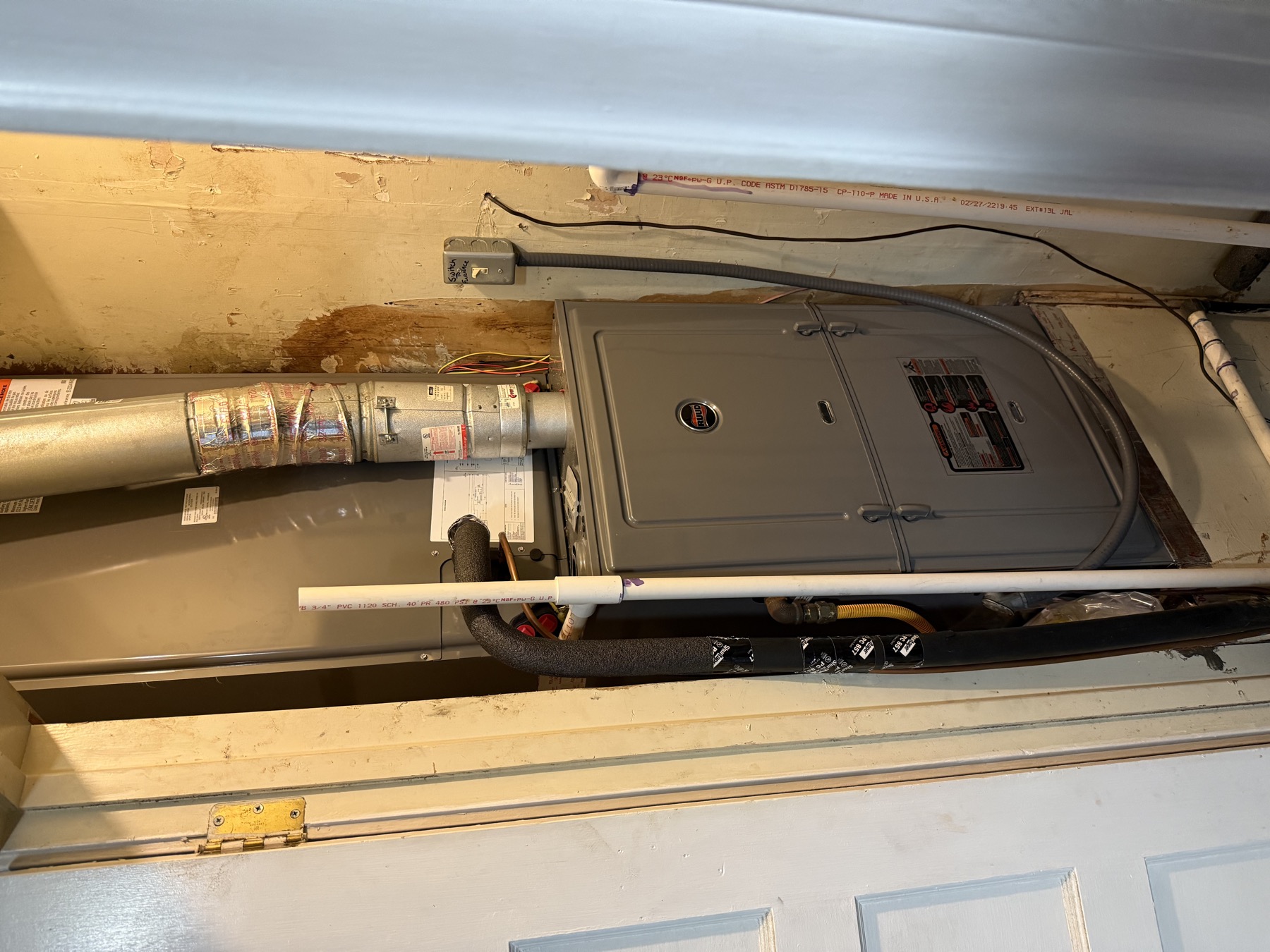
The switch nobody remembers exists
Somewhere on or near your indoor unit there is a switch that looks exactly like an ordinary light switch, because that is what it is. It cuts power to the equipment for service. In the houses we work in around Tega Cay it is frequently in a laundry room, a hallway, or on the wall beside a closet or an attic hatch, which means it lives somewhere people reach without thinking.
It gets flipped. Somebody putting away laundry, somebody carrying boxes into an attic, somebody who thought it was the closet light. The system goes dead, which reads as a serious failure, and the fix is to flip it back.
Learn where yours is on a day when nothing is wrong. Knowing means you can rule it out in ten seconds on the day something is.
The breaker, checked exactly once
Go to the panel and look. A tripped breaker will sit slightly out of line with its neighbors, and resetting it once is reasonable. Push it firmly to off first, then back to on, since a half-thrown breaker often will not reset if you only nudge it toward on.
Once. That is the whole permission. A breaker that trips again immediately is not being stubborn, it is doing its job, and its job is stopping current going somewhere it should not. Repeatedly resetting into a fault is how a component failure turns into a burned wire, and it is one of the few genuinely dangerous things on this list.
If it goes twice, stop and tell us that when you call. A breaker that trips instantly on reset points somewhere quite different from one that held for an hour first, and knowing which one you have changes what rides out on the truck.
Now the part where you stop
Everything above is something you can see, reach, or flip. The line is drawn at anything that requires opening a panel, and it is drawn there for reasons worth spelling out.
The electrical side is the first. Equipment panels contain line voltage, and the capacitor inside can hold a charge after power is removed, which surprises people who assume switching off the breaker makes everything inside safe. It does not. That component is also one of the most commonly failed parts in summer, which means a great many videos exist encouraging people to change one themselves. We would rather you did not.
Refrigerant is the second. There is no consumer version of this. A system low on refrigerant leaked, and adding more without finding the leak is renting cool air by the month while the underlying fault continues. The equipment for handling it properly is not something to improvise around.
The third is subtler and it costs people the most money. Guessing at a part gets expensive quickly, because faults imitate each other. A tired capacitor can look like a failing compressor. Restricted airflow can look like a refrigerant problem. Replace the wrong thing and you have paid for a component your system did not need, still have the original fault, and now have a second variable in the way of diagnosing it. That is the argument for measuring first, which is the order we work in on the Tega Cay air conditioning repair page.
What actually helps us, from the couch
The most valuable thing you can hand us costs nothing and requires no tools: an accurate account of what happened. When did it start. Was it sudden or gradual. Does it fail at a particular time of day, or in particular weather. Is it the whole house or one room. Any noise, and whether it is constant or only at startup. Any smell. Any water anywhere it should not be.
That description does real work. It often tells us whether this is tonight’s problem or tomorrow morning’s, and it decides what parts are on the truck when we arrive. It is also why we would rather talk it through on the phone before anybody drives, and why we will say plainly if what you are describing can safely wait for daylight. That triage is the same one covered on the emergency page for the peninsula.
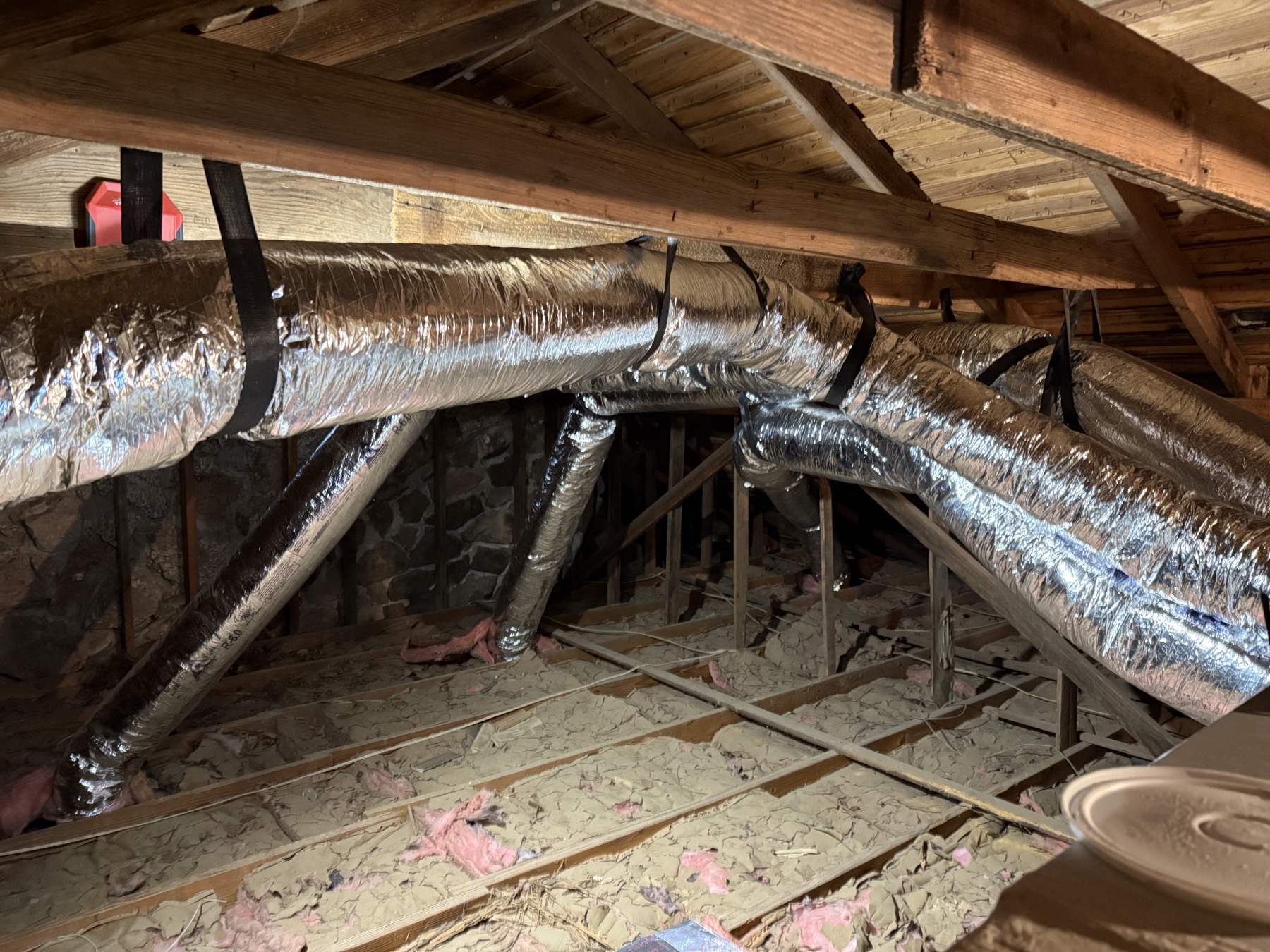
Clearing the path helps too. Move whatever is stacked in front of the indoor unit, and cut back anything that has grown in around the outdoor unit this season. Things grow fast here, and a unit boxed in by shrubs works harder every cycle whether or not anything is broken.
Then call. Whatever we find, you get it explained in plain language, the fix list in cheapest-first order, and an honest number in writing before anybody opens a toolbox. Work down the four checks first, then write out what you found and what you did not, because the ruled-out half is worth as much to us as the rest.
Quick answers
Is there anything on the outdoor unit I should do myself?
Keep the space around it clear and rinse loose debris off the outside of the fins with a garden hose on a gentle setting, with the power off. Do not use a pressure washer, which folds fins over and permanently reduces heat transfer, and do not open the unit. Fins bent flat are a repair, not a cleaning.
My system is running but barely cooling. Emergency or morning?
Usually morning, provided the house is holding a livable temperature and nobody in it is vulnerable to the heat. Check the filter and look for ice on the lines, and if you find ice, shut it off at the thermostat and let it thaw rather than running it. Call and describe it, and we will tell you honestly which one it is.
Should I keep resetting a breaker that keeps tripping?
No, and this is the one on the list we feel strongly about. One reset is reasonable. If it goes again straight away, leave it off and call. That breaker is stopping current from going somewhere it should not, and repeatedly forcing it back is how a manageable component failure becomes damaged wiring.
Does the humidity here change what I should be watching for?
It adds one thing: water. More moisture in the air means more condensate moving through the drain system, so water anywhere near the indoor unit is worth reporting promptly. It also means a house that feels damp while the thermostat looks satisfied is a real symptom rather than imagination, and it is worth a call rather than a lower setpoint.
How do I know whether I have a furnace or a heat pump?
Rough rule around here: a gas line running to the equipment means a furnace. An outdoor unit that runs on cold days, in a newer house, usually means a heat pump with electric backup. Tell us what you can see when you call and we will sort it out before anybody drives, since the two go in completely different diagnostic directions.
Checked the list and still stuck?
Tell us what the system is doing and we will tell you what it sounds like, including when the answer is that it can wait until morning. Findings in plain language, fixes cheapest-first, every number in writing before work starts.
Call (803) 573-2473Make It EZ →Want proof first? The gallery is all real jobs.