
Your Rock Hill new build came with a new HVAC system, which is not the same as a finished one
Rock Hill has been absorbing Charlotte for a decade, and you can read it in the rooflines off Mount Gallant, whole streets that were pasture two summers ago. If you closed on one of those houses, everything in it is new, including the heat pump outside and the air handler in the attic. That is good news, and it also makes the next sentence hard to hear, because a system that runs is not the same thing as a system that was set up, and that gap is where most first-year comfort complaints in new subdivisions live.
We get called to these houses in the second summer, usually by somebody who has already been told nothing is wrong. The equipment is healthy and it holds a number at the thermostat. The bonus room over the garage is still ten degrees off in August. That is not a broken machine. It is a machine that got installed on a schedule and never commissioned, which is a specific word with a specific meaning.
The short version
- Commissioning means somebody measured airflow, verified refrigerant charge against the weather that day, and configured the thermostat for your equipment. Startup means somebody confirmed it blows cold.
- On a new heat pump, a wrong aux heat setting quietly runs electric strips all winter while everything appears to work.
- The builder warranty and the manufacturer warranty are two separate documents. Read both, and register the equipment before the paperwork disappears.
Running and commissioned are two different words
Commissioning is the part of an installation where somebody proves the system does what it was designed to do, in your house, with numbers. Airflow comes first: the blower gets measured, not assumed, because the air moving across that coil determines almost everything downstream. Static pressure gets read the way blood pressure gets read, and if the ductwork is fighting the blower, that shows up as a number that either falls inside the range in the equipment’s own documentation or does not. High static is one of the most common findings in newer houses around here, and it is the one that quietly shortens equipment life while nobody notices a thing. Nobody can feel that at a supply register, and on a lot of new construction it was never measured at all.
Refrigerant charge is second, and a charge gets verified against conditions on the day: outdoor temperature, indoor humidity, the length of line set that actually got run between the pad and the attic. A system charged by feel in April can be meaningfully off in July, and the symptoms are what people describe to us in year two, runs constantly, cools but feels sticky, upstairs never catches up. Third, the thermostat gets configured for the equipment in front of it instead of left on whatever the box shipped with, and that one has real money attached.
Configuring a thermostat for the equipment is more than picking a temperature. It means telling the thermostat what it is actually attached to, a heat pump with electric backup rather than a furnace, how many stages that equipment has, how far the outdoor temperature has to fall before the backup is allowed to join in, and how long the fan should keep running after a cycle ends so the heat still sitting in the coil gets used. Ship it on defaults and it will still hold your setpoint. It will simply do it the expensive way, and nothing on the display will tell you.
None of this is exotic and none of it takes long. It simply has to be somebody’s job on the calendar, and on a fast subdivision schedule the mechanical crew is often on the next lot before the drywall dust settles. The house passed. The system started. Everyone moved on.
Builder grade describes priorities, not a scandal
We are not interested in painting builders as villains, and the crews putting up these neighborhoods work hard under real constraints. A production house is thousands of decisions made against a budget and a delivery date. Equipment gets specified to hit a number, duct runs get routed to clear the framing that already exists, and what gets shortchanged are the items that cost time rather than materials. A homeowner who understands that stops feeling cheated and starts asking a better question, which is what specifically is left to finish and who is going to finish it.
What that means in practice is that some things were optimized and others were merely satisfied. The equipment is usually good equipment and the install is usually clean enough. What gets shortchanged are the items that cost time rather than materials, which is the commissioning list above plus the balancing work that can only really happen once the house is finished and lived in. None of that is anybody’s villain moment. It is work that fell outside the closing date, and it is still sitting there waiting for someone to pick it up.
The rooms that were wrong on day one
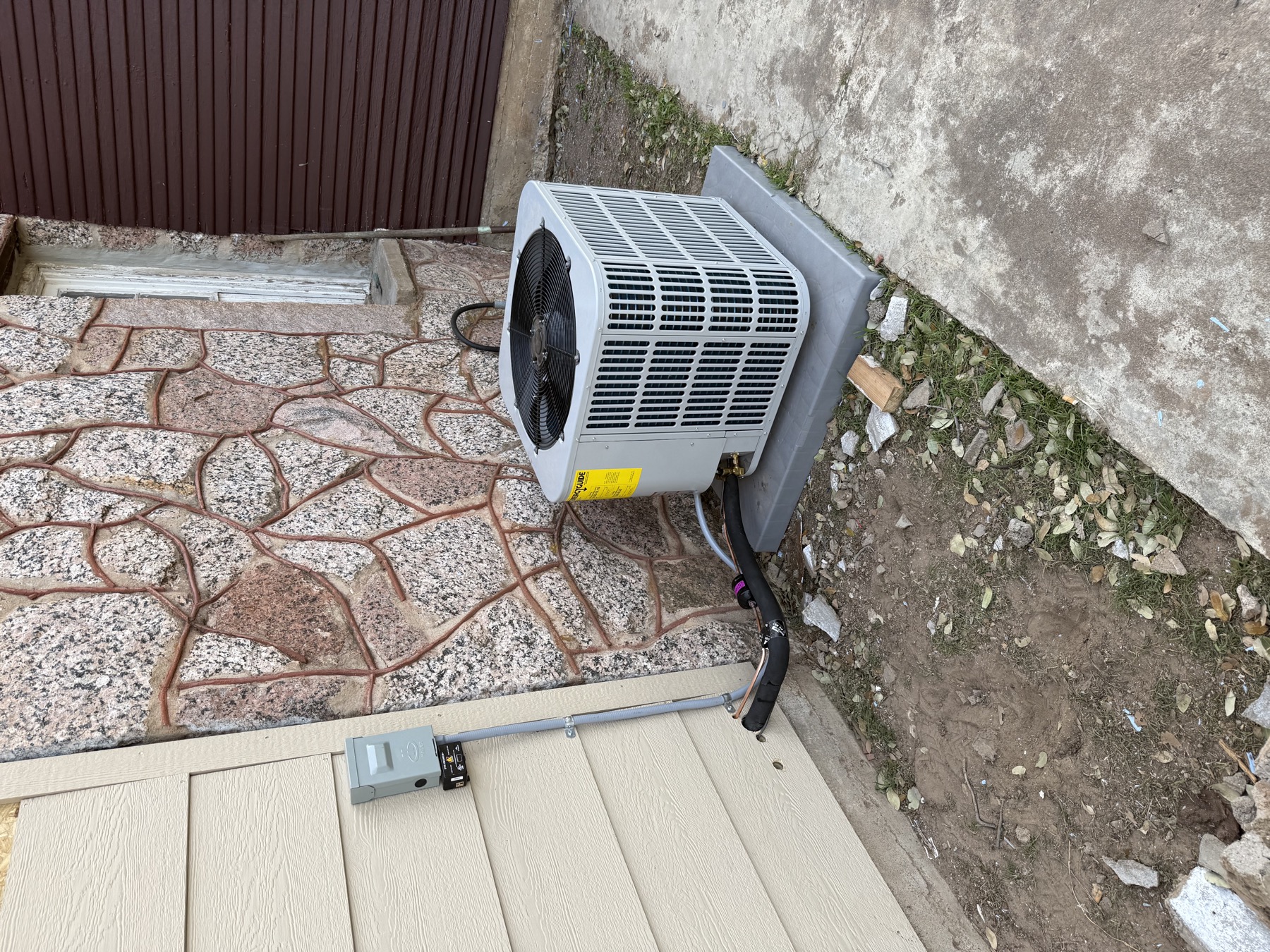
Ask a hundred owners of new houses around Rock Hill which room is the problem and you get two answers over and over: the bonus room over the garage, and the upstairs bedroom at the far end of the trunk line. Both are physics before they are anything else. The bonus room sits above an unconditioned garage with attic on three sides, so it loses and gains heat faster than any other room, and it typically got the same size supply as a normal bedroom. The far bedroom sits at the end of a long run, where air gets lazy.
That is duct design, which is the uncomfortable category, because duct design is decided before drywall and revisited by essentially nobody after closing. Once the ceilings are up, adding a properly sized run to that bonus room becomes real work. It is still doable, we do it, and it helps to know that this is the actual fix rather than the thermostat being stupid. When the run genuinely cannot be improved, a ductless head is often the cleanest answer for one room, which is why ductless mini splits in Rock Hill land on bonus rooms and converted spaces in exactly this housing stock.
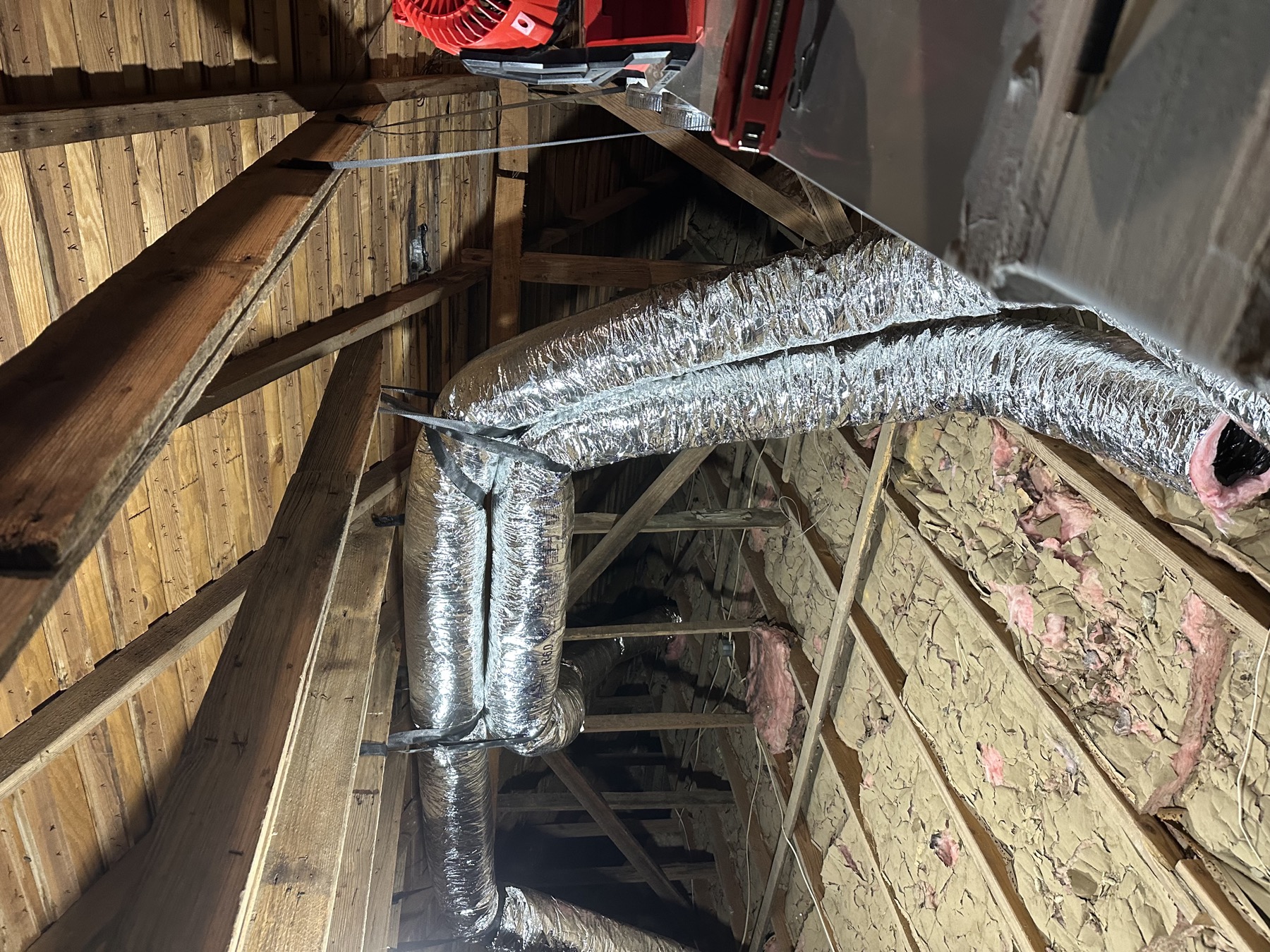
Two smaller things make it worse and are easier to correct. Most of these systems have balancing dampers in the trunk, and on most of these houses they sit wide open exactly where the installer left them, so nobody ever gave the starved rooms their share. Returns are the other one, chronically undersized in production building, and if the upstairs has a single hallway return and every bedroom door closes at night, those rooms pressurize and stop taking supply air.
Worth saying plainly: nobody is coming back to redesign that duct layout for you. Once the house closes, the trades have moved on to the next phase of the neighborhood and the mechanical drawings are finished business. That is not a scandal either, it is how the sequence works, and it means the room that was wrong in your first August will be wrong in your fourth unless somebody deliberately goes after it. The good news is that the deliberate version is usually a normal service visit with measurements and adjustments rather than a demolition project.
Aux heat is where the money quietly leaks
Nearly all of this housing stock heats with a heat pump, which is the right call for York County winters. A heat pump moves heat rather than making it, and it does that efficiently until the outdoor temperature drops far enough that it needs help. The help is a set of electric resistance strips in the air handler, and running strips is the expensive way to heat a house. Fine at the right times. Not fine when it happens because a setting was left where it shipped.
The settings go by several names: balance point, changeover, lockout, aux staging. What they share is that a wrong value produces no symptom you can see. The house is warm, the thermostat says heat, nothing beeps. The only tell is the January power bill, and by then most people have decided this is simply what a heat pump costs. Strips draw far more power than the compressor does for the same warmth, which is why a wrong value shows up on the bill instead of on the thermostat.
If you get one thing checked before your first real winter in the house, make it this. Correcting changeover is the smallest job on this page and reliably the one with the best return, and it is standard on any heat pump service visit in Rock Hill we run. Ask what the setting was when the tech arrived and what it became, and write both numbers down for next winter.
Two warranties, two documents, go read both
New construction usually leaves you holding coverage from two directions, and homeowners blend them into one vague sense of being protected. The builder warranty is one document covering what that builder agreed to cover. The manufacturer warranty is a separate document with its own terms, duration, and conditions about registration, maintenance, and who may perform work. Anyone who tells you confidently what either covers without opening it is guessing, us included, so we will not do that here.
What we will say is what to do. Find both documents this month, read the coverage and exclusion sections rather than the cover page, and note what each says about maintenance records, because that paperwork decides it and not anybody’s opinion. Then register the equipment with the manufacturer if nobody has. Registration is a short form off the model and serial tags, and it gets missed constantly because it lands in the same weeks as boxes and address changes.
The first-year punch list worth walking
Here is the walk we would do in a new Rock Hill house. Go room by room with a thermometer on a hot afternoon and again on a cold morning and write the numbers down, because the pattern is the useful part. Put a hand at every supply register and note the weak ones. Check the thermostat’s installer settings for equipment type and aux behavior, find the model and serial tags on both units, and confirm the outdoor unit did not get boxed in by landscaping. Bring that list to whoever you have out and ask for measurements against it: airflow, static pressure, charge verified against the day, temperature split. A company that hands you numbers is doing the work. Our Rock Hill service page lays out how we work in these neighborhoods, and anything the walk turns up gets quoted in writing before we touch it.
Quick answers
My house is a year old. Does anything really need attention already?
Attention, yes. Repair, almost never. The equipment is usually healthy at that age. What needs attention is setup: airflow nobody measured, dampers where the installer left them, thermostat settings still on factory defaults.
Can the bonus room be fixed without tearing into the ceiling?
Sometimes. Balancing the dampers, opening up the return path, and correcting airflow at the blower solve a real share of these complaints on their own. When the supply run itself is too small or too long, the honest options are improving the duct or adding a ductless head for that one room, and we will tell you which one your house is.
Will having someone else work on it affect my coverage?
Your two documents answer that, not us and not anyone on the phone. Both carry language about who may perform work and what records they expect, and terms vary. Read yours, and call the manufacturer if it is ambiguous.
New house, new equipment, and nobody ever measured it?
We do the commissioning these subdivisions did not get: airflow measured, charge verified against the day, dampers balanced, aux heat set for your equipment instead of the factory default. The readings come to you in writing, and anything real gets quoted first.
Call (803) 573-2473 or send us the detailsWant proof first? The gallery is all real jobs.