
Auxiliary heat is running in your Rock Hill house and you cannot tell
Rock Hill runs on heat pumps. Drive the neighborhoods that went up over the last twenty five years, off Celanese, out toward India Hook, down through the newer stretches near Manchester Meadows, and the only heating equipment on most of those properties is the outdoor unit sitting on a pad beside the house. In a place with short winters and a handful of genuinely cold mornings, that is the right machine for the job.
But every one of those systems carries a second heater inside the air handler, and it is the most expensive thing in the house to run. Auxiliary heat, strip heat, backup heat, depending on who is talking. It is supposed to work a few hours a season. In plenty of York County houses it works far more than that and nobody knows, because auxiliary heat does its damage silently. It trips nothing, breaks nothing, and never makes the house uncomfortable. The bill is the only place it shows up, and the bill arrives a month late.
The short version
- Auxiliary heat is an electric resistance element. It makes heat the hard way, at a fraction of the efficiency the heat pump manages.
- Three things start it running when it should not: a thermostat set back too far, an unnoticed fault in the heat pump, and a stuck or miswired relay.
- You cannot feel it in the room. Strips make the supply air hotter, so the trouble feels like the system doing better.
- The thermostat indicator, the outdoor unit’s behavior, and a clamp meter on the strip circuit settle it in one visit.
What auxiliary heat is, and why it is in there
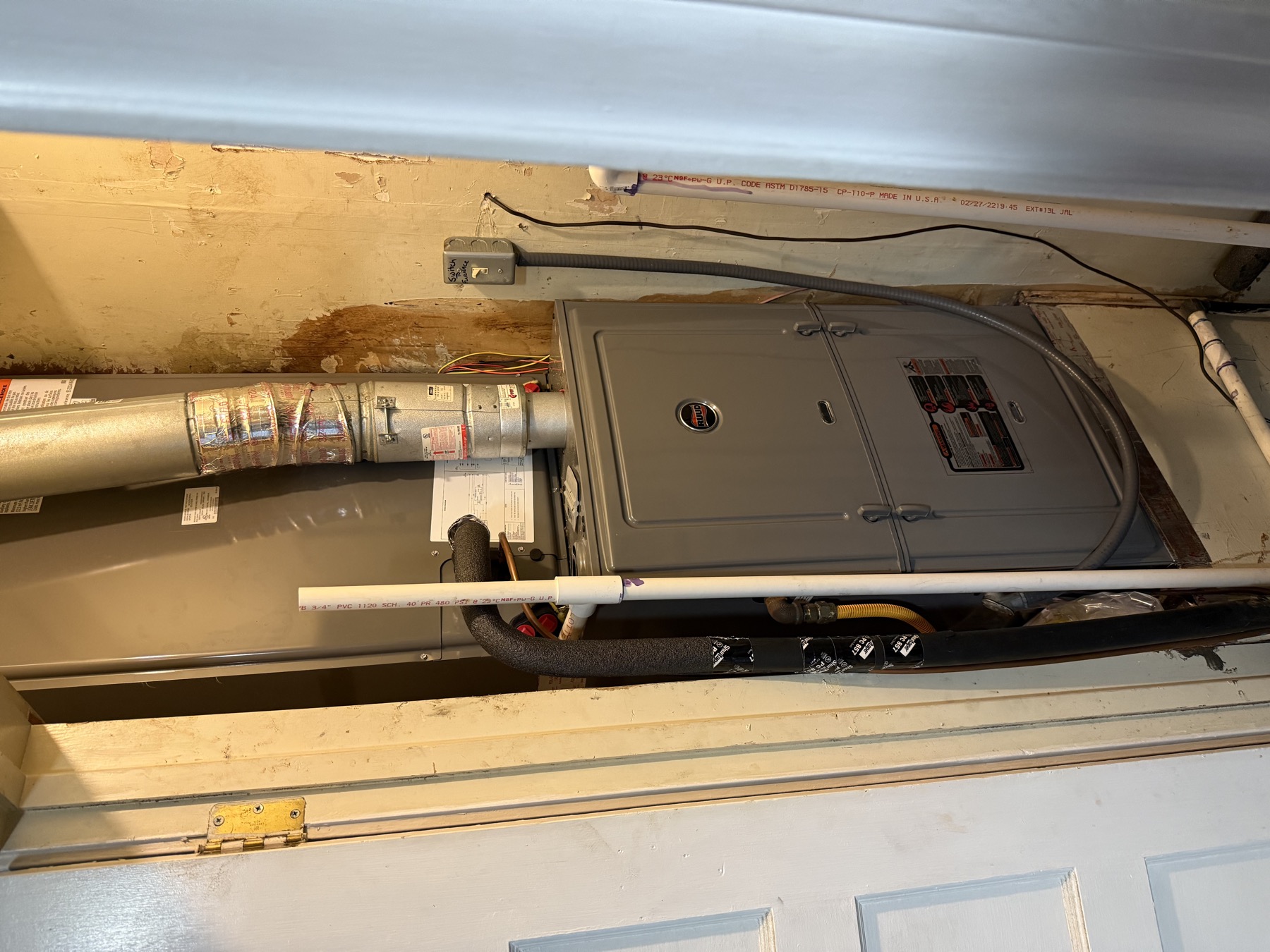
Open an electric air handler and you find a bank of coiled metal elements sitting in the airstream on their own heavy circuit. Electricity runs through them, the metal resists, the resistance throws off heat. Same principle as a hair dryer. Nothing clever is happening, and nothing can be: resistance heat turns electricity into heat one for one, and that is the ceiling. A heat pump does something categorically different. It does not make heat, it collects heat that already exists in the outdoor air and moves it inside, and because moving is cheaper than making, it delivers far more warmth for the same electricity than a strip element ever will.
So why build the expensive heater into the efficient machine? Two honest reasons. Defrost is the first. On a damp cold morning frost forms on the outdoor coil, the system briefly reverses itself to melt it off, and the strips fire so your registers do not blow cold for those few minutes. Capacity is the second. On the coldest mornings there is less heat outside to harvest, output falls, and the strips close the gap. Used that way, auxiliary heat is good design. The problem is when it stops being occasional.
The first way it runs when it should not: the setback
Most people come to a heat pump with habits learned on a gas furnace, where dropping the thermostat well down overnight or during the workday is free money. A furnace has one speed, it makes heat fast, and catching back up costs no more per degree than holding steady would have. A heat pump is built to hold a temperature, not to sprint. Push the thermostat up a big jump at once and the control logic sees a wide gap, decides the heat pump alone will take too long, and calls the strips in to help.
So the deep setback habit hands the busiest heating hours of the day to the most expensive heater in the house, every weekday, all winter, in the name of saving money. A programmed overnight drop does the same thing at dawn. Two or three degrees usually keeps the recovery gentle enough that the heat pump handles it alone. Deeper than that and you are trading a small overnight saving for an expensive climb every morning. If your thermostat offers adaptive or intelligent recovery, turn it on. It starts the climb earlier and more gradually.
The second way: a heat pump that quietly stopped keeping up
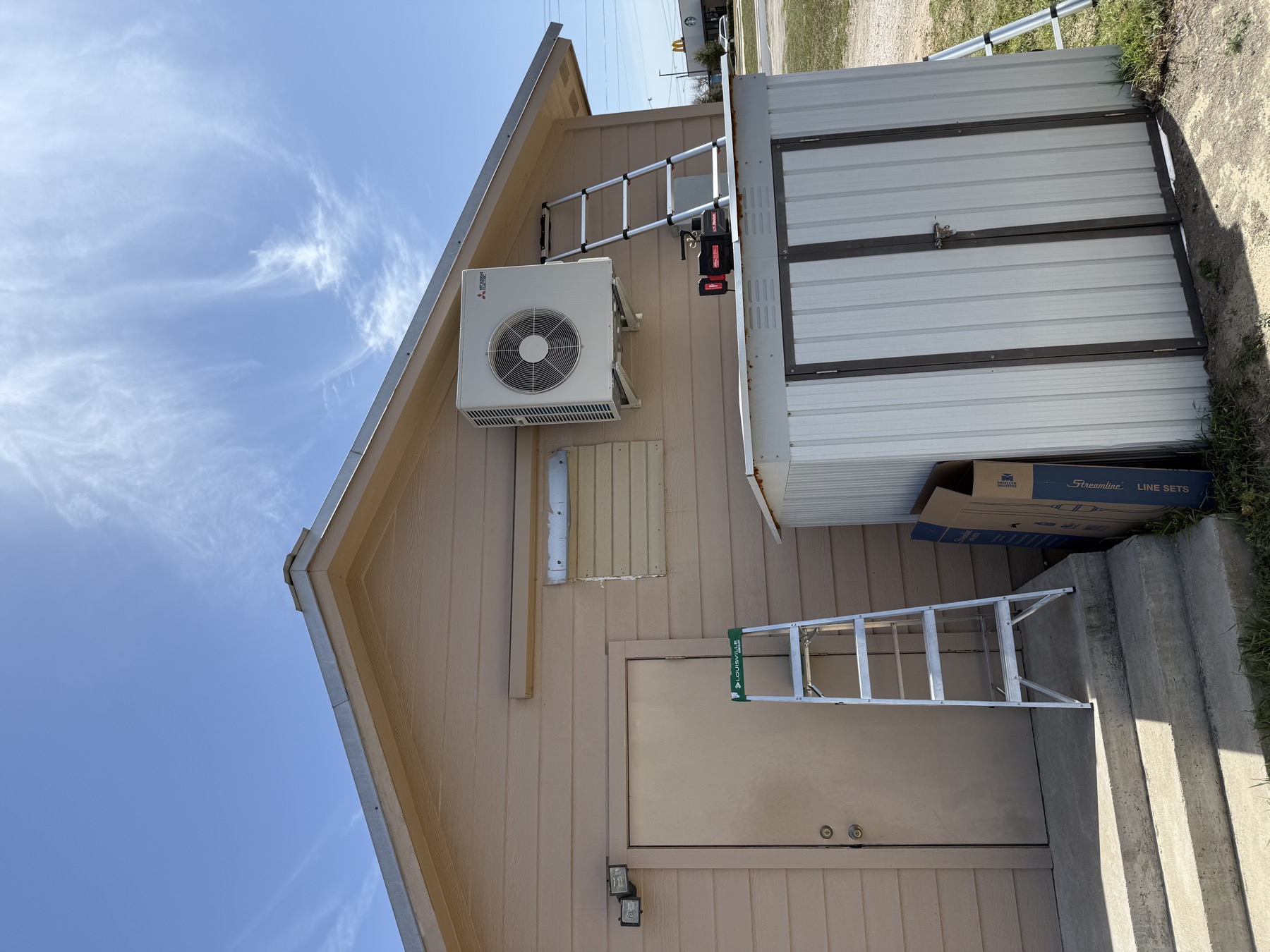
This is the one that costs the most and gets caught the latest. Heat pumps rarely fail all at once, they lose ground. Refrigerant seeps past a corroded coil, a capacitor weakens and the compressor labors, a reversing valve bleeds internally. Or the outdoor coil packs with pollen and grass clippings and everything else a Rock Hill spring supplies, and the system loses its ability to pull heat out of the air.
In every one of those cases output drops, the house falls behind the setpoint, and the controls do exactly what they were designed to do: bring on auxiliary heat to cover the shortfall. The thermostat is satisfied. The vents blow warm. Nobody in the house experiences a failure. A broken machine has handed its job to an emergency heater, and the emergency heater said nothing about it. We have opened systems here where the heat pump had contributed almost nothing for two winters, and the only symptom anyone ever had was a bill they had decided was just what that house cost. That is the story behind most of the heat pump service calls we take in Rock Hill that begin with the words nothing is really wrong, but.
The third way: a relay that never let go
Strip heat is switched by relays and sequencers. If a set of contacts welds shut, or a sequencer sticks, or the control wiring got crossed during an installation or a thermostat swap, the strips can sit energized any time the blower runs. Miswiring is the version we find most after a do it yourself thermostat replacement. Heat pump wiring is not furnace wiring, and a thermostat set up as a conventional system will run the strips as primary heat and never call the heat pump at all. Everything works. Everything feels fine. The house is being heated the expensive way on purpose.
Why standing in the room tells you nothing
Everyone assumes they would notice something this expensive. You would notice a cold house. You would notice a system that would not start. You cannot notice this one, and the reason is worth understanding. Heat pump air comes out warm but not hot, a patient stream a few degrees above body temperature delivered over a long cycle. People used to furnaces often describe it as feeling cool at the register even while the room warms perfectly well. Strip heat produces genuinely hot supply air, fast.
Which means the symptom of the expensive failure feels like an improvement. The vents get hotter, the house recovers quicker, and if anything the system seems to be running better than it did last year. Your hand at the register is a broken instrument for this particular question.
How to check, this week
Start at the thermostat, because it is free. Almost every thermostat controlling a heat pump displays something when auxiliary heat engages: AUX, AUXILIARY HEAT, EM HEAT, or a small indicator. Learn what yours shows, then watch it. Auxiliary for a few minutes during a defrost cycle, or on the coldest morning in January, is the system behaving. Auxiliary on a mild afternoon in the forties, or every evening when you walk in the door, is the system telling you something.
Then go outside and use your eyes and ears. When the heat is calling, the outdoor unit should be running: fan turning, compressor humming, warmth coming off it. Hot air at your vents while that unit sits dead silent means the strips are carrying the house alone. That single observation, made once on a cold morning while the coffee brews, has found more failed heat pumps in York County than anything else we know how to teach.
Then compare your own usage year over year rather than against a neighbor’s house. Weather varies, so it is rough, but a winter that costs dramatically more than the last one in the same house is a real signal. What a technician adds is measurement: a clamp on the strip circuit to see whether it draws when it should not, pressures and temperature split to see whether the heat pump is actually producing, and the thermostat configuration read against the equipment it is wired to.
Emergency heat, and when to touch that switch
Emergency heat is a different setting from auxiliary heat, and the two get confused constantly. Auxiliary is automatic. Emergency heat is a manual override that shuts the heat pump off and runs the strips as the only heat source. There is one good reason to use it. The heat pump has actually failed, the house needs heat tonight, and a repair is scheduled. That is a fine trade for two days and a terrible one for two months. The failure we run into is the switch that never went back after some cold snap. Go look at yours. It takes ten seconds.
When the bill is the only symptom
Most people who call us about this do not call about this. They call because the number stopped making sense and they want somebody to explain it, which is a legitimate service call and we treat it as one. We ask what the thermostat has been showing and how the schedule is set. We confirm outside that the heat pump is running and producing. We take readings at the air handler with the strips isolated. By the end we can usually tell you which of the three stories your house is living.
Sometimes the answer is settings, and the repair is a schedule change and a short conversation about setbacks. Sometimes it is a relay or a wiring correction, a small job with a large result. Sometimes it is a real fault, and we quote the repair in writing and let the numbers sit at your kitchen table. The same system cools the house all summer, so a heat pump limping through winter is the one that quits in July, which is when the phone rings about AC repair in Rock Hill. Our Rock Hill service page lays out everything we cover around town, and you can send us the details any time.
Quick answers
How do I know if my house even has strip heat?
If your heat comes from an outdoor unit that runs in winter and there is no gas line to the equipment, you almost certainly have strips in the air handler. The panel usually shows a large double breaker dedicated to it. A technician can confirm it in a minute with the access panel off.
My thermostat shows AUX every cold morning. Is that bad?
Not automatically. On a genuinely cold Rock Hill morning a healthy system may need help, and brief auxiliary during a defrost cycle is normal in any weather. The pattern is what matters: mild days, long stretches, or auxiliary appearing this winter when it never did last winter.
Should I turn the thermostat off during the day instead?
With a heat pump, letting the house drift far from setpoint sets up an expensive recovery later. Hold a steady temperature, or use a shallow setback of a couple of degrees. The furnace habit of deep setbacks does not transfer to this equipment.
Would a new thermostat fix this?
Sometimes it helps and sometimes it causes the problem. One with clear auxiliary reporting and gradual recovery keeps a healthy system off the strips. One configured incorrectly for a heat pump creates exactly what this article describes.
Can I check the strip heat myself?
The free parts, yes: read the thermostat indicator, verify emergency heat is off, watch whether the outdoor unit runs when the heat is calling, and compare your own winter bills year over year. Anything behind the air handler panel is live high voltage. That part is ours.
Find out what your heat is actually running on.
Bring the bill, give us ten minutes, and we will tell you whether your Rock Hill house is being heated by the heat pump or by the strips. The diagnosis is honest and the prices are written down.
Call (803) 573-2473 or send us the detailsWant proof first? The gallery is all real jobs.