
HVAC on a Rock Hill rental: how landlords should run the numbers
Heating and cooling a house you rent out is a different calculation from heating and cooling the house you sleep in, and landlords get burned by treating them as the same problem. In your own home you are the sensor. You hear the noise change in February, you notice the upstairs bedroom losing the fight in July, and you call while the problem is still small and cheap. On a rental you have no sensor. You have a lease, a tenant with their own priorities, and a machine in a crawlspace nobody looks at until it quits.
We work rentals all over Rock Hill and the rest of York County: student houses near Winthrop, subdivided mill village places around Old Town, single family investments bought when Charlotte money came down the interstate. The equipment is ordinary. The decisions around it are what separate a quiet year from a bad one.
The short version
- A marginal system on a rental does not fail politely. It fails on a holiday weekend at after-hours pricing.
- Tenants report problems later than owners do, so build your maintenance around that delay instead of wishing it away.
- Turnover is the only genuinely convenient window for real work, and in a student market it has a date on the calendar.
- Filters are the highest return item in the building, and one thermostat serving two apartments is a permanent argument.
- A written service record settles disputes. With no record, the loudest story wins.
The repair or replace question when you are not the one who is cold
On your own house, keep or replace is mostly a financial question. On a rental there is a second column and it is the expensive one: what a marginal system does to your operating year. An owner living with a tired unit tolerates a warm afternoon and books the repair for Tuesday. A tenant with the same unit calls at nine at night in August, and that visit is an after-hours visit at an after-hours price, at whatever hour the failure picked.
So the honest framing is that a borderline system in a rental is not something you nurse along for free. It quietly buys you a number of emergency calls a year, and by definition they land at the worst moment, because that is when equipment gives up, with every crew in the county already booked.
That does not mean replace everything old. It means remaining life and readings are only half the picture here. We also talk plainly about how likely a unit is to strand you, because a system that will probably hold two more seasons in an owner-occupied house is a different bet when failure arrives as a nine o’clock phone call. If yours is already earning those calls, our Rock Hill repair side would rather say so than keep selling the same fix.
Your tenant is not your early warning system
This is not a complaint about tenants. It is how people behave in a house they do not own. A homeowner hears a new rattle and thinks about the checkbook. A tenant hears it and thinks it is somebody else’s rattle. So the noise runs six weeks. The drain line backs up and nobody looks at the pan until there is a stain on a ceiling.
Faults that would have been caught small on an owner-occupied house reach us as failures. A weak capacitor becomes a compressor that hard-started all summer. A clogged condensate line becomes drywall work. A dirty coil becomes a system that iced, thawed, and flooded.
You do not fix that with a lease clause telling people to report promptly. Everybody has that clause. You fix it by scheduling the inspection yourself, twice a year, so the machine gets looked at whether or not anyone complained. The landlords who almost never have emergencies are not lucky. They put spring and fall visits on the books and stopped waiting to be told.
Turnover is your only convenient window
Real HVAC work in an occupied unit is a negotiation. Access, timing, noise, dust, somebody’s work-from-home schedule, a dog that cannot be loose while the door is propped open. In a vacant unit it is just a job. Line up capital work with the empty weeks instead of fighting for entry mid-lease.
In a market shaped by Winthrop, those weeks are not a mystery. The student-heavy blocks turn over in a tight summer window everyone in town knows. That is when duct repairs, changeouts, thermostat work, and anything that opens a wall should happen. The catch is that every other owner figured this out too, so book in March for a July job. On the single family side, where leases stagger, the equivalent move is deciding during a walkthrough rather than during a failure.
Filters are the highest return item in the building
If you do one maintenance thing on a rental, make it filters. A restricted filter raises run times, freezes coils, stresses blowers, and quietly takes years off equipment, and it is the most common thing we find wrong when we open a rental unit. We have pulled filters that clearly predated the current lease, and the equipment behind them showed it.
The real question is what you do when you cannot rely on the person living there. A labeled stack of the right size left at move-in, with the interval written on it, raises compliance without guaranteeing it. A delivery subscription puts a fresh one at the door on a schedule so the tenant only has to slide it in. Folding it into a maintenance plan puts it on a technician. What does not work is the honor system with no filters in the house, because nobody is buying one for a place they leave in nine months.
Two apartments, one thermostat, permanent argument
Rock Hill has a lot of housing that was never designed to be what it now is. Old Town homes and mill village houses have been split into apartments for generations, and the heating and cooling often did not get split with them. One system, one thermostat, two households with different bodies, different schedules, and different opinions about seventy two degrees.
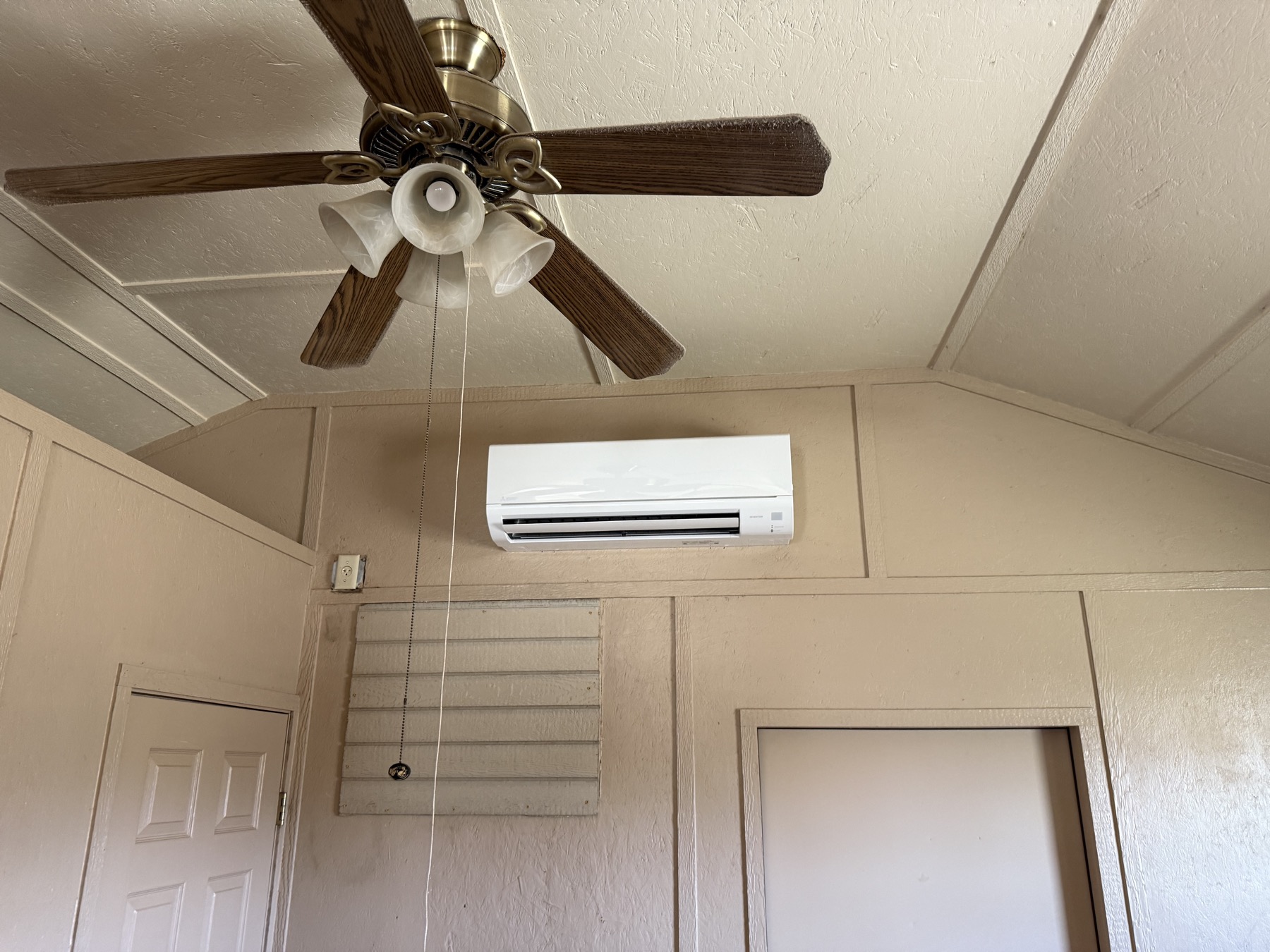
There is no maintenance fix for that. Whoever holds the thermostat controls the other tenant’s comfort, and the one without it calls you. Balancing dampers help at the margins. Zoning helps when the ductwork is worth zoning, which in a century-old split house it frequently is not. This is where ductless earns its keep instead of reading as a luxury: each unit gets its own head, its own remote, and no shared duct run to argue over. Where running proper trunk lines upstairs would mean tearing into finished space, the wall-mounted approach usually goes in faster and cleaner. The honest math on ductless mini splits is that complaint volume drops the day the shared thermostat disappears.

Write it down, because someday you will need it
Sooner or later there is a dispute about who broke what. The tenant says it was never right. You remember it being serviced. Neither memory is evidence. A dated service record showing what was found, what was done, and the condition at move-in and move-out is.
Keep invoices. Keep technician notes. Photograph the equipment tag and the filter slot at turnover so you have a before and after. If a visit turns up something caused by use rather than age, get it written into the notes that day instead of reconstructing it later. What your lease says about maintenance, damage, and access is between you, your property manager, and your attorney, and we are not the ones to tell you what it means. Our job is making sure the facts exist for whoever does.
Check the system before you buy, not after
An aging system on a property you are considering is a real number, and it belongs in the offer. Get the equipment looked at properly rather than taking the one line in a general inspection report. Age and match of both pieces. Refrigerant type and whether it is getting hard to source. Electrical readings under load. Evidence of past repairs, and whether those were repairs or patches.
Then look at what is not the equipment, because in older stock that is usually the real problem: crawlspace duct that has lost its insulation, returns undersized for the rooms they serve, a condensate path draining toward the house. Those shape your operating costs for years. Priced in writing before closing, it is a negotiation. Skipped, you inherit whatever the last owner deferred, usually in your first summer. The rest of what we see across Rock Hill and York County is on our service page, and you can send us the address and the details before you commit.
The sizing trap in a converted mill house
Here is the one that catches experienced owners. A mill house or an Old Town bungalow gets split into two or three units and the original system stays. The load changed the day the walls went up. Interior partitions block airflow paths the ducts were designed around. Rooms that were part of an open plan become sealed apartments with one supply and no return. Occupancy rises, which adds heat and moisture. Conditioned square footage barely moved, so the tonnage still looks right on paper. Nominally correct, functionally wrong, and the symptom is a system that runs constantly, satisfies nobody, and dies early from the hours.
Oversizing shows up here too, usually after someone replaced equipment by matching the old nameplate instead of the current building. An oversized unit short-cycles, and in our humidity that means cooling the air without pulling the moisture out, so the apartment feels clammy at the set temperature. Tenants call that the air conditioning not working, and they are not wrong. The fix is sizing the building you actually have: a load calculation on the current floor plan and occupancy, which on a conversion often points toward separate systems per unit.
Quick answers
Should I put my rentals on a maintenance plan or just wait for calls?
The scheduled visit does double duty on a rental. It catches the small faults your tenant was never going to report, and it puts a technician in the property twice a year with a written record of what was found. Call-when-broken works on a house where the owner is the early warning system. On a rental you do not have one, so you buy the equivalent.
Can I make the tenant responsible for filters in the lease?
What a lease can assign is a question for your property manager or your attorney, not for us. What we can tell you from the field is that a clause alone rarely produces changed filters. Pair whatever the lease says with a practical system: filters supplied at move-in, a delivery subscription, or a technician handling it on a scheduled visit.
How far ahead should I plan a replacement around summer turnover?
Start the conversation in late winter for a summer changeout. That leaves time to compare options calmly, arrange financing if you want it, and hold a spot before the turnover weeks fill up. Deciding after the keys come back means competing for the same crowded window as every other owner nearby.
Is ductless worth it on a standard single family rental?
Conversions are where it solves a problem nothing else solves. On a single family rental with sound ductwork, a conventional system is usually the straightforward answer. Ductless still earns a spot on additions, converted garages, bonus rooms, and any space the original ducts never reached properly.
Tenants say it runs all day and still feels humid. Is it failing?
Maybe, but in a converted house the more common cause is sizing and airflow rather than a bad machine. Equipment too large for the actual load short-cycles and never dehumidifies, and blocked returns produce the same complaint. Worth diagnosing properly before anyone spends money repeating the problem.
Want a straight read on the system in your rental?
One visit with instruments, repair priced beside replacement, both in writing, and a plain answer about whether that unit is going to strand you next August. Second opinions are free if someone already handed you a verdict, and the decision stays yours.
Call (803) 573-2473 or send us the detailsWant proof first? The gallery is all real jobs.