
Service area · River towns, mill houses, and honest moisture work
Gaston County HVAC, where the rivers set the moisture agenda
Gaston County rounds out the western arc of our radius, and water writes half its HVAC story: Belmont and Mount Holly sit in the fork of the Catawba and its tributaries, river humidity works the housing stock daily and without holidays, and the crawlspaces on this side of the map are honest moisture factories that reward a crew willing to take the readings seriously and crawl accordingly. Gastonia adds the county seat’s full housing range, mill village streets to brand-new outskirts, with every era of American mechanical thinking still in active service somewhere on its map.
We cross from Fort Mill with the complete roster and a particular enthusiasm for the county’s specialties: moisture control done by measurement, mill-house retrofits done with respect, and veteran systems given the honest math. Same written prices as home, same 24/7 no-extra-fee line, and three town pages below for the street-level stories.
The western arc, mapped
Where we work
Belmont leads the county’s renaissance, historic mill village turned destination main street, with housing to match the story. Mount Holly holds the river’s other bank with its own revival underway, and Gastonia anchors the county seat’s full spread, from the Loray mill district’s village streets to the newer builds on the outskirts. Each town has its own page and the same standard.
Distance honesty: this is the western edge of the radius, reached through or around Charlotte depending on the hour, and arrival windows respect the geography truthfully. Routes cluster the county’s calls sensibly, emergencies break every clustering rule at the usual priority, and the invoice never learns what the odometer did.
The short version
River moisture handled by measurement, mill-house craft handled with respect, veteran-system honesty as standard equipment, and metro-core service standards delivered at the radius edge without a surcharge in sight. The free pricing visit covers all three towns and every county road between them.
The rivers, and what they do to houses
Moisture as the county’s standing agenda
Riverside geography keeps Gaston County’s crawlspaces damper, its coils wetter, and its humidity baselines higher than the metro average, and the mechanical consequences follow on schedule: drain clogs leading the summer call log, crawlspace duct insulation failing from below, musty baselines that owners stop noticing until they leave town and return, and dehumidification earning its keep more obviously here than anywhere on the map.
The honest response is measurement before machinery: moisture readings that establish what the house actually does, crawlspace inspections that find the source rather than the symptom, and fixes sequenced properly, drainage and sealing before hardware, duct correction before capacity. The county rewards that discipline visibly, and the before-and-after readings make the case better than any sales script could.
The crawlspace specialty, at home here
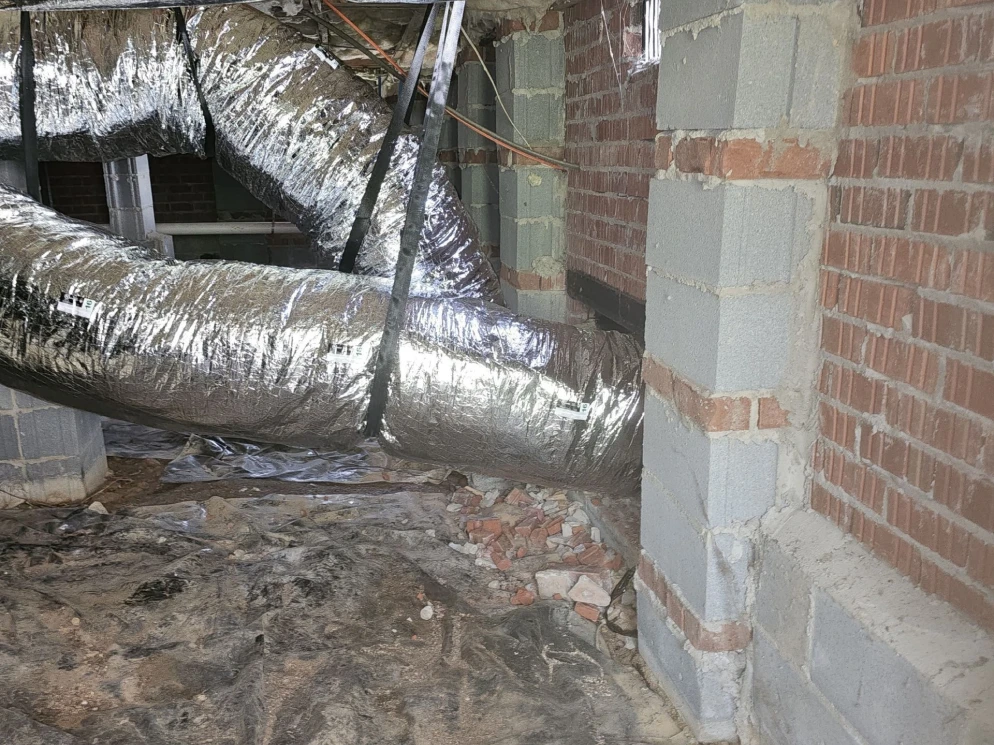
Our crawlspace enthusiasm, knees notwithstanding, finds its fullest employment in this county: duct runs re-hung and sealed up off the damp ground, insulation restored, dedicated dehumidification sized to the space and drained without human memory involved, and the hero photo above showing exactly the standard, fabricated in our warehouse and installed to outlast the moisture that ruined its predecessor.
The payoff reads upstairs: floors that stop feeling clammy, the musty baseline retired, systems that stop fighting the house they serve, and power bills that reflect conditioned air actually reaching rooms instead of leaking into the damp. River-county crawlspace work is unglamorous, measurable, and transformative, which is our favorite combination in the entire trade.

Mid-service on a Daikin condenser.
Mill houses, revivals, and the housing range
The mill village stock, treated with respect
Gastonia’s and Belmont’s mill villages hold housing that predates every central-air assumption: compact frames, original proportions, renovation layers spanning a century, and systems added wherever each era’s budget allowed. Retrofitting these homes well is craft work, ductless zones that spare the plaster, right-sized equipment that respects small volumes, and balancing that unwinds decades of improvisation.
The revival economy raises the stakes pleasantly: renovated mill houses in Belmont’s orbit are getting the full-restoration treatment, and their new owners want mechanical systems matching the craftsmanship upstairs. That is exactly the work we drive west for, and the veteran-system honesty that serves Chester County translates here word for word.
Gastonia’s full spread
The county seat runs every housing chapter at once: mill district streets, mid-century neighborhoods with add-on histories, and newer construction on the outskirts hitting its first equipment birthdays. The service answer flexes accordingly, archaeology on one street and builder-grade pattern work on the next, with the trucks stocked for both directions of the county’s range.
Strips-to-heat-pump conversion math runs especially well in the county’s older stock, where resistance heat still carries too many winters at the most expensive rate in the Carolinas. One power bill and ten minutes tells the story, and the western route has funded some of the most satisfying conversions we run anywhere.
Service at the western edge, honestly run
Edge logistics that feel like core service
The western arc gets the same routing discipline as the southern one: calls clustered so the drive serves several households per trip, maintenance rhythms booked in county batches, parts for the local patterns loaded deliberately, and the result reading as core service delivered at the edge. Emergencies break every rule at the standard priority, with the honest drive time quoted while the truck loads.
The no-surcharge policy holds here for the same reason it holds in Chester County: radius edges are where surcharge temptation lives, and a policy that bends at its edges was never a policy. Gastonia at 10 p.m. pays what Fort Mill at 10 a.m. pays, and the reviews that mention it are the reason the policy exists in writing.
The full roster, westbound
Everything crosses the county line intact: cooling repairs through purification, tune-ups through ductless design, warehouse fabrication behind every duct job, written pricing before every repair, and the 10% teacher and service-personnel discount that the county’s schools and first responders use as intended.
Second opinions ride west free as well, and the county’s veteran systems generate their share: verdicts reviewed, condemned equipment revived where the instruments disagree with the sales script, and honest funerals where the verdict was right. Every county deserves one company that treats the drive as logistics rather than leverage, and Gaston County has ours.
A river-county year, in service calls
The wet-season file
Spring rains load the county’s crawlspaces early, and the moisture readings we take in April predict the summer’s drain-clog season with unsettling accuracy. By June the rivers’ humidity baseline is doing its daily work, cooling triage runs at full tempo, and the dehumidification conversations land hardest in exactly the weeks when the air upstairs starts feeling like the crawlspace smells.
Storm season adds the western arc’s share of lightning-struck boards and surge casualties, and the summer’s most satisfying visits are the crawlspace restorations: duct runs re-hung and sealed while the damp is at its most instructive, with before-and-after readings that make the invoice feel like a bargain by Labor Day.
The dry-season file
Fall pulls the county’s furnaces and heat pumps out of hibernation, and the first cold snap runs its usual dawn exam across all three towns simultaneously. The mill-house stock feels winter honestly, compact frames with layered renovation histories heat unevenly without balancing, and the strips-only homes meet their power bills in December with predictable regret and our conversion calculator close behind.
Late winter belongs to the planners and the revival projects: renovated mill houses getting their mechanical systems matched to the craftsmanship upstairs, shoulder-season replacements booked calmly, and the maintenance rhythm signing up another season of households who would rather watch the cold snap from the comfortable side of the glass. Then the rains return, and the readings start over.
The western-arc promise
Metro-core standards at the radius edge: same prices as Fort Mill, written quotes, honest arrival windows, moisture work done by measurement, and the 24/7 line answering all three river towns without a surcharge at any hour. Free pricing visits county-wide, Optimus Financing behind qualifying projects, and second opinions on other companies’ verdicts at no charge.
The rivers set the moisture agenda around here and we brought the instruments to answer it: (803) 573-2473, answered by an actual Massey at any hour the Catawba happens to be flowing, which by last measurement was all of them.
Stuck between repair and replace?
Call and describe what the system is doing. We run the math at your kitchen table, in writing, and the decision stays yours.
Gaston County questions, answered from the field
Do you really come out to Gastonia at Fort Mill prices?
Really: same diagnostic rate, same written repair pricing, no fuel surcharges, no edge-of-radius markup, ever. The western drive is our cost of doing business, the routing discipline keeps it efficient, and the invoice from Gastonia reads exactly like one from around the corner from our shop. Pricing that bends with the odometer was never going to be our version.
My crawlspace smells musty and the floors feel damp. Where do I start?
With readings, not hardware: the free inspection measures what the space actually does, finds the moisture source, and sequences the fix honestly, drainage or sealing first where needed, duct correction and dehumidification after. River-county crawlspaces are our most satisfying work, and the before-and-after numbers will make the case without any salesmanship required.
Can you retrofit central air into my mill house?
Thoughtfully, yes, and often the better answer is ductless: zones that spare the plaster and the proportions, right-sized for compact volumes, with full duct systems designed and warehouse-fabricated where central air genuinely fits. The house’s character survives the comfort upgrade, which in Belmont’s revival market is half the assignment and most of the pleasure.
How fast can you reach Belmont or Mount Holly in an emergency?
Honestly quoted at the western edge: longer than home county, prioritized ahead of everything routine, faster at night than through Charlotte’s rush hour, and moving the moment the call ends. The phone triage starts the diagnosis meanwhile, and active-water and no-heat calls jump every queue we have, at the standard no-surcharge price.
Is river humidity really different from regular Carolina humidity?
Measurably: riverside baselines run higher, crawlspaces stay damper longer after rains, and equipment lives a wetter life within blocks of the water. The consequences are ordinary, drains, coils, duct insulation, moisture-fed mustiness, arriving faster, which makes the twice-yearly service rhythm and the moisture-first mindset earn more here than anywhere on our map.
Do you handle the county’s older electric-heat homes?
Enthusiastically: strips-only heat at Carolina’s most expensive rates makes the heat-pump conversion math dramatic in the county’s older stock, and those conversions are some of the best bill reductions we deliver anywhere. Bring a winter power bill to the free visit and the arithmetic takes ten minutes, with keep-what-you-have remaining an honest possible answer.
Do the revival-district renovations get special handling?
They get matched handling: mechanical work specified to the same standard as the restoration upstairs, ductless zones that spare original plaster, equipment sized for compact mill-house volumes, and documentation the eventual appraisal will appreciate. Belmont’s renovation market taught us the assignment years ago, and the befores-and-afters from those streets are some of our proudest.
What do you actually work on most in Gaston County?
Moisture work leads: crawlspace duct restoration, dehumidification, and the drain-clog season the rivers extend. Behind it: mill-house ductless retrofits, veteran-system repairs with honest math, strips-to-heat-pump conversions, and the builder-grade pattern arriving in the newer outskirts. The county’s range keeps the trucks broadly stocked and the work genuinely interesting.
Gaston County, street level
Three river towns carry the local detail, with the full roster and the honest moisture instruments making the drive to each.
Gastonia · Belmont · Mount Holly · All Services · All Service Areas
Want proof before the phone call? The gallery is all real jobs, and the financing page covers the big-ticket math.