
Lancaster County · The Red Rose City, running at two speeds
Lancaster HVAC for a county seat living at two speeds
Lancaster runs on two clocks at once. The historic core keeps the slower one: the courthouse district’s century buildings, the mill-era neighborhoods that Springs built and the town still lives in, and housing stock whose mechanical stories span every decade since window units were the technology. Meanwhile the fast clock ticks southward from Indian Land, where the 521 corridor’s growth machine keeps extending its reach down the panhandle toward the county seat, bringing builder-grade construction and its familiar arithmetic with it.
We serve both clocks from Fort Mill with the same flat prices and the same instruments: veteran systems in the mill-era streets given honest keep-or-retire math, the historic core’s compact frames retrofitted with the patience they demand, strips-to-heat-pump conversions closing their dramatic numbers across the older stock, and the arriving construction served straight from the metro’s pattern file. The Red Rose City gets the whole roster, both speeds, and the 24/7 line covers every street in town without a surcharge at any hour.

The county seat, mapped from the north
Where we work
From the courthouse square through the mill-era neighborhoods around it, out along the 521 and 9 corridors to the newer construction filling the town’s northern approaches, Lancaster anchors the southern end of our Lancaster County coverage. The drive from Fort Mill runs the panhandle’s length, the routing clusters county-seat calls sensibly, and the invoice never reads differently than it would around the corner from our shop.
The county page carries the panhandle-to-seat story at full length, and Indian Land holds the corridor’s fast end. This page belongs to the seat itself, both clocks of it.
The short version
A county seat with a historic core, a mill-era middle, and a growth wave arriving from the north, served on each street’s own terms: patient craft for the old stock, honest instrument-led math for the veterans, and the pattern file for whatever the corridor sends south next. Written prices everywhere, at every speed the town runs.
The mill-era streets and the honesty economy
Springs country, mechanically speaking
The mill-era neighborhoods carry Lancaster’s deepest housing story: compact frames built for working families, decades of ownership continuity, and mechanical systems that skew heavily veteran, equipment past fifteen serving houses past seventy, with service histories written across generations of owners. The standing treatment applies in full: instruments before verdicts, repairs priced beside replacements in writing, and genuine extra seasons earned wherever the readings support them.
The conversion arithmetic runs as hard here as anywhere on our map: resistance strips still heat these streets at density, December bills punish them at the Carolinas’ most expensive rate, and a heat pump carrying the mild season steps those bills down far enough that the neighbors start asking questions. One power bill and ten minutes at the kitchen table settles each house honestly, including the houses where keeping the current setup wins.
Second opinions, seat edition
Veteran-heavy county seats attract the trade’s condemnation scripts, and Lancaster generates a steady share of our second-opinion calls: systems declared dead that needed sensors, replacement quotes padding scope nobody asked for, and verdicts that reverse the moment actual instruments arrive. The second opinion rides south free, the reversals stay deeply satisfying, and the honest confirmations get delivered just as plainly when the original verdict was right.
Budget reality shapes the work here more than in the corridor’s new money, and we price accordingly rather than pretending otherwise: cheapest-fix-first sequencing, financing through Optimus shown beside every replacement quote, and the 10% teacher and service-personnel discount working every street in the seat. Honest math is the whole product in a town that has seen enough of the other kind.
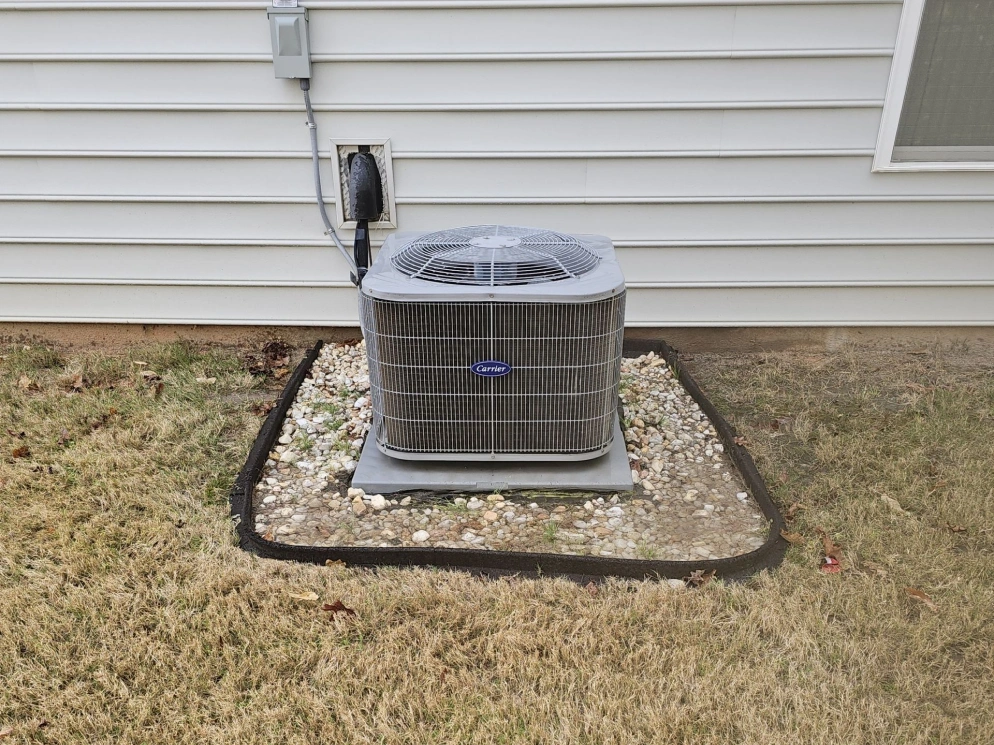
A Carrier condenser after its maintenance visit.
The historic core and the patient craft
Courthouse-district retrofits
The blocks around the courthouse square hold the town’s oldest frames, buildings and houses that predate ductwork as a concept, with plaster worth sparing and proportions worth respecting. The retrofit craft applies exactly as it does in York’s historic district: ductless zones routed through closets and chases, compact equipment sized to real volumes, line sets placed where they cannot offend, and balancing that patiently unwinds whatever each renovation era improvised.
The core’s slow revival, storefronts finding new purposes, upper floors converting to living space, old houses getting careful updates, adds coordinated rough-in work to the calendar: mechanical decisions made at the drawing stage with the renovation trades, where they cost markers instead of change orders. The seat’s old bones deserve the patient version of this trade, and the patient version is what makes the drive.
Crawlspaces, additions, and the balancing decades
The older neighborhoods carry the additive history their decades always write: rooms added, porches enclosed, ductwork extended by three philosophies of handymen, and the room-to-room disagreements only measurement can name. The balancing craft earns steady seat employment, corrections priced cheapest-first as everywhere.
The crawlspaces underneath run the county’s moisture agenda on the seat’s scale: damp holding after rains, duct insulation failing from below, and the musty baselines owners stop noticing. The readings-first sequence sorts each address honestly, sources before hardware, restoration and dehumidification where the numbers justify, with before-and-after readings that make the case without salesmanship.
The fast clock arrives from the north
The corridor reaches the seat
The 521 growth machine keeps extending south, and Lancaster’s northern approaches are filling with the metro’s familiar script: builder-grade systems installed at volume, tight envelopes holding humidity indoors, staging left unconfigured, and warranty clocks ticking toward the aging-in-formation years. The pattern file transfers from Indian Land intact, the trucks stock for the known failures, and the year-two checkup catches the volume-schedule corners at tune-up prices.
The seat’s version of the pattern arrives a few years behind the corridor’s, which is an advantage if the newest streets use it: the lessons Indian Land learned expensively are available here at the cheap end, one early inspection at a time. New-construction owners who book it meet the pattern on their own terms rather than its.
The working town’s commercial lane
Lancaster’s working economy, the shops around the square, the businesses along the corridors, the operations the county seat has always hosted, runs on our light-commercial lane: written prices, maintenance scheduled around business hours, and equipment recommendations sized to how each space actually operates rather than what a catalog suggests. Honestly scoped as everywhere: small buildings yes, big-facility logistics referred rather than fumbled.
The rental stock runs deep across the mill-era streets, and landlords get the standing portfolio model: one number for tenant calls, honest phone triage, batched maintenance across addresses, per-address records, and tenants treated as customers for the hour we are there. The seat’s working housing deserves working service, and the model keeps HVAC the quiet line on every spreadsheet it touches.
A county-seat year, in service calls
The warm half
Spring loads the seat’s mature trees with pollen and books the southern maintenance batches; summer opens the cooling campaign across both clocks at once, veteran capacitors in the mill-era streets, drain clogs wherever the humidity reaches, the first formation failures on the northern approaches, and the crawlspace moisture work at its most instructive. Storm cells take their toll of boards and contactors, and surge protection earns its line in every quote.
The conversion conversations peak with the power bills, the second-opinion calls arrive from wherever the scripts have been working the older streets, and the maintained households watch the season from the comfortable side, as designed.
The cold half
First snaps run the seat’s exam at dawn: strips-heated mill-era frames meeting December with predictable regret, veteran furnaces explaining their skipped fall service, and the 24/7 line working its southern shift at honest travel times with no surcharge attached, vulnerable households first as always. Fall-serviced systems show their preparation in the margins, street by street.
Shoulder seasons belong to the planners and the projects: courthouse-district renovations sequencing their mechanical phases, replacements booked calmly across the mill-era blocks, conversions closing their math at kitchen tables, and the maintenance rhythm signing another season of the seat’s growing calendar. Then the pollen returns, and the Red Rose City’s two-clock year restarts.
The Lancaster promise
Both clocks served on their own terms at every address in the seat: patient craft in the historic core, honest instrument-led math across the mill-era streets, conversion arithmetic wherever the strips still run, moisture work by measurement underneath it all, and the pattern file ready for whatever the corridor sends south. Flat Fort Mill prices with zero mileage theater, financing through Optimus shown honestly, the 10% teacher and service-personnel discount working town-wide, and the 24/7 line covering the county seat without a surcharge at any hour.
The Red Rose City has been working longer than most of the metro has existed. It deserves a mechanical service that respects both of its speeds: (803) 573-2473, any hour Lancaster needs it.
Stuck between repair and replace?
Call and describe what the system is doing. We run the math at your kitchen table, in writing, and the decision stays yours.
Lancaster questions, answered from the seat
Do you charge more to come down to Lancaster?
Never: flat Fort Mill pricing at every address in the seat, no fuel surcharges, no radius markup, and the panhandle drive treated as ordinary logistics. The southern route clusters county-seat calls for efficiency, and the invoice from a mill-era street reads exactly like one from our home zip code.
Our house still heats with electric strips. Is a heat pump really worth it here?
In Lancaster’s older stock, usually dramatically: resistance heat costs multiples per delivered degree, and a heat pump carrying the mild Carolina season steps December bills down hard enough to notice without squinting. Bring one winter power bill to the free visit and the ten-minute math settles your house honestly, including the cases where keeping what you have wins.
Another company said our system is dead. Worth a second look?
Always, and the look is free: a meaningful share of condemned systems reverse under actual instruments, needing sensors or boards rather than funerals. When the original verdict holds, we say so just as plainly and price the replacement in writing beside a keep-it-limping option where one honestly exists. The seat generates a steady share of these calls, and the reversals never stop being satisfying.
Can you work on the really old houses near the courthouse?
That is the patient craft we enjoy most: ductless zones that spare the plaster, compact equipment sized to real volumes, routing that respects the original details, and coordination with renovation trades from the drawing stage. The core’s old bones reward careful work, and careful work is the only version on our trucks.
Is financing available for a replacement?
Through Optimus, shown beside every replacement quote as a matter of course: quick application, honest terms, and the decision left with you rather than attached to a sales pitch. Budget reality shapes plenty of the seat’s replacement decisions, and a monthly number sometimes turns an impossible winter into a manageable one. The math gets shown straight either way.
How fast can you get here in an emergency?
The honest southern quote: longer than home county, prioritized ahead of everything routine, faster at night than by day, and moving the moment the call ends with the real travel time stated. No-heat and active-water calls jump every queue at the standard no-surcharge price, vulnerable households first.
Do you handle rental houses in town?
At portfolio scale: one number for tenant calls, honest triage, batched maintenance across addresses, per-address records, and tenants treated as customers for the hour we are there. The mill-era streets run deep with working rentals, and the model keeps HVAC the quietest line on the spreadsheet.
What do you work on most in Lancaster?
Both clocks: veteran repairs and conversions across the mill-era streets, patient retrofits in the historic core, crawlspace moisture work underneath the older stock, second opinions wherever the scripts have visited, and early pattern service on the northern approaches as the corridor arrives. The seat employs the full roster at both speeds, which is exactly why it earned its own page.
Around Lancaster
The county page carries the panhandle-to-seat story at full length, and the services linked below run the southern route weekly: the veteran honesty, the conversion math, and the moisture work the older stock keeps assigning.
Lancaster County·Indian Land·Van Wyck·Heat Pumps·Furnace Repair·Mini-Splits
Want proof before the phone call? The gallery is all real jobs, and the financing page covers the big-ticket math.