
Cold but clammy: why your house feels like a cave with the AC running
There is a particular kind of summer misery we hear described on the phone all season long, and it always comes with a note of confusion: the thermostat says seventy two, the air conditioner runs, and the house still feels wrong. Sticky. Heavy. Towels that never quite dry, a basement smell creeping upstairs, sheets that feel damp at bedtime. Cold and clammy at the same time, like a cave with a nice thermostat.
The confusion is fair, because we are all taught that air conditioning makes houses comfortable, and this house is air conditioned and uncomfortable. The missing idea is that comfort is two jobs, temperature and humidity, and it is entirely possible for a system to do the first job while failing the second. In the Carolinas, where summer air arrives loaded with moisture, the second job is half the battle. Here is why houses go clammy, and how each version gets fixed.
The short version
- Comfort is temperature AND humidity together. Your air conditioner can nail the first job completely and still flunk the second one all summer long.
- Oversized systems cool fast and dehumidify badly, because short cycles never wring the air. Fast is the whole problem, weirdly enough.
- Tight newer homes trap moisture indoors while damp crawlspaces push it up from below, and plenty of houses are fighting both at once.
- The fix follows the readings in cheapest-first order: drainage, duct sealing, drain clearing, right-sizing, and only then a dedicated dehumidifier where the numbers still ask for one.
How an AC dehumidifies, when it gets the chance
Every air conditioner is secretly a dehumidifier. As warm house air passes over the cold indoor coil, moisture condenses out of it the same way a cold glass sweats on a porch. That water drips into a pan, runs down the condensate line, and leaves your house one drop at a time. On a proper humid-season day, a healthy system pulls gallons out of the air, and that removal is a huge share of why conditioned air feels comfortable rather than merely cold.
But here is the catch: dehumidification only happens while the system runs. The coil has to stay cold, with air moving across it, long enough for real moisture to condense and actually drain away. Short bursts of cooling chill the air without meaningfully drying it. That single fact explains most clammy houses in the metro, because something is cutting those run times short.
So when a house is cold and damp at once, the first question is never what gadget to buy. It is: why is this system not running long enough to dry the air, or where is new moisture coming from faster than the system can remove it? Everything that follows is one of those two stories.
The oversized system: too much muscle, no patience
The most common villain, especially in newer neighborhoods, is an air conditioner that is simply too big for the house. Bigger sounds better, and plenty of systems get sized by square footage and rounded up for safety. But an oversized unit blasts the thermostat down in ten or fifteen minutes and shuts off. Temperature job done, humidity job barely started, because the coil never stayed wet long enough to drain real moisture.
The result is a house that cycles between chilly and sticky all day: short blasts of cold, long idle stretches where the humidity creeps back, and that cave feeling by evening. The owner responds by lowering the thermostat further, which makes the blasts colder without making them longer, and now the house is sixty nine degrees and still damp, with a power bill to match.
The honest fix happens at replacement time: a load calculation on the actual house, and a system sized so it runs longer, gentler cycles that wring the air properly. If your oversized unit is young and healthy, there are interim moves, blower speed adjustments, and in stubborn cases dedicated dehumidification, but sizing is the root cause, and we would rather tell you that truth now than sell you around it forever.
The tight house: great insulation, trapped moisture
Newer construction has gotten impressively tight. Good for energy bills, tough on moisture. Every shower, every pot of pasta, every load of laundry, every breathing human adds water vapor to the air, and in a tight envelope that moisture has nowhere to leak out. Combine a tight house with an oversized builder-grade system and you have manufactured the perfect clammy home, which is why so many of the calls come from subdivisions barely five years old.
Tight-house humidity has a signature: it is worst in the evenings and in bedrooms, follows cooking and shower schedules, and hangs around even when the weather outside dries out. If your house fits the profile, the readings usually confirm it in minutes, and the answer is a properly sized system at the next replacement, sometimes helped by a dedicated whole-home dehumidifier that handles moisture without over-cooling the place.
A whole-home dehumidifier, mounted on the return side of the system, dries the air independently of the cooling cycle. It is the right tool for houses where the numbers justify it, and the wrong tool to sell before anyone has taken the numbers. We install plenty, and we talk people out of plenty, and the readings make the call both times.
The crawlspace: moisture from below
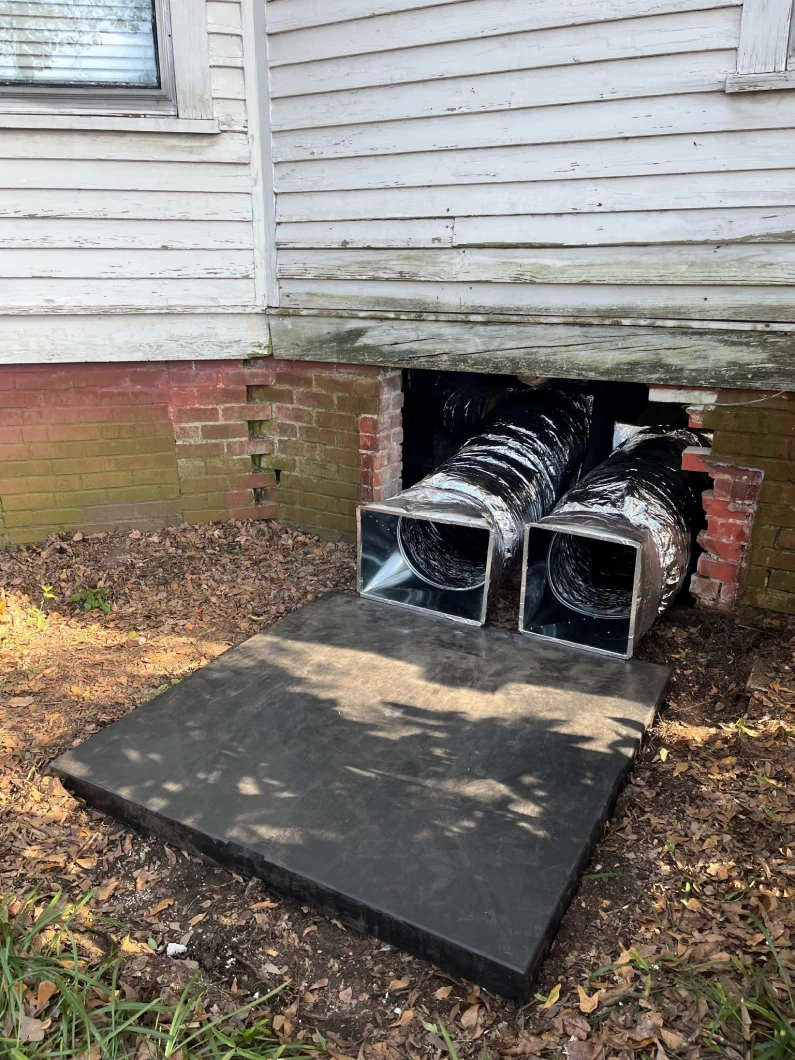
Around here, the other great moisture source is under the floor. Most homes in the region sit over crawlspaces, and the river-and-creek geography keeps plenty of those crawlspaces damp for much of the year. Wet ground breathes vapor upward through the floor, duct systems living down there soak in it, and the house above inherits a humidity baseline it can never quite shake, plus that musty note owners stop smelling until they come home from vacation.
The crawlspace version has its own signature: mustiness, floors that cup or creak more in summer, humidity that stays high even when the AC runs long and proper cycles. The fix sequence matters and runs cheapest-first: find and fix the water source, improve drainage, seal the ground with a vapor barrier, restore any duct insulation the damp has ruined, and only then decide whether dedicated dehumidification is still needed. Skipping to the gadget while the ground stays wet is buying a bucket for a leak.
This work is unglamorous and it transforms houses. We take before-and-after moisture readings on every crawlspace job precisely because the numbers make the case better than any sales pitch could, and because a dried-out crawlspace pays dividends on comfort, on the power bill, and on the floor structure itself for decades.
The failing system: wet coil, weak performance
Sometimes the clammy house is simply a cooling system in decline. A low refrigerant charge chills the coil unevenly and cuts moisture removal. A filthy coil cannot condense water efficiently. A clogged condensate drain lets the collected water sit in the pan and evaporate right back into the airstream, which means the system is re-humidifying the house with its own harvest. Each of those is a straightforward service visit to find and fix.
The clog deserves special mention because it escalates: a blocked drain line eventually overflows the pan, and the first symptom plenty of homeowners get is a ceiling stain under the attic air handler. If your clammy summer comes with any water where water should not be, move that call up the list, because drywall repair costs more than drain clearing every single time.
This is also the version maintenance simply prevents. The spring visit clears the drain, cleans the coil, and verifies the charge before the humid months arrive, which is a big share of why maintained houses ride out Carolina summers on the comfortable side of this whole article.
How we sort your house’s version out
The diagnosis is measurement, start to finish. Humidity readings through the house, run times observed, the coil and charge checked, the crawlspace read separately, and the duct system inspected where it lives. Each clammy-house story leaves different fingerprints, and an hour with instruments usually names the culprit outright.
Then you get the fix list in cheapest-first order, in writing: maybe a drain clearing and a coil wash, maybe crawlspace drainage before any equipment conversation, maybe blower settings, maybe a dehumidifier whose numbers we can show you, maybe honest sizing talk for the next replacement. The order matters, because the expensive step is often unnecessary once the cheap ones are done.
What you will never get is a moisture problem used as a pretext to sell a bigger air conditioner. Bigger is usually how the problem started. That single sentence has saved our customers more money than any coupon we could print.
Quick answers
What indoor humidity should I actually aim for?
Between forty and fifty five percent feels right to most people and keeps the house healthiest. Below forty gets scratchy and staticky, above sixty grows things nobody wants to grow. A twenty dollar hygrometer from the hardware store tells you where you stand, and knowing your number turns this whole article from theory into a diagnosis.
Would running the fan continuously help dry the house?
Usually the opposite, and this one surprises everyone. After a cooling cycle ends, the coil sits wet, and a constantly running fan blows air across it, evaporating that moisture right back into the house. Fan on auto lets the water drain instead. Continuous fan has uses, but drying a clammy house is emphatically off the list.
Are the little dehumidifiers from the big box store worth it?
For a single damp room, they can take the edge off. For a whole clammy house, they are a mop brought to a plumbing problem: loud, thirsty, always in the way, and never near the actual moisture source. If one unit running constantly is what comfort requires, the house is asking for a real diagnosis, and probably a cheaper permanent answer than years of portable units.
Our house is new. Surely it cannot have these problems?
New is precisely when two of them peak: tight envelopes trap the most moisture, and builder-grade systems are the most likely to be oversized, because volume construction sizes by spreadsheet rather than by the house. Some of the clammiest houses we visit still smell like new carpet, and their owners assumed new meant immune. The year-two checkup catches all of this early, while the fixes are settings and small parts instead of regrets, and it costs the same as any tune-up.
Can bad ductwork alone make a house humid?
Genuinely yes. Leaky return ducts in a damp crawlspace inhale moist air and deliver it into the house on every cycle, an outdoor-air smuggling operation running around the clock. Sealing the duct system closes the border, and it is one of the quietest comfort upgrades money buys around here.
How fast can the musty smell actually go away?
Faster than most owners believe. Once the source is fixed, the crawlspace dried, the drain cleared, the duct sealed, houses change character in weeks. The smell people assumed was the house’s personality turns out to have been a symptom the whole time, and watching an owner realize that never gets old.
Tired of the cave?
One visit with a hygrometer, a flashlight, and a look under the floor names your house’s version of this story. The fix list arrives cheapest-first, in writing, with the readings that justify each line, and the sticky towels become someone else’s problem for good. Call any hour, because August humidity does not keep business hours either.
Call (803) 573-2473or send us the detailsWant proof first? The gallery is all real jobs.