
Heat pump or gas furnace? The honest Carolina answer
Somewhere in the Charlotte metro right now, a homeowner is getting two completely different answers to the same question. One company swears by gas furnaces and talks about heat pumps like they are a scam. Another pushes heat pumps like the furnace is a museum piece. Both companies sound certain. Both quote with confidence. And the homeowner is left googling at midnight, which might be how you got here.
Here is the thing both sales pitches skip: the right answer depends on your house, your fuel situation, and this specific climate, and the Carolinas happen to sit in the exact sweet spot where the honest answer is usually interesting. We install and repair both, we do not earn a commission either way, and this is the conversation we actually have at kitchen tables from Fort Mill to Gastonia.
The short version
- Our winters are mild. That is the whole ballgame, and it is why heat pumps shine here.
- Resistance strip heat is the most expensive heat in the Carolinas. Escaping it pays fast.
- If you already have natural gas and a working furnace, the math changes. Dual fuel often wins.
- Nobody should decide this from a sales pitch. One power bill and ten minutes of honest math at your own kitchen table settles it for your house specifically.
What a heat pump actually does
A heat pump is an air conditioner that runs in both directions. In summer it moves heat out of your house exactly like any AC. In winter it reverses and moves heat from the outdoor air into your house. People hear that and object that winter air is cold, but cold air still holds heat, and modern equipment extracts it efficiently until temperatures get well below what a Carolina January usually does.
The reason this matters is efficiency. A gas furnace makes heat by burning fuel, and the best ones convert most of that fuel to warmth. A heat pump does not make heat at all, it moves it, and moving heat takes far less energy than creating it. In mild weather, a heat pump delivers two to three units of heat for every unit of electricity it consumes. There is no burner on earth that can match that arithmetic, because the burner has to create every unit it delivers.
The catch arrives when it gets genuinely cold. As outdoor temperatures fall, a heat pump works harder for less, and at some point it needs help. How often your winter reaches that point is the entire question, which is why this decision is regional, and why advice written for Minnesota keeps confusing people in South Carolina.
The Carolina climate is the tiebreaker
Look at an actual Charlotte-area winter. Most of it lives in the forties and fifties. We get cold snaps, a handful of mornings in the teens and twenties, the occasional week that reminds everyone where the coats are. But the deep, sustained cold that embarrasses heat pumps is a visitor here, never a resident. For the overwhelming share of our heating hours, a heat pump is operating in exactly the conditions where it embarrasses every other option instead.
This is why the answer differs from your cousin in Ohio. His winter parks below freezing for months, and his heat pump would spend half its life leaning on backup heat. Ours does not. The same machine that struggles in Buffalo prints savings in Baxter Village. Climate is the tiebreaker, and our climate picked a side.
It also means the scary stories you have heard, the freezing house, the monster bills, usually trace back to one of two things: a heat pump installed somewhere it did not belong, or a heat pump leaning on the wrong kind of backup. Which brings us to the villain of this whole story.
Strip heat: the expensive secret in your air handler
Inside most heat pump air handlers sits a bank of electric resistance coils, the same technology as a toaster. They exist as emergency backup, and used a few hours a year they are harmless. The problem is the enormous number of Carolina homes, especially older ones and rentals, running resistance strips as their primary heat, either because that is all that was ever installed or because a failing heat pump quietly handed the job over and nobody noticed.
Resistance heat delivers exactly one unit of heat per unit of electricity, full retail price, no discount. It is the most expensive way to warm a house in this state. When people show us a December power bill that jumped past three hundred dollars, strips are the suspect, and they are usually guilty. The bill spike people blame on the power company is very often a dead heat pump nobody diagnosed, with the strips silently doing the whole job at triple the cost.
If your winter bills feel criminal, that is worth a look before any equipment conversation. Bring us one bill and we will tell you in ten minutes whether strips are eating your budget and what escaping them would actually save. Across the older streets of Lancaster, Chester, and the mill neighborhoods, that single conversation has been worth more than any equipment we sell.
When the gas furnace genuinely wins
If your house already has natural gas service, a furnace in decent shape, and ductwork sized for it, ripping all that out to chase heat pump efficiency rarely pencils. Gas in our area is reasonably priced, a modern furnace is a fine machine, and the conversion cost eats years of theoretical savings. Our advice in that situation is usually to run what you have and revisit when the furnace ages out.
Gas also delivers a kind of heat some people simply prefer, hot and fast from the vents, and it does not blink at the coldest morning of the year. If your household includes someone who feels every draft, or the house itself is leaky and old and hard to keep warm, that instant recovery has real value that never shows up on an efficiency chart.
Propane changes the story, though. Delivered fuel prices swing hard, and by the time propane lands in a Carolina tank it is usually expensive heat. Propane households are the ones where the heat pump math gets dramatic, and where the hybrid setup below deserves the hardest look.
Dual fuel: the both-and answer
The setup we quote more every year is dual fuel: a heat pump doing the everyday work, with a gas or propane furnace as the backup instead of electric strips. The heat pump carries the forties-and-fifties weather where it is unbeatable. When a real cold snap arrives, the furnace takes over, burning fuel only during the hours it genuinely outperforms.
You get the heat pump’s cheap mild-season heat, the furnace’s cold-snap muscle, and you never touch resistance strips at all. For homes that already own a working furnace, adding a heat pump at the next AC replacement is often nearly free strategy: the AC needed replacing anyway, and a heat pump is an AC that learned a second job.
It is genuinely the best of both, and the fact that it does not fit in either sales pitch, the gas guys or the heat pump guys, tells you something about sales pitches.
How we actually run the numbers with you
No brochure, no averages from some other state. We look at your last winter’s power bill, what fuel reaches your street, what equipment is in the house now and how much life it has left, and how long you plan to stay. Then we price the realistic options side by side, in writing, including the option of doing nothing this year. Financing through Optimus sits beside the numbers if a monthly figure matters, and the 10% teacher and service-personnel discount applies to all of it.
Sometimes the answer is a heat pump and the December bills drop enough that neighbors ask questions. Sometimes it is keep your furnace and call us in five years. Sometimes it is dual fuel at the next replacement. The math is the product. The equipment is just how the math gets delivered.
The mistakes that give heat pumps a bad name
Most heat pump horror stories in this area trace to installation, never the technology. The big one is sizing by square footage instead of by the actual house. An oversized heat pump short-cycles, never wrings the humidity out, and leaves the house cold and clammy at the same time, which convinces the owner the technology is junk. A load calculation on the real structure, windows, insulation, ductwork and all, prevents the whole story.
The second mistake is leaving the backup strips wired to jump in early. Poorly configured controls call for strip heat the moment the thermostat falls a degree or two behind, so the expensive toaster coils run all winter while the efficient machine idles. We find this constantly on systems other companies installed, and fixing the changeover settings alone has dropped January bills by real money without touching a single part.
The third is neglect. A heat pump runs all year, both seasons, which means it works roughly double the hours a furnace-plus-AC pair splits between them. It earns its maintenance visits, and the twice-yearly rhythm matters more for this machine than any other equipment we service. Skip it for years and the horror story writes itself, then gets blamed on the wrong villain.
Quick answers
Do heat pumps really work when it drops below freezing?
Yes, and modern cold-climate models keep meaningful output well into the teens. Efficiency does taper as it gets colder, which is exactly why the backup plan matters, and why we would rather see a furnace behind your heat pump than a bank of strips.
My heat pump blows air that feels cool. Is it broken?
Possibly working exactly as designed. Heat pump supply air runs cooler than furnace air, warmer than the room but cooler than your hand, so it can feel draft-like even while it heats the house fine. If the house holds temperature and the bills look normal, relax. If the house is losing ground, that air might actually be cold, and that is a service call.
What does switching from strips to a heat pump save?
Depends on the house, but strips-primary homes see the biggest swings we ever deliver, because you are replacing the most expensive heat in the state with the cheapest. Bring one winter bill to the free visit and we will show you your number, in writing, before anyone commits to anything.
Which brands do you actually trust for heat pumps?
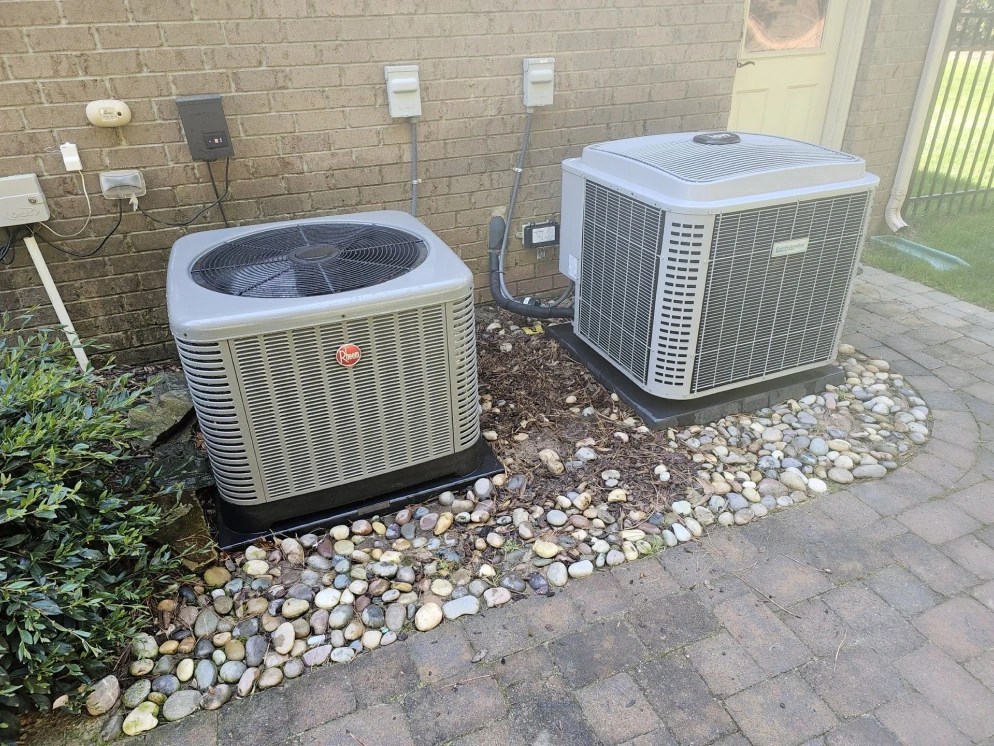
We install a lot of Rheem, Bosch, Carrier, Goodman, and Mitsubishi because they hold up in this climate and parts arrive fast when something eventually fails. But brand matters less than sizing and installation, a mid-tier machine installed carefully will outlive a premium one slapped in by the square-footage method. We repair every major brand either way.
Is a dual fuel setup expensive to install?
If you already own a working furnace, it is mostly the cost of the heat pump replacing your AC, plus controls. That is why the smartest moment for it is when the air conditioner dies anyway. Planning one summer ahead of an aging AC turns an emergency into a strategy.
Want your actual number instead of a pitch?
Bring one winter power bill and ten minutes of patience. We run your house’s actual numbers at the kitchen table, put every option in writing including the do-nothing option, and the decision stays yours. That is the whole appointment, and it is free.
Call (803) 573-2473or send us the detailsWant proof first? The gallery is all real jobs.